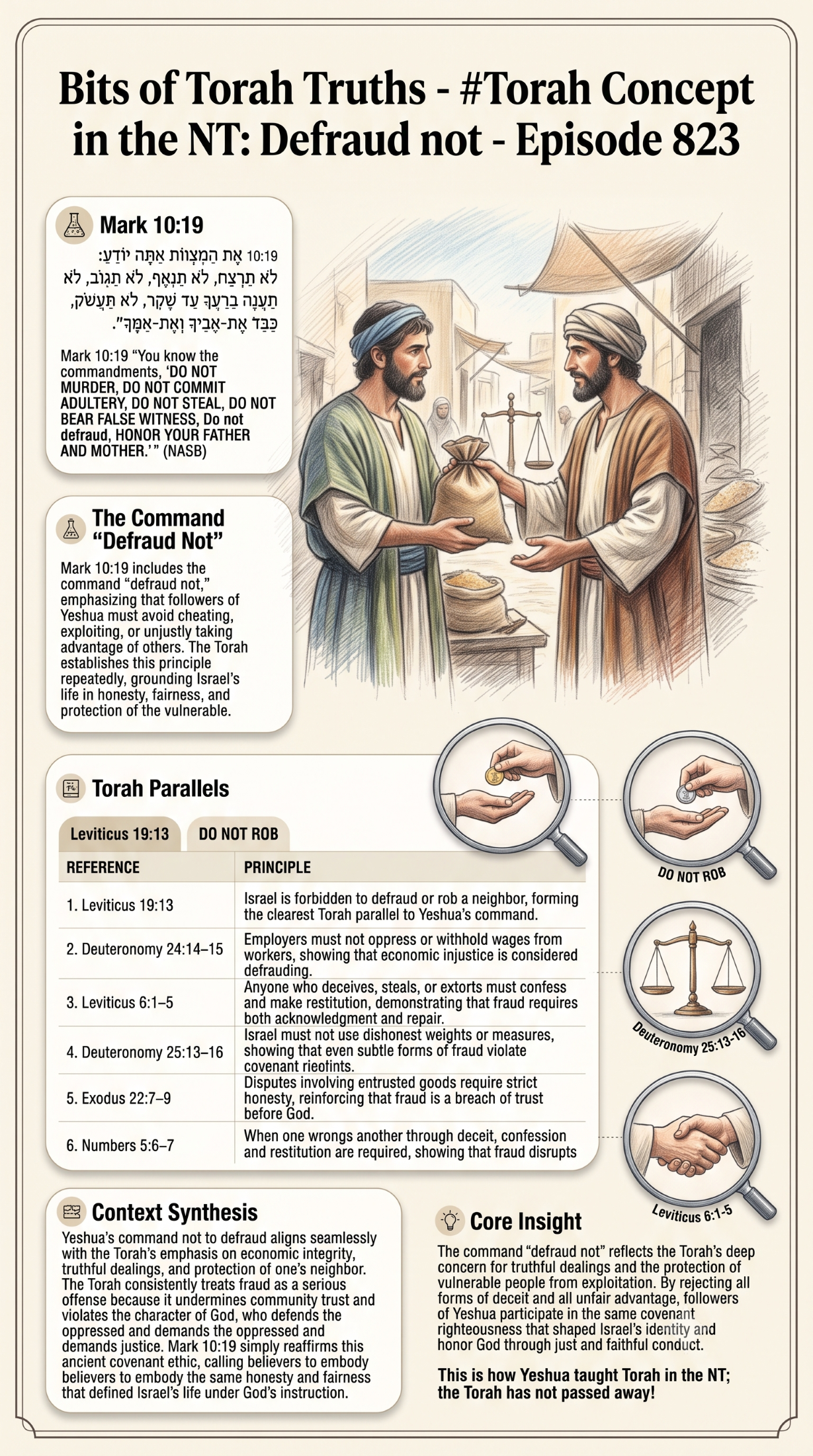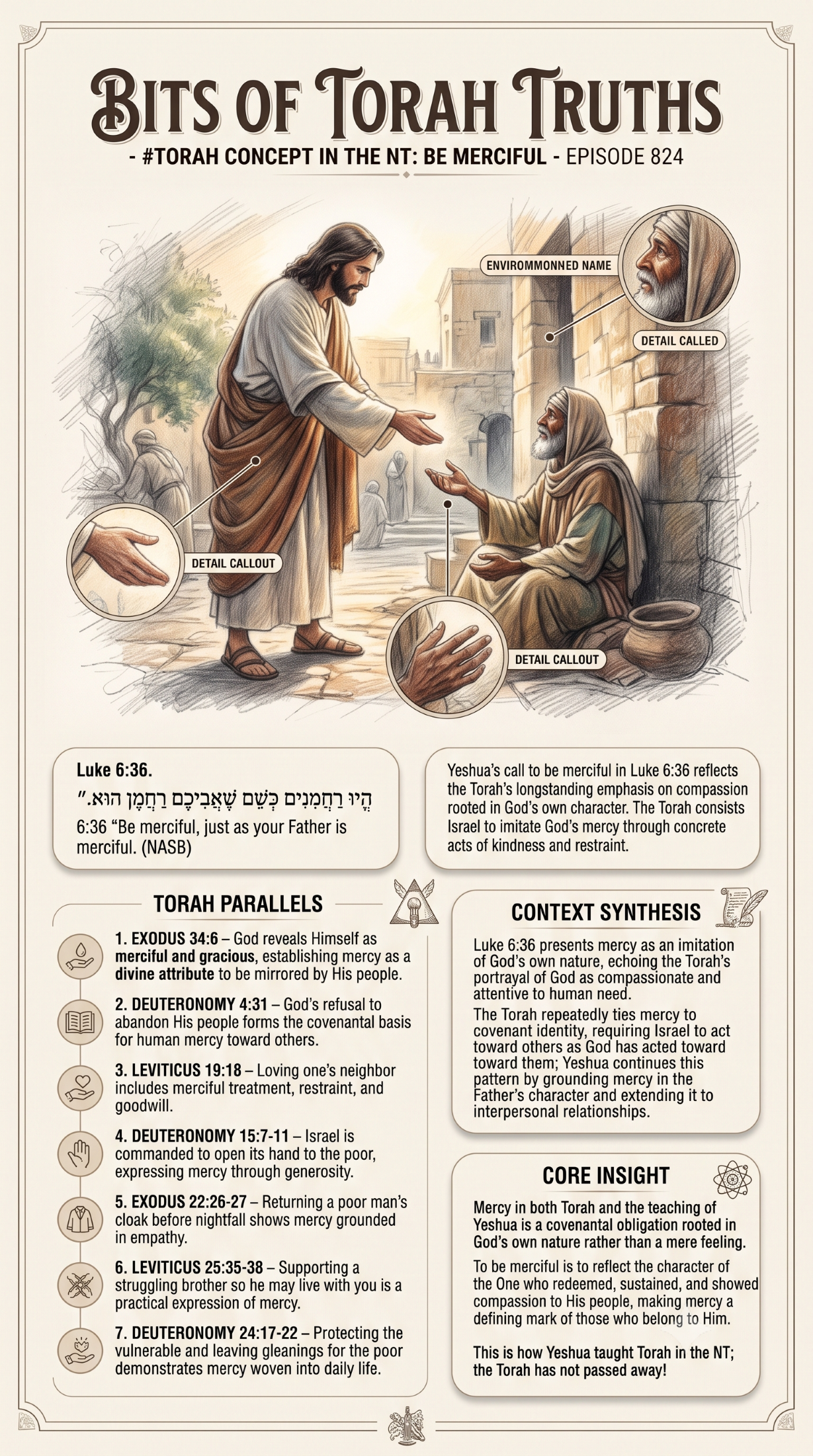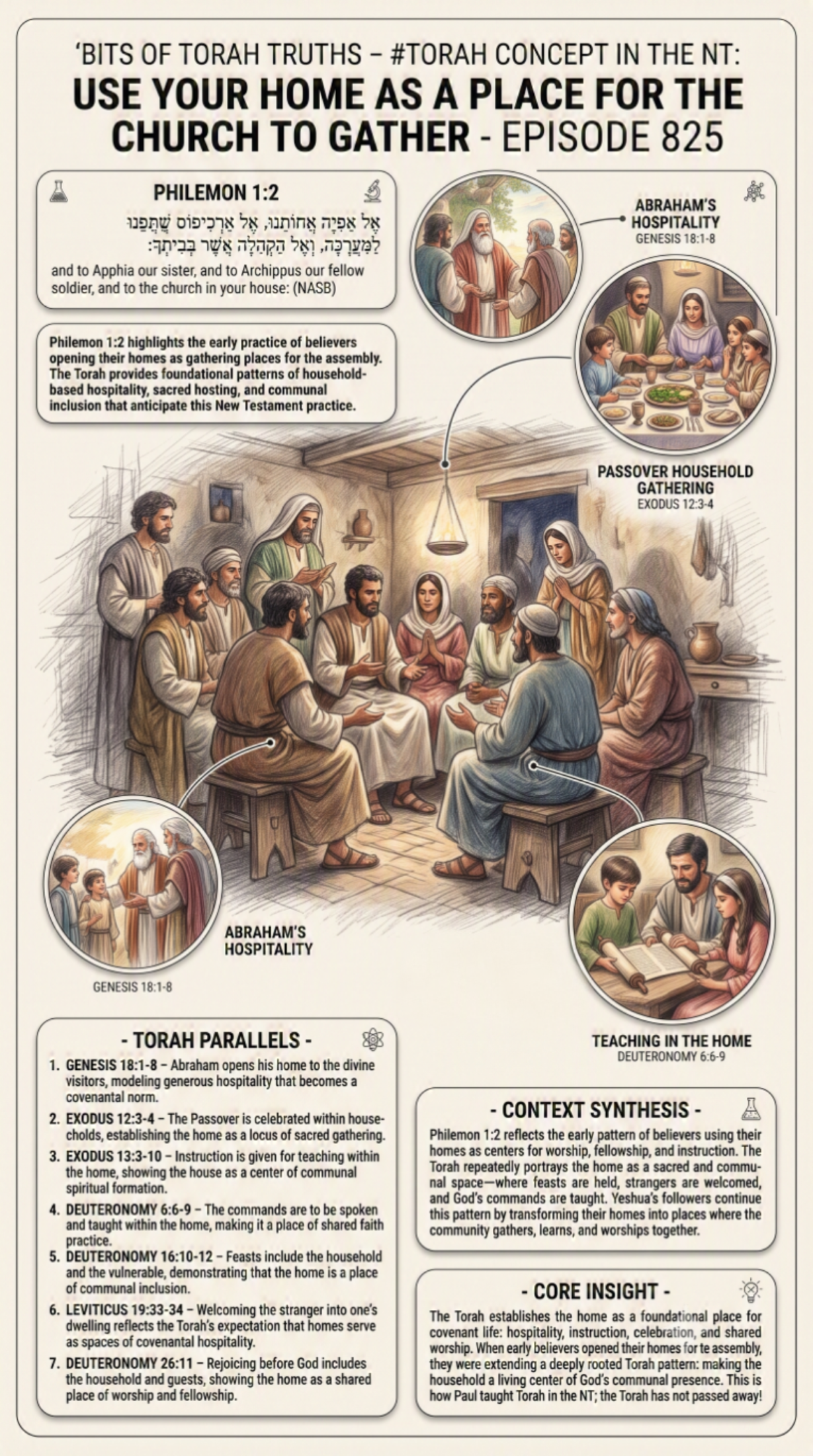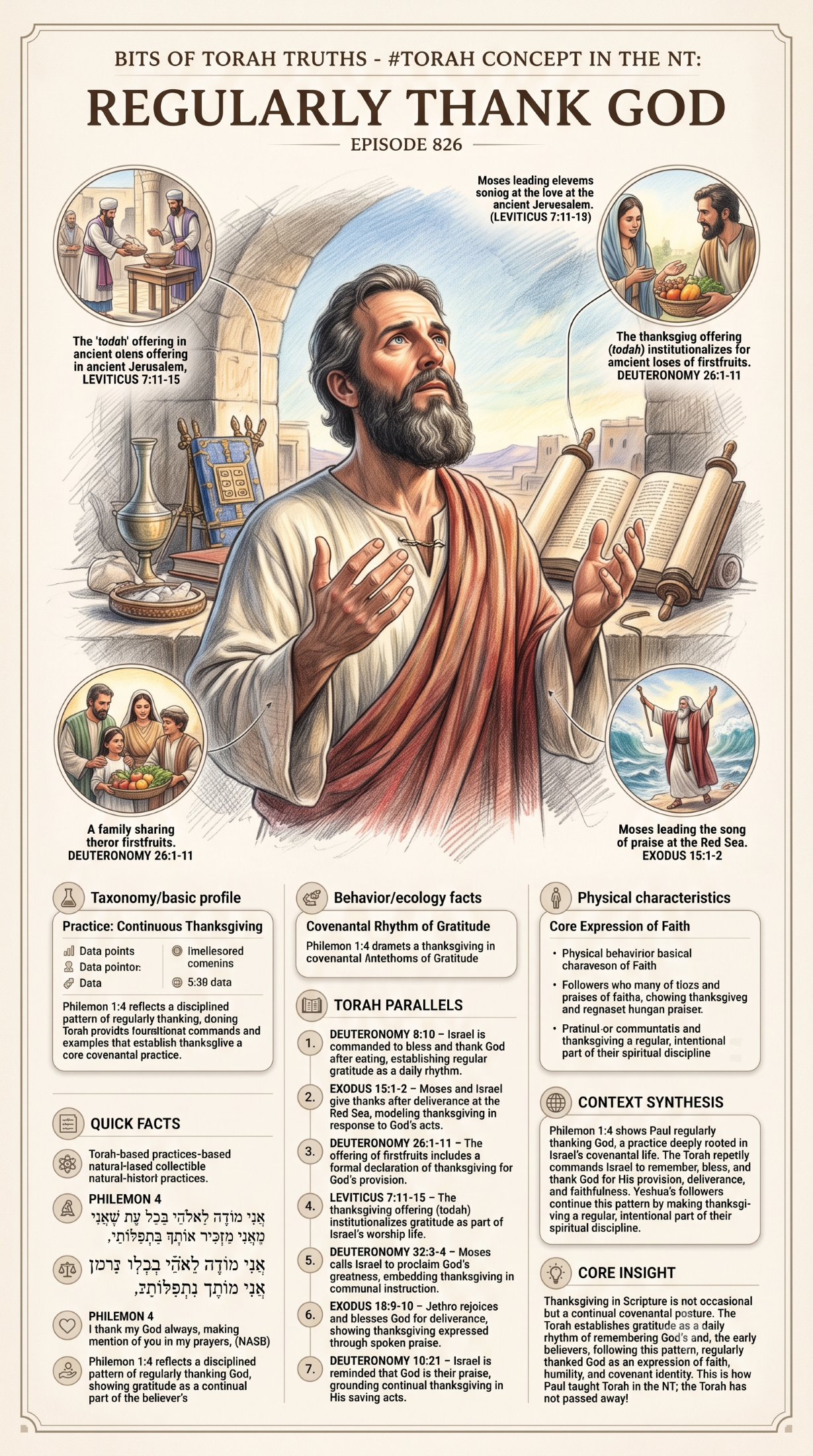
Bits of Torah Truths – #Torah Concept in the NT: Do good deeds out of free consent and conviction – Episode 830
Philemon 14
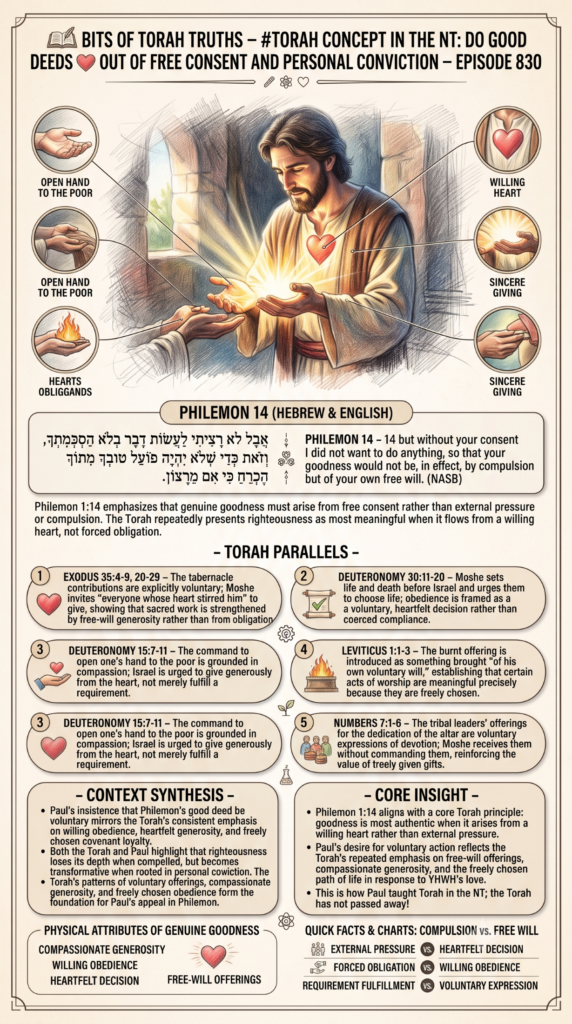
14 אֲבָל לֹא רָצִיתִי לַעֲשׂוֹת דָּבָר בְּלֹא הַסְכָּמָתְךָ, וְזֹאת כְּדֵי שֶׁלֹּא יִהְיֶה פֹּעַל טוּבְךָ מִתּוֹךְ הֶכְרֵחַ כִּי אִם מֵרָצוֹן.
#torah#torahwisdom#torahtruth#torahforlife#torah4you#torahtruth
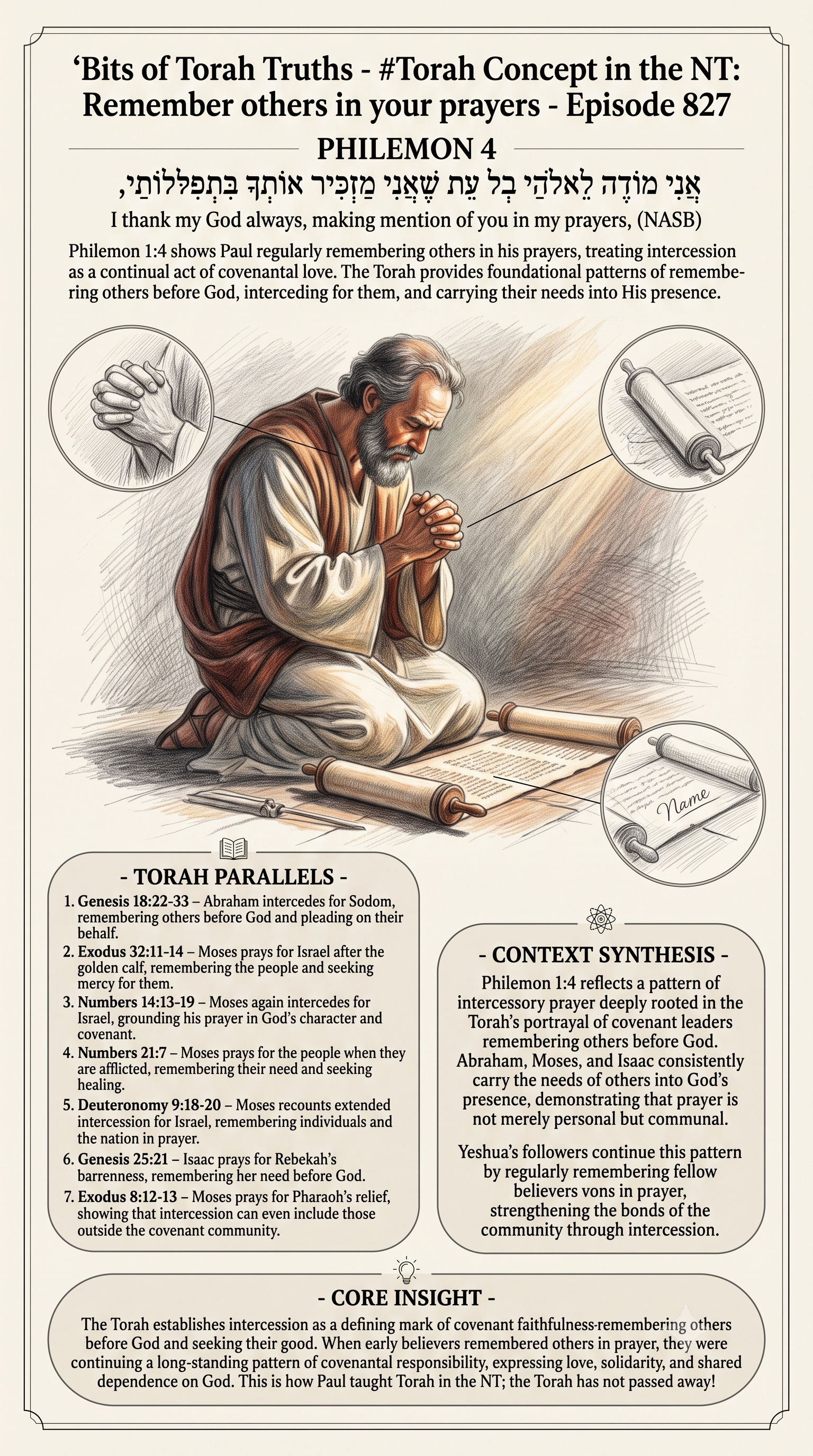
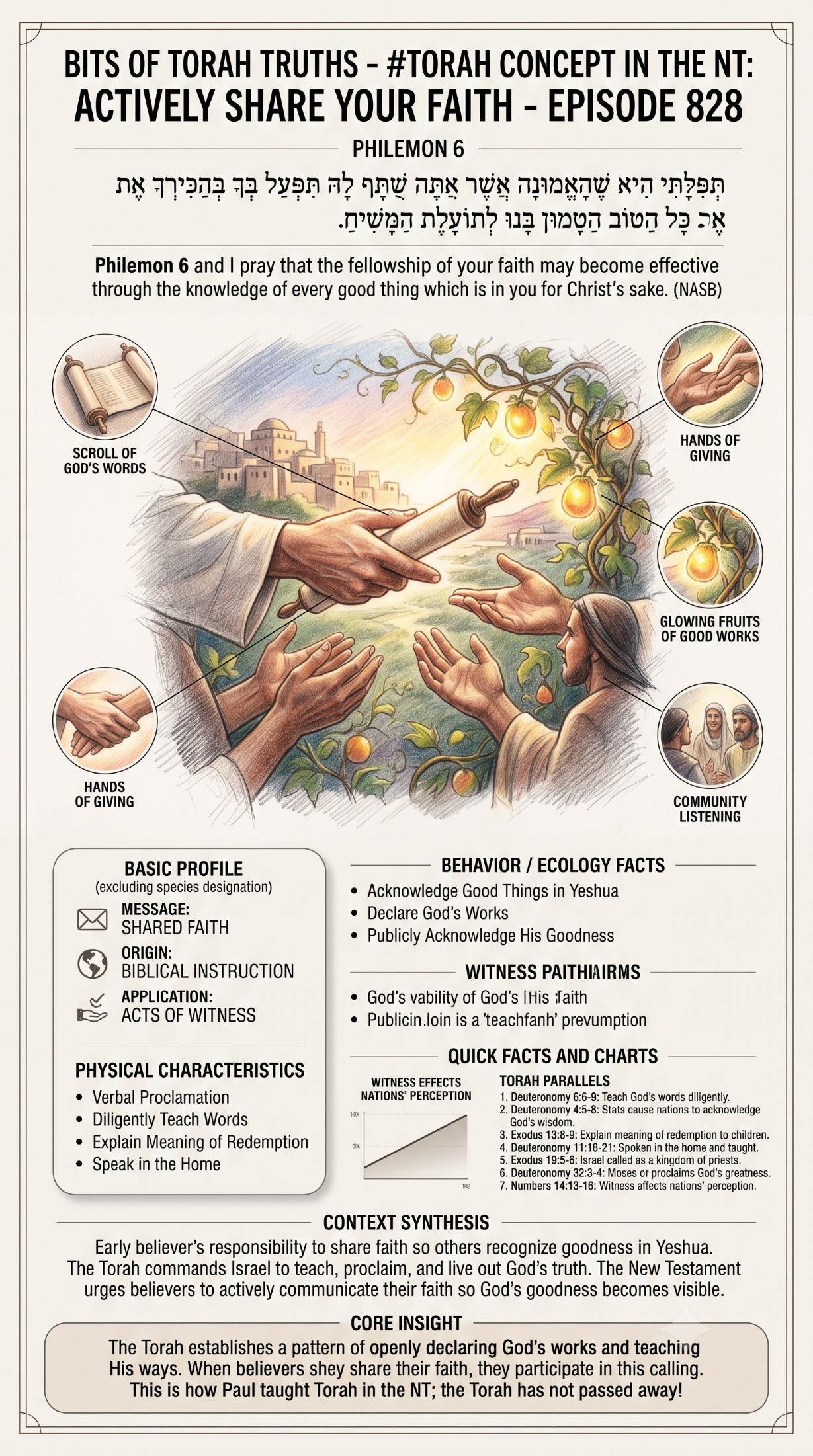
Philemon 14
14 but without your consent I did not want to do anything, so that your goodness would not be, in effect, by compulsion but of your own free will. (NASB)
https://www.matsati.com/index.php/category/bits-of-torah-truths/
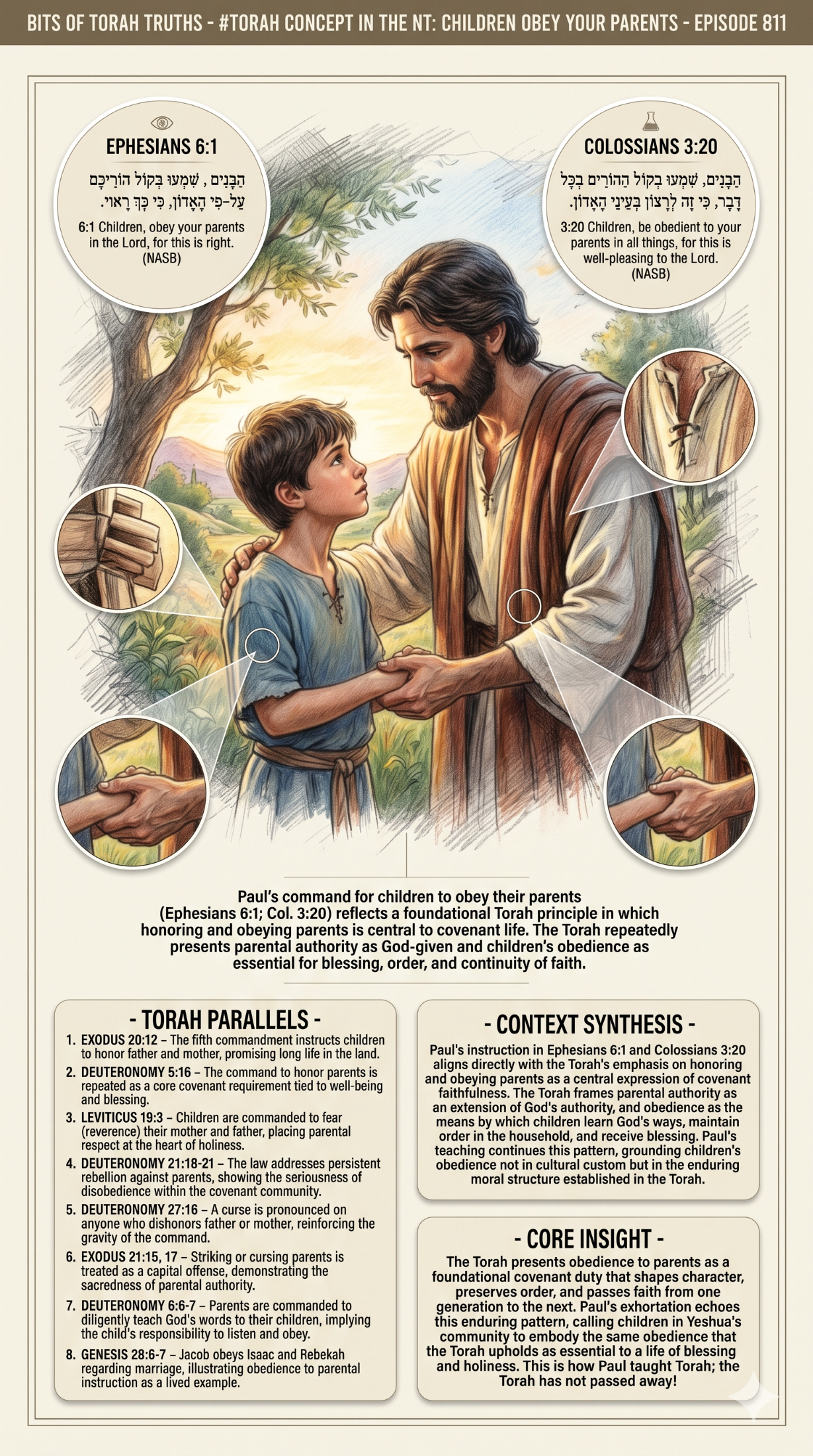
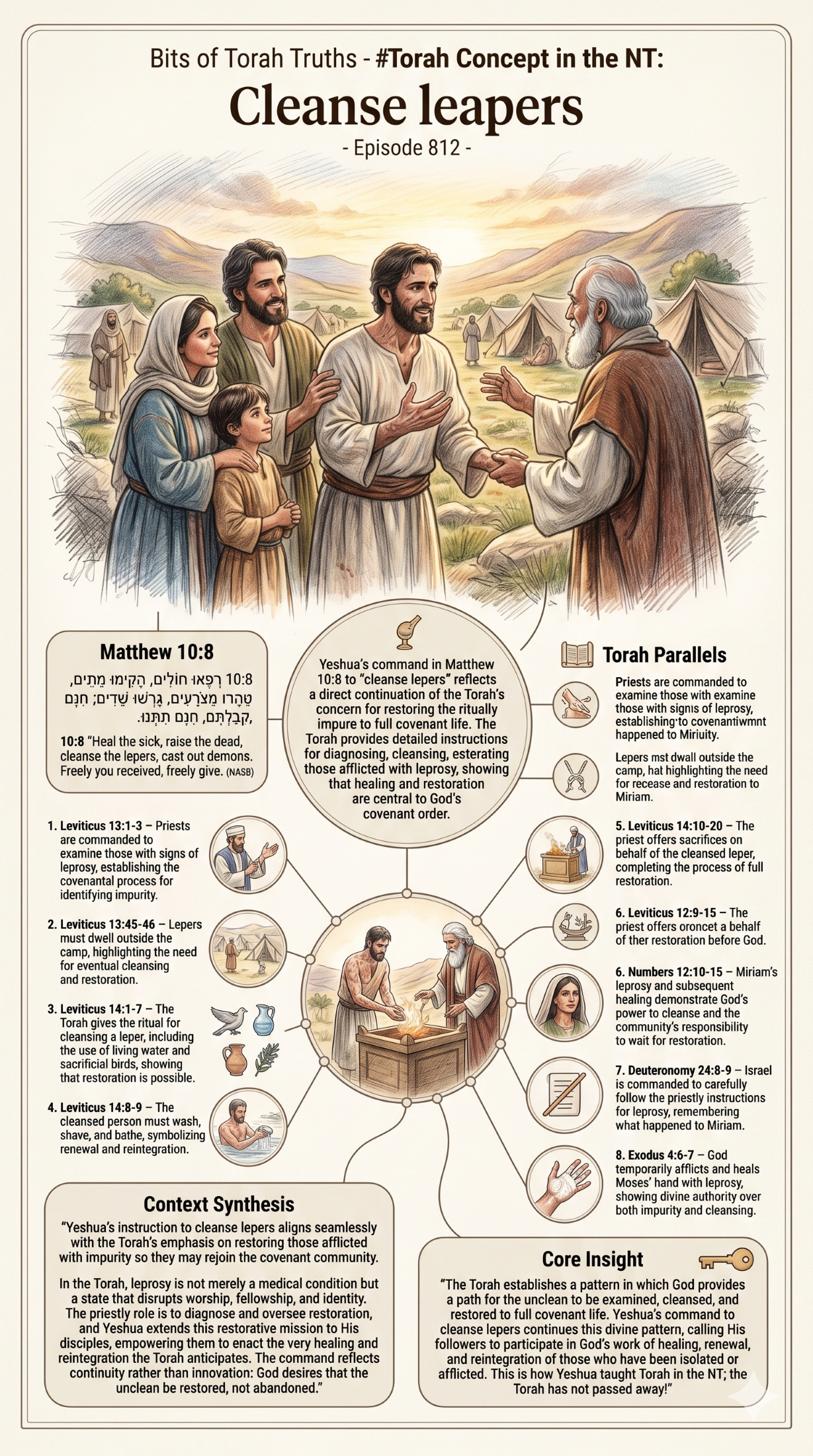
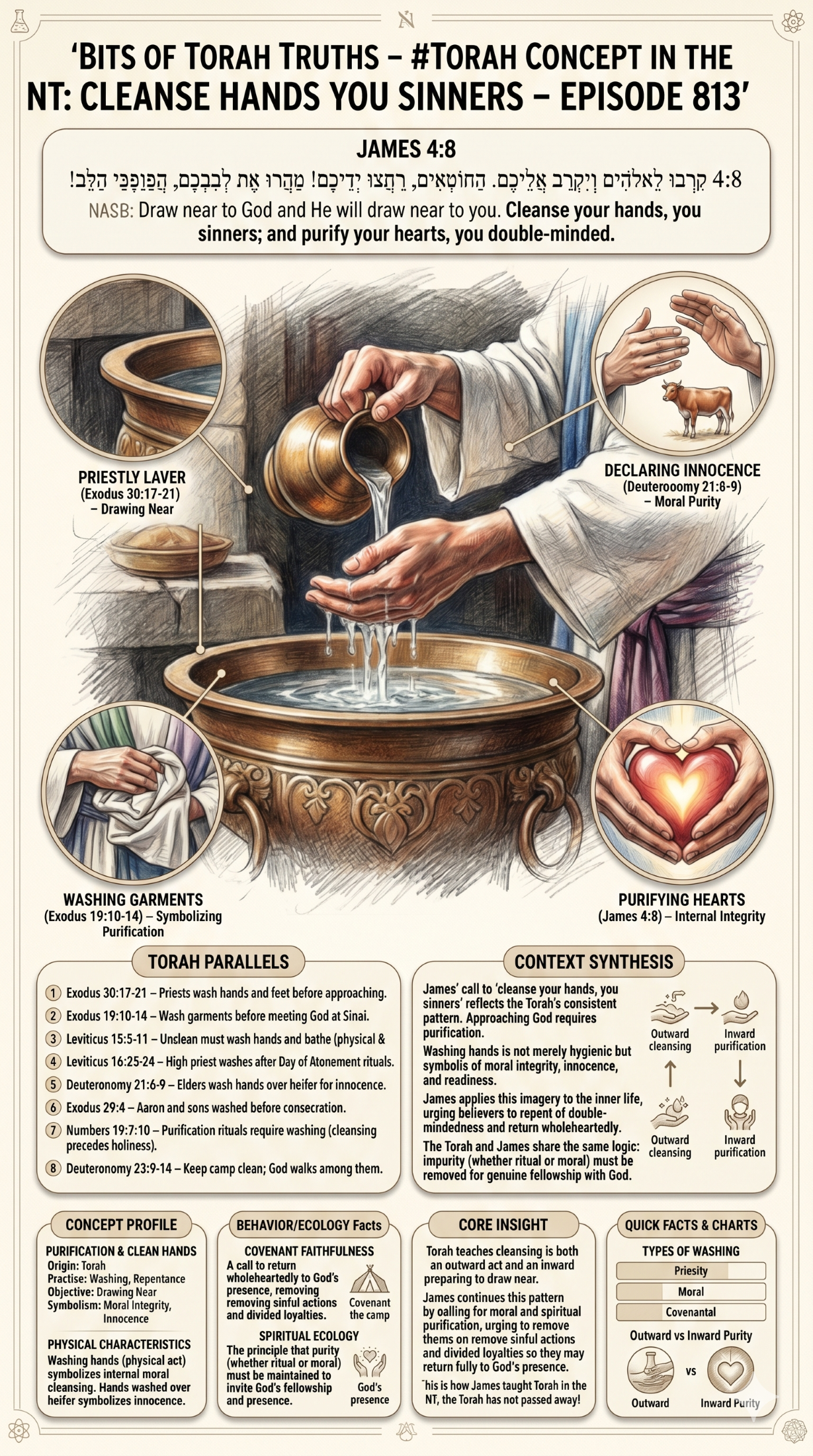
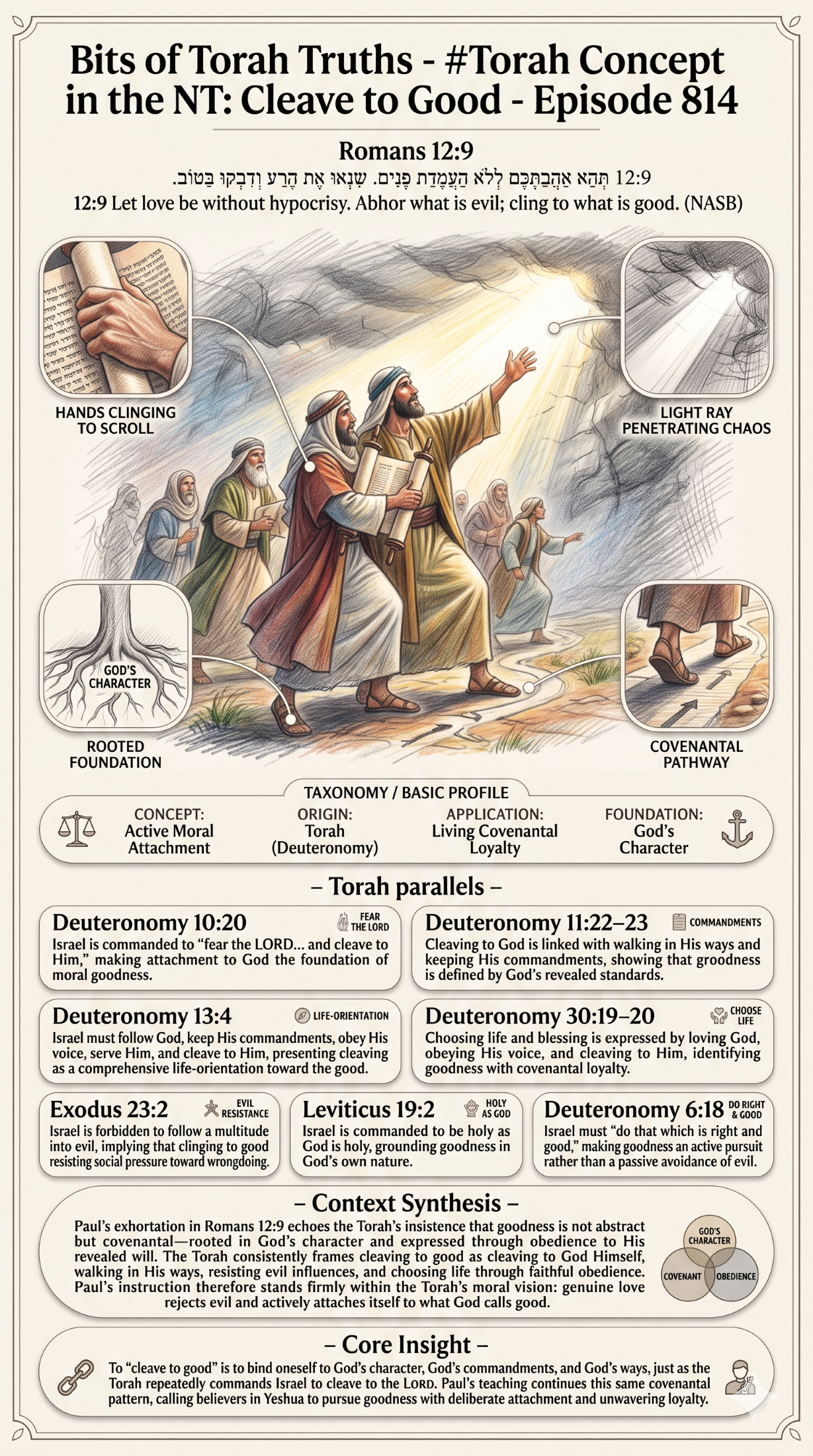
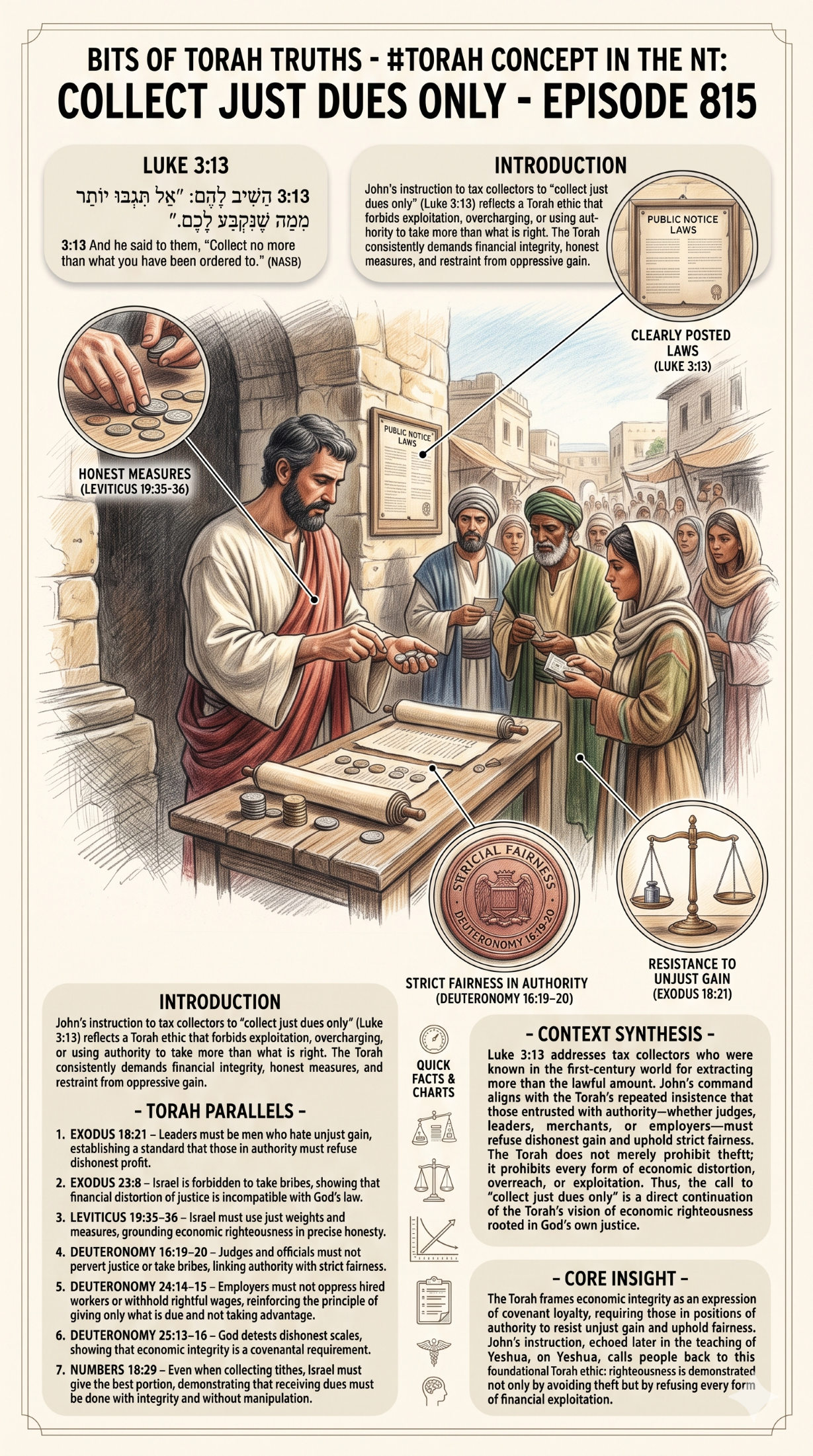
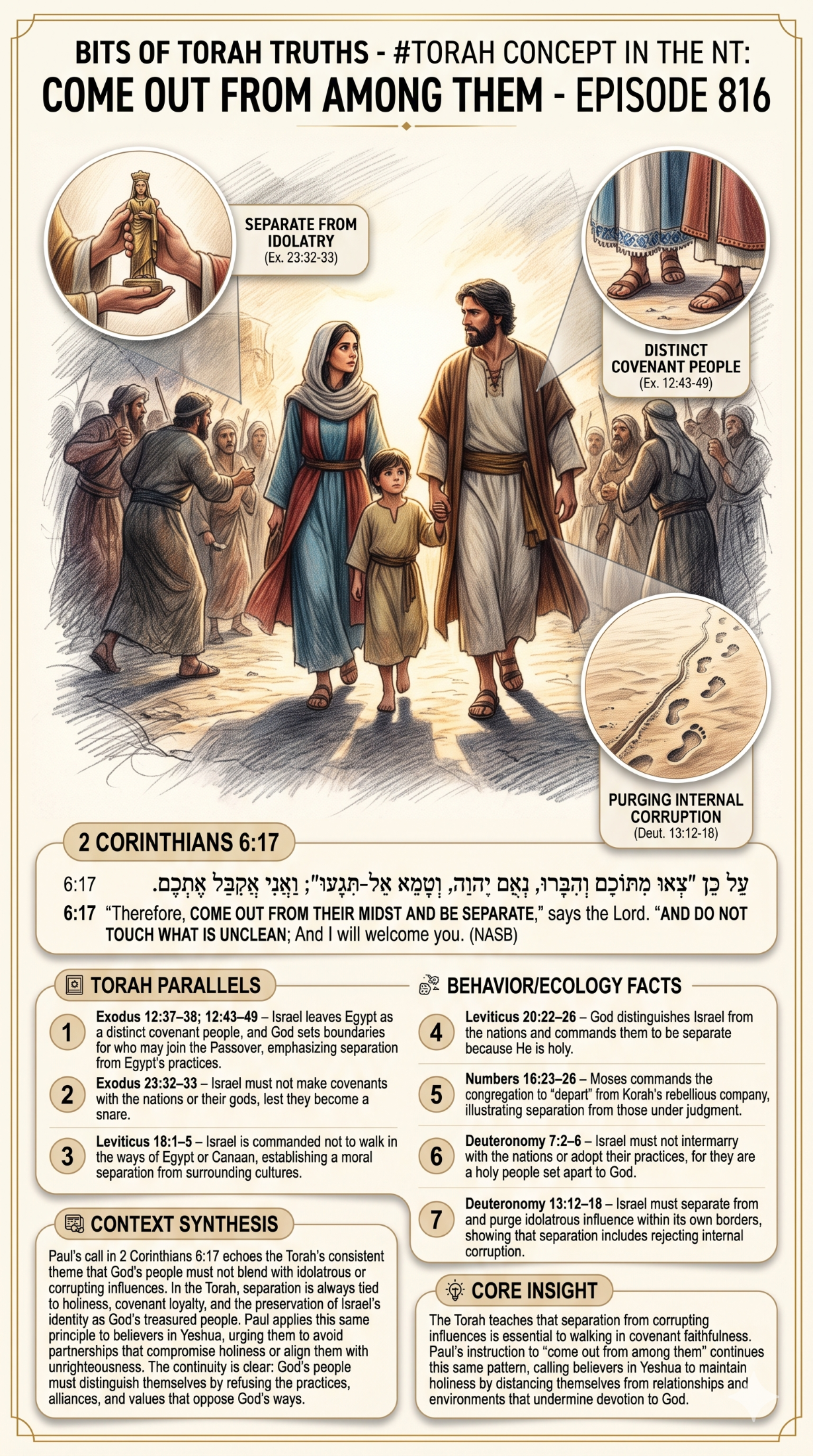
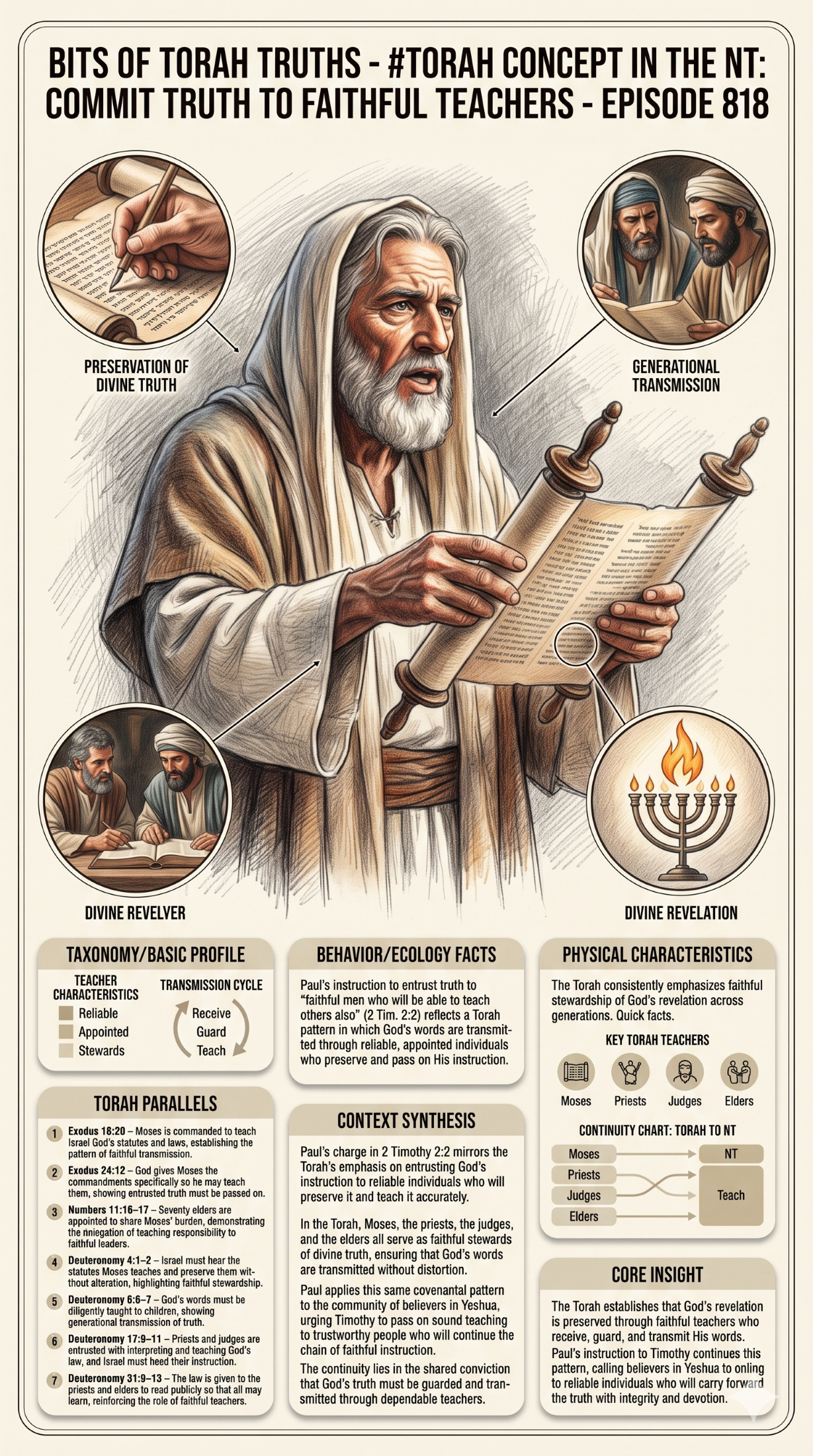
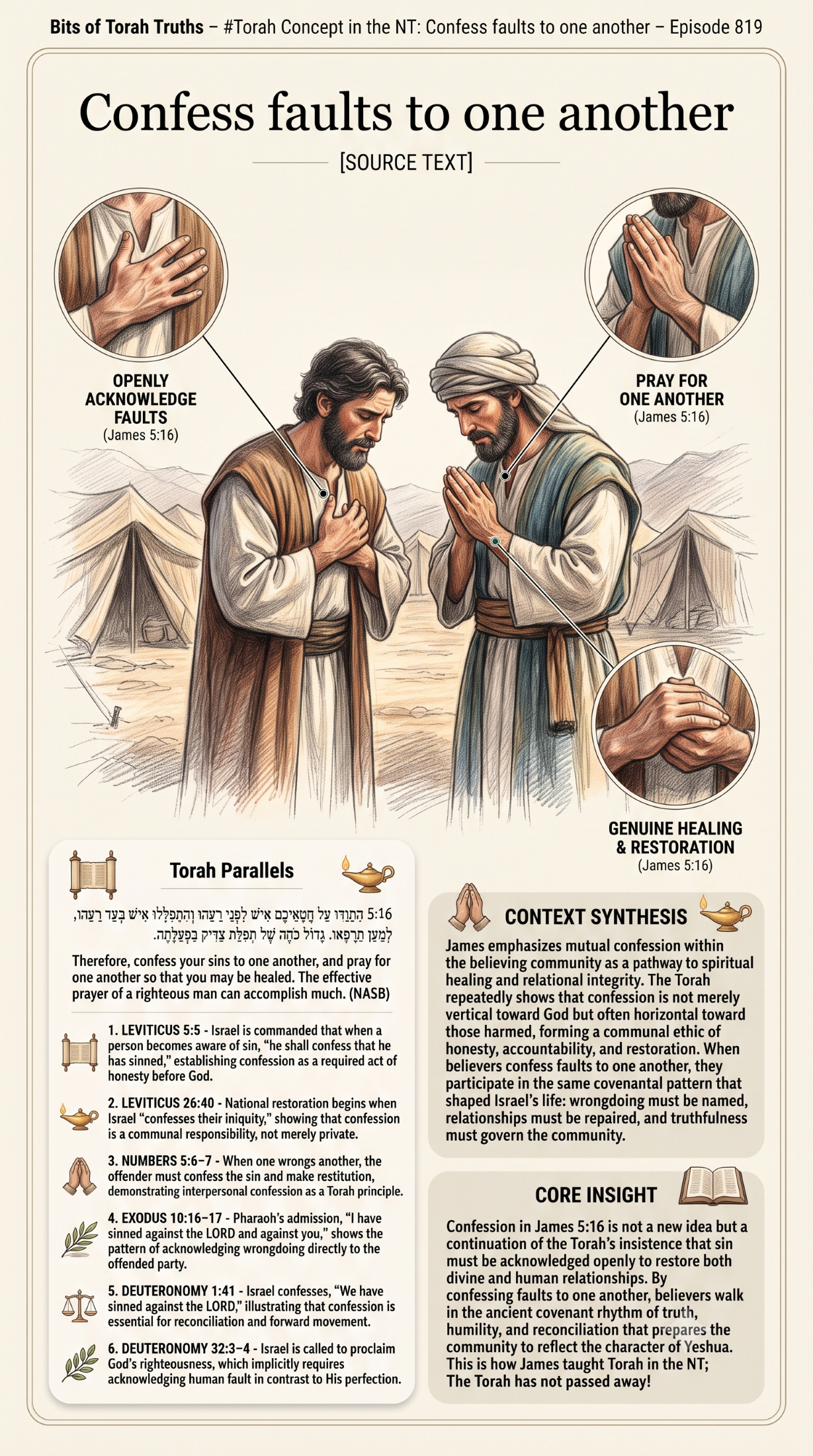
Philemon 1:14 emphasizes that genuine goodness must arise from free consent rather than external pressure or compulsion. The Torah repeatedly presents righteousness as most meaningful when it flows from a willing heart, not forced obligation.
– Torah parallels –
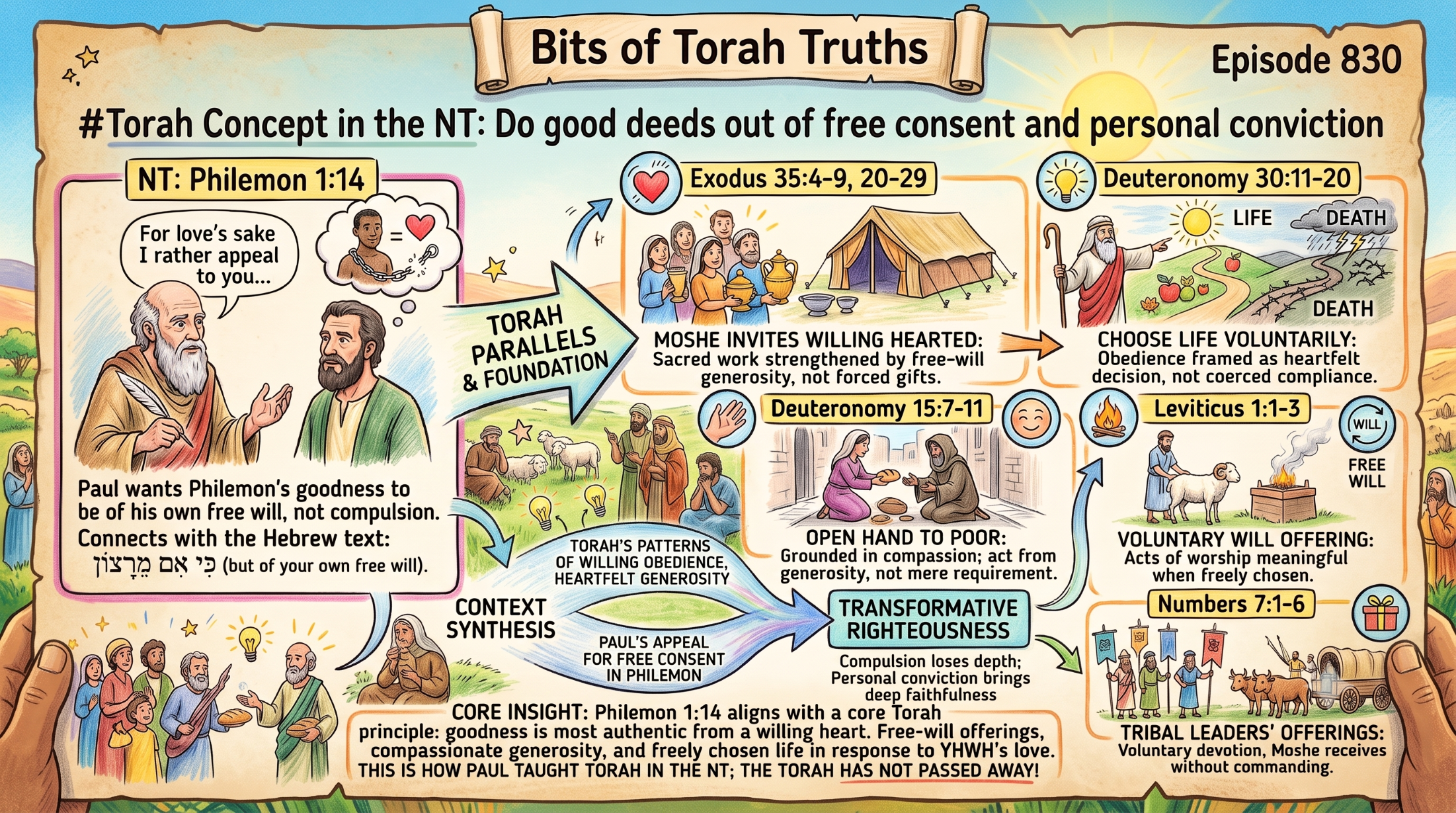
- Exodus 35:4‑9, 20‑29 – The tabernacle contributions are explicitly voluntary; Moshe invites “everyone whose heart stirred him” to give, showing that sacred work is strengthened by free‑will generosity rather than compulsion.
- Deuteronomy 30:11‑20 – Moshe sets life and death before Israel and urges them to choose life; obedience is framed as a voluntary, heartfelt decision rather than coerced compliance.
- Deuteronomy 15:7‑11 – The command to open one’s hand to the poor is grounded in compassion; Israel is urged to give generously from the heart, not merely fulfill a requirement.
- Leviticus 1:1‑3 – The burnt offering is introduced as something brought “of his own voluntary will,” establishing that certain acts of worship are meaningful precisely because they are freely chosen.
- Numbers 7:1‑6 – The tribal leaders’ offerings for the dedication of the altar are voluntary expressions of devotion; Moshe receives them without commanding them, reinforcing the value of freely given gifts.
– Context Synthesis –
Paul’s insistence that Philemon’s good deed be voluntary mirrors the Torah’s consistent emphasis on willing obedience, heartfelt generosity, and freely chosen covenant loyalty. Both the Torah and Paul highlight that righteousness loses its depth when compelled, but becomes transformative when rooted in personal conviction. The Torah’s patterns of voluntary offerings, compassionate generosity, and freely chosen obedience form the foundation for Paul’s appeal in Philemon.
– Core Insight –
Philemon 1:14 aligns with a core Torah principle: goodness is most authentic when it arises from a willing heart rather than external pressure. Paul’s desire for voluntary action reflects the Torah’s repeated emphasis on free‑will offerings, compassionate generosity, and the freely chosen path of life in response to YHWH’s love. This is how Paul taught Torah in the NT; the Torah has not passed away!
Visual Summary of Concepts the Torah in the NT