Bits of Torah Truths – #Torah Concept in the NT: Overcome evil with good – Episode 916
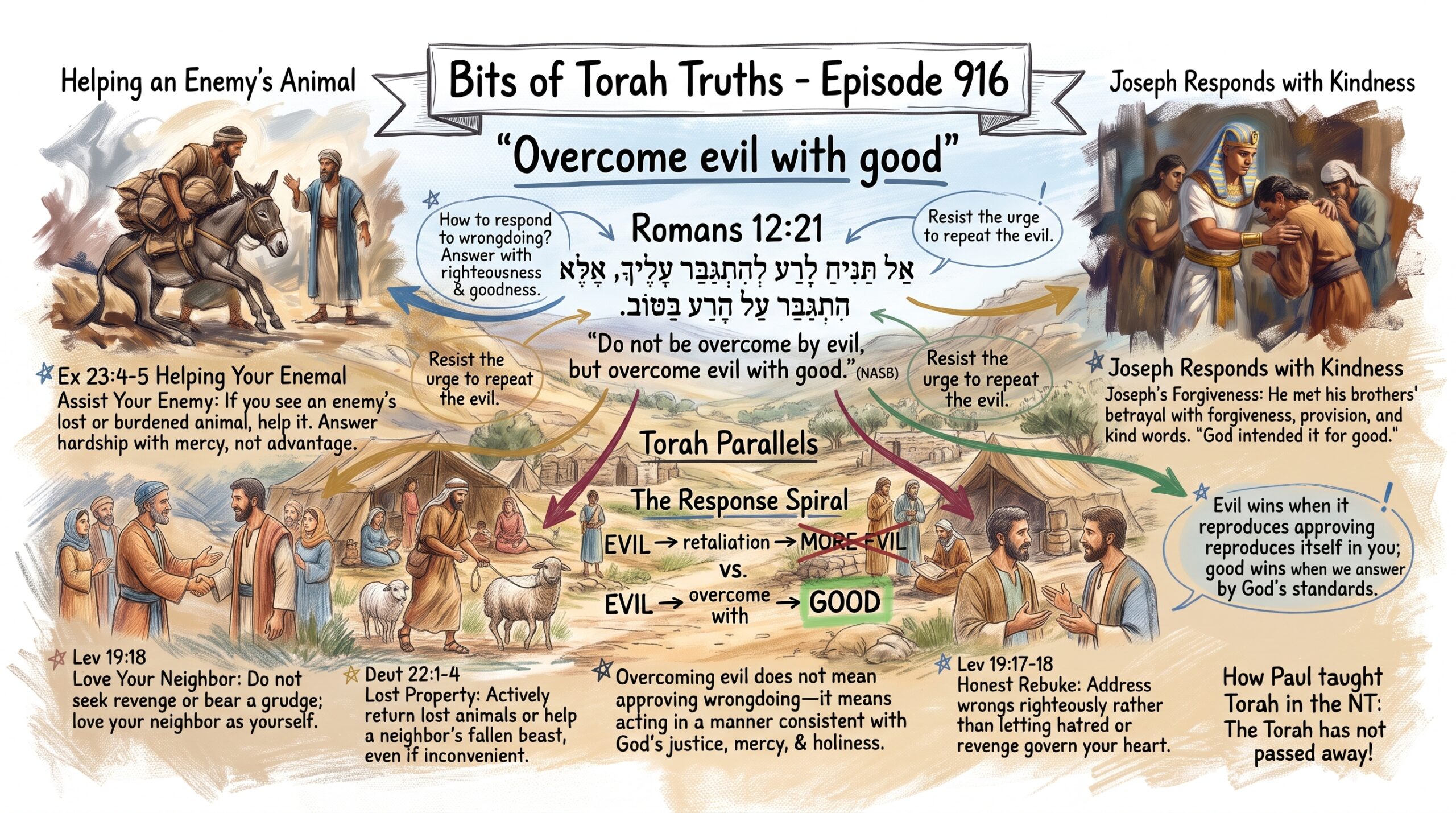
Romans 12:21
12:21 אַל תַּנִּיחַ לָרַע לְהִתְגַּבֵּר עָלֶיךָ, אֶלָּא הִתְגַּבֵּר עַל הָרַע בַּטּוֹב.
#torah #torahwisdom #torahtruth #torahforlife #torah4you #torahtruth
Romans 12:21
12:21 Do not be overcome by evil, but overcome evil with good. (NASB)
https://www.matsati.com/index.php/category/bits-of-torah-truths/
Romans 12:21 teaches that believers should not allow evil to dictate their response, but should answer wrongdoing with righteousness and goodness. The Torah contains multiple examples and commands that encourage mercy, justice, kindness, and restraint, demonstrating that good is God’s prescribed response to evil.
– Torah parallels –
- Exodus 23:4-5 – If a person encountered an enemy’s lost animal or burdened animal, he was commanded to help rather than seek advantage from his enemy’s hardship.
- Leviticus 19:18 – Israel was instructed not to take vengeance or bear a grudge, but to love a neighbor as oneself.
- Deuteronomy 22:1-4 – Israelites were required to return lost property and assist others in need, even when doing so was inconvenient.
- Genesis 50:19-21 – Joseph responded to the evil done by his brothers with forgiveness, provision, and kindness rather than retaliation.
- Leviticus 19:17-18 – God’s people were instructed to address wrongs honestly and righteously rather than allowing hatred and revenge to govern their actions.
– Context Synthesis –
In Romans 12:21, Paul urges believers to resist being conquered by evil attitudes such as revenge, bitterness, and hostility. Instead, they are to overcome evil through righteous conduct that reflects God’s character. The Torah repeatedly reveals this principle. Commands concerning enemies, neighbors, and those in need emphasize acts of mercy, practical assistance, and restraint. The account of Joseph provides a living example: although he suffered genuine injustice, he chose reconciliation and provision rather than vengeance. Throughout the Torah, overcoming evil does not mean approving wrongdoing; rather, it means responding in a manner consistent with God’s justice, mercy, and holiness.
– Core Insight –
The Torah teaches that God’s people are not to mirror the evil directed toward them. Instead, they are called to pursue actions that reflect righteousness, compassion, and covenant faithfulness. Romans 12:21 expresses this same principle by teaching that evil gains victory when it reproduces itself in others, whereas good prevails when believers respond according to God’s standards rather than human impulses. The faithful response to evil is not retaliation, but conduct that advances God’s purposes and honors Him. This is how Paul taught Torah in the NT; the Torah has not passed away!
This report is based on the plain-text meaning of the cited Torah passages and the immediate context of Romans 12:21. The analysis draws upon explicit scriptural themes of mercy, non-retaliation, justice, reconciliation, and covenant faithfulness, distinguishing direct biblical evidence from interpretive synthesis while seeking accuracy, transparency, and fidelity to the biblical text.
Visual Summary of Concepts the Torah in the NT