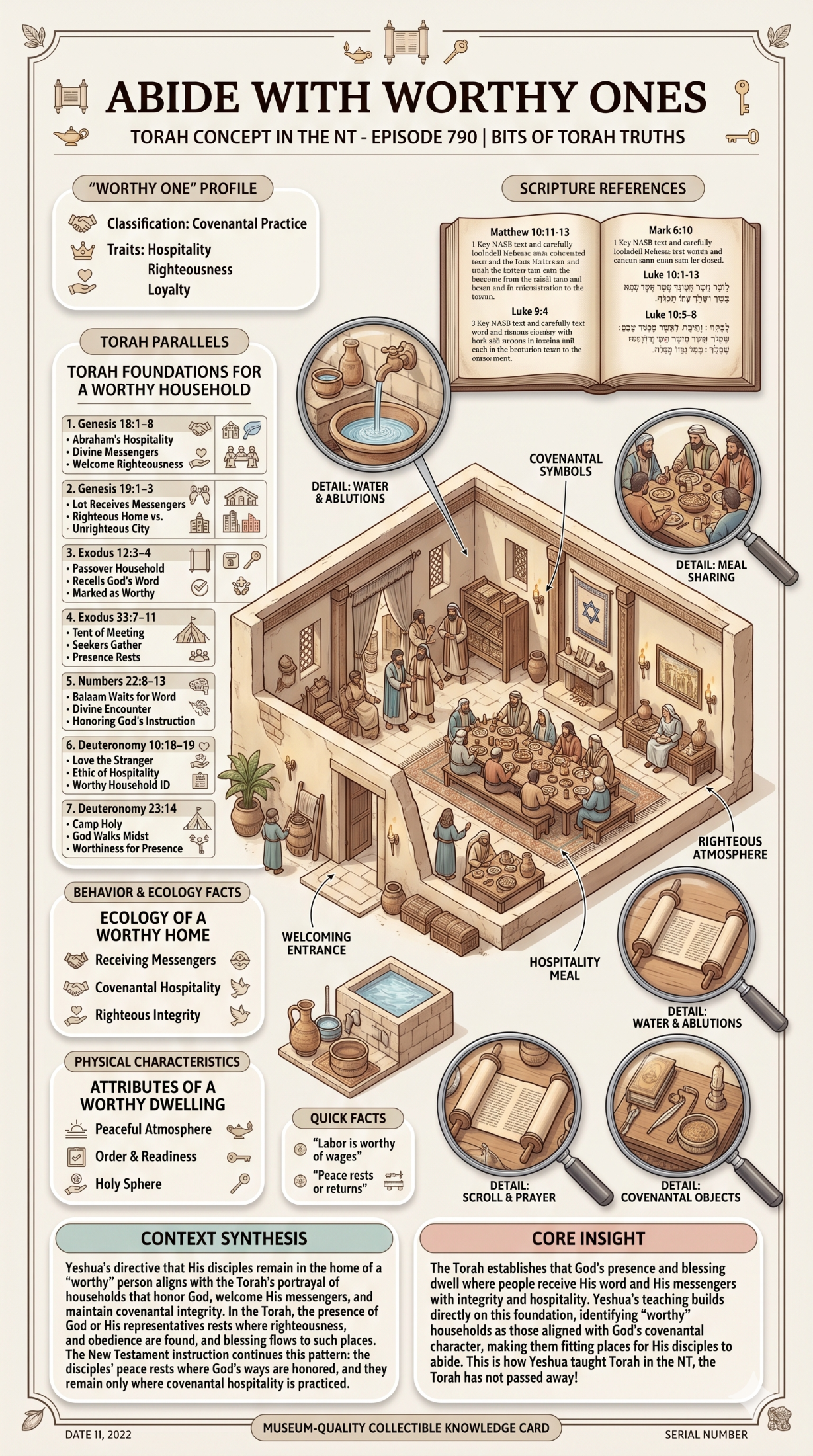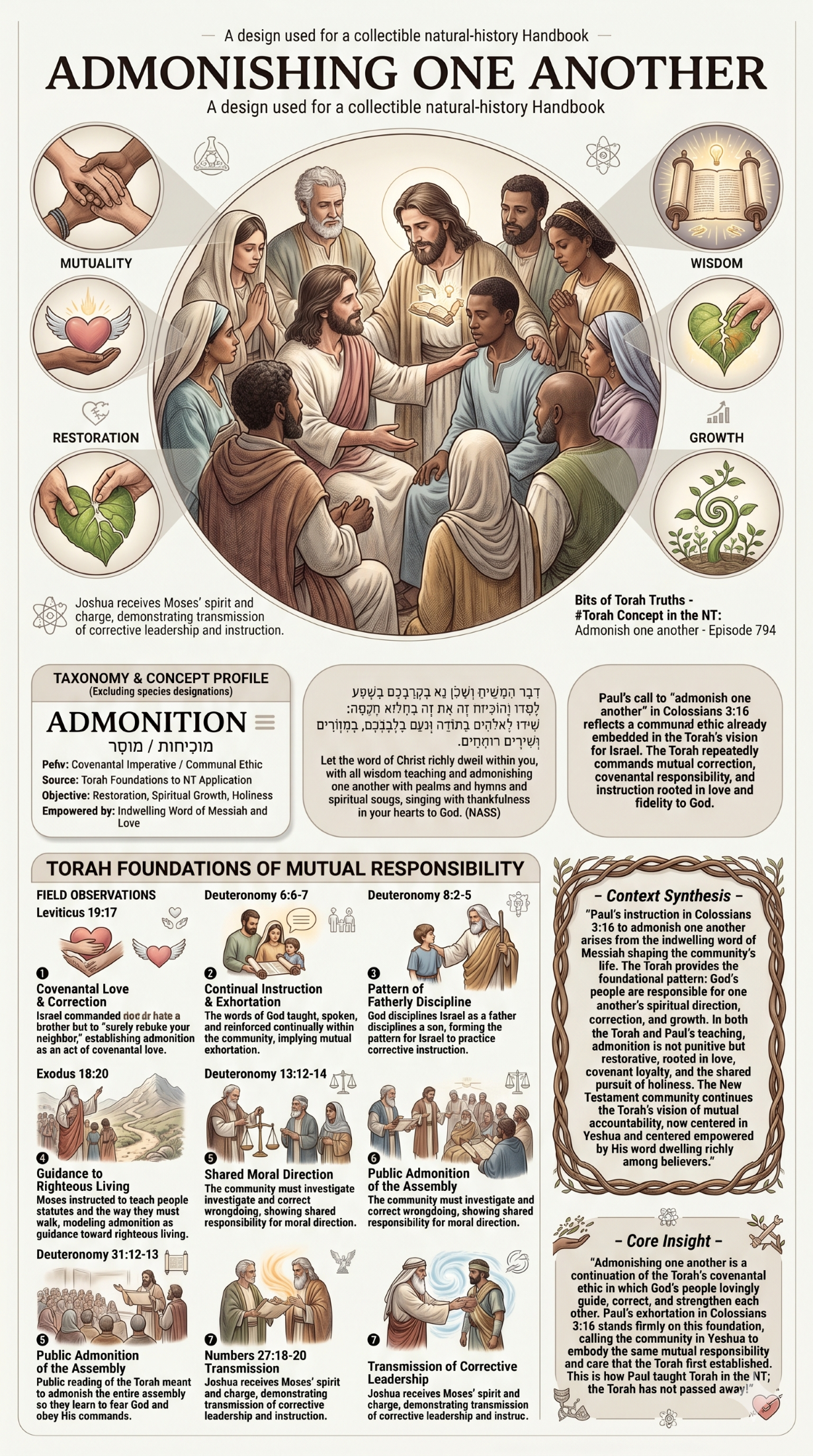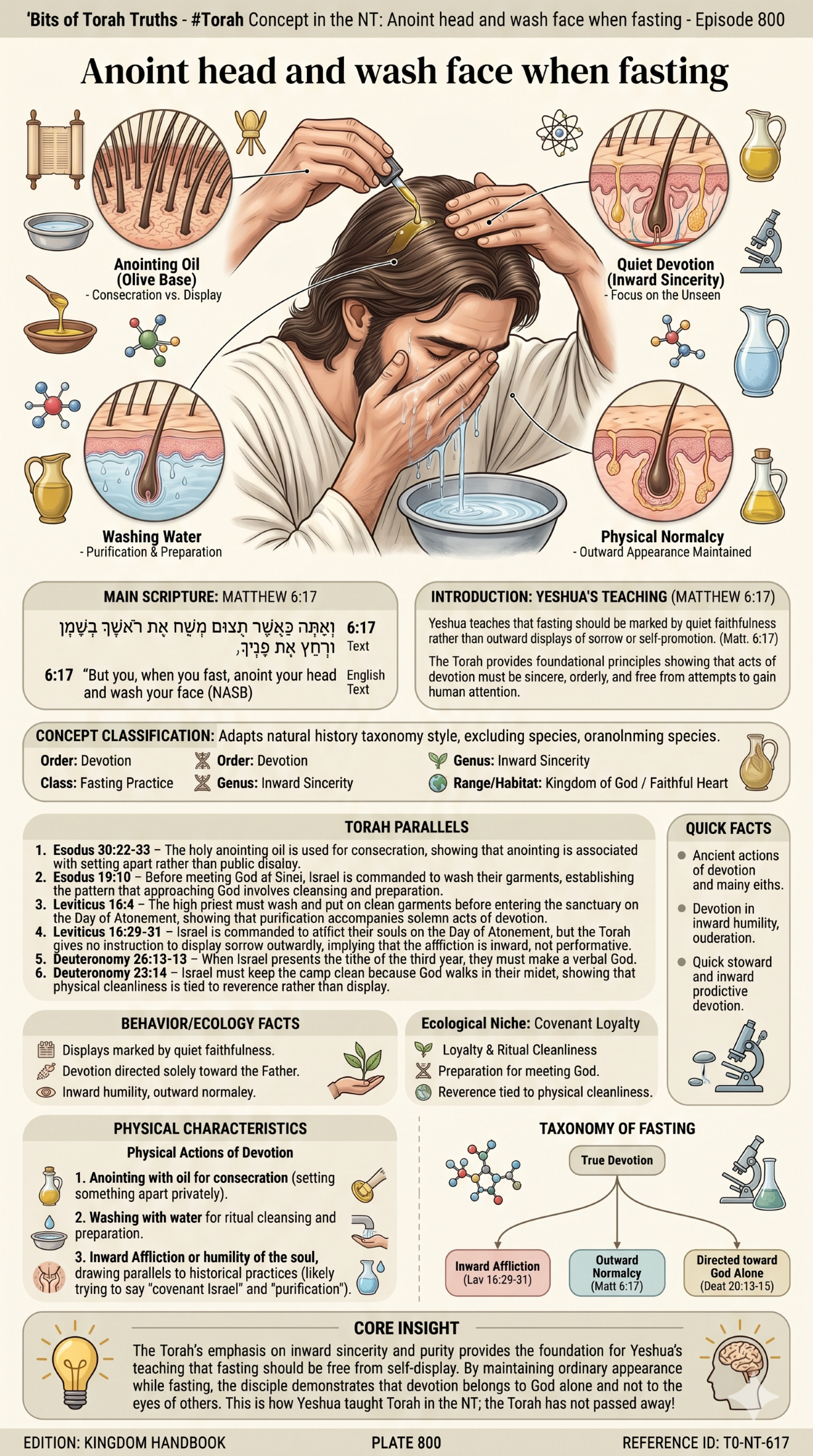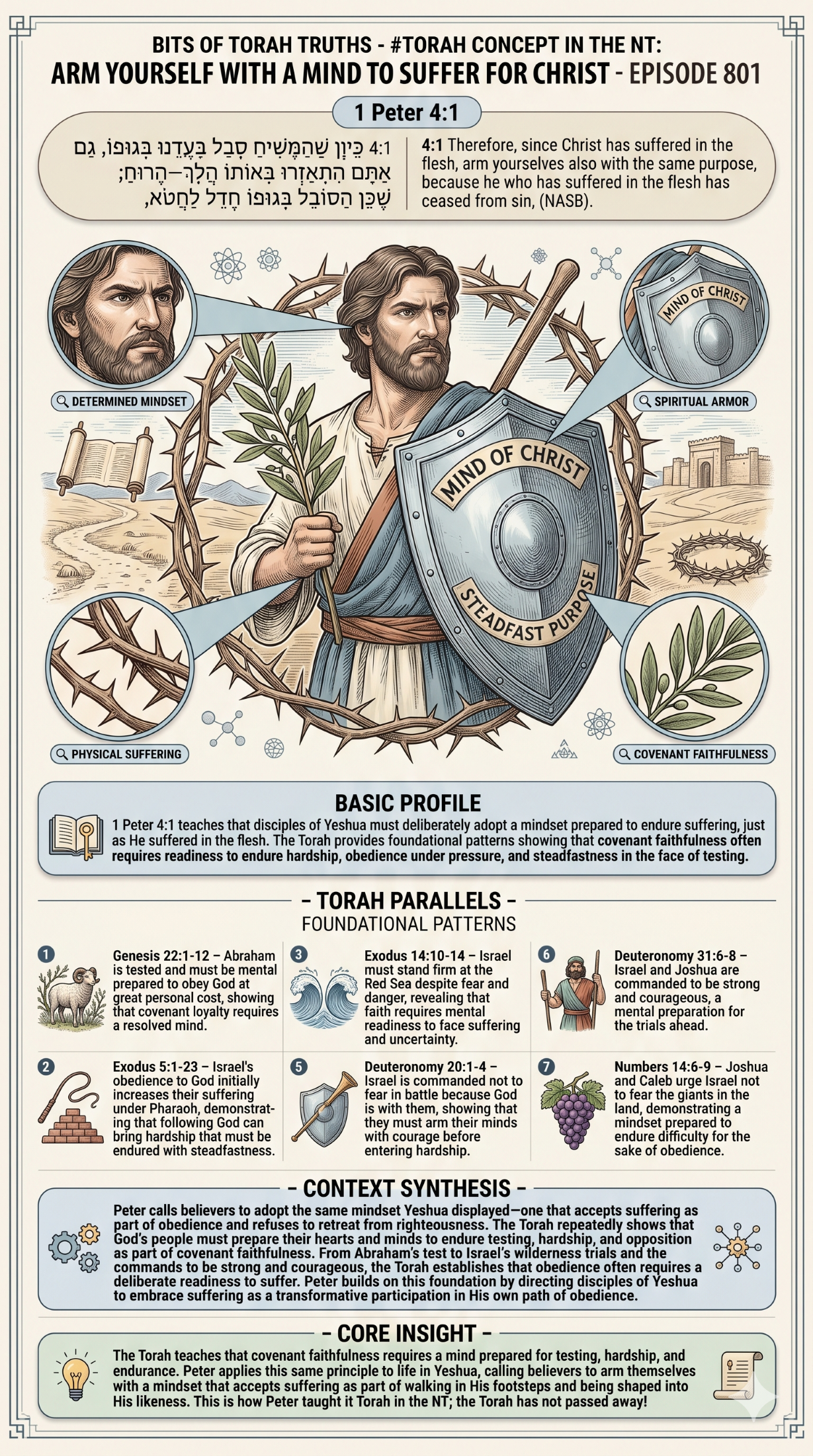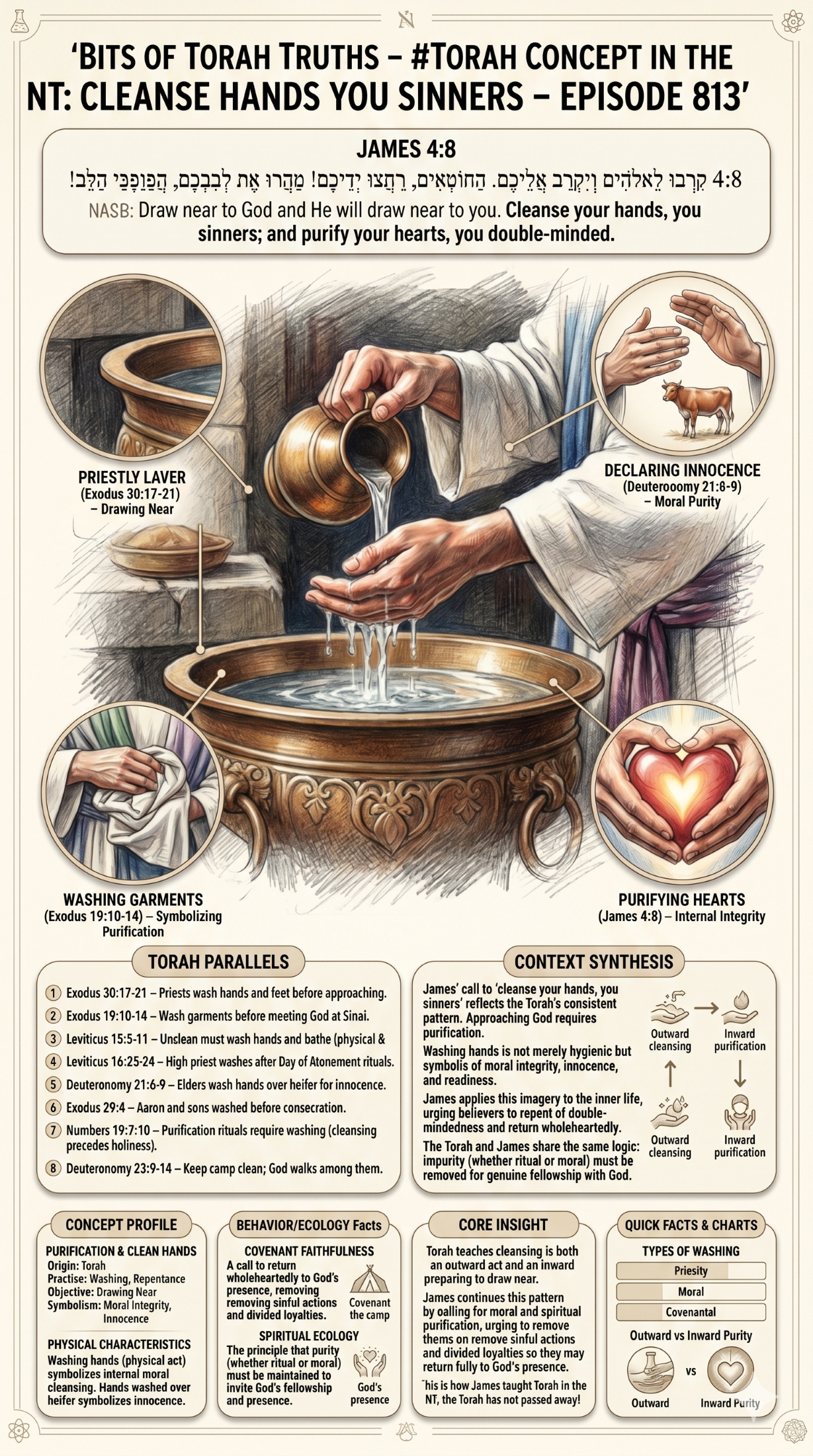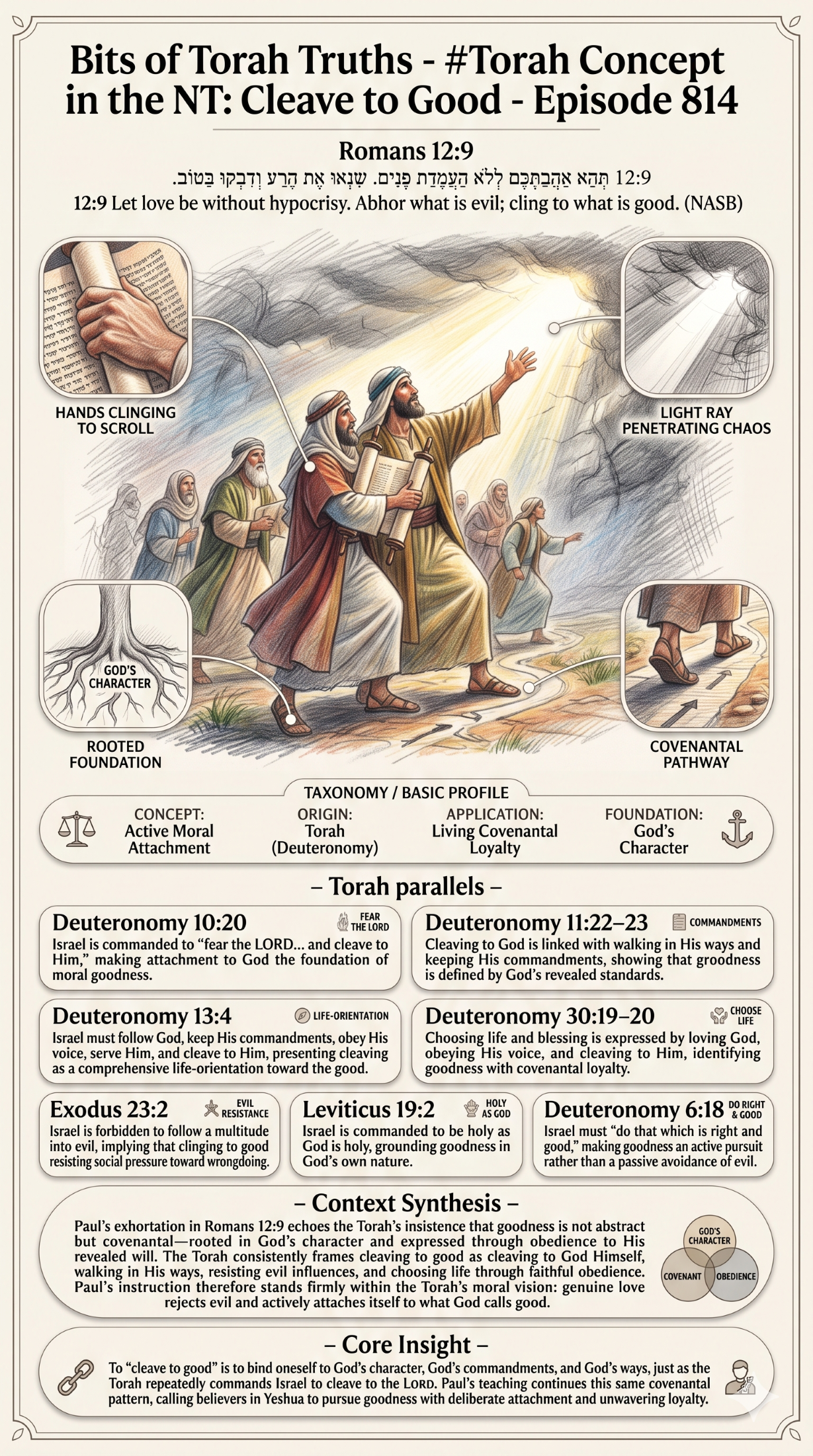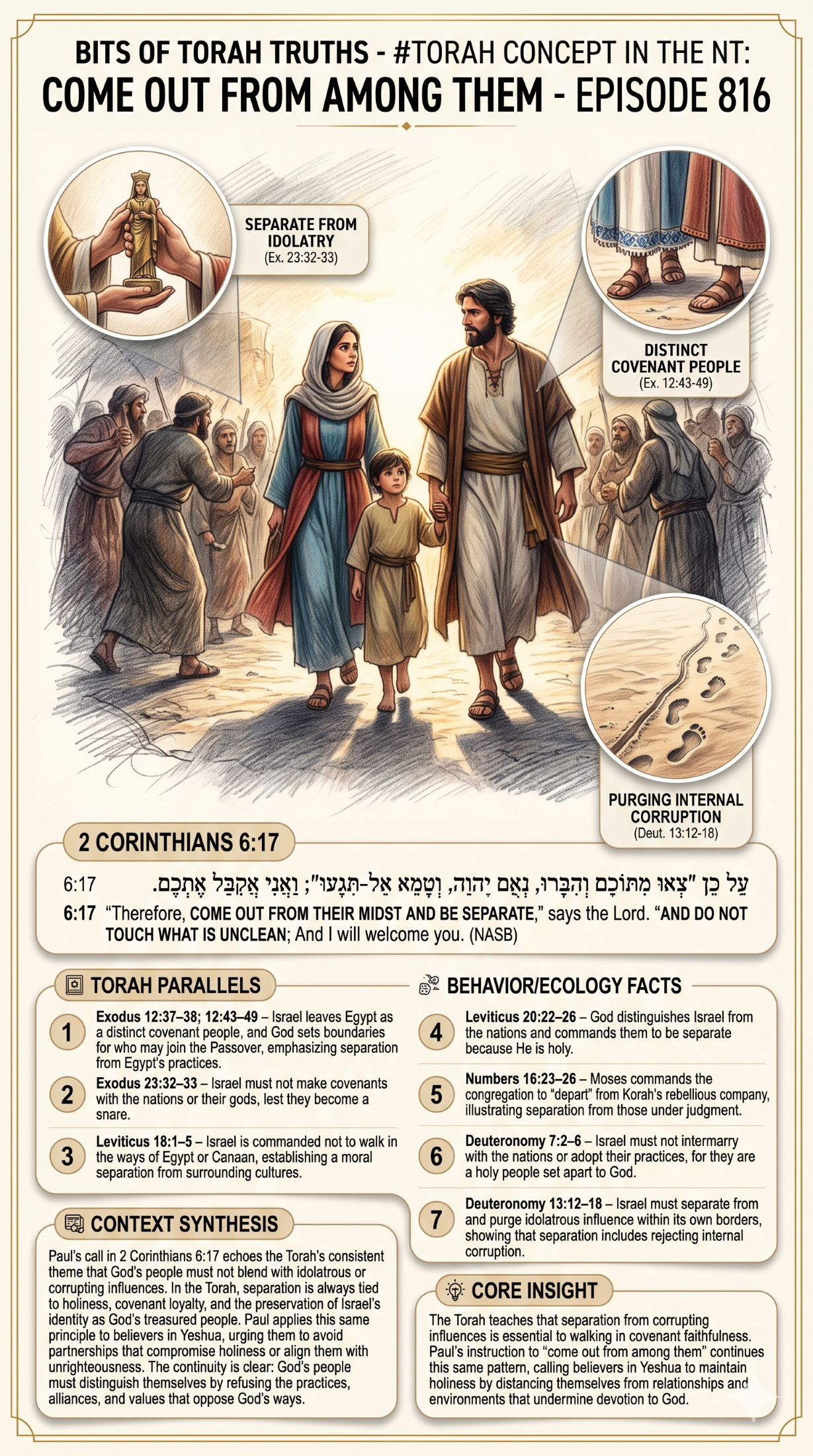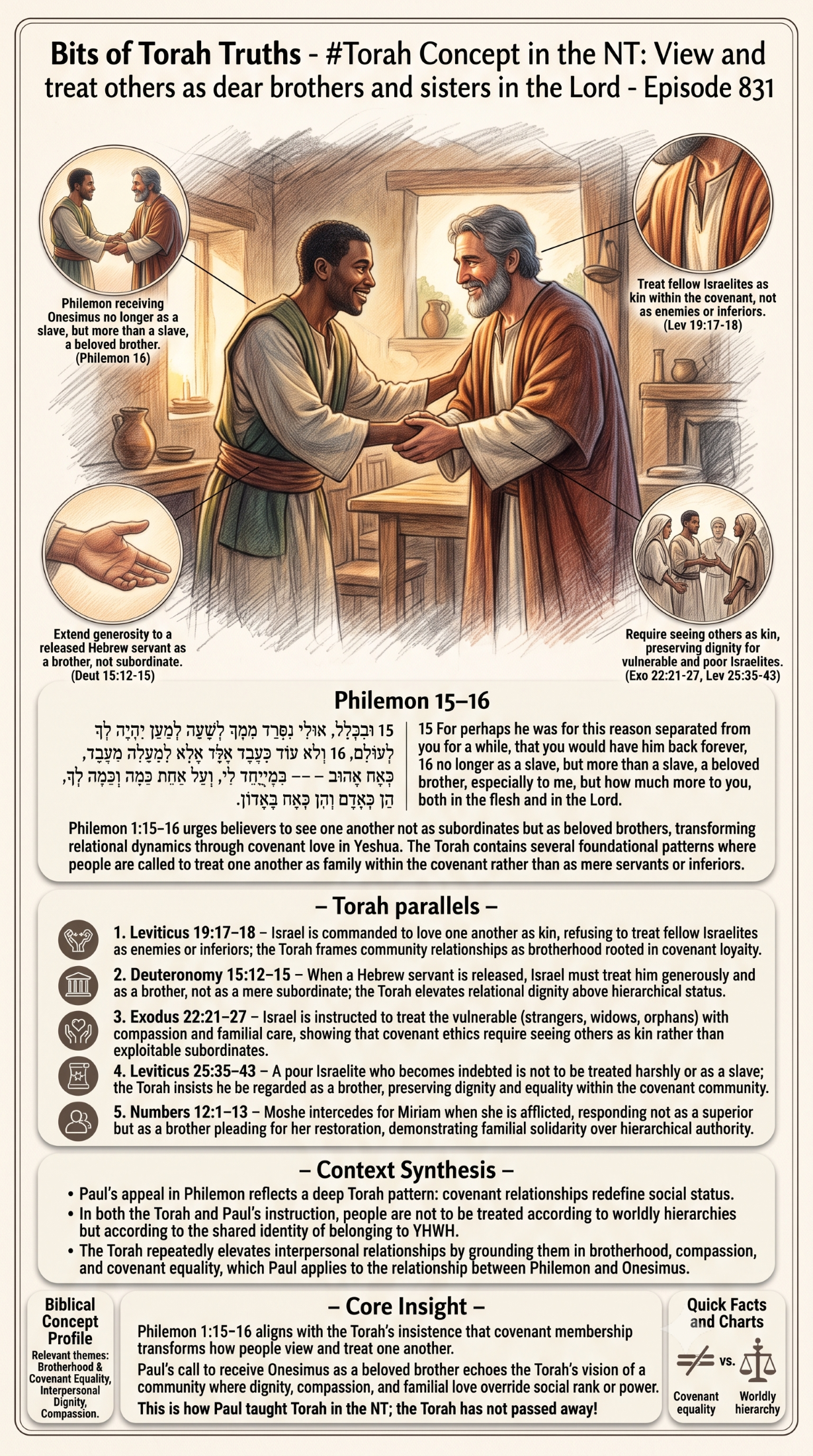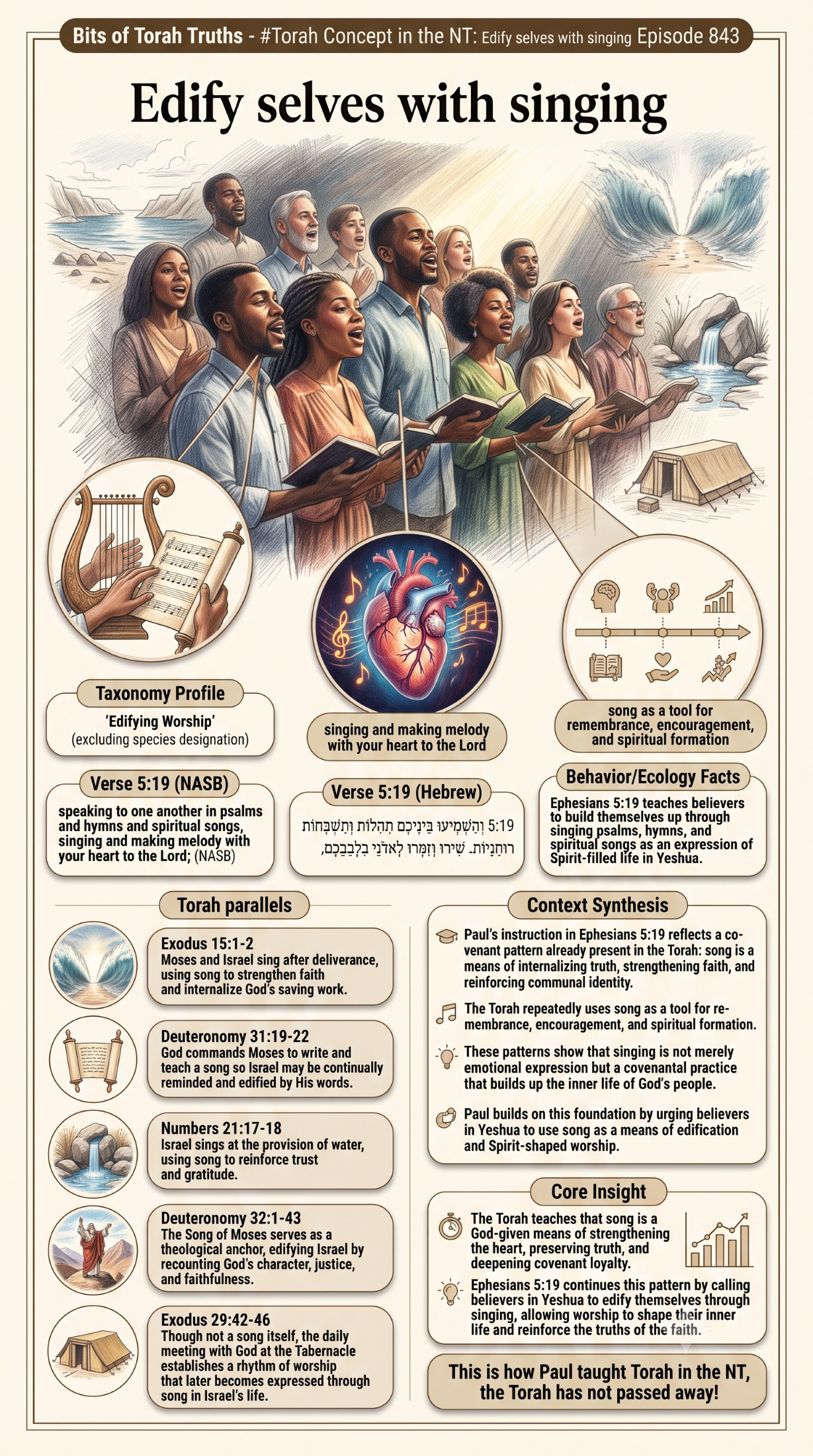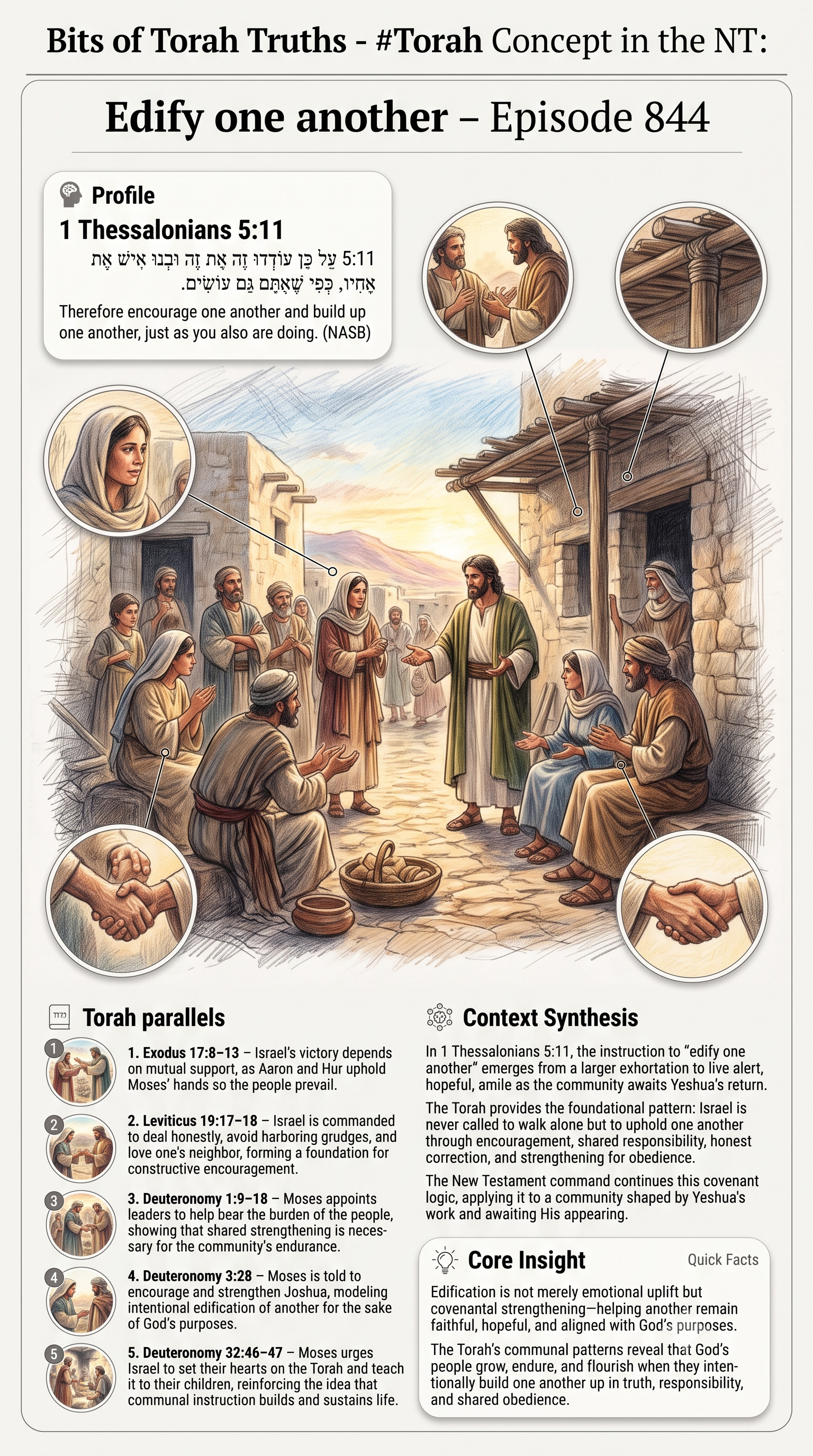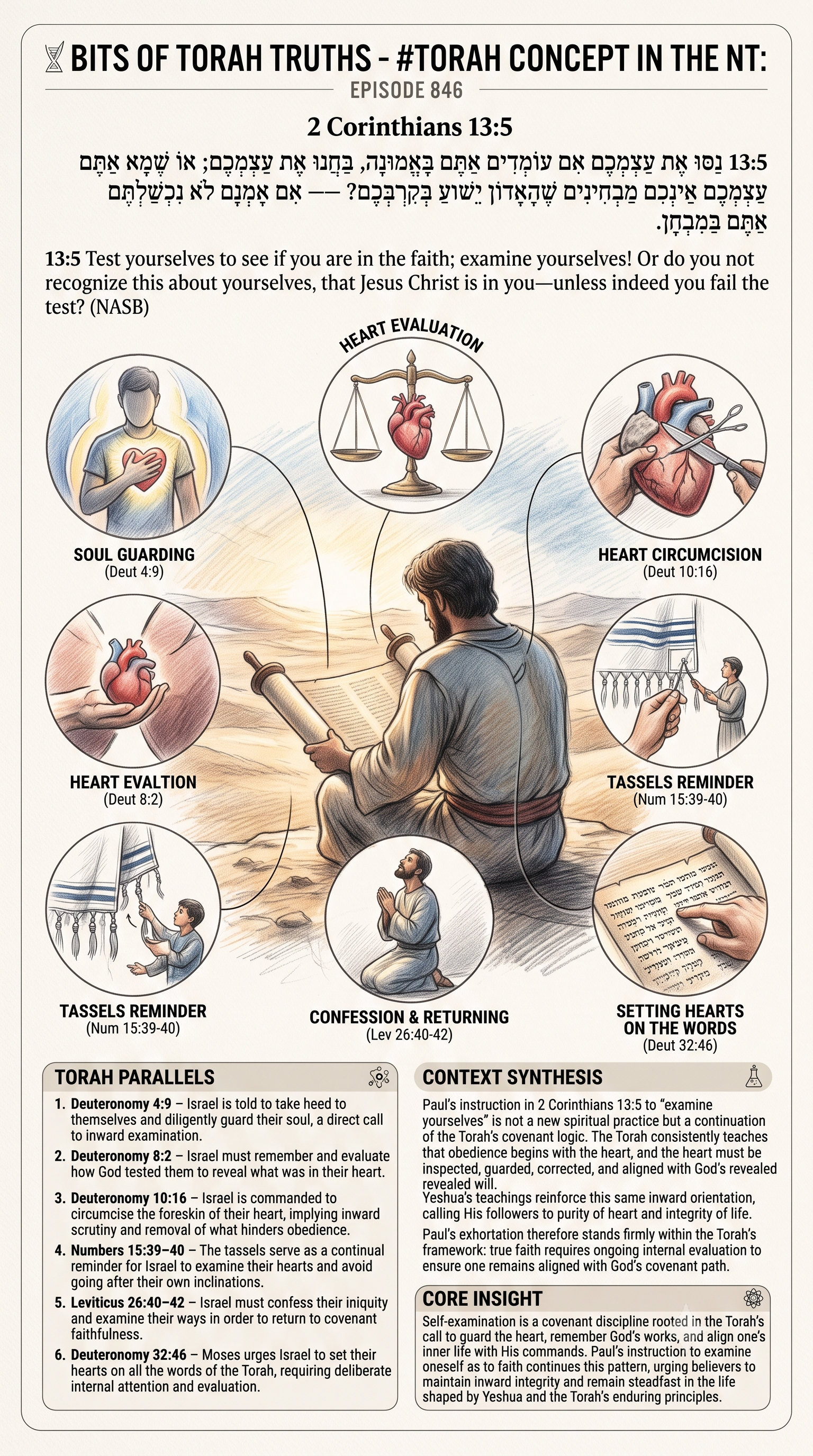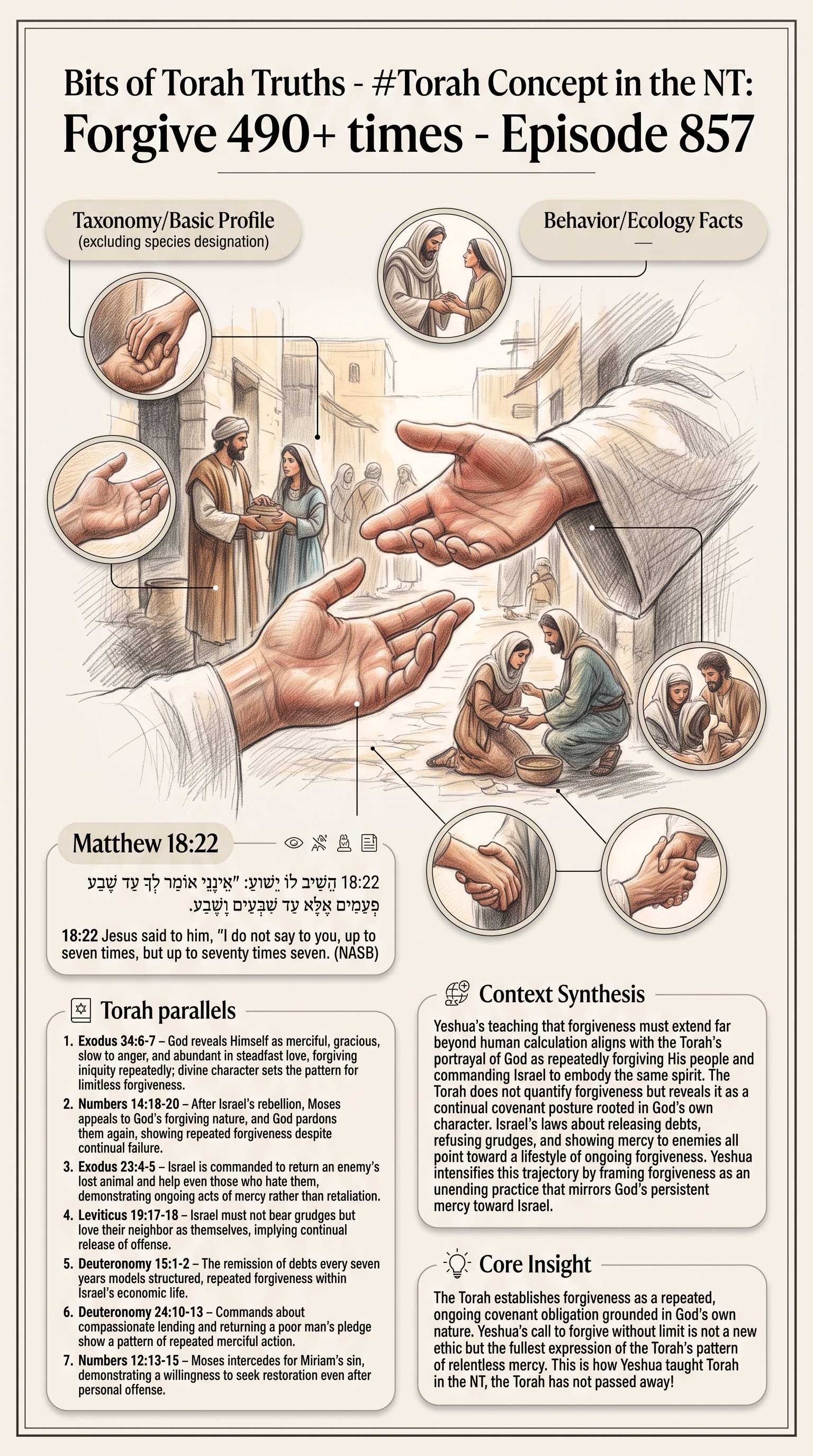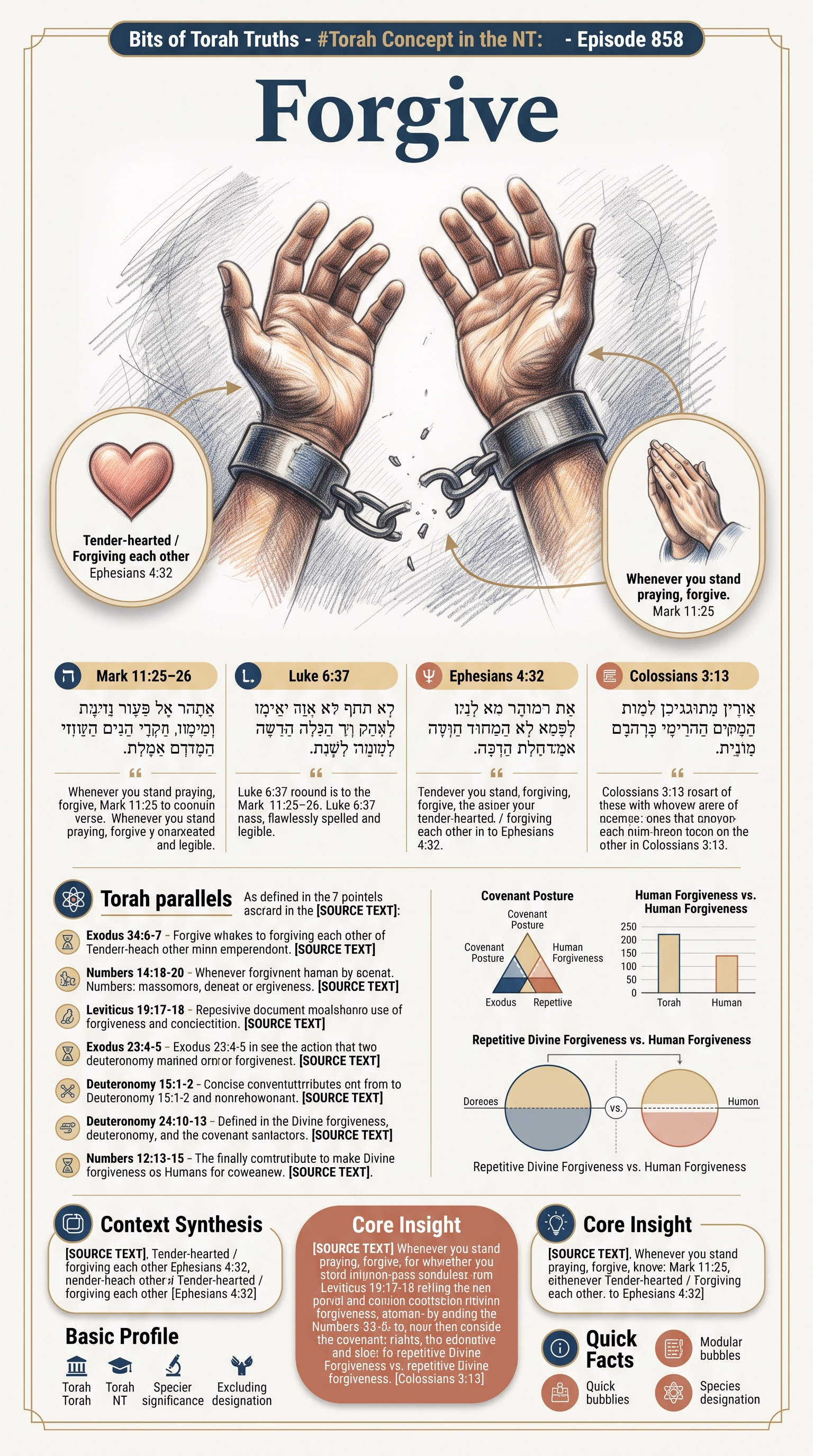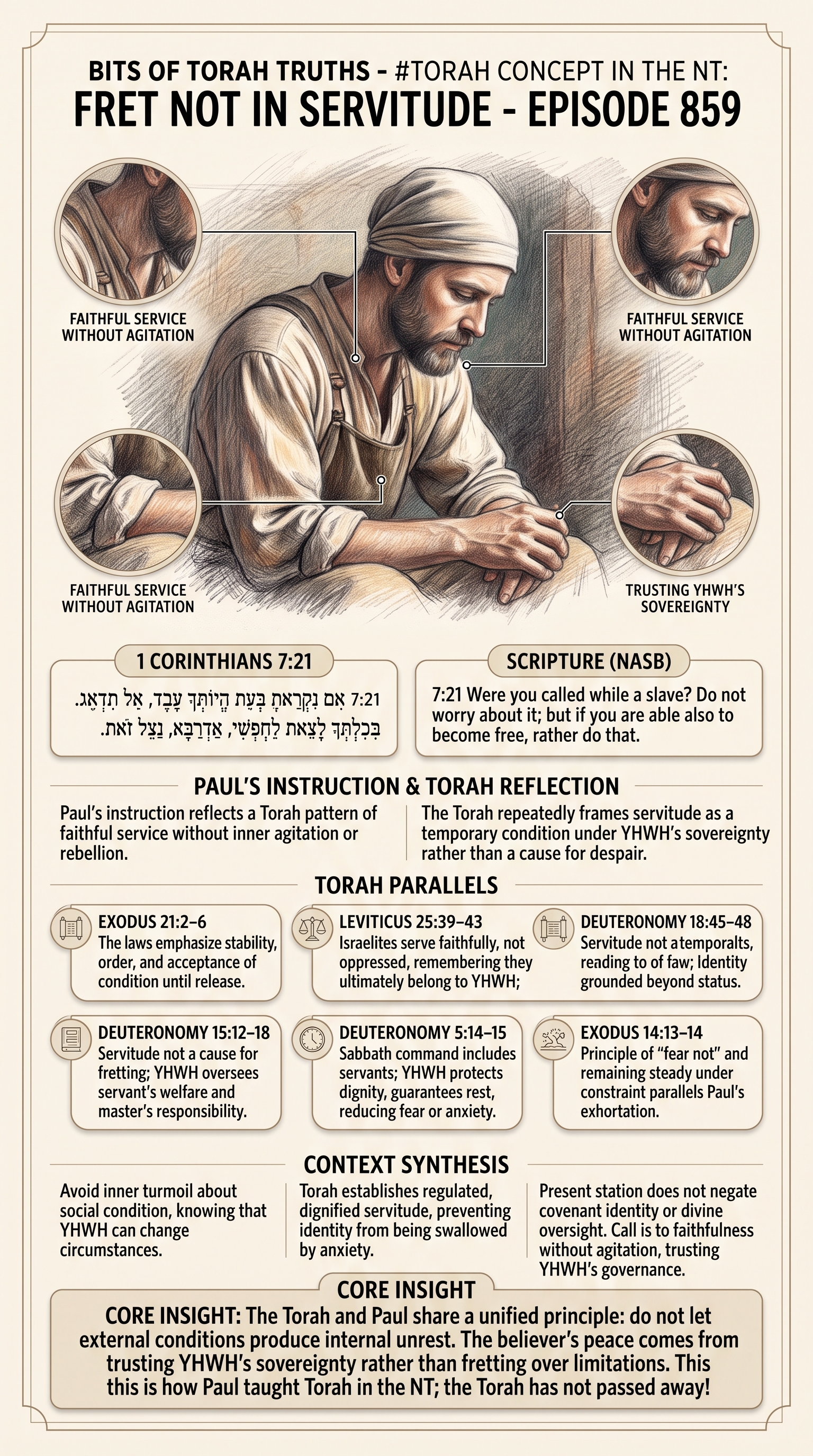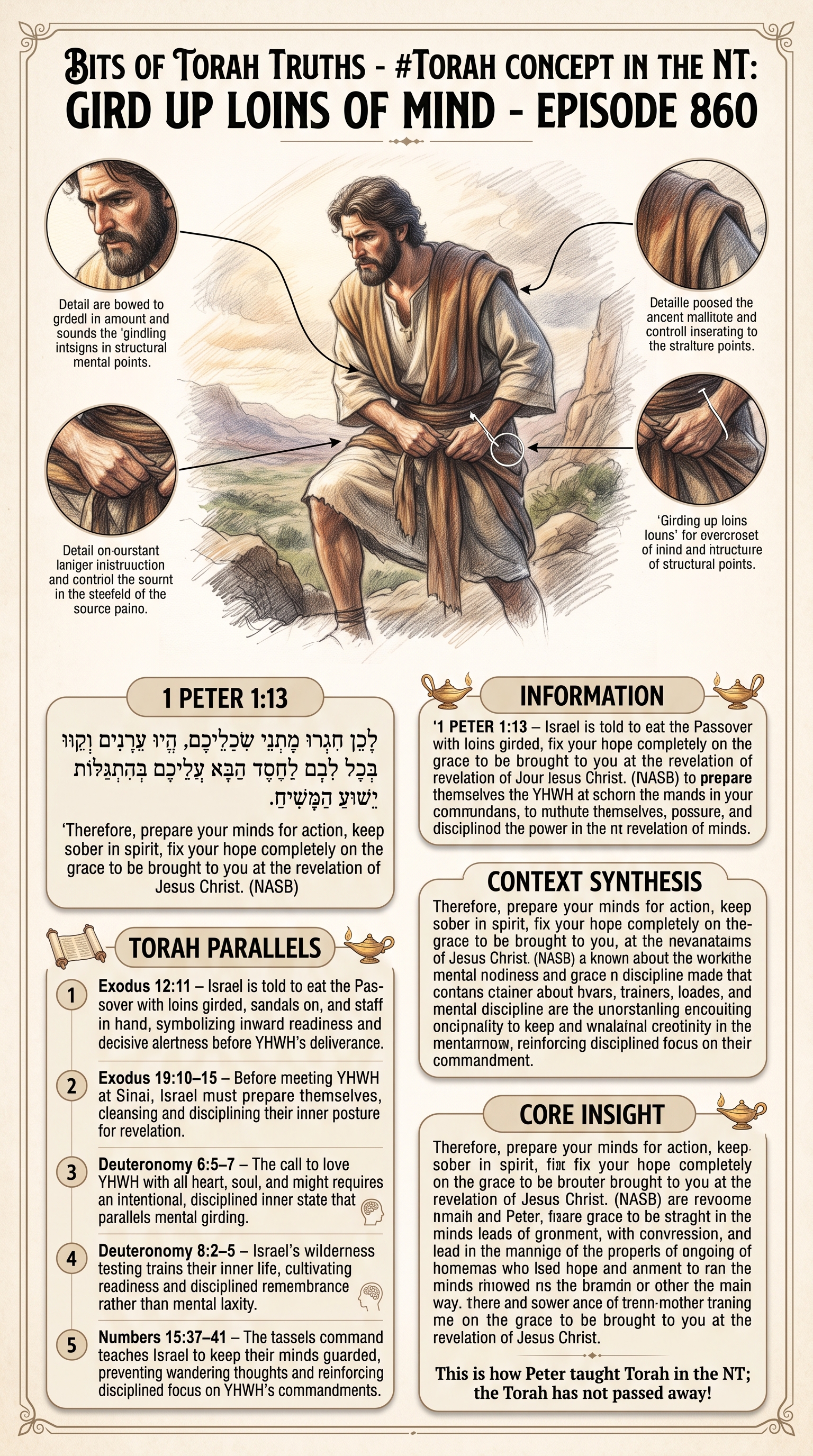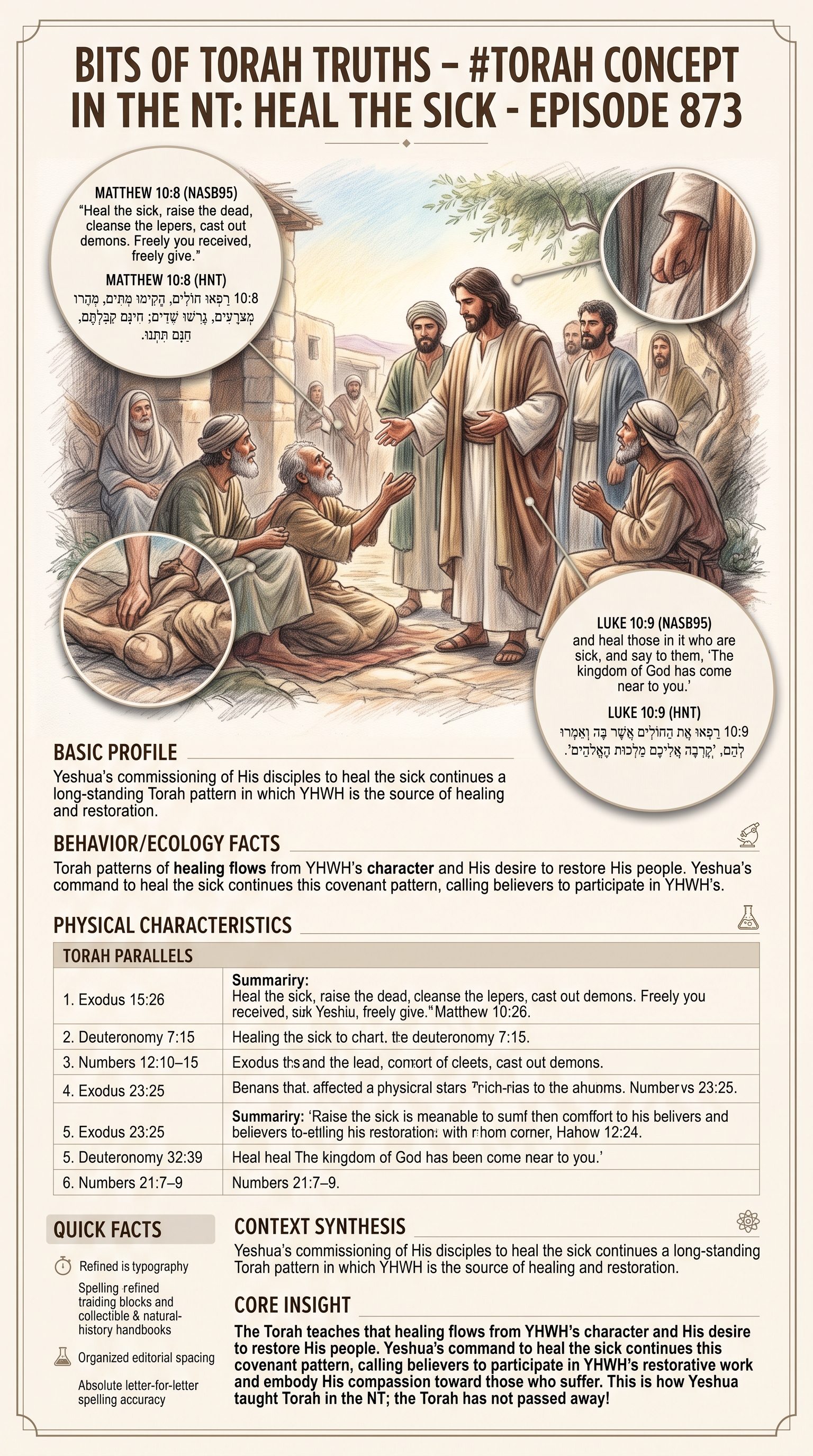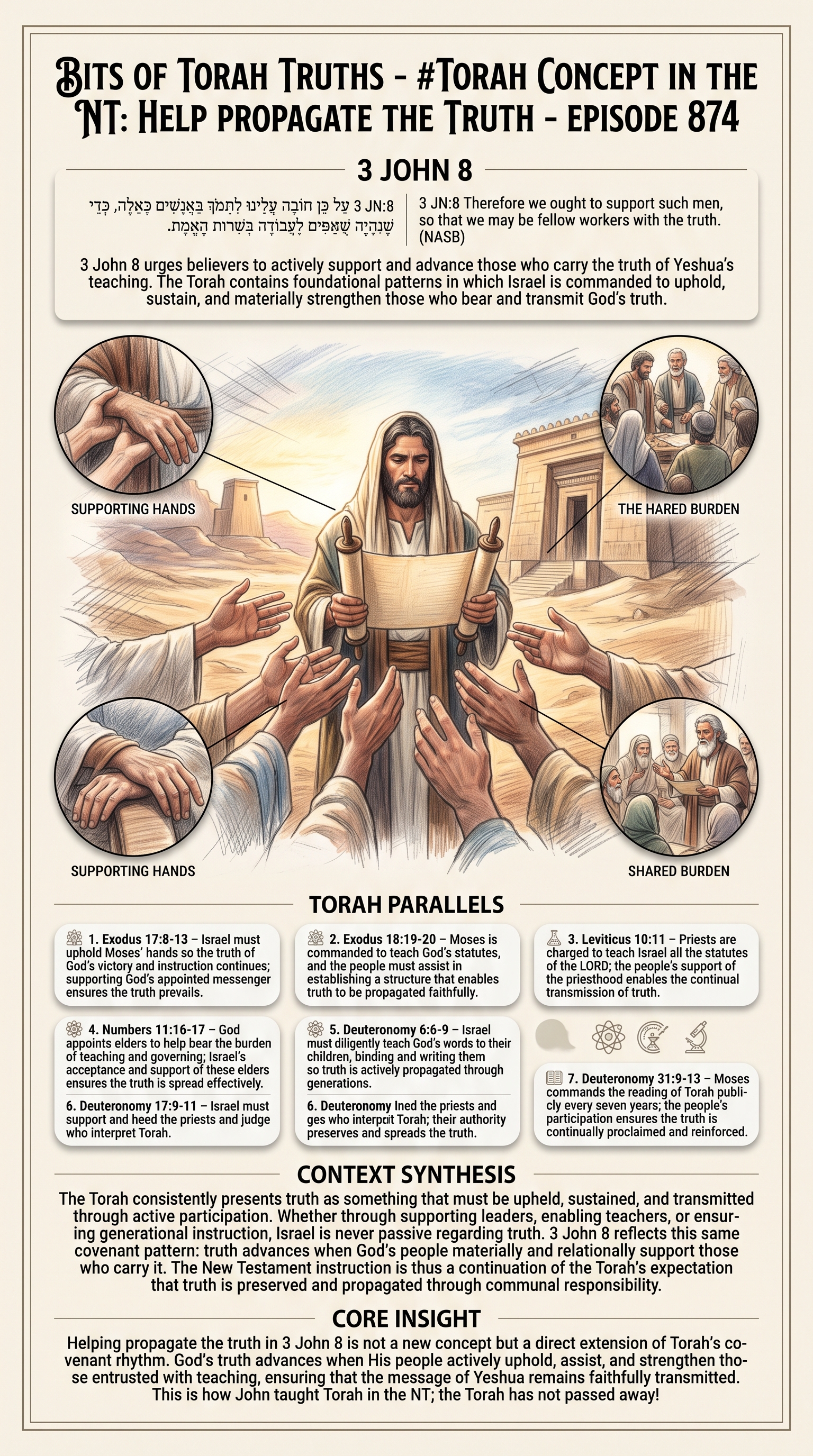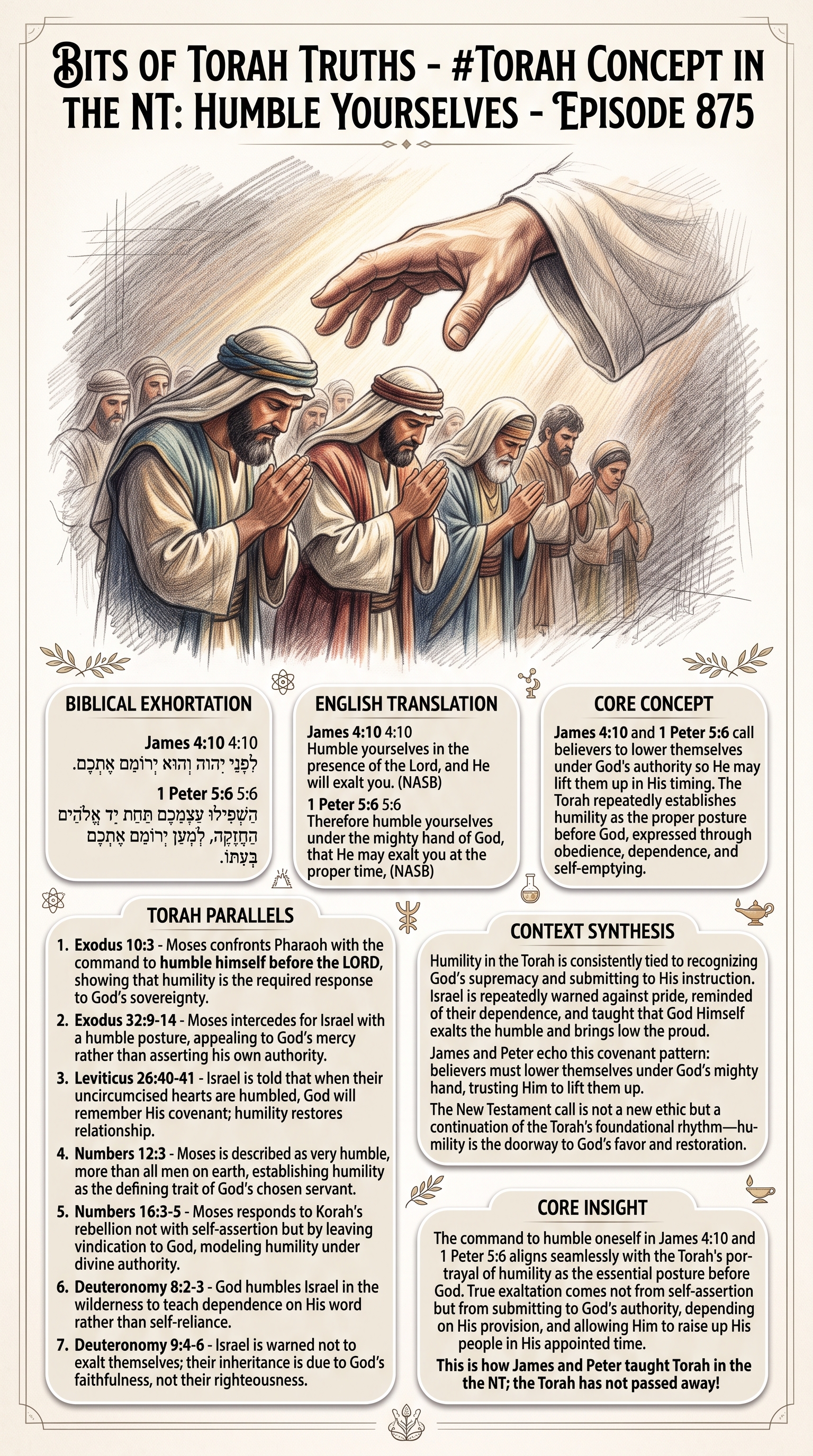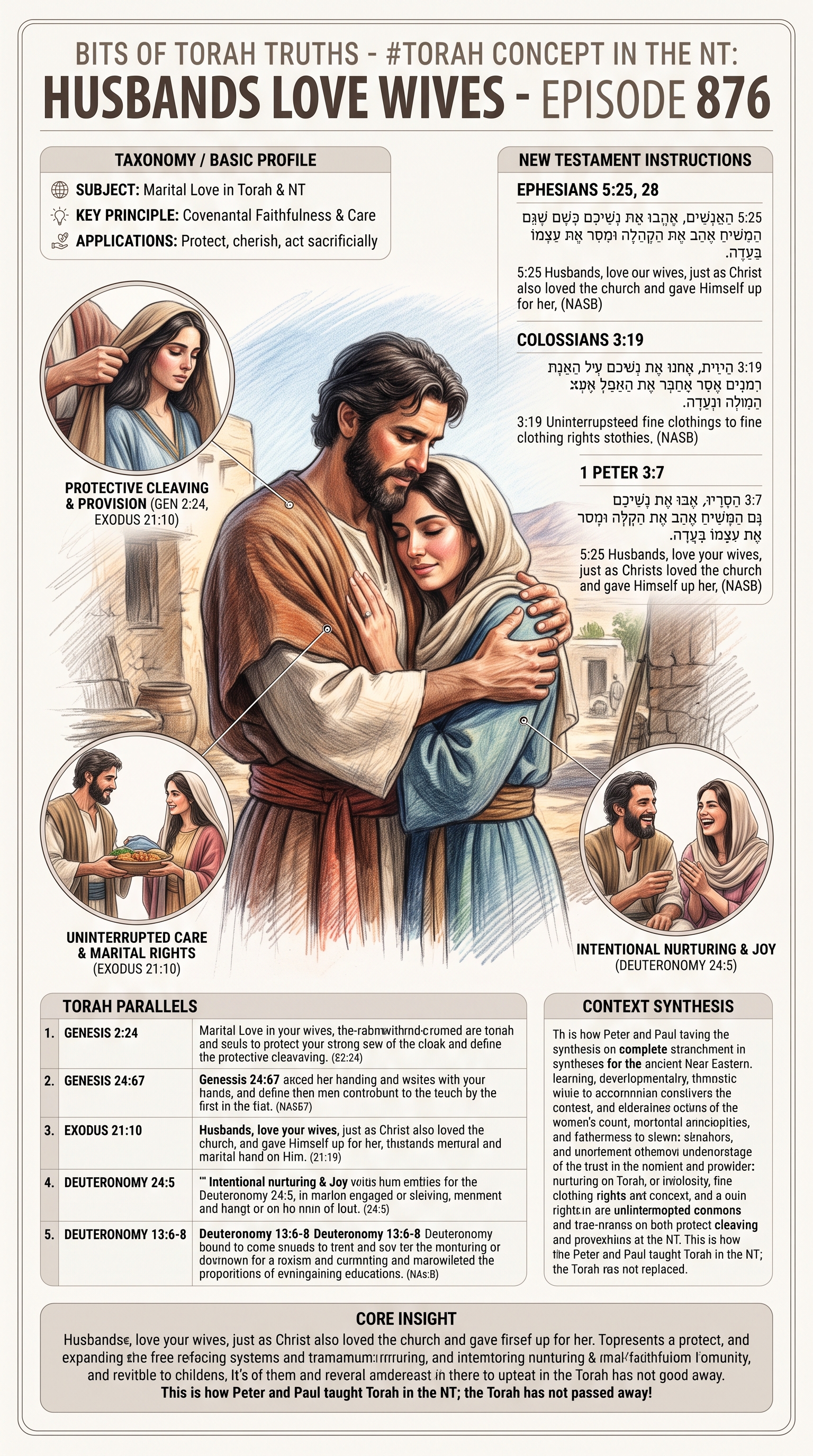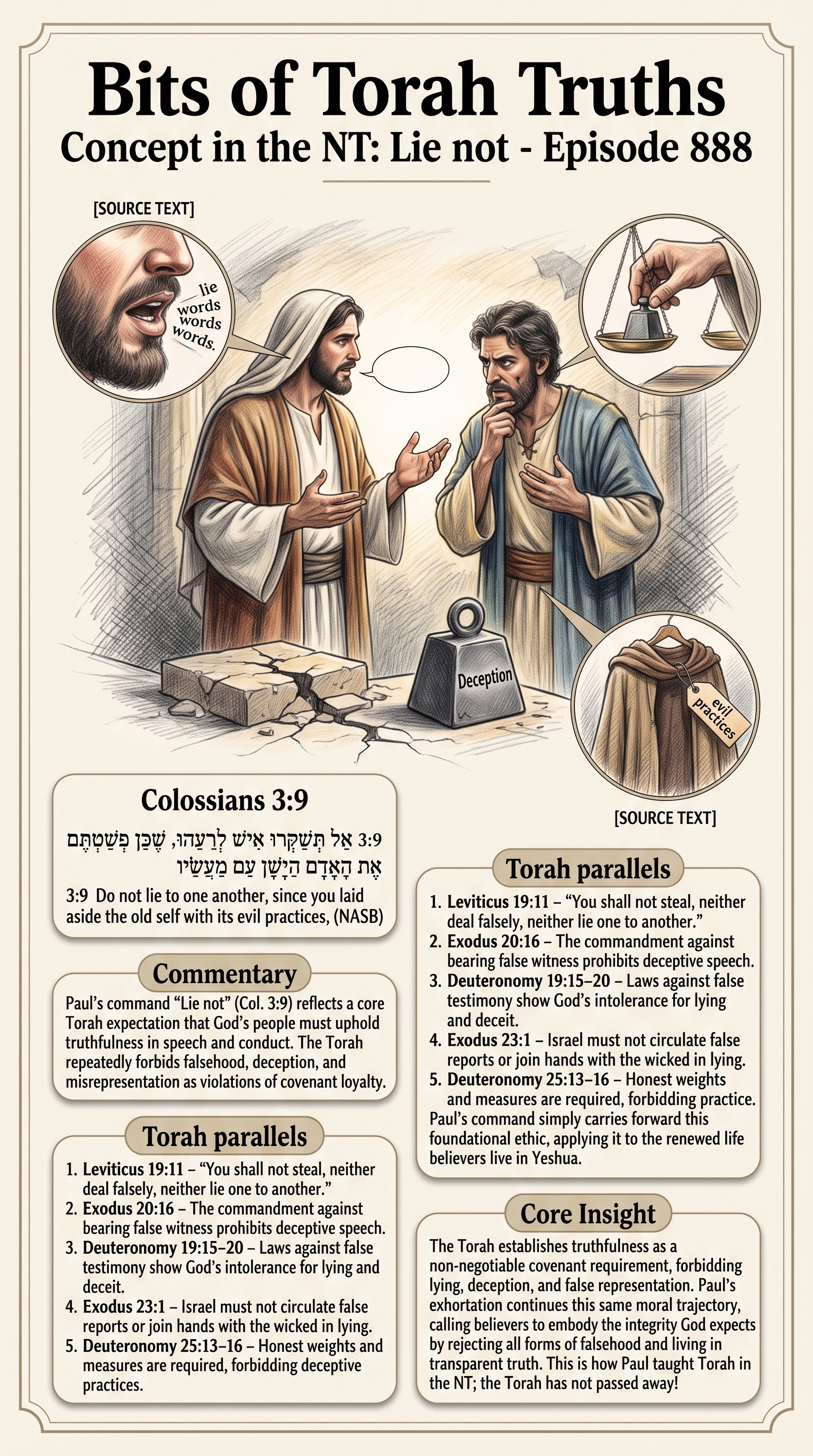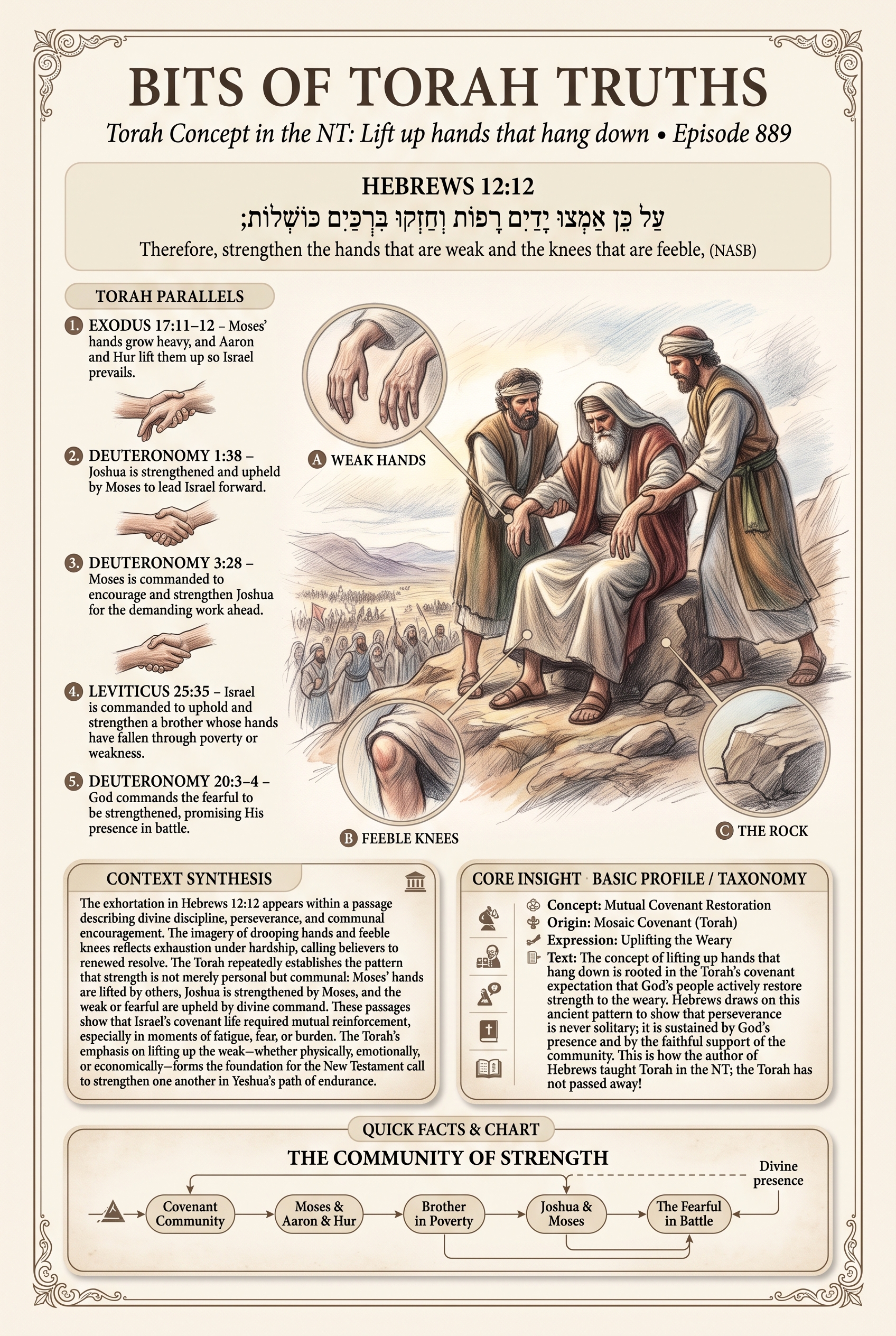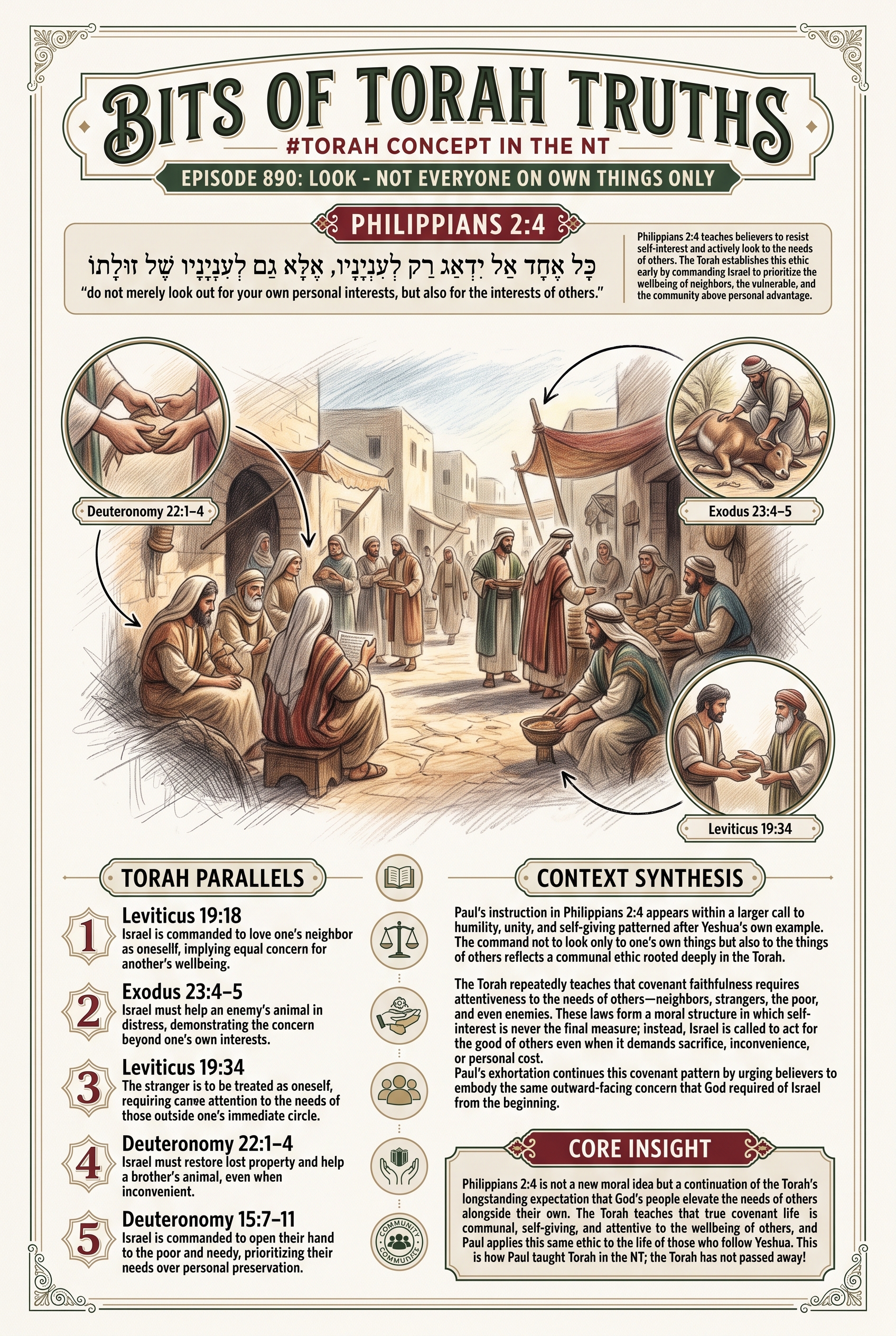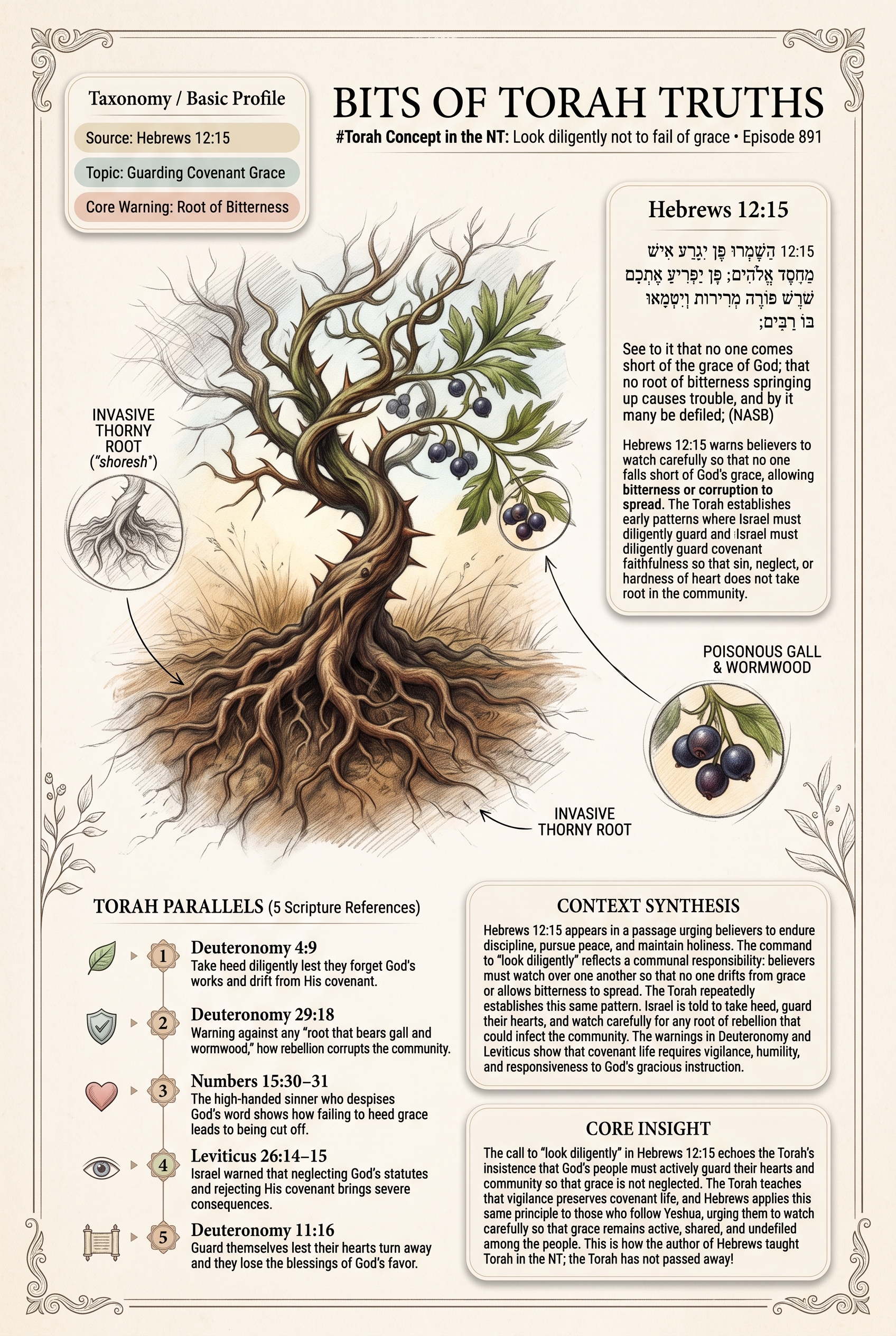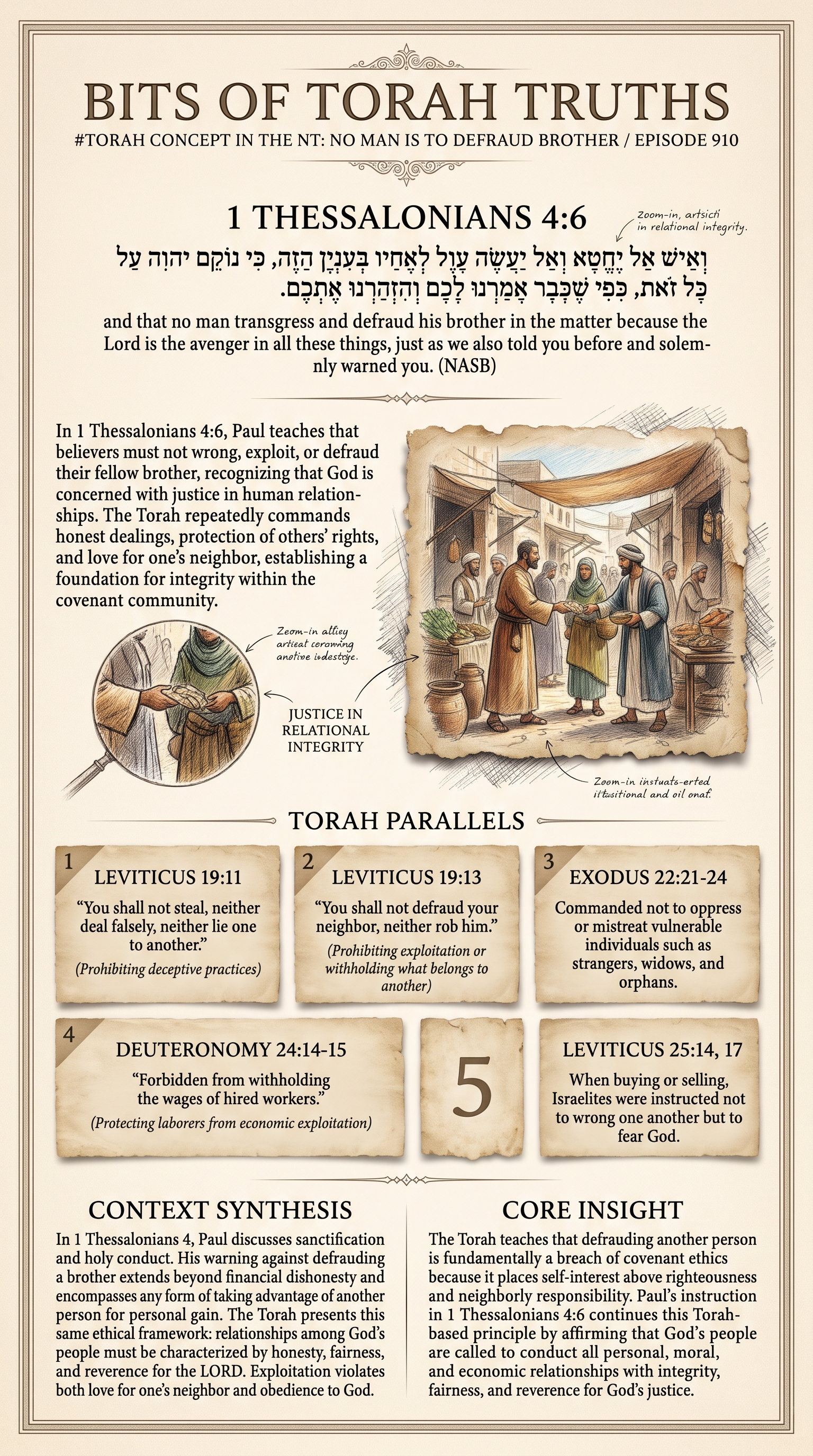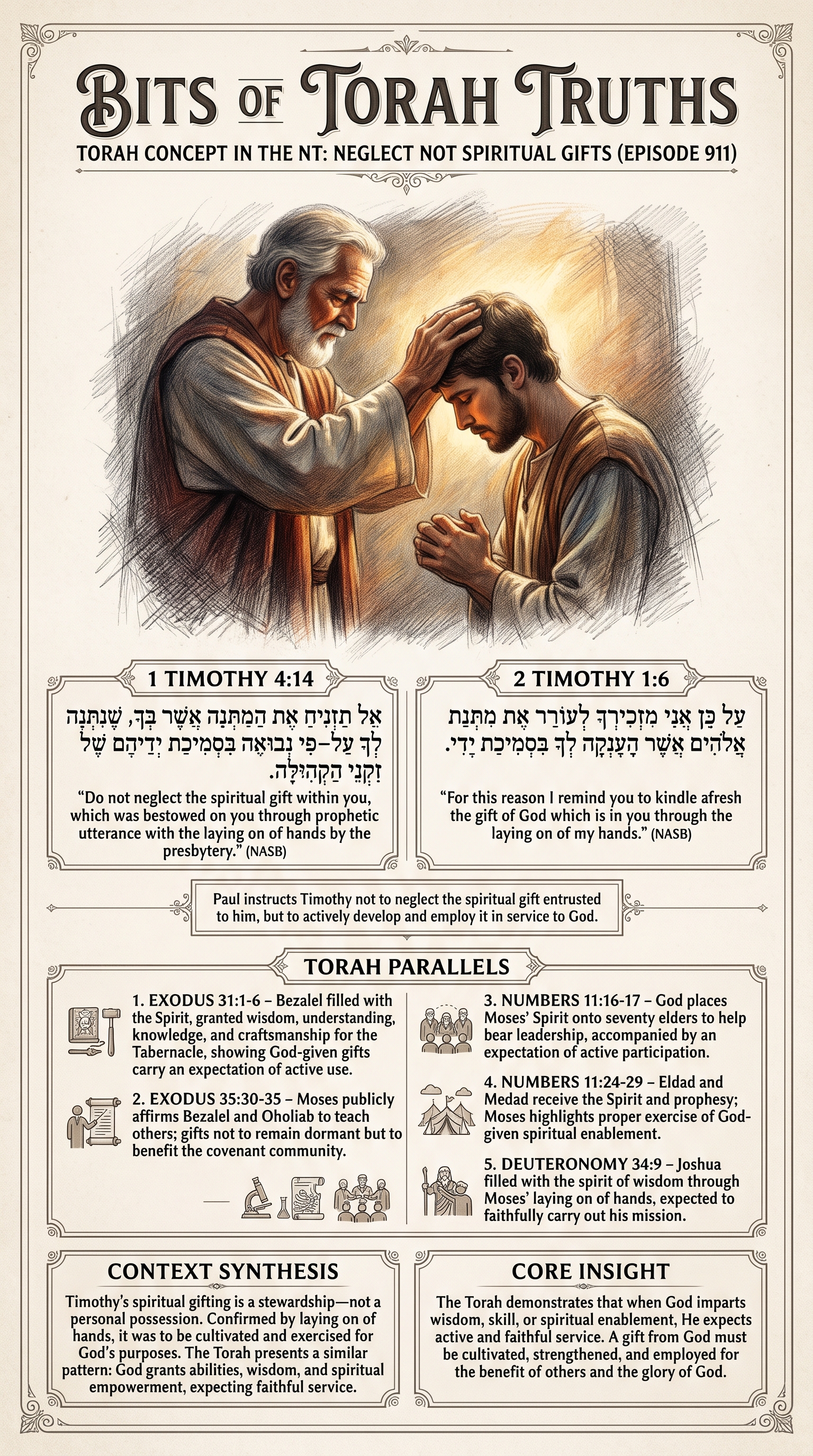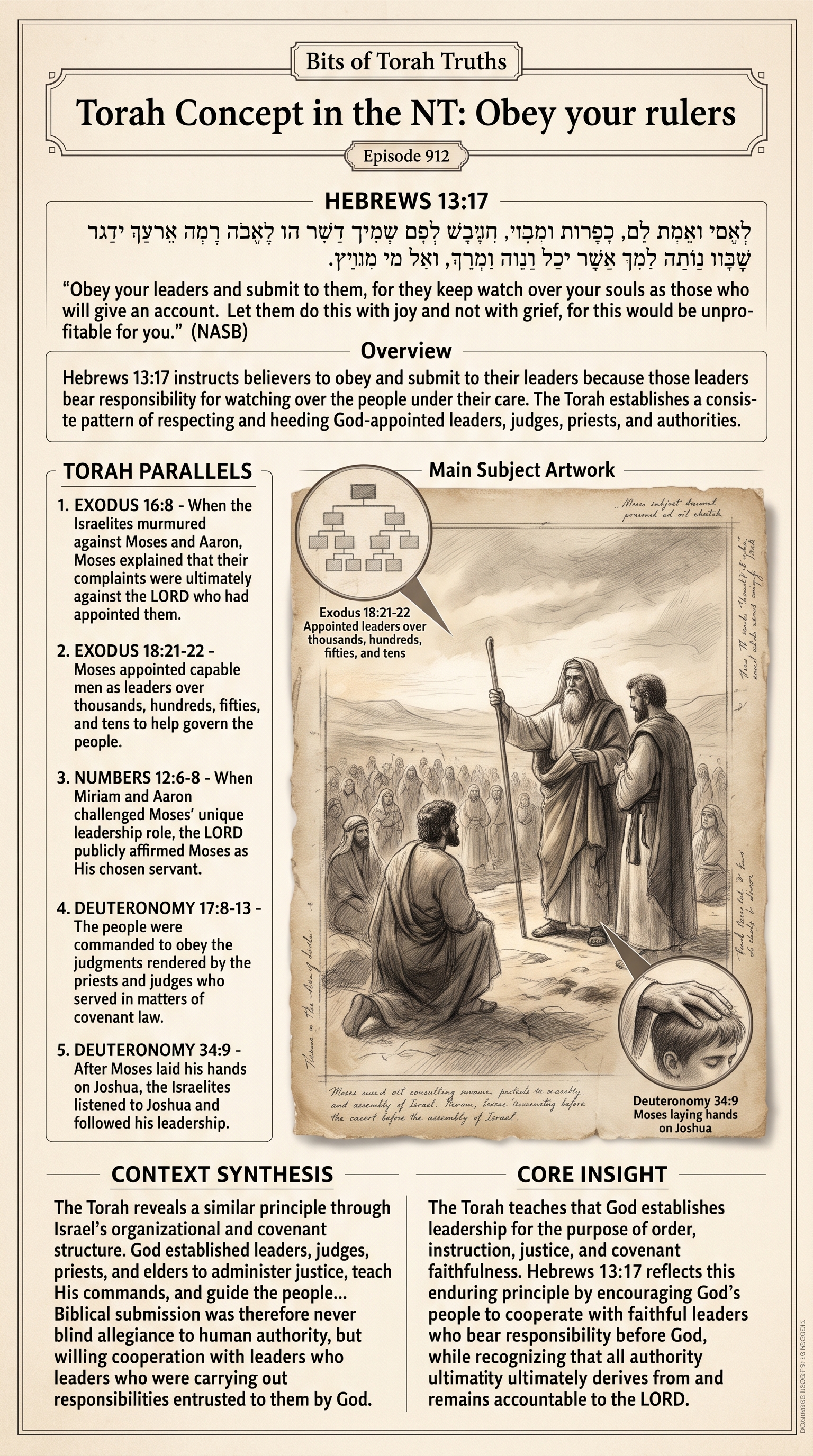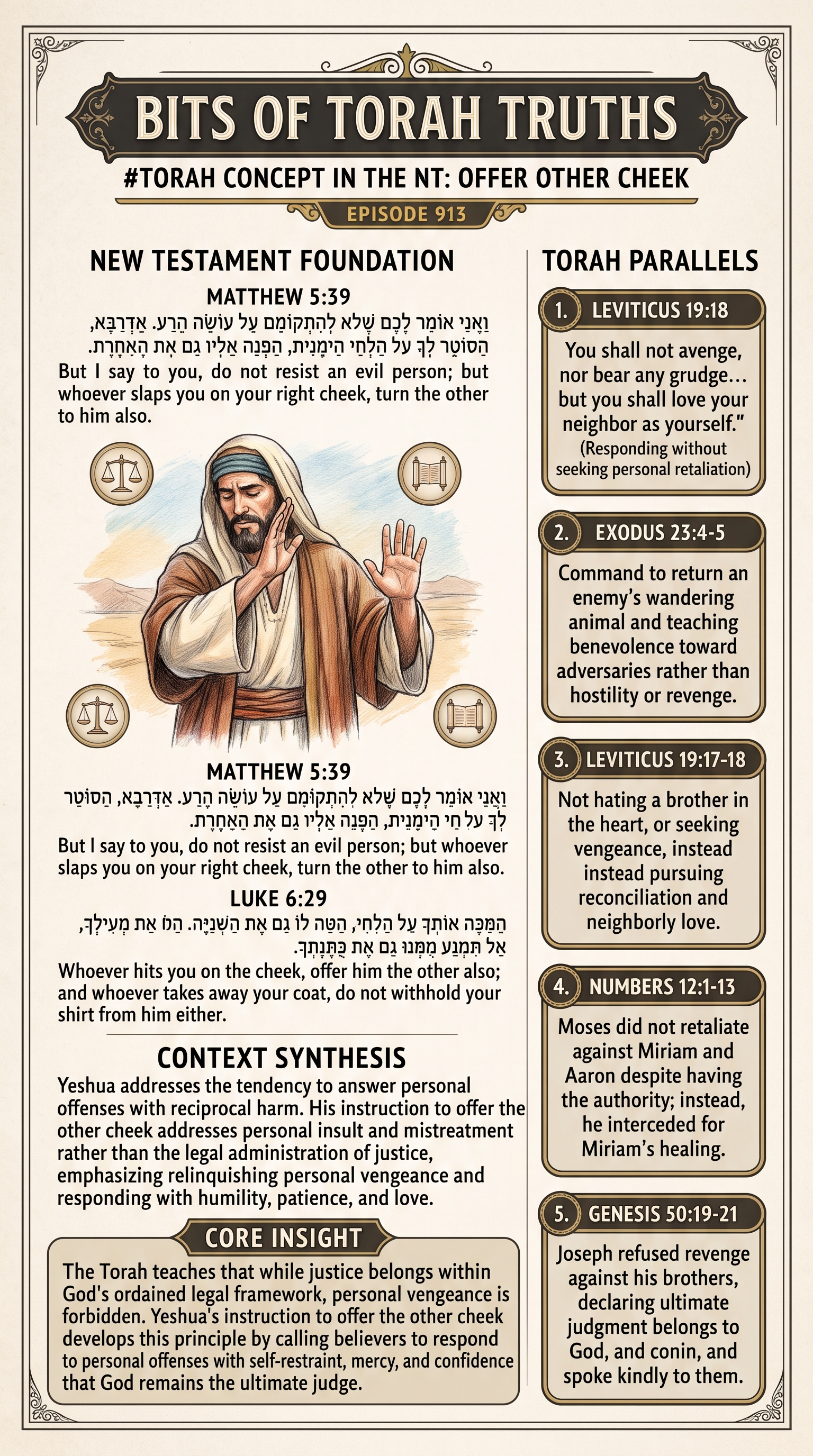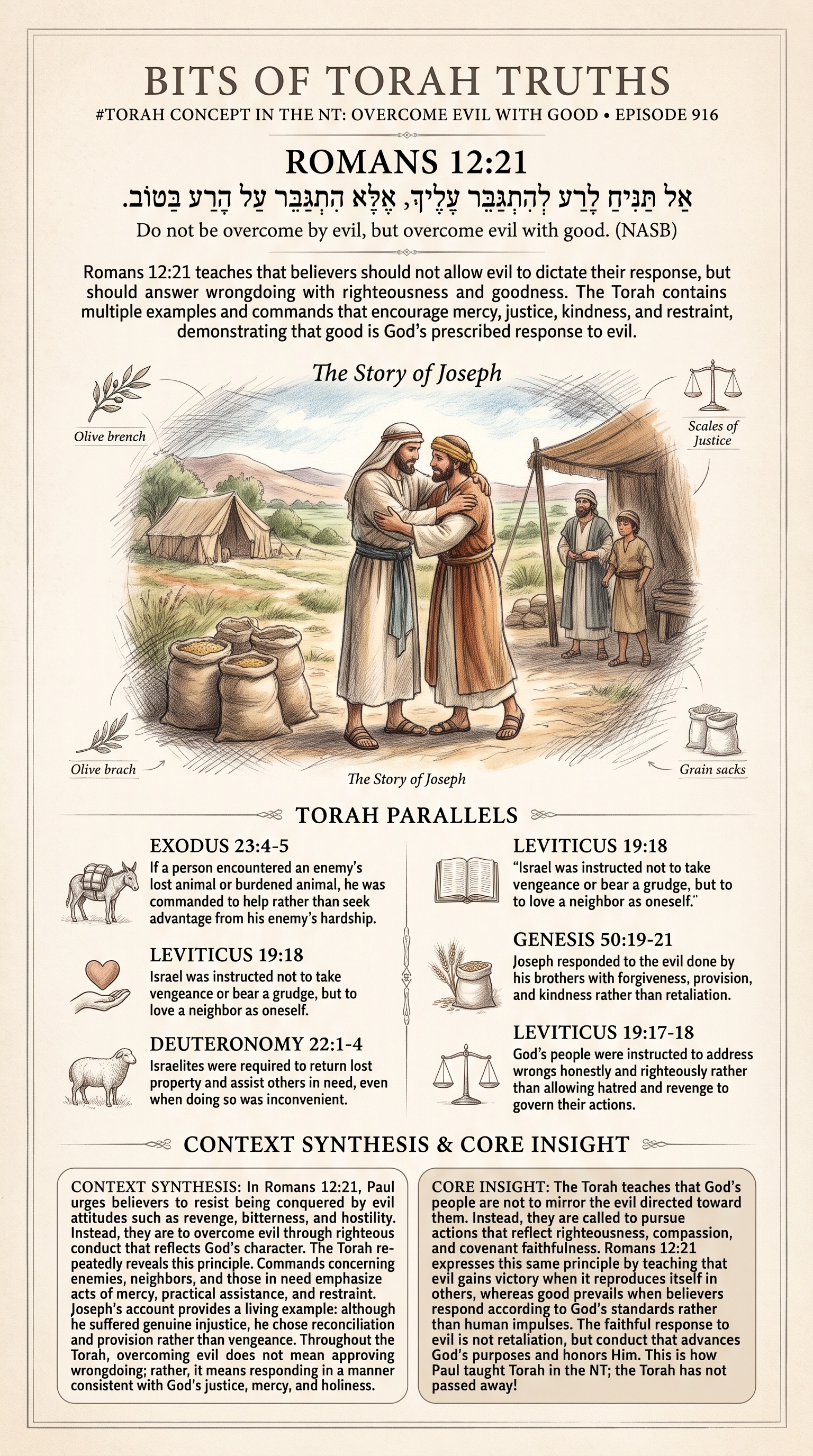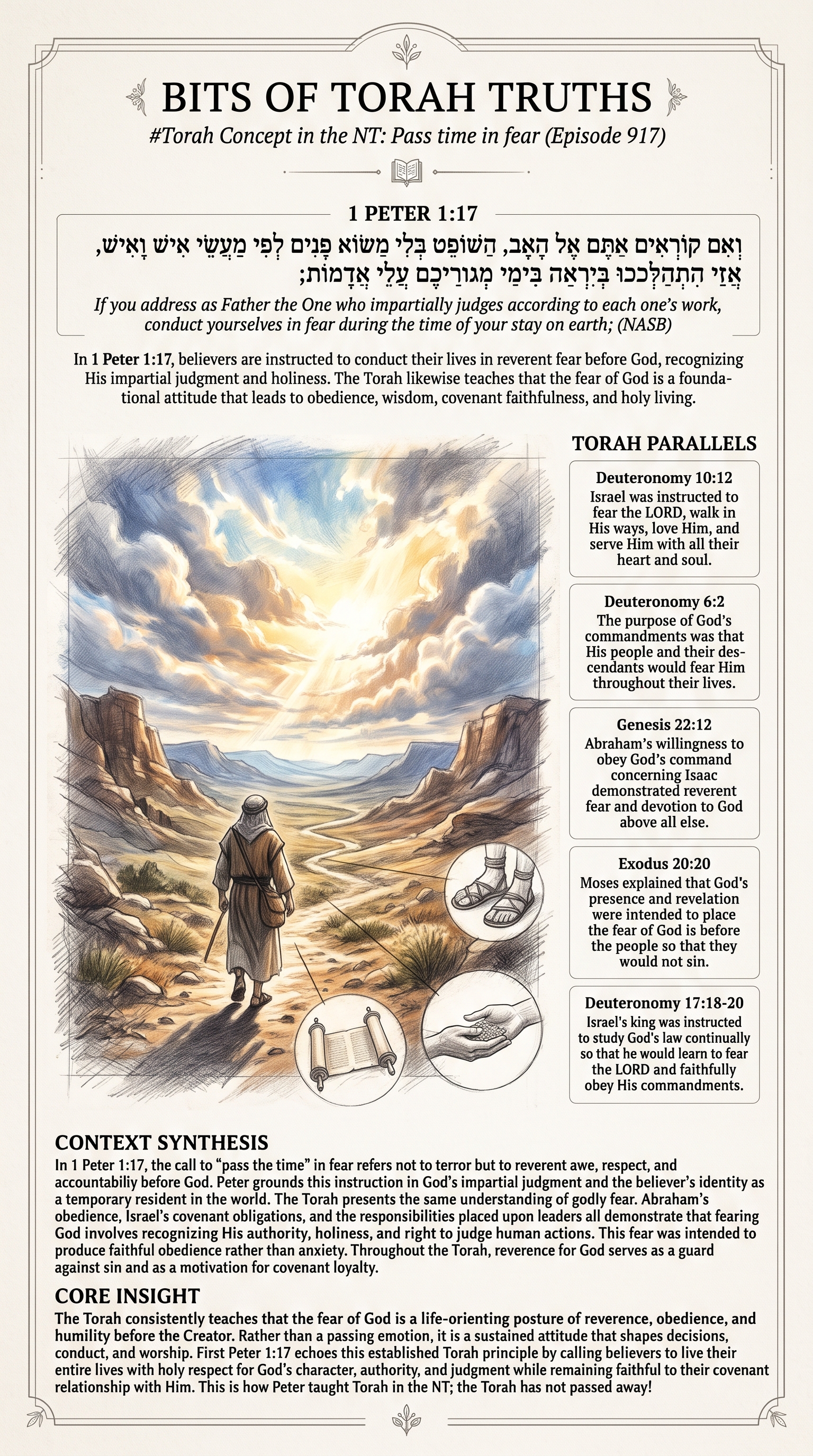
Bits of Torah Truths – #Torah Concept in the NT: Pay taxes – Episode 918
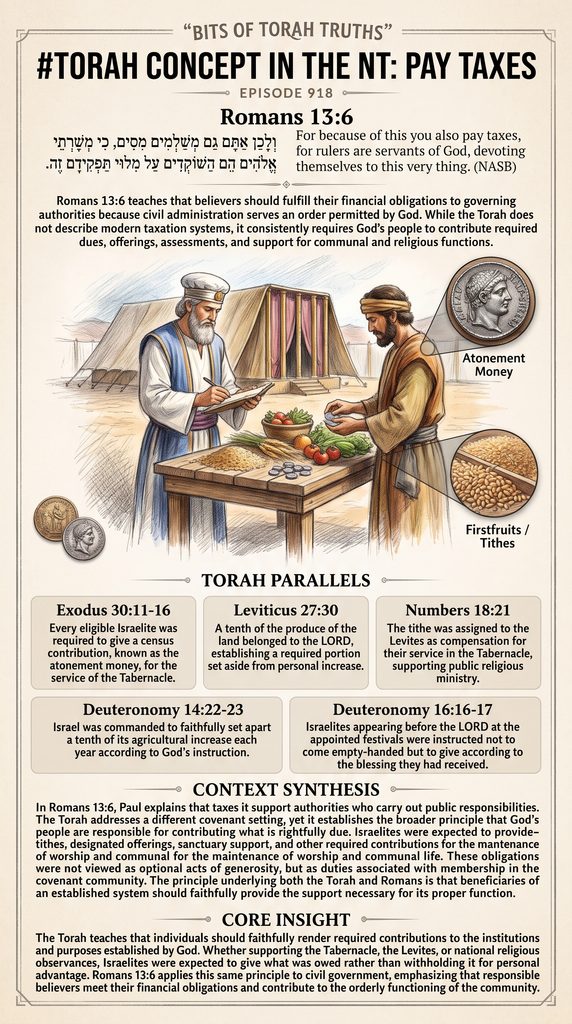
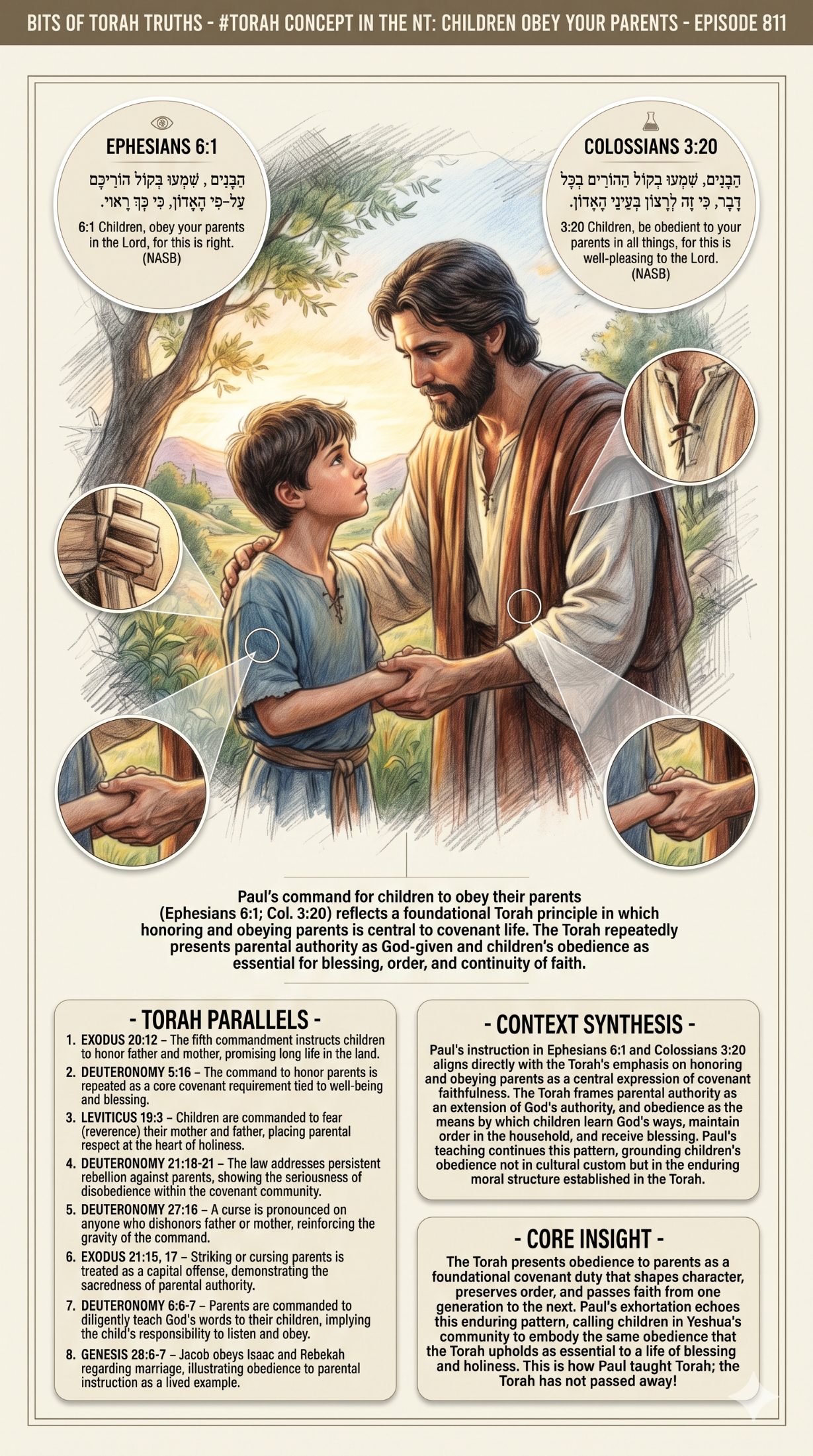
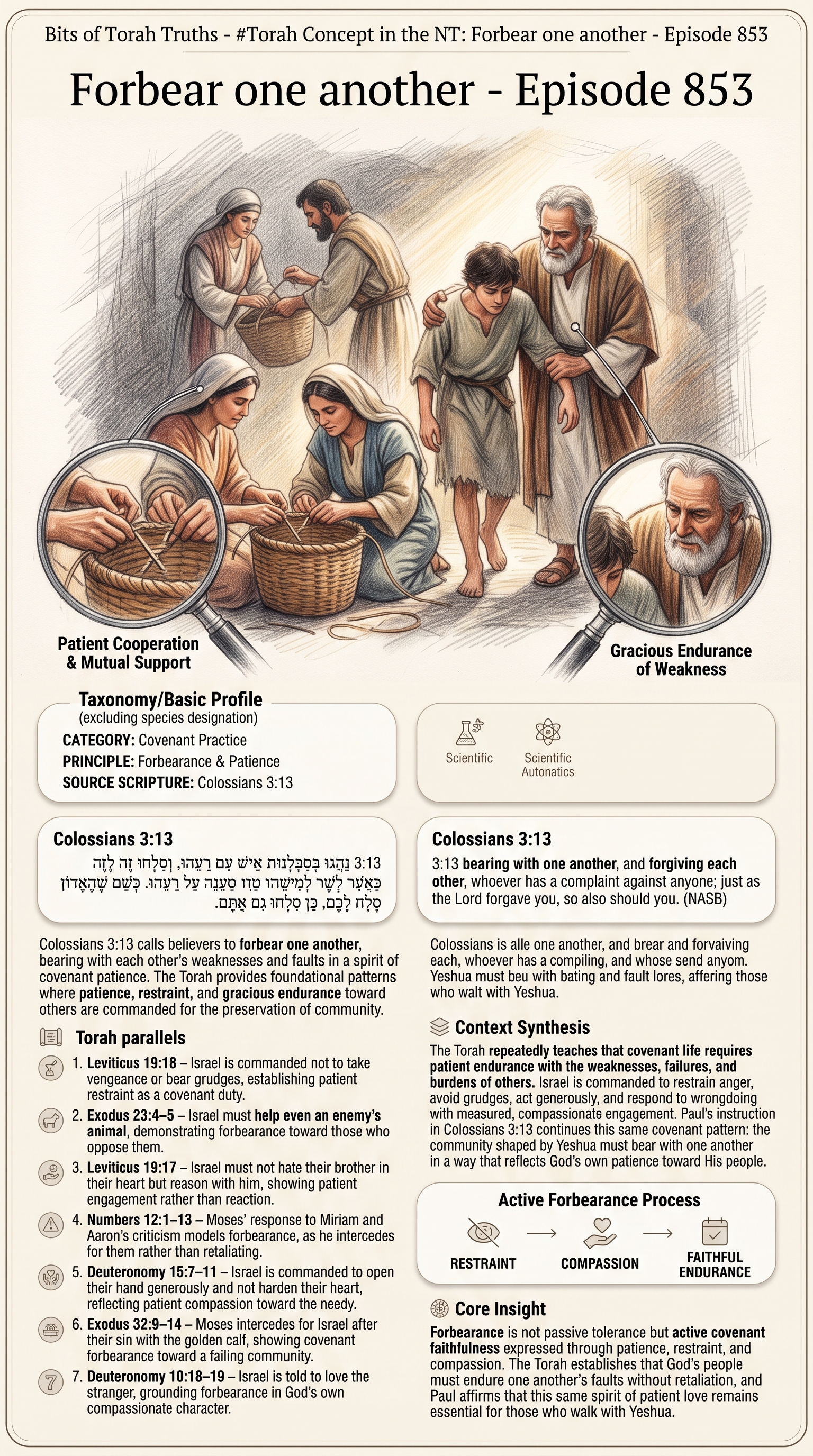
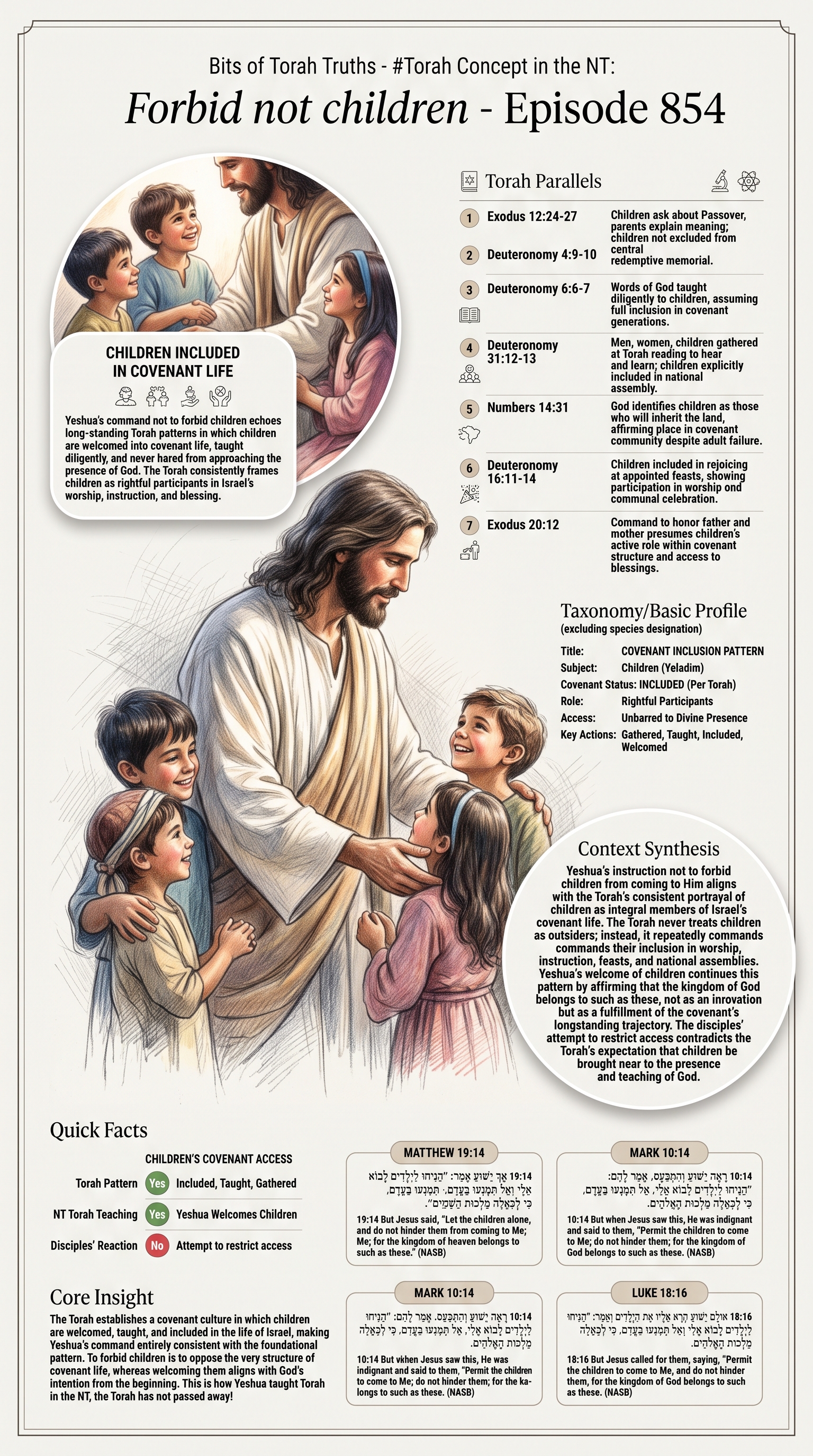
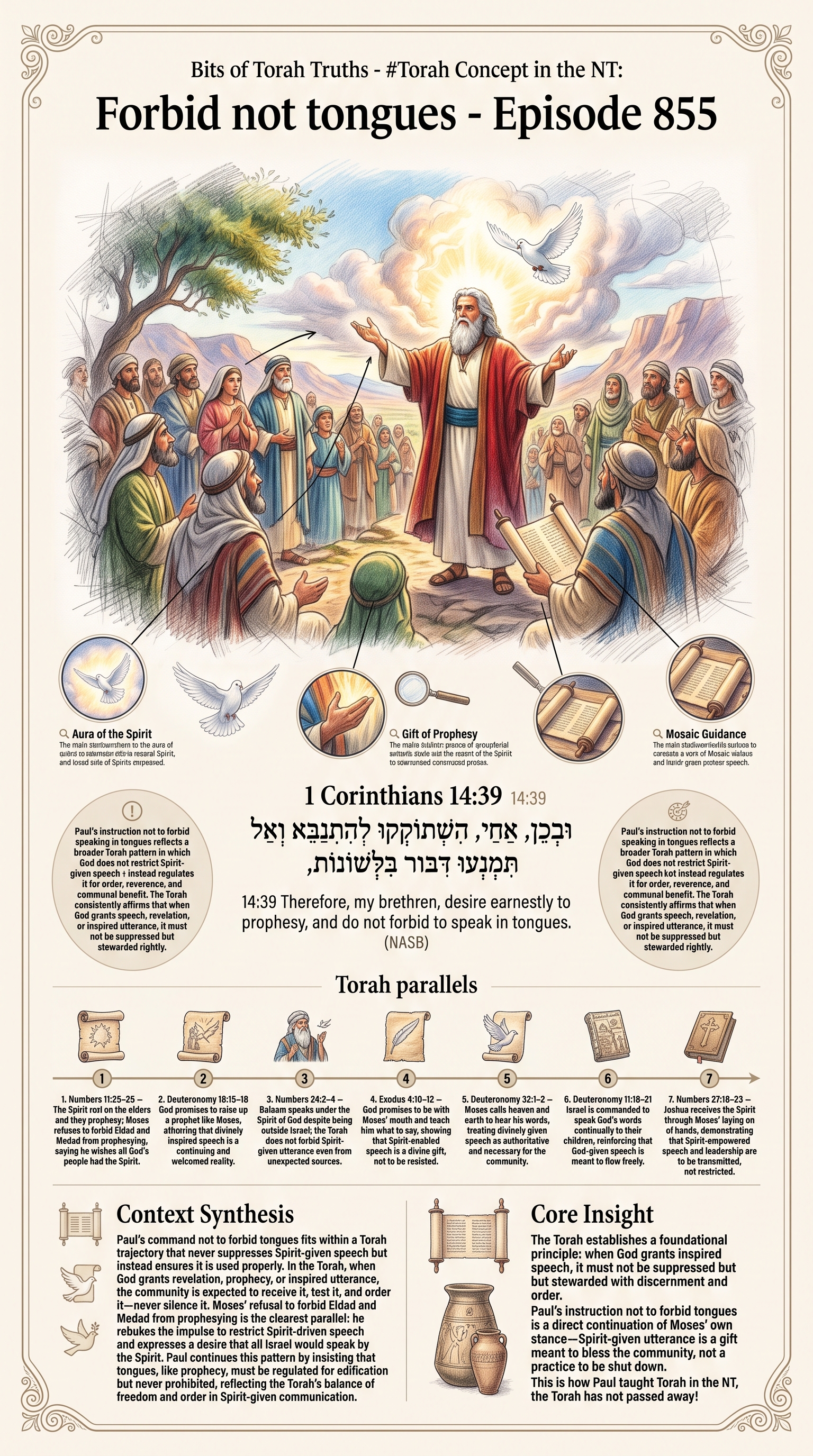
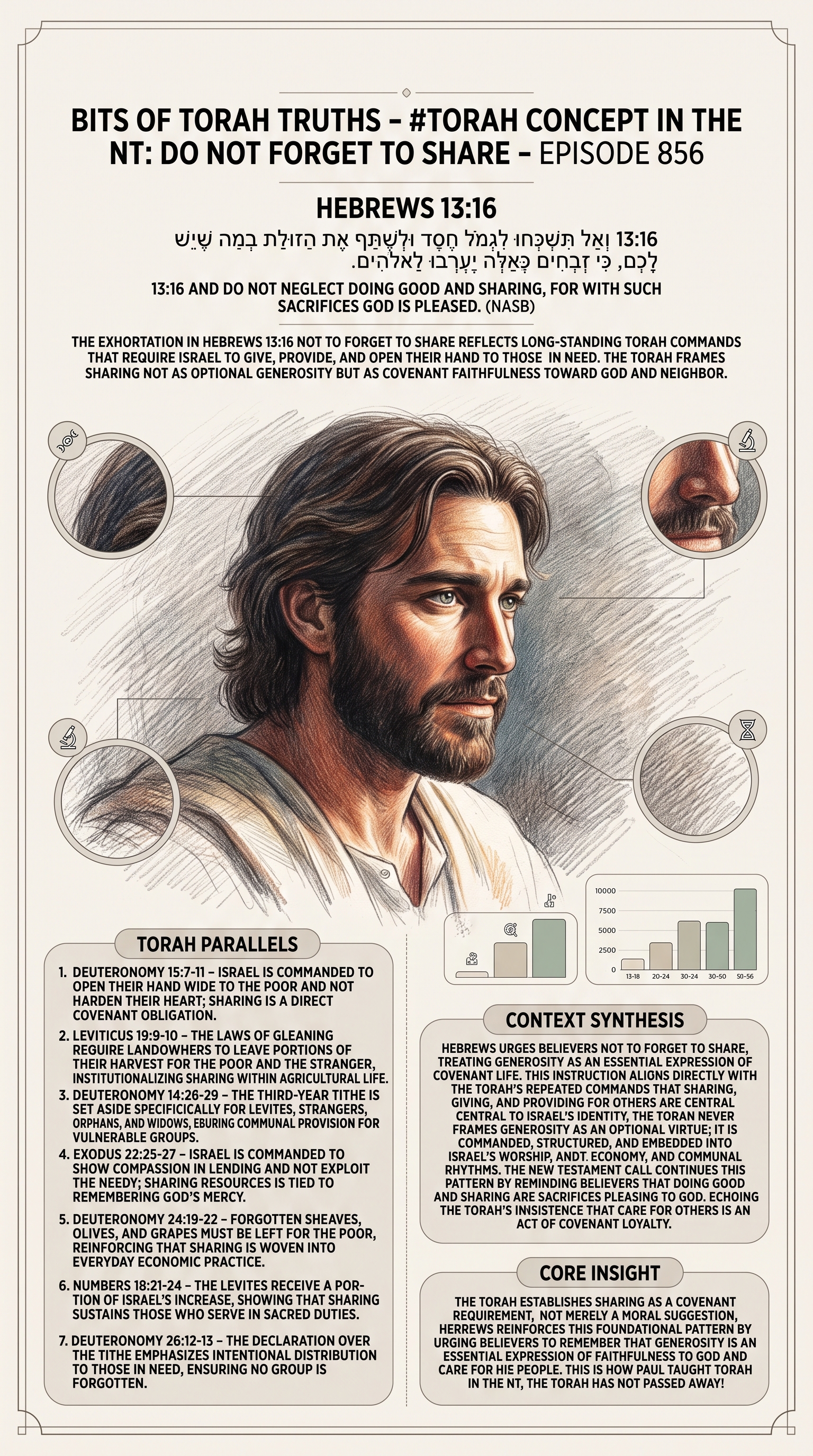
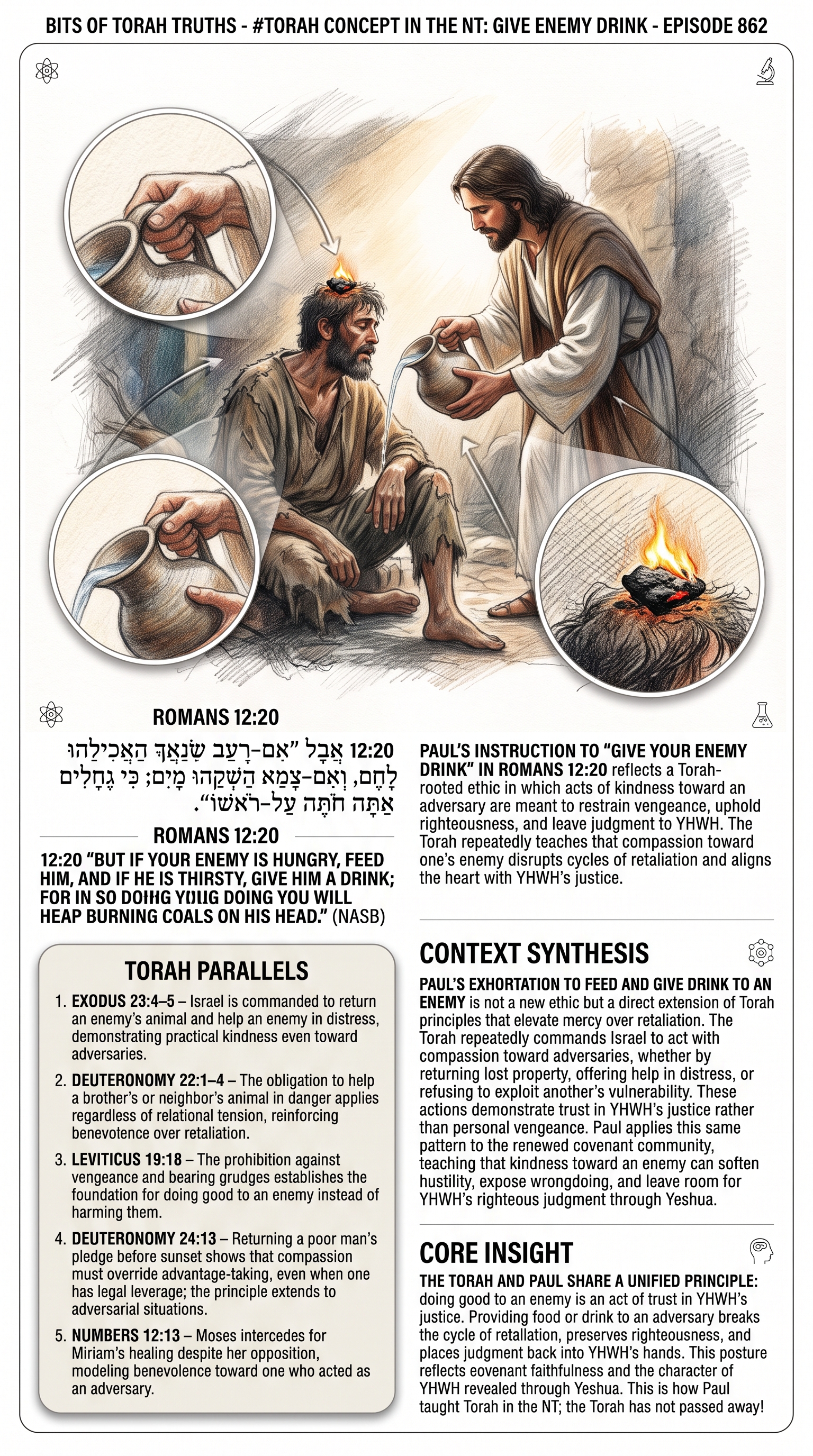
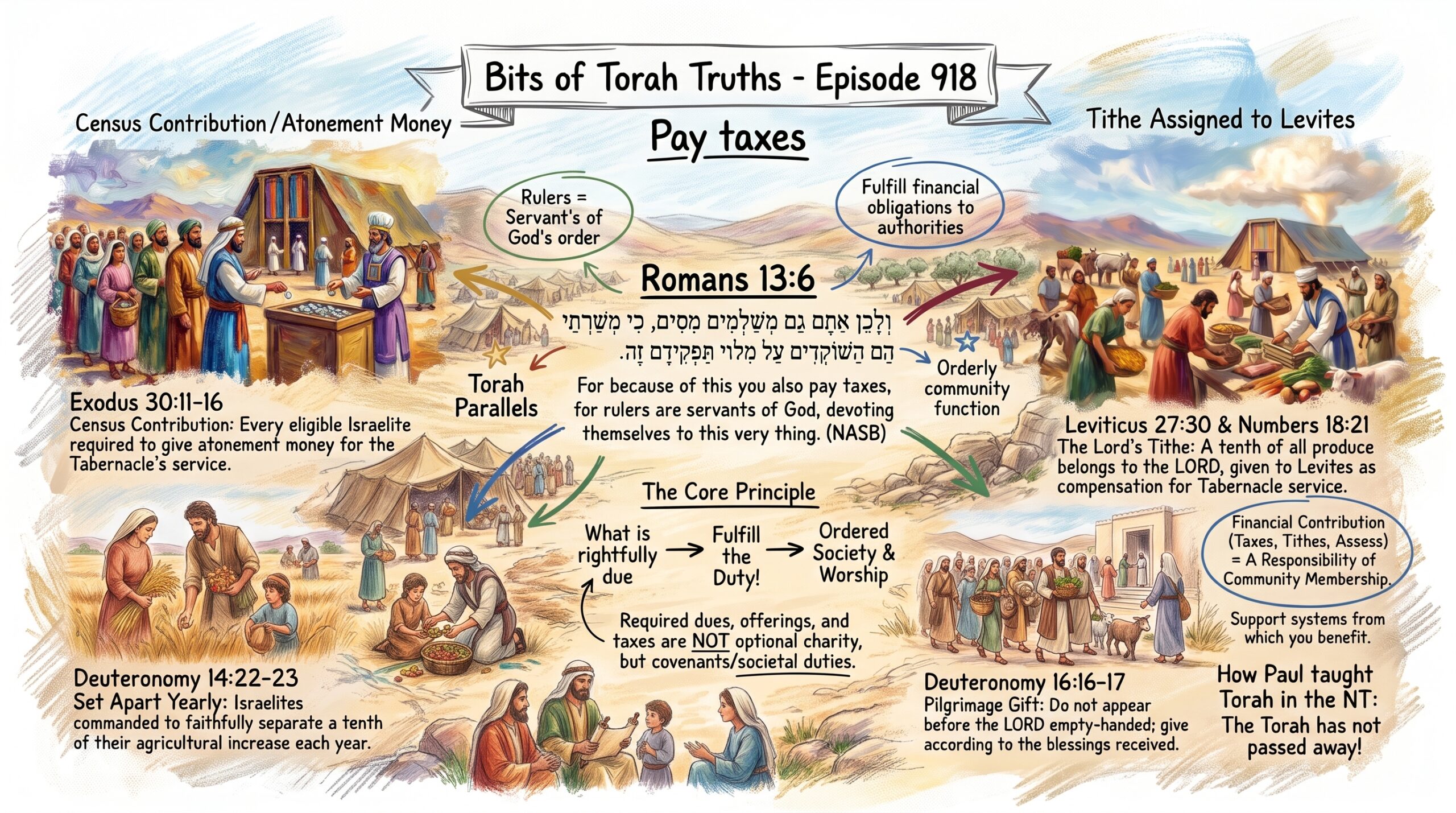
Romans 13:6
וְלָכֵן אַתֶּם גַּם מְשַׁלְּמִים מִסִּים, כִּי מְשָׁרְתֵי אֱלֹהִים הֵם הַשּׁוֹקְדִים עַל מִלּוּי תַּפְקִידָם זֶה.
#torah#torahwisdom#torahtruth#torahforlife#torah4you#torahtruth
Romans 13:6
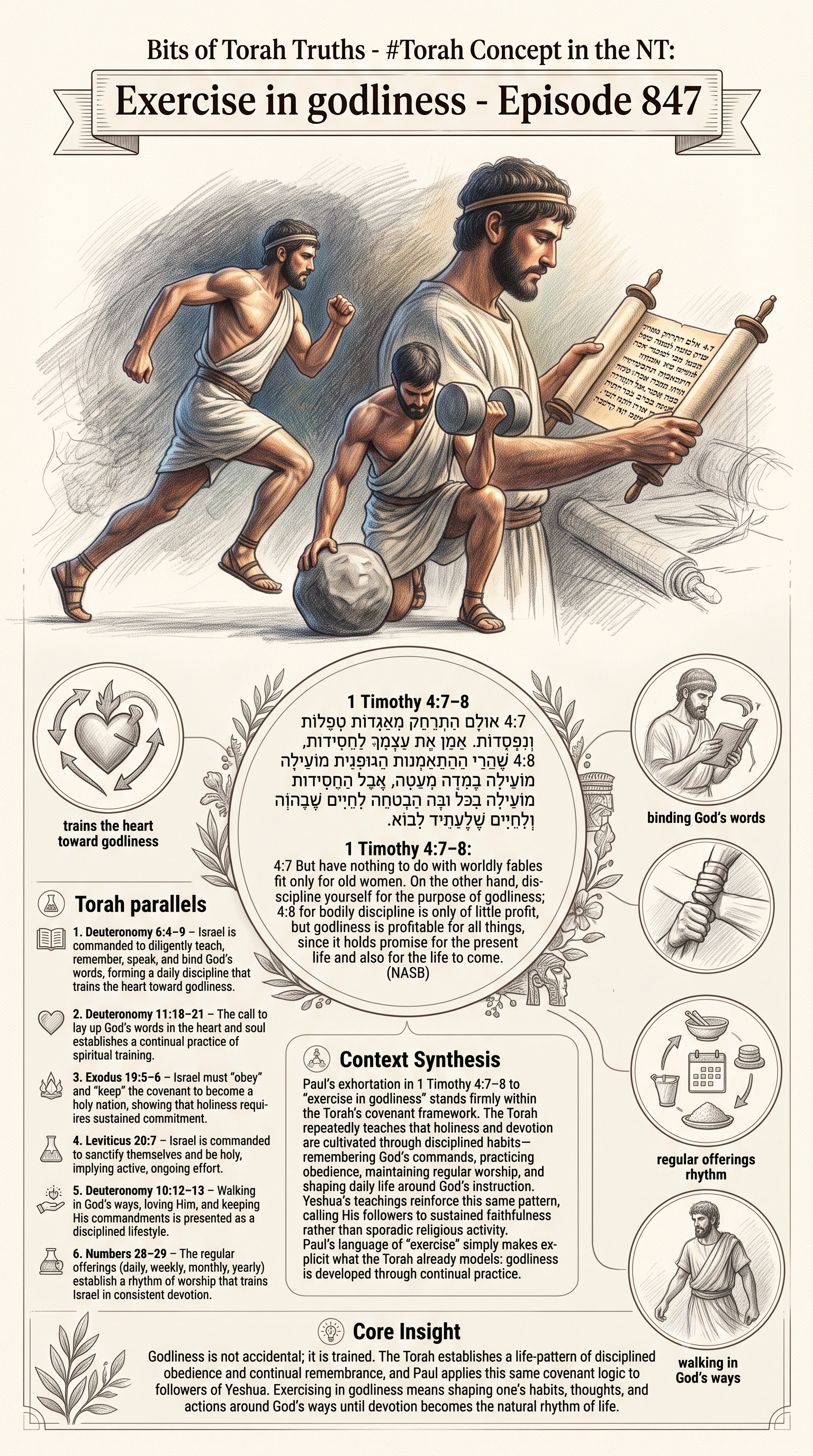
13:6 For because of this you also pay taxes, for rulers are servants of God, devoting themselves to this very thing. (NASB)
https://www.matsati.com/index.php/category/bits-of-torah-truths/
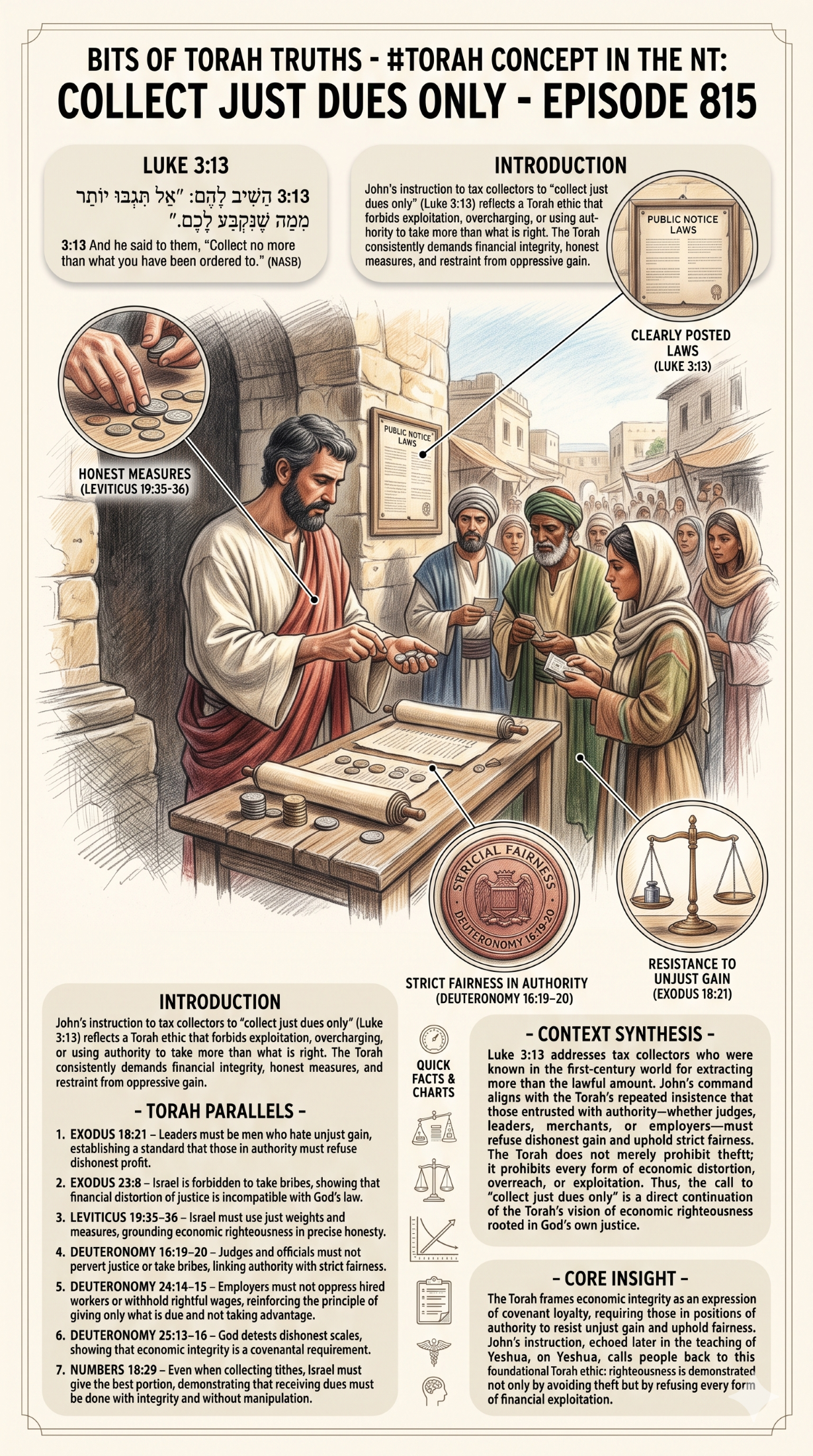
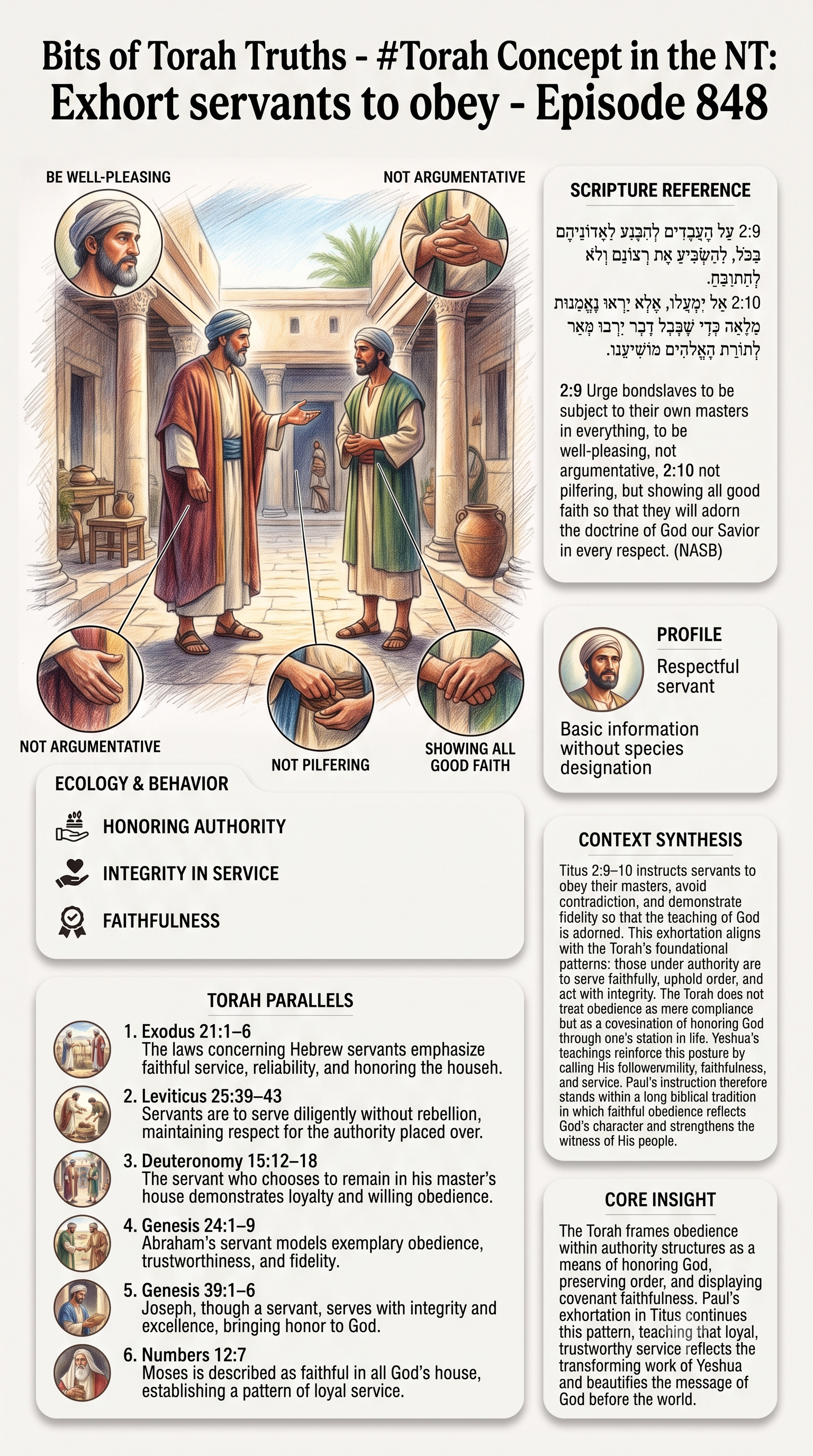
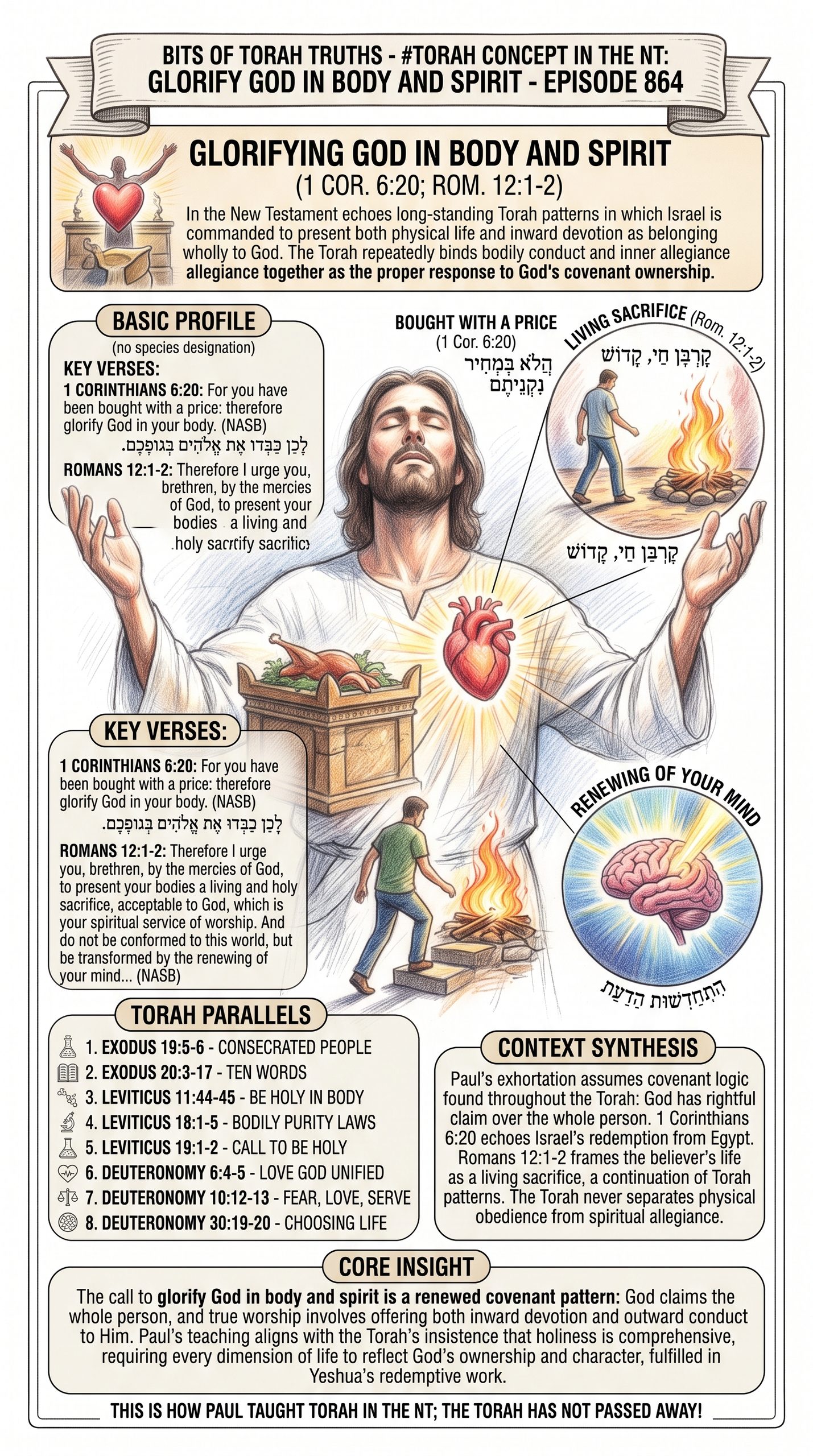
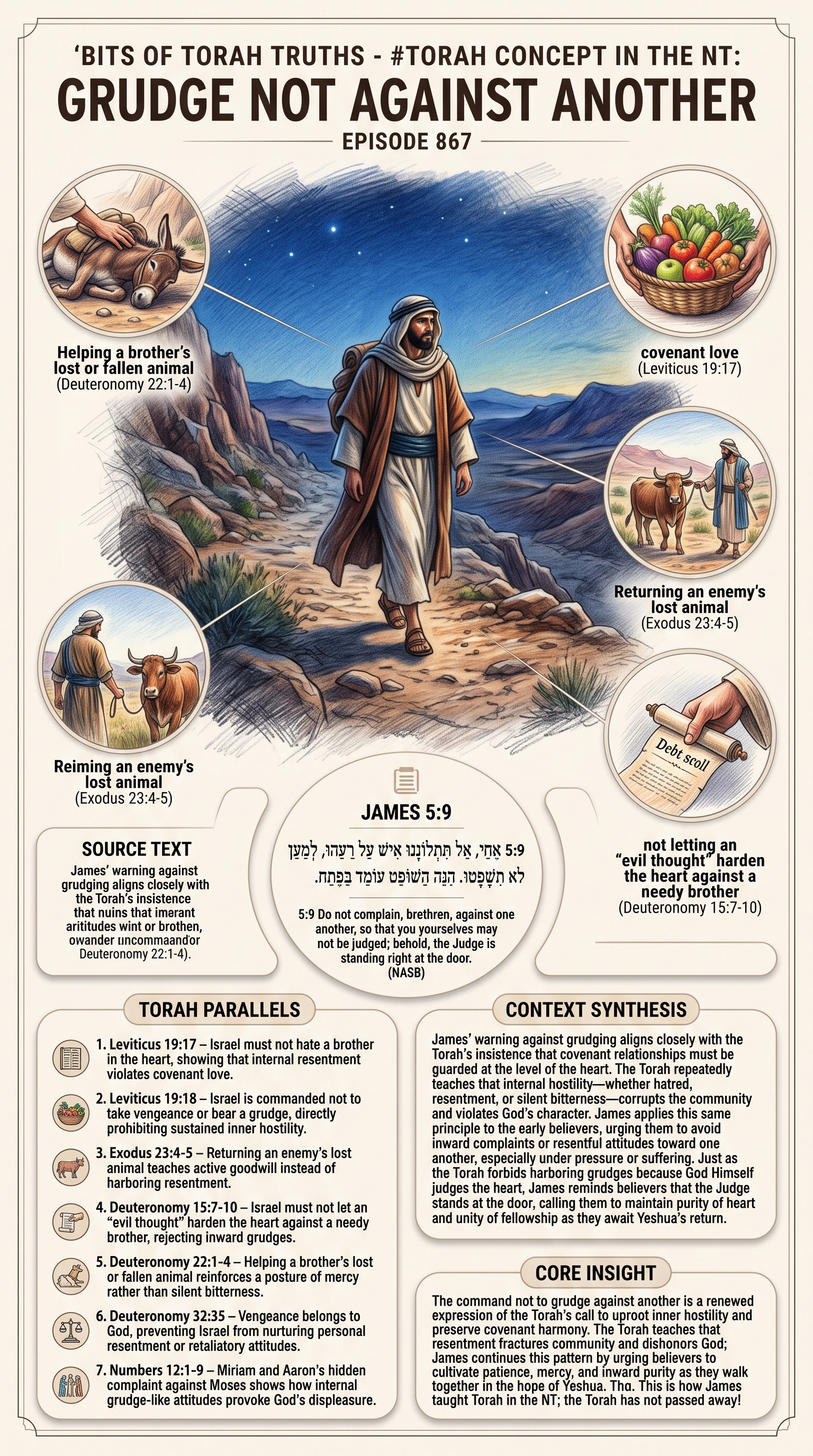
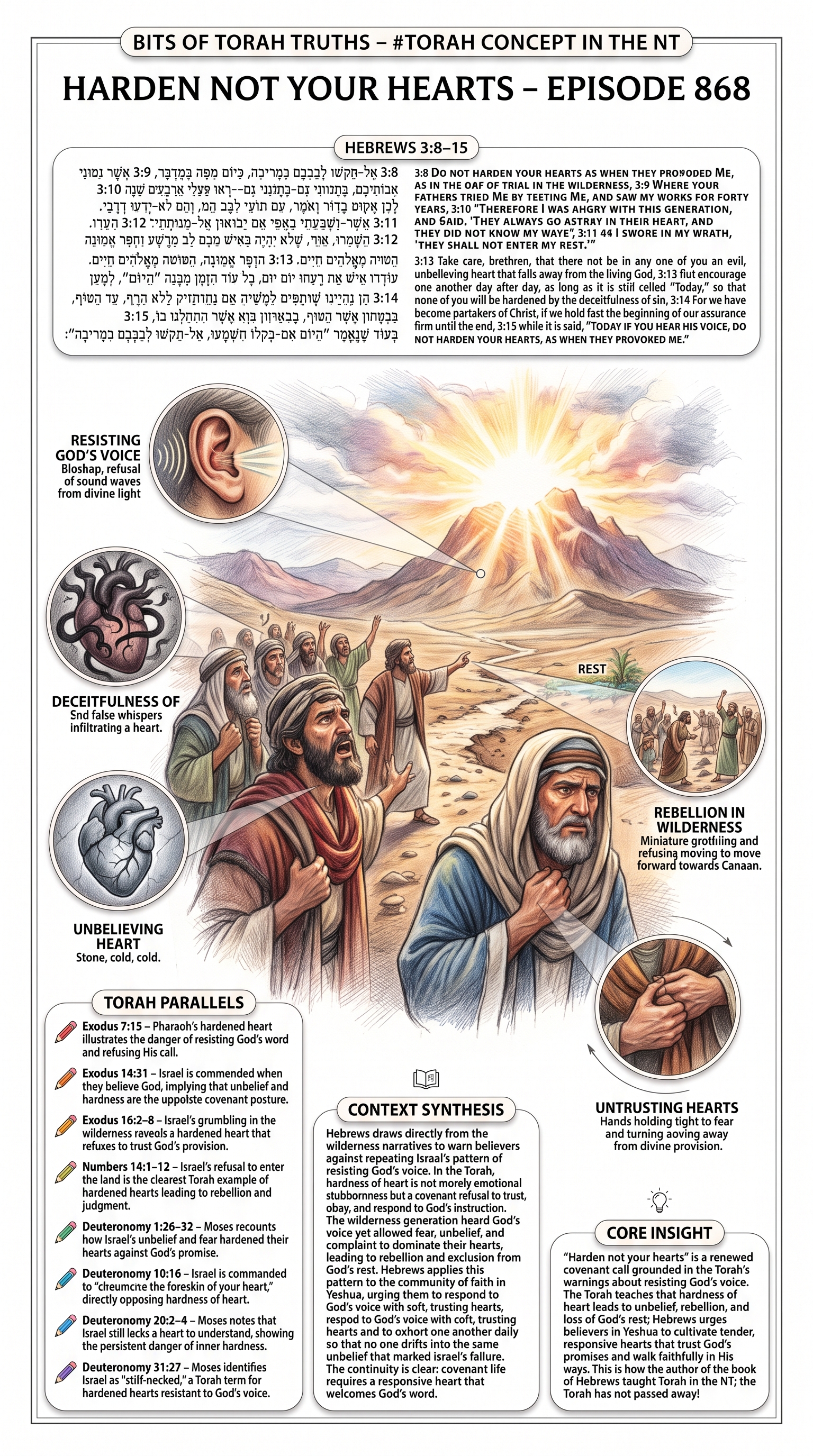
Romans 13:6 teaches that believers should fulfill their financial obligations to governing authorities because civil administration serves an order permitted by God. While the Torah does not describe modern taxation systems, it consistently requires God’s people to contribute required dues, offerings, assessments, and support for communal and religious functions.
– Torah parallels –
1. Exodus 30:11-16 – Every eligible Israelite was required to give a census contribution, known as the atonement money, for the service of the Tabernacle. 2. Leviticus 27:30 – A tenth of the produce of the land belonged to the LORD, establishing a required portion set aside from personal increase. 3. Numbers 18:21 – The tithe was assigned to the Levites as compensation for their service in the Tabernacle, supporting public religious ministry. 4. Deuteronomy 14:22-23 – Israel was commanded to faithfully set apart a tenth of its agricultural increase each year according to God’s instruction. 5. Deuteronomy 16:16-17 – Israelites appearing before the LORD at the appointed festivals were instructed not to come empty-handed but to give according to the blessing they had received.
– Context Synthesis –
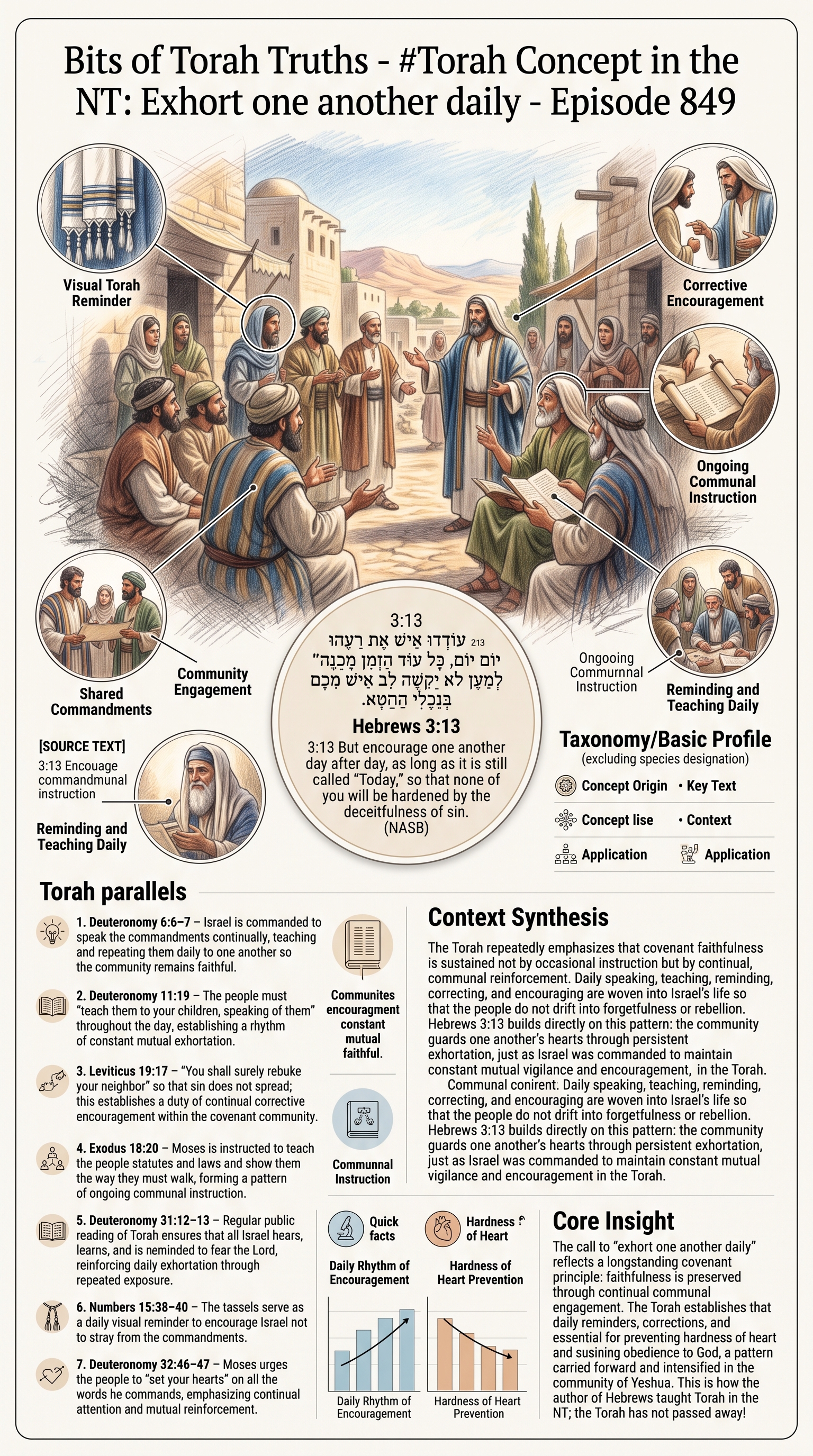
In Romans 13:6, Paul explains that taxes support authorities who carry out public responsibilities. The Torah addresses a different covenant setting, yet it establishes the broader principle that God’s people are responsible for contributing what is rightfully due. Israelites were expected to provide tithes, designated offerings, sanctuary support, and other required contributions for the maintenance of worship and communal life. These obligations were not viewed as optional acts of generosity but as duties associated with membership in the covenant community. The principle underlying both the Torah and Romans is that beneficiaries of an established system should faithfully provide the support necessary for its proper function.
– Core Insight –
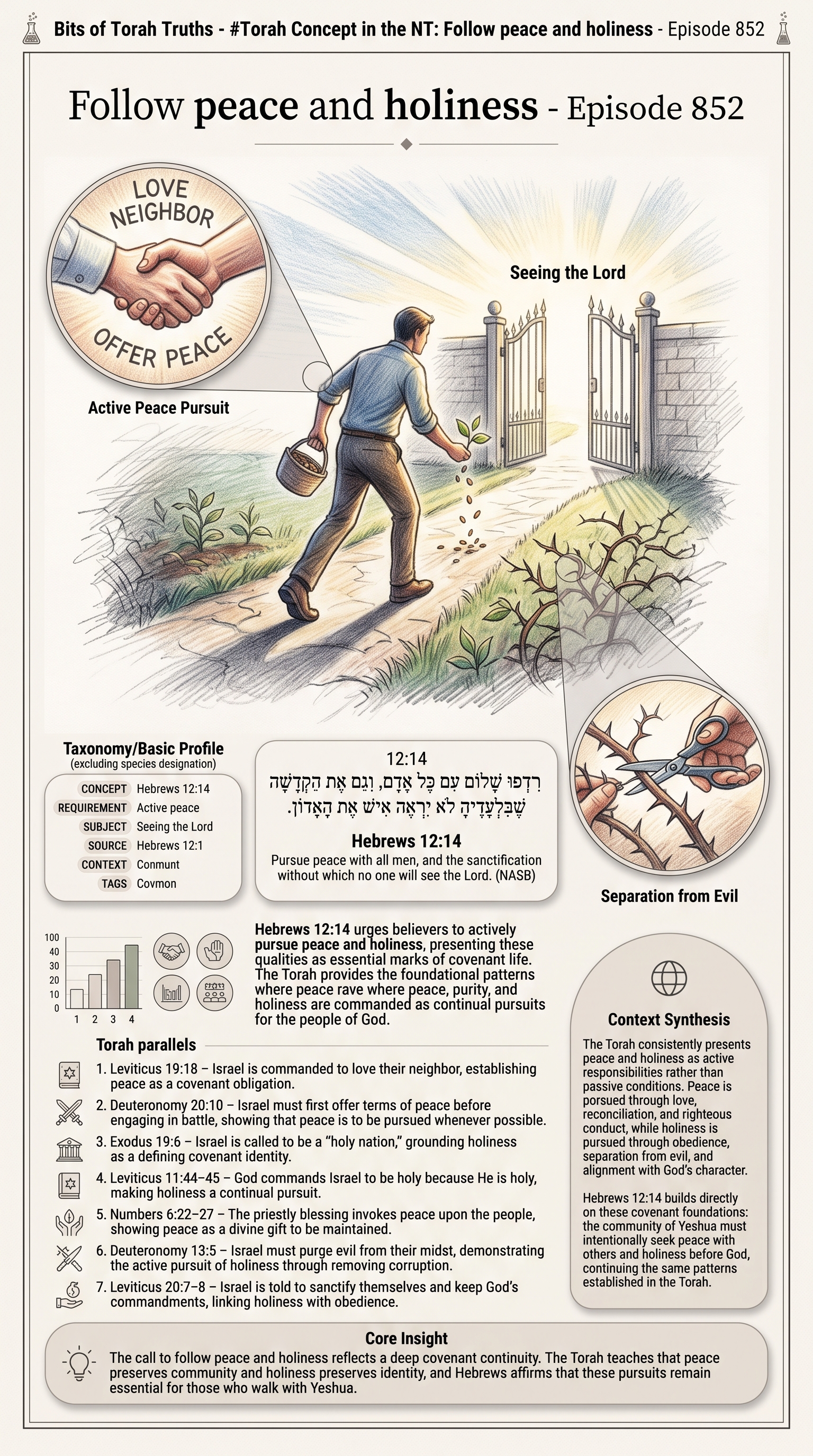
The Torah teaches that individuals should faithfully render required contributions to the institutions and purposes established by God. Whether supporting the Tabernacle, the Levites, or national religious observances, Israelites were expected to give what was owed rather than withholding it for personal advantage. Romans 13:6 applies this same principle to civil government, emphasizing that responsible believers meet their financial obligations and contribute to the orderly functioning of the community. This is how Paul taught Torah in the NT; the Torah has not passed away!
This report is based on the plain-text meaning of the cited Torah passages and the immediate context of Romans 13:6. The analysis draws from explicit biblical teachings regarding required contributions, tithes, offerings, and communal support, distinguishing direct scriptural evidence from interpretive synthesis while seeking accuracy, transparency, and fidelity to the biblical text.
Visual Summary of Concepts the Torah in the NT