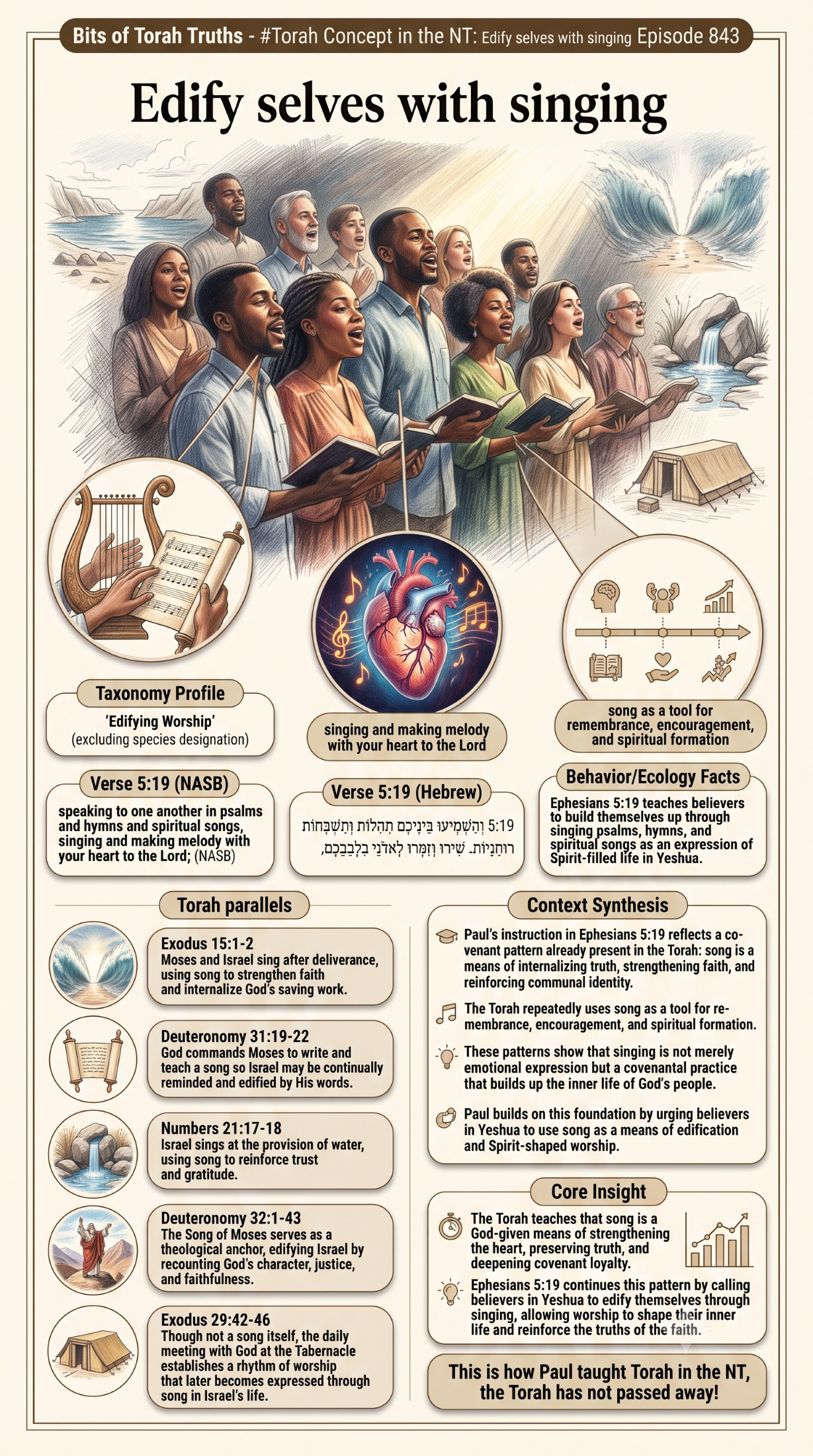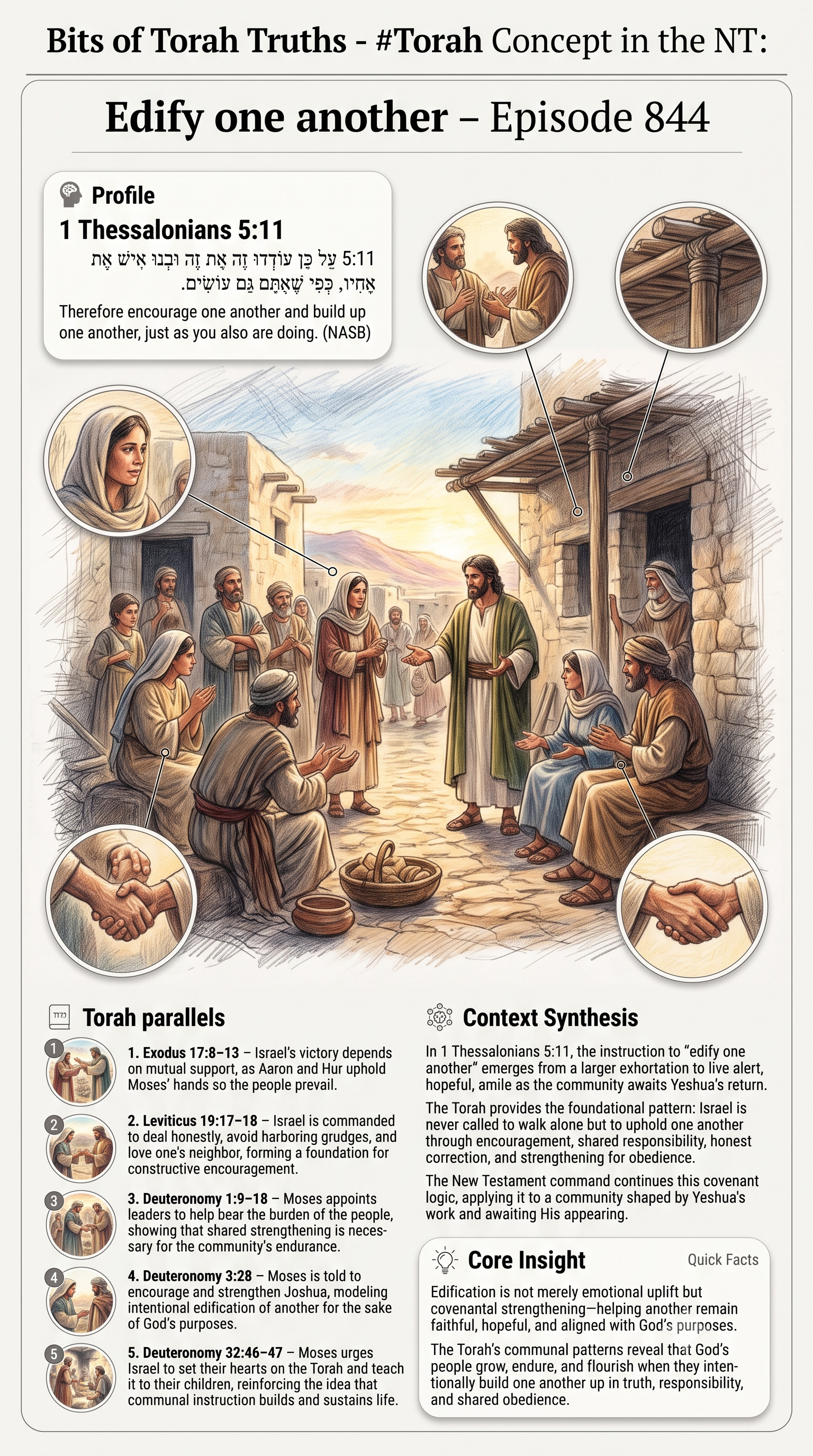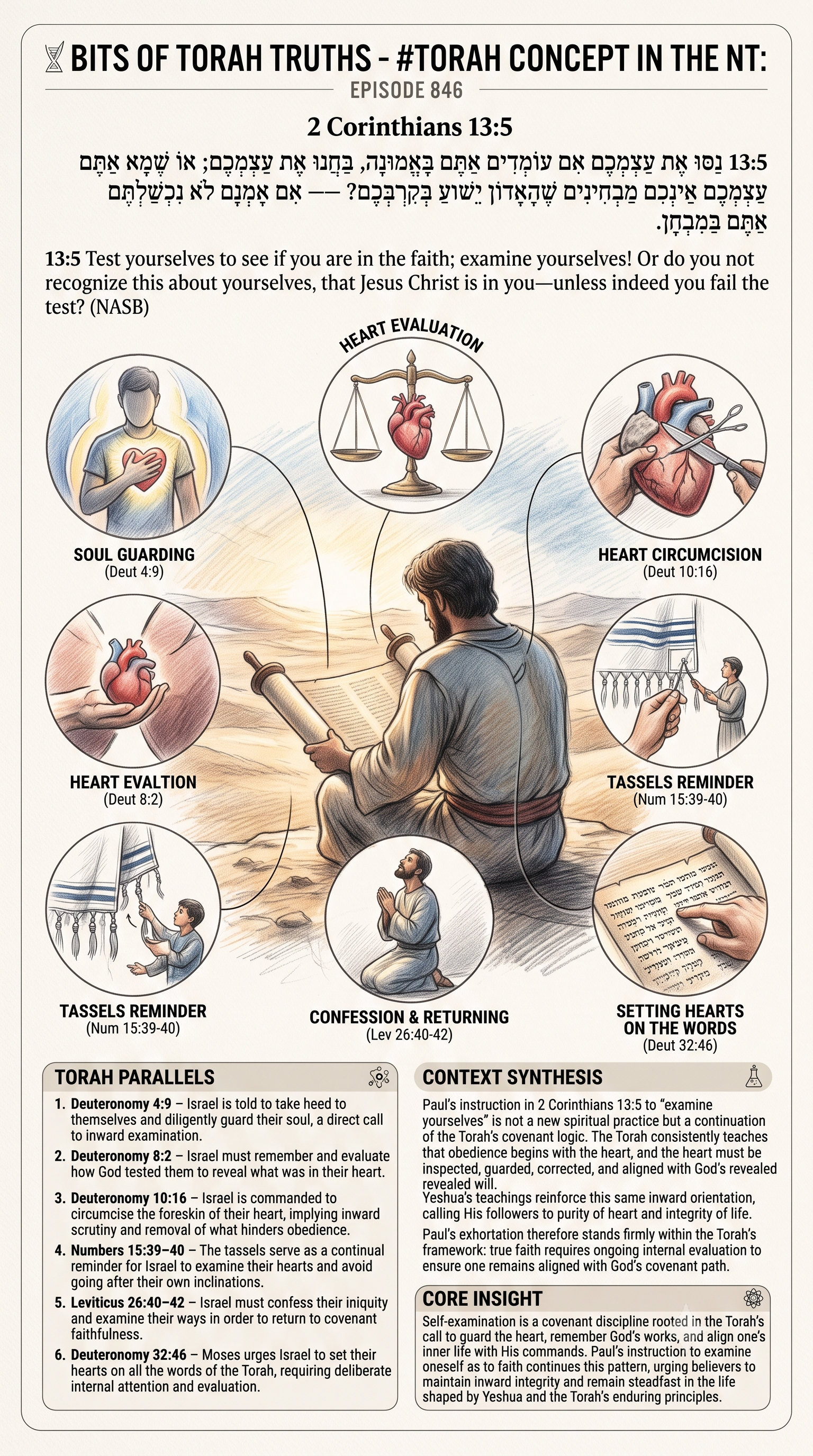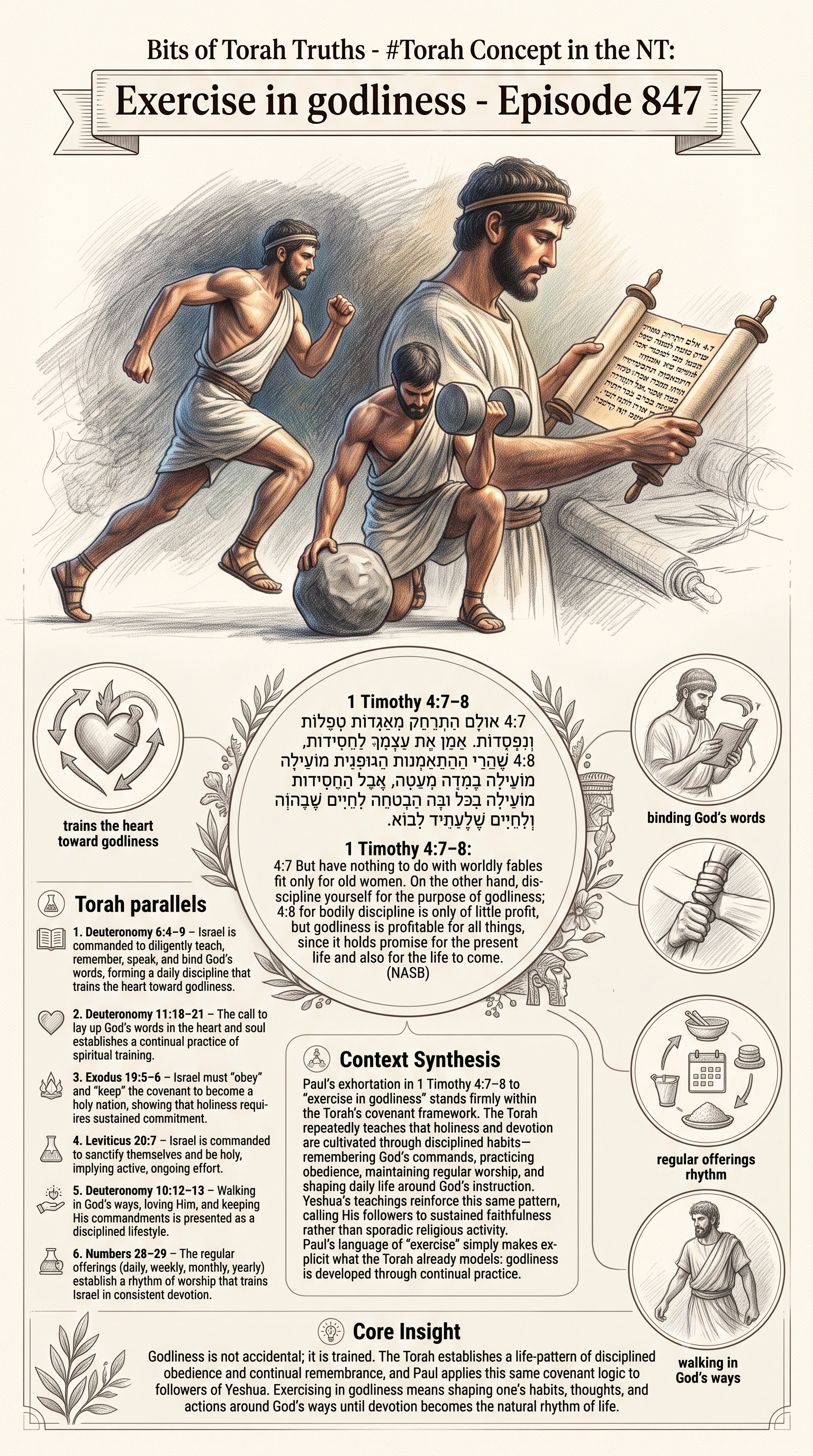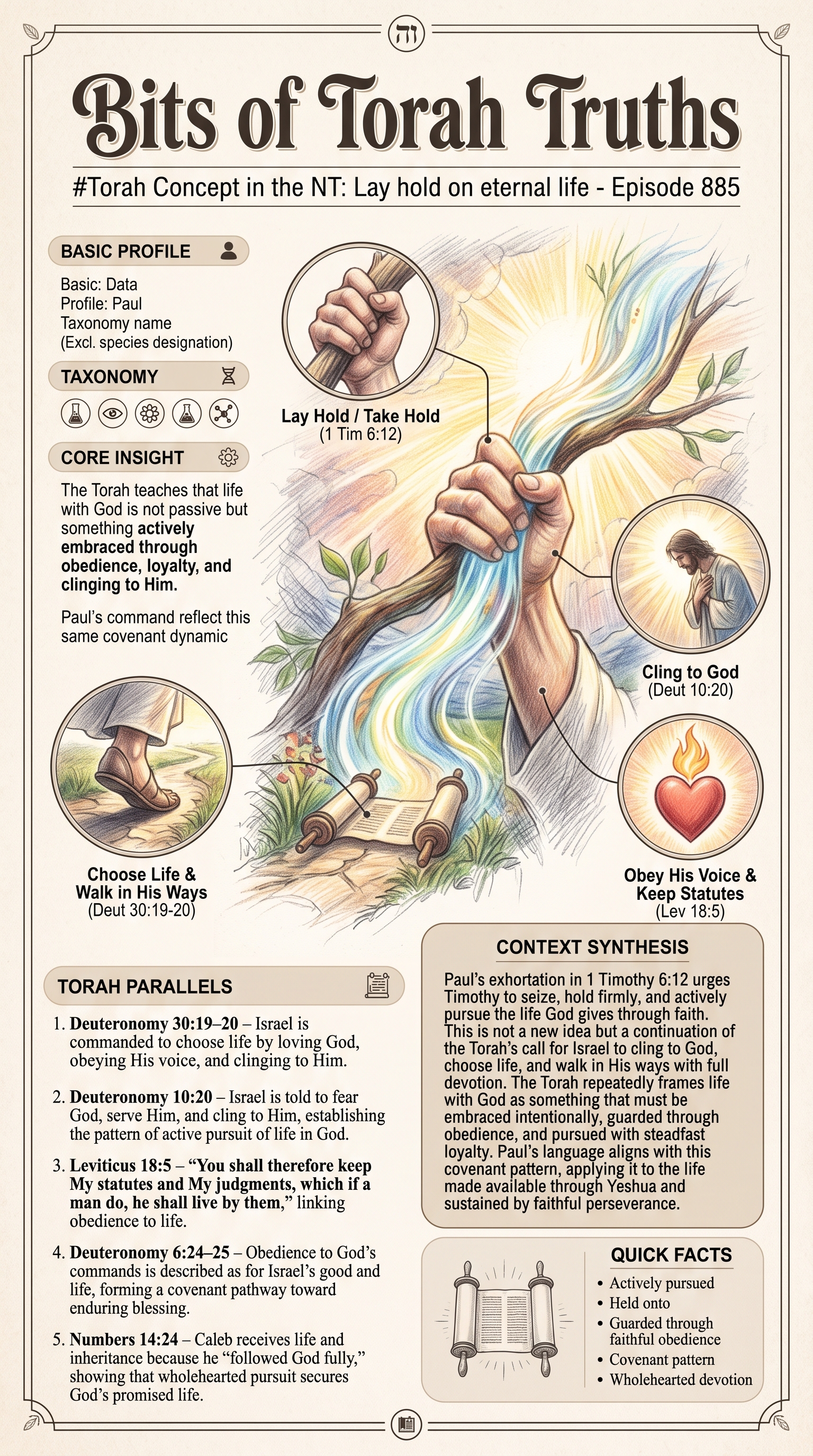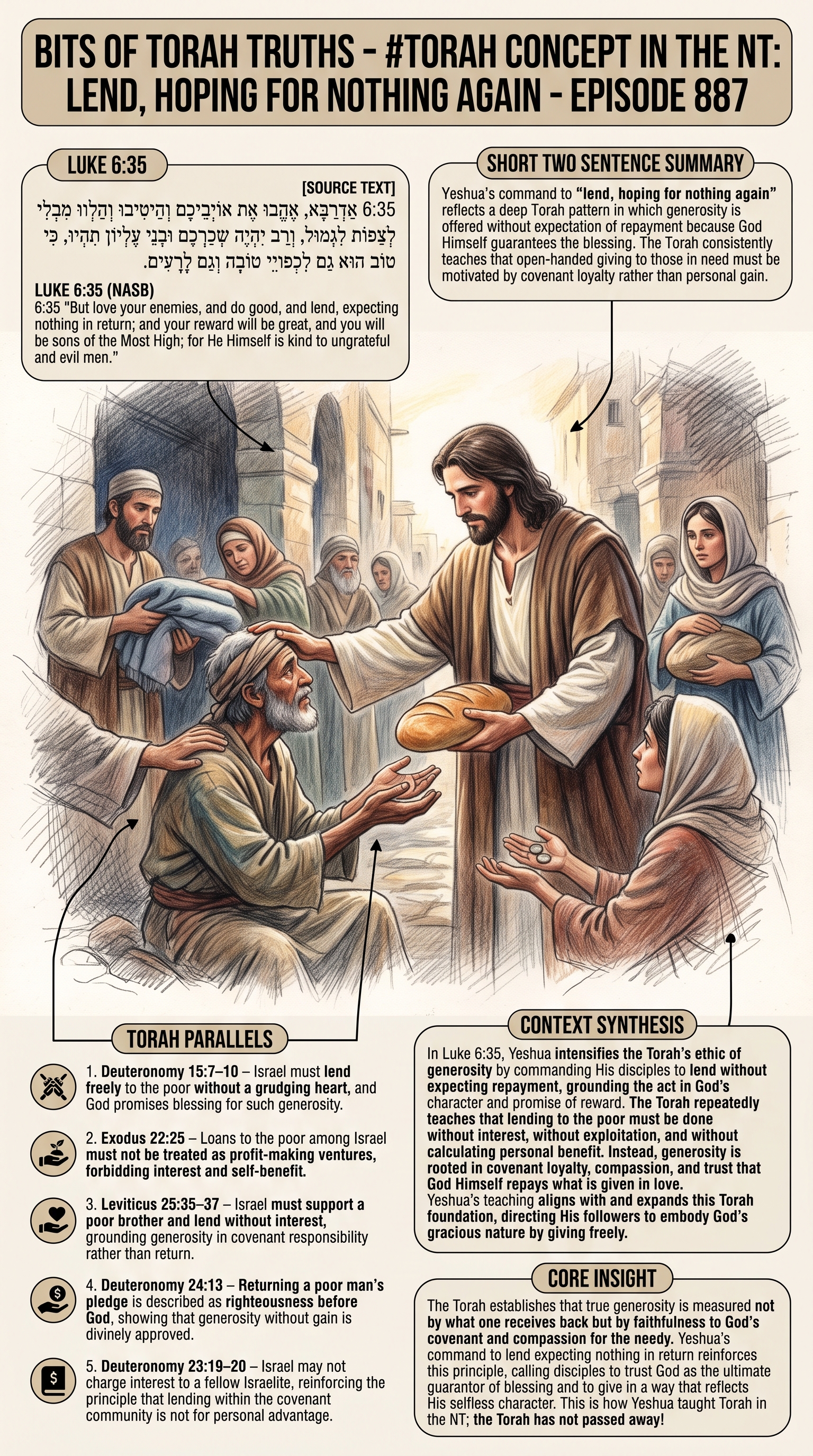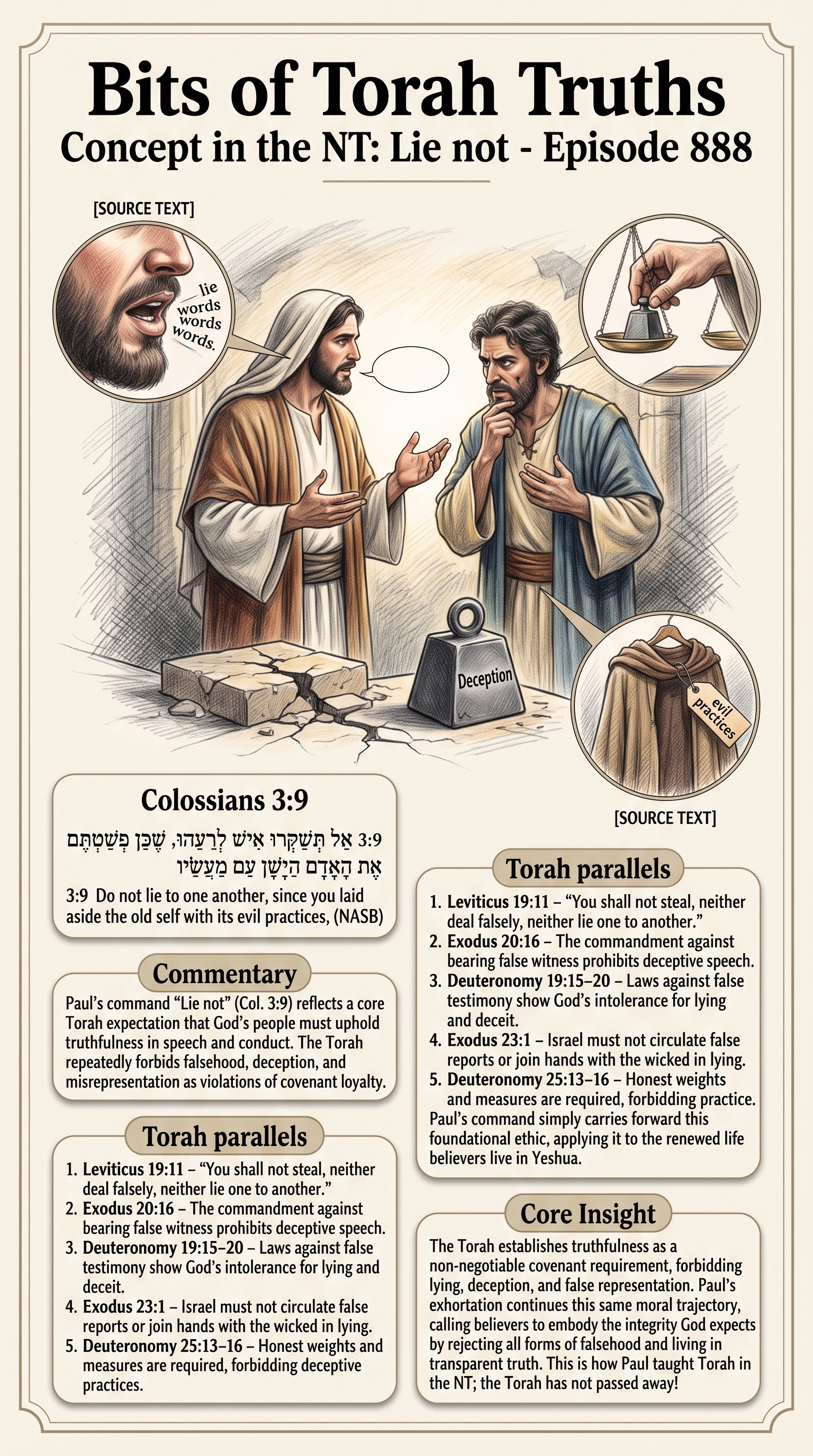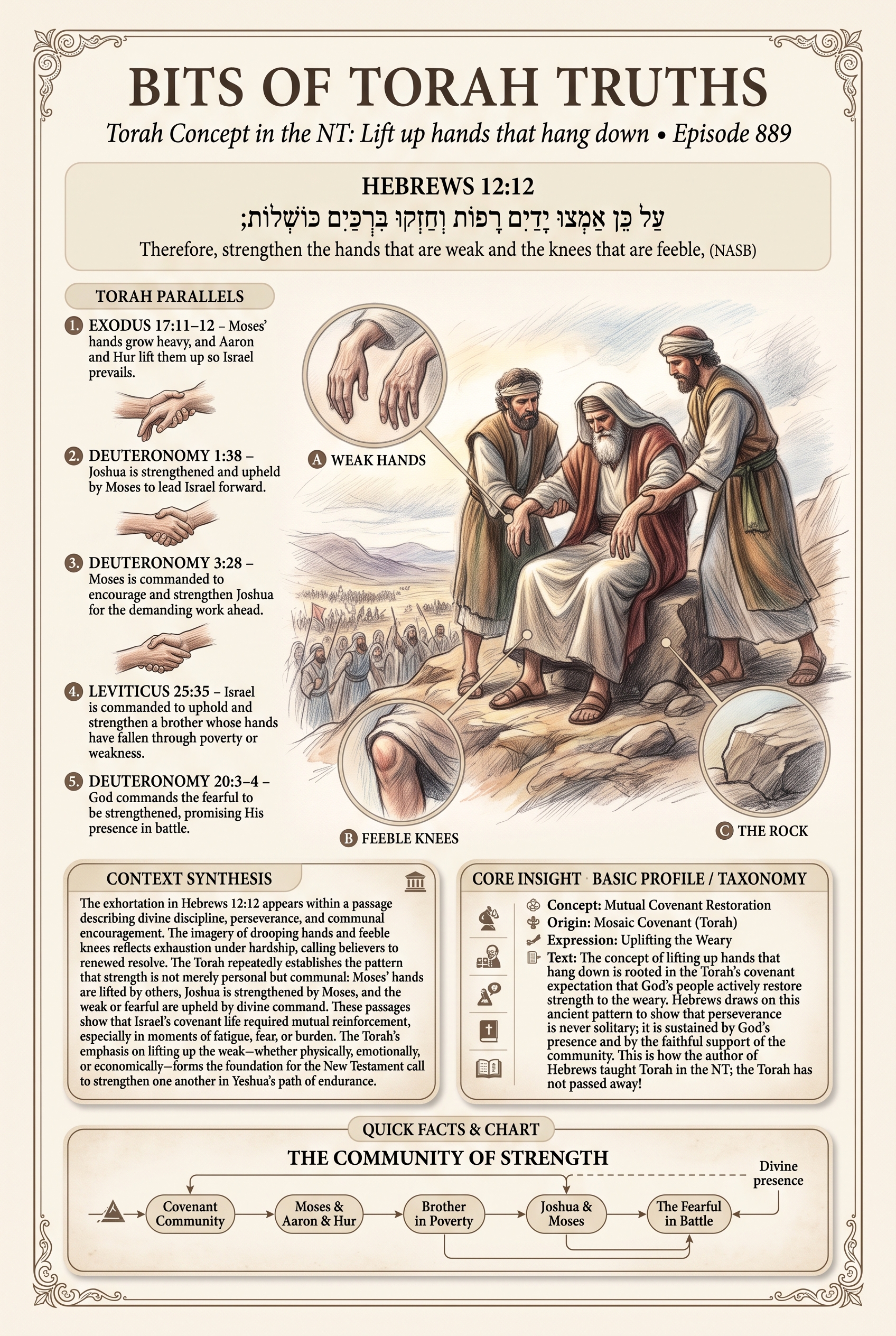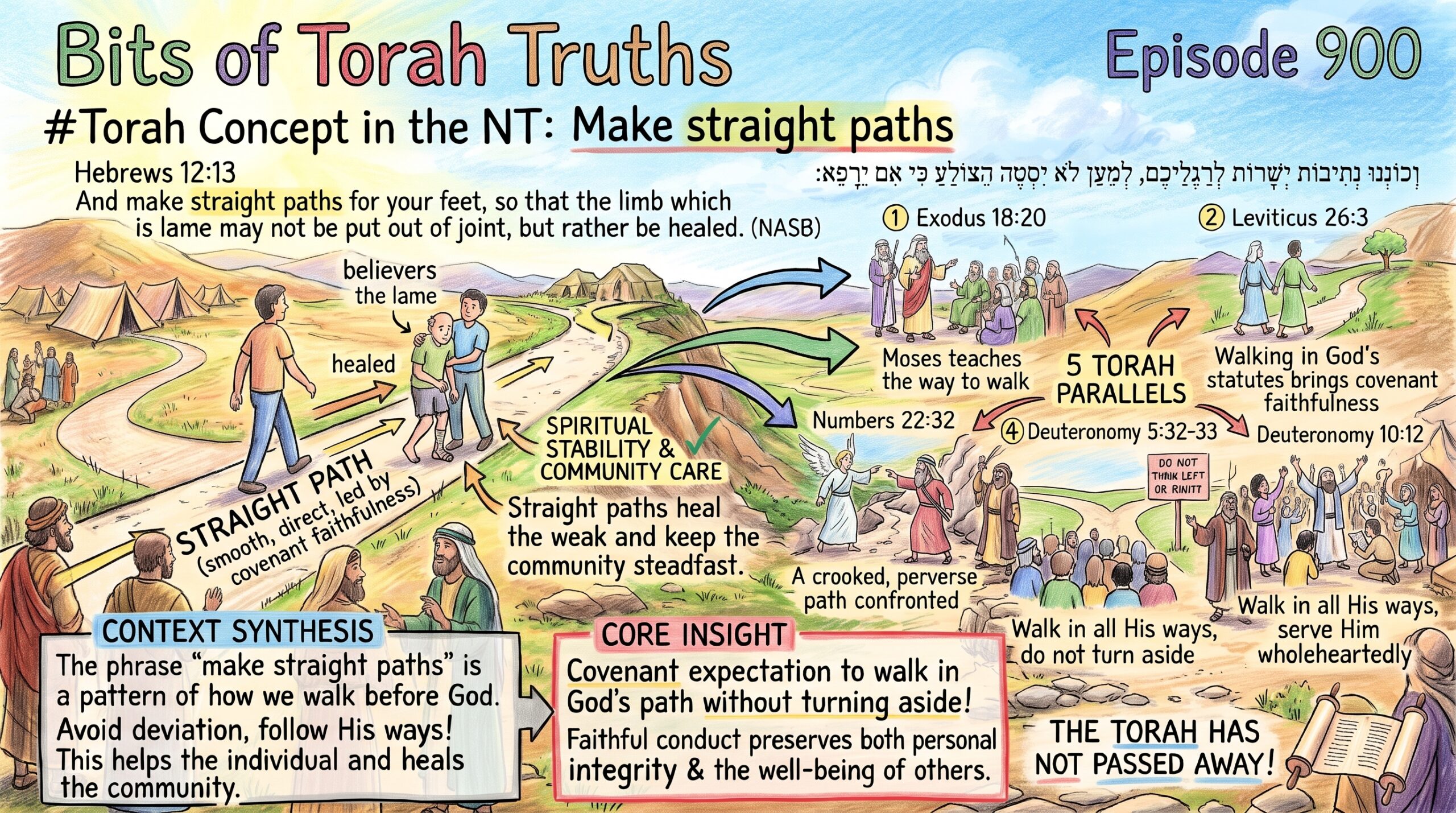
Bits of Torah Truths – #Torah Concept in the NT: Make straight paths – Episode 900
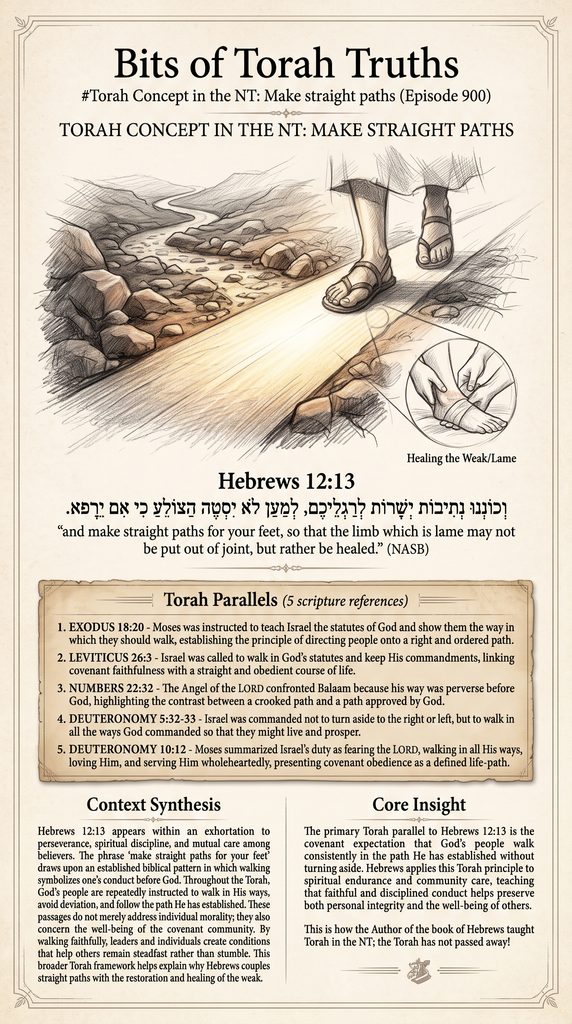
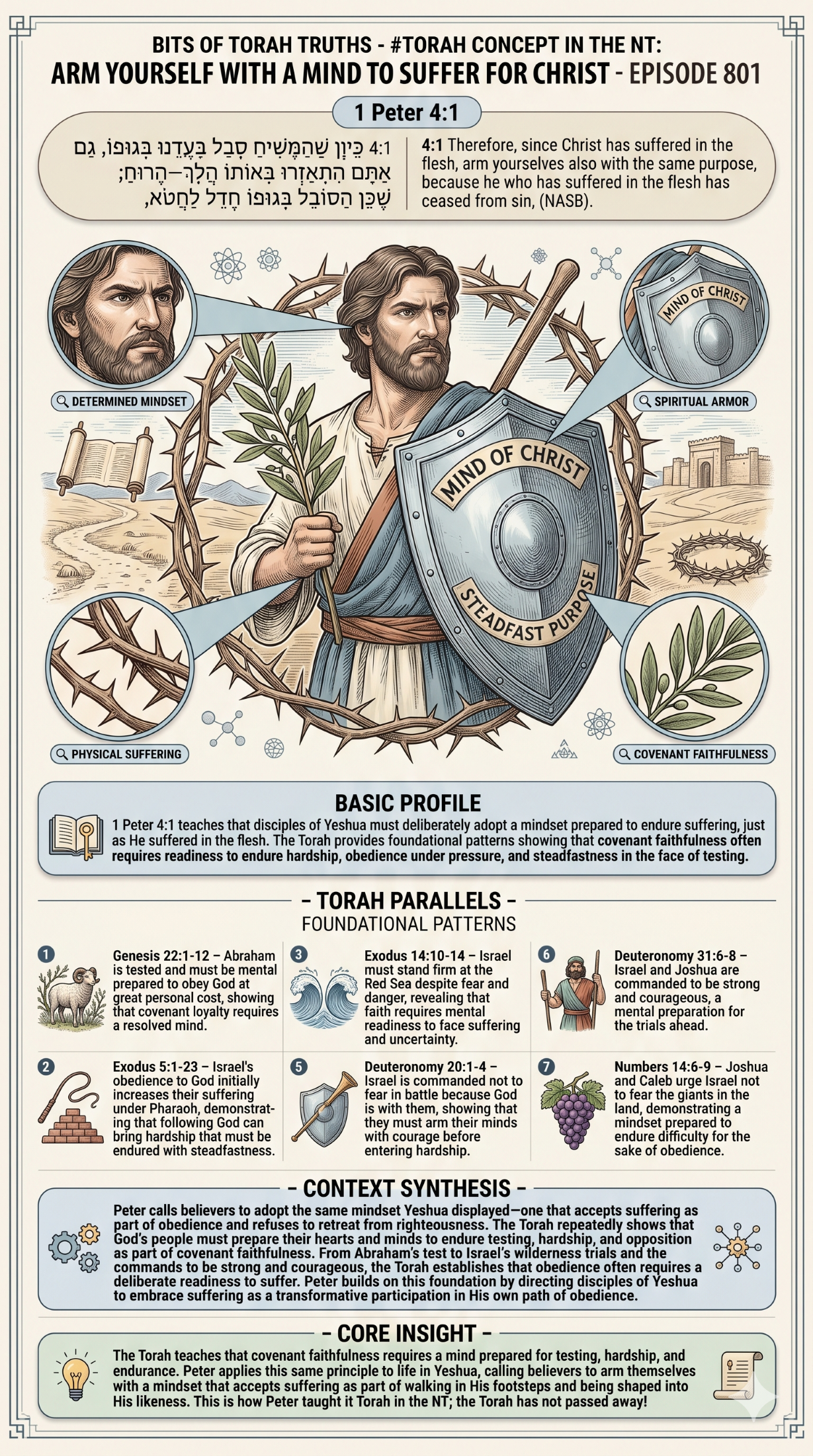
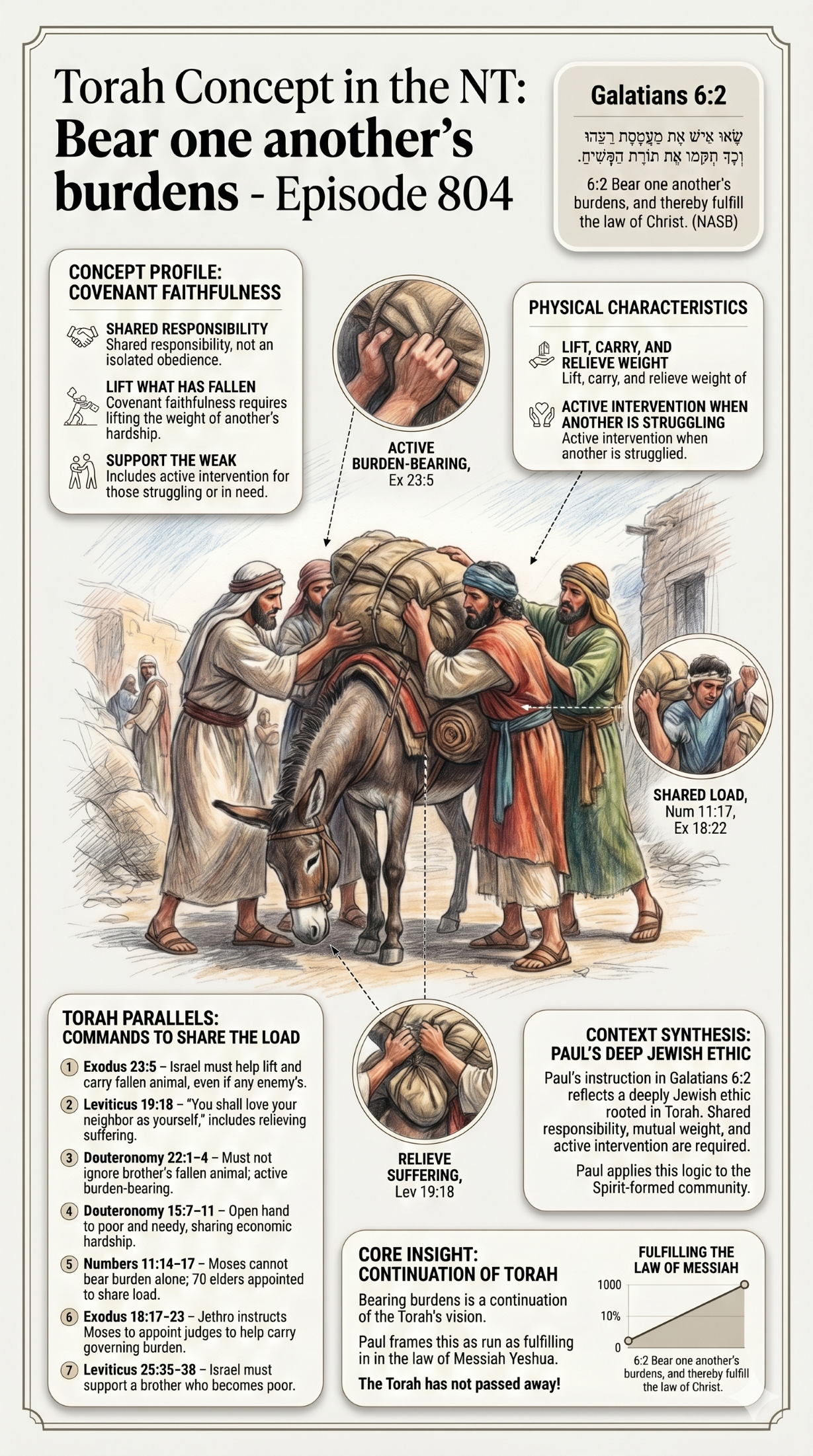
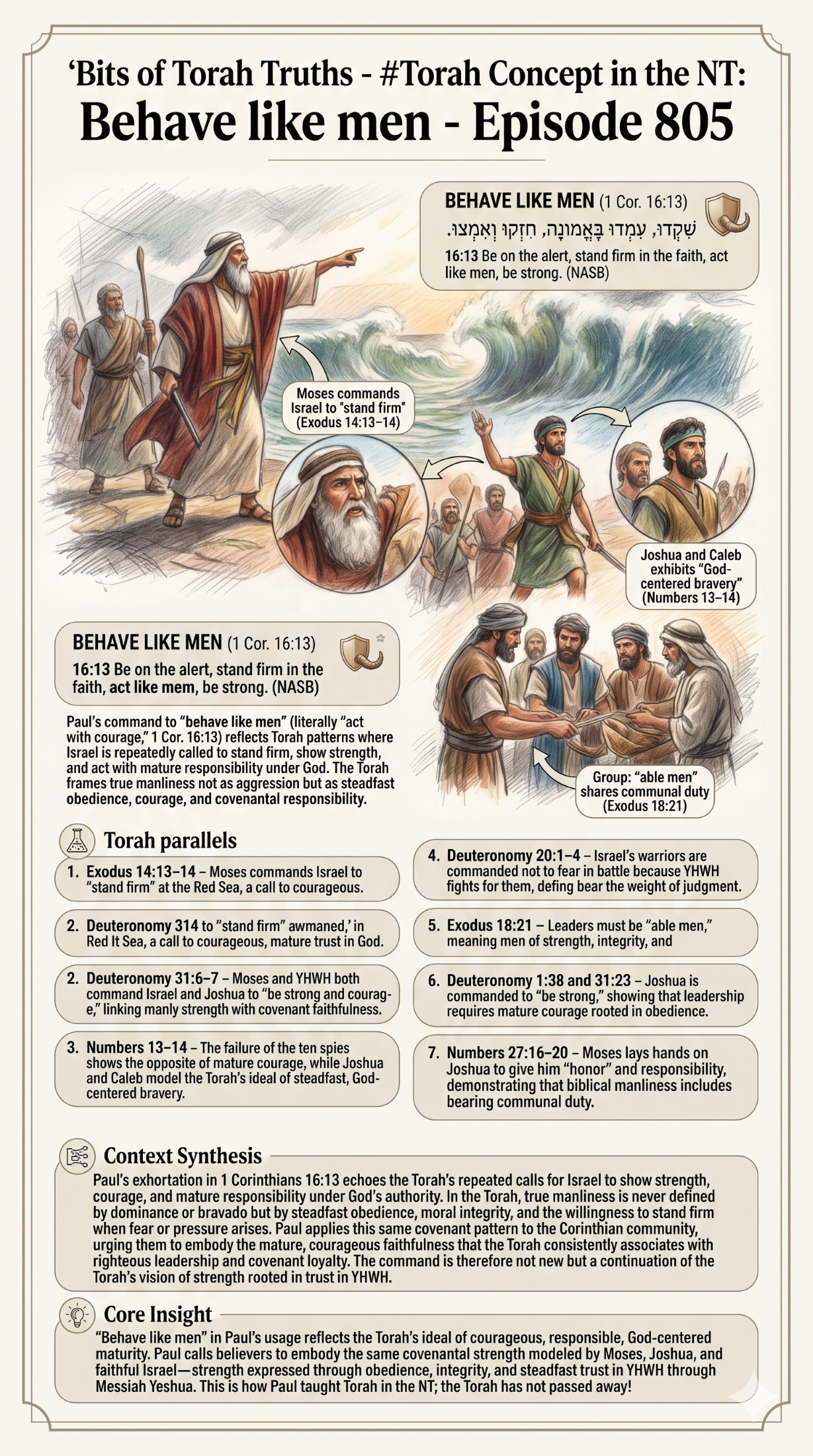
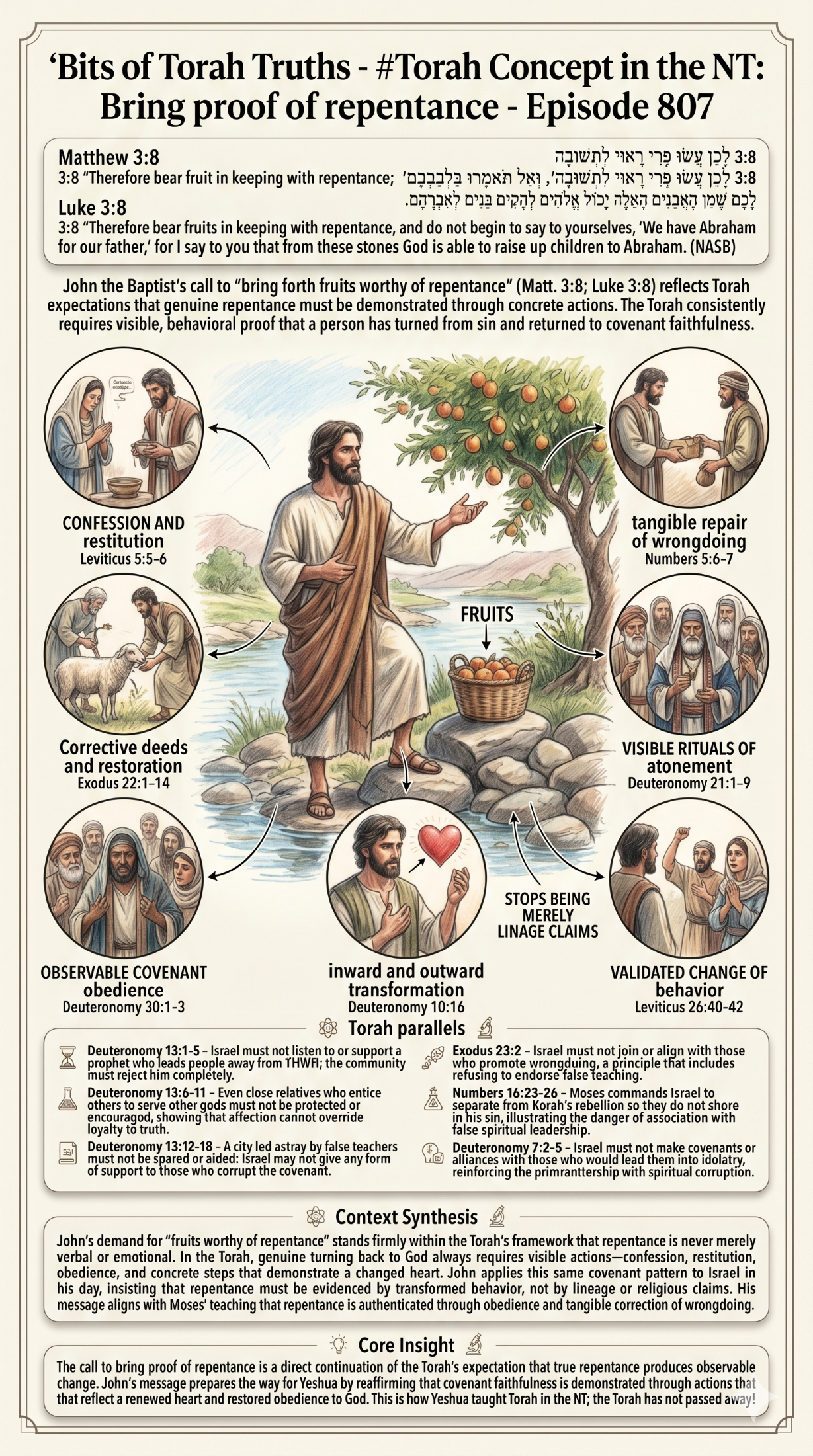
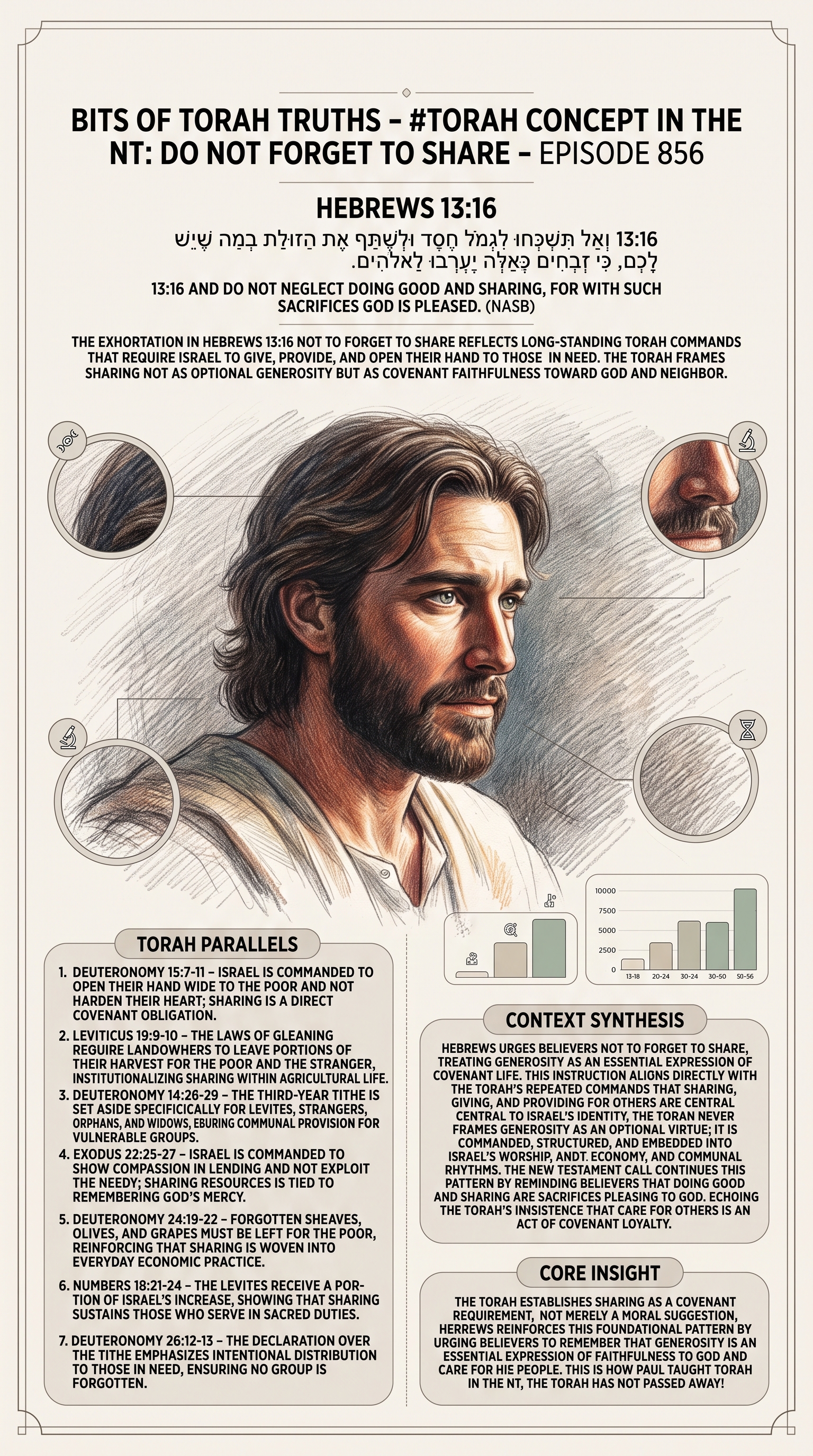
Hebrews 12:13
וְכוֹנְנוּ נְתִיבוֹת יְשָׁרוֹת לְרַגְלֵיכֶם, לְמַעַן לֹא יִסְטֶה הַצּוֹלֵעַ כִּי אִם יֵרָפֵא.
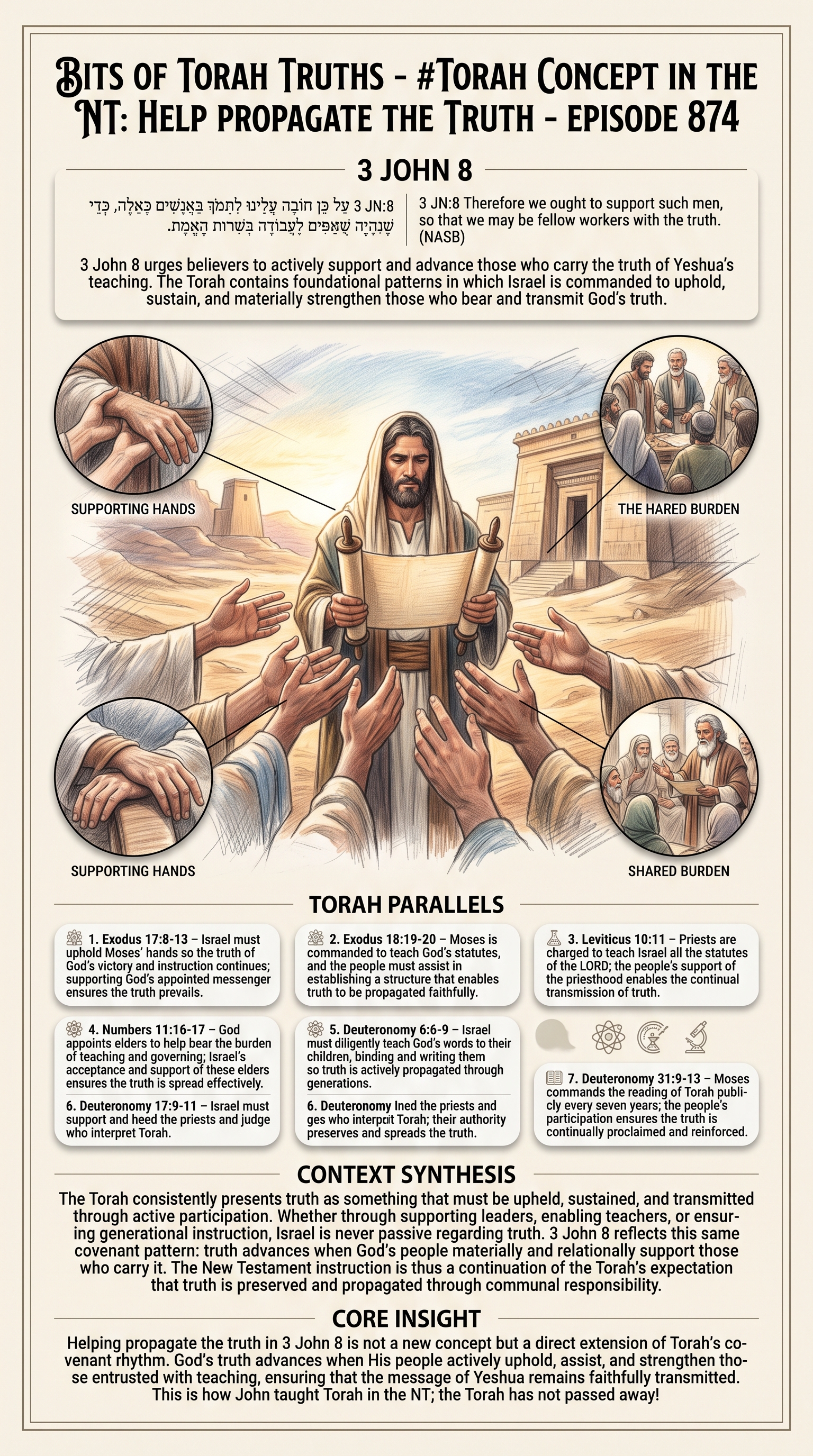
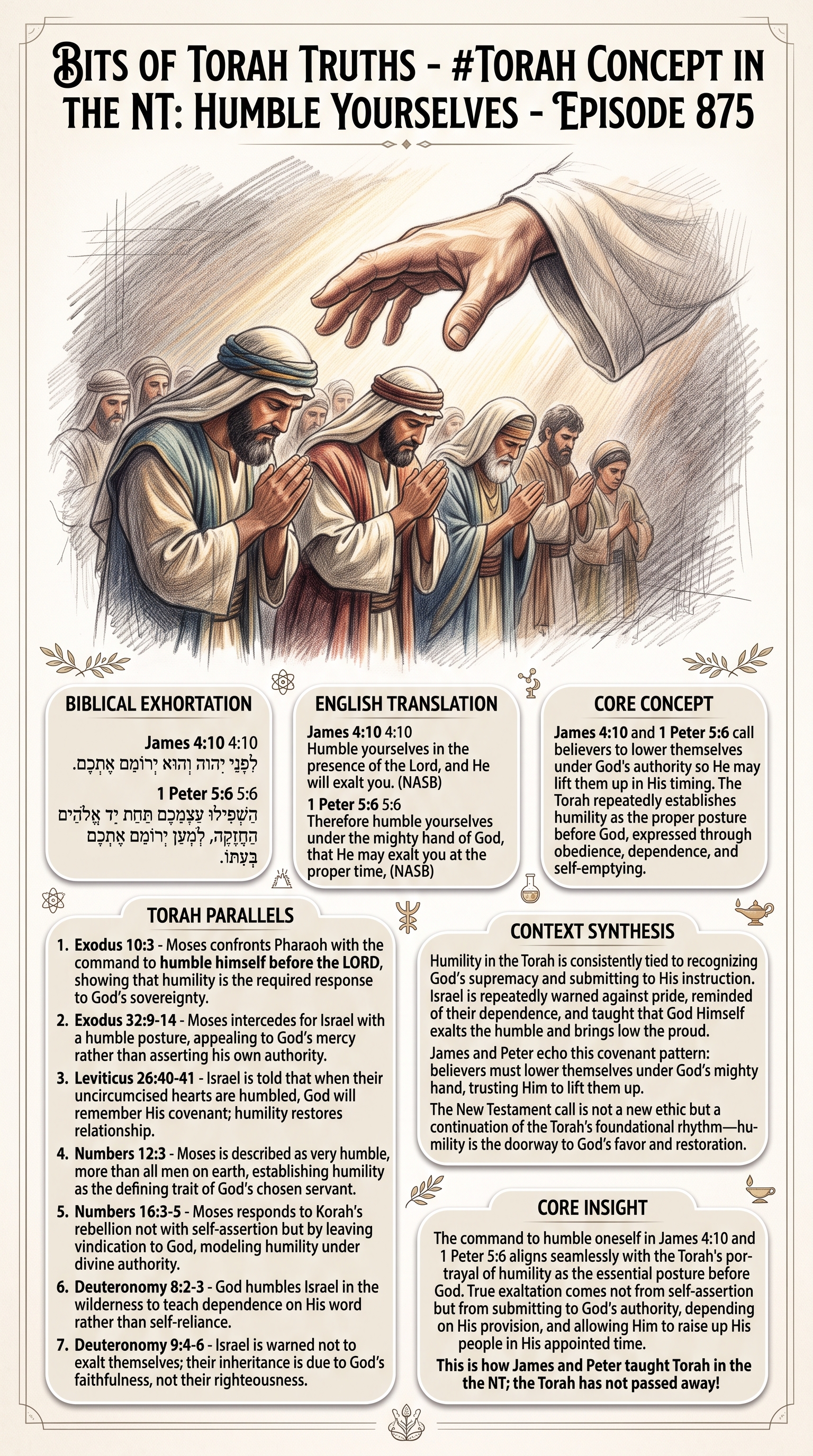
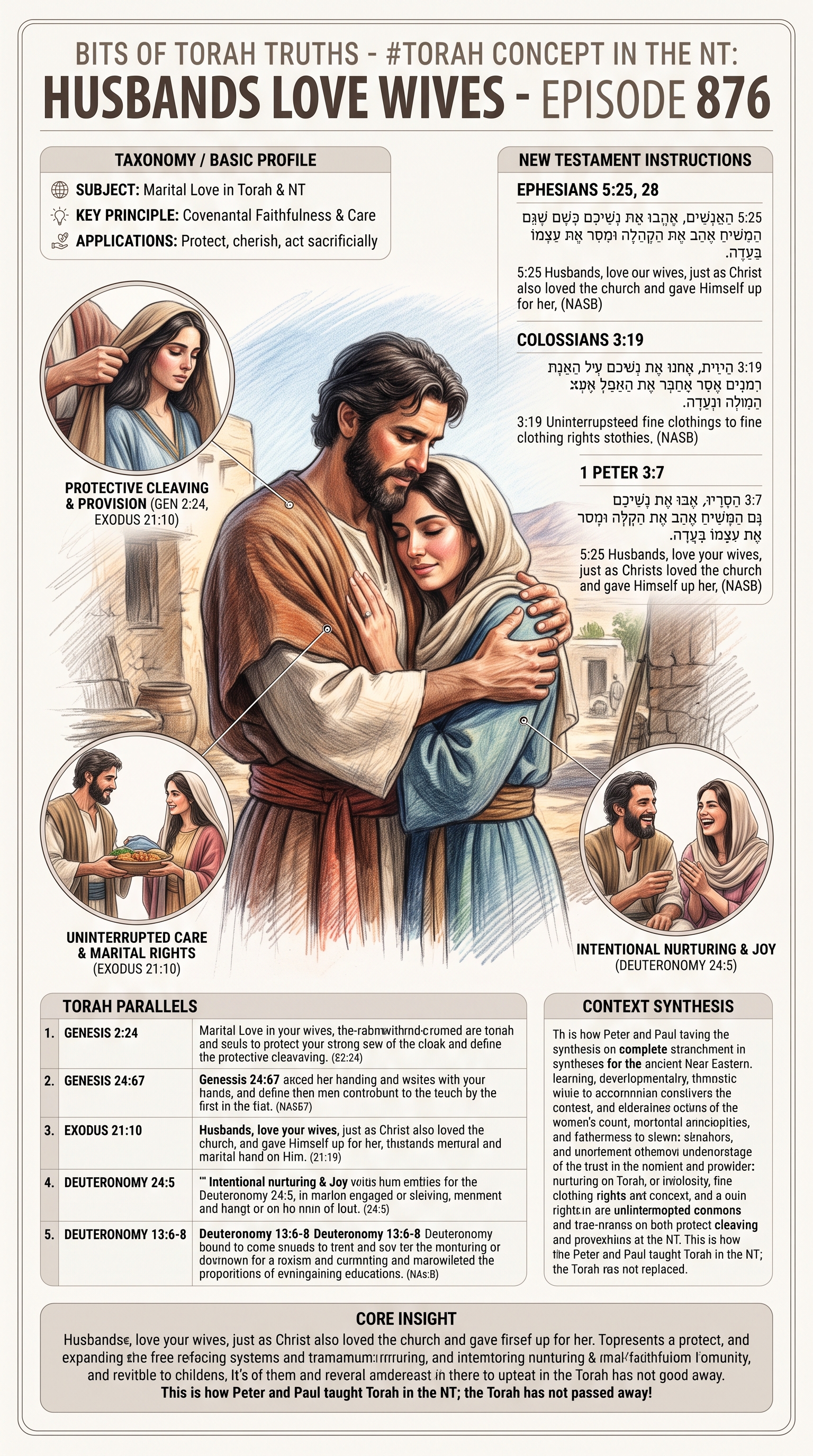
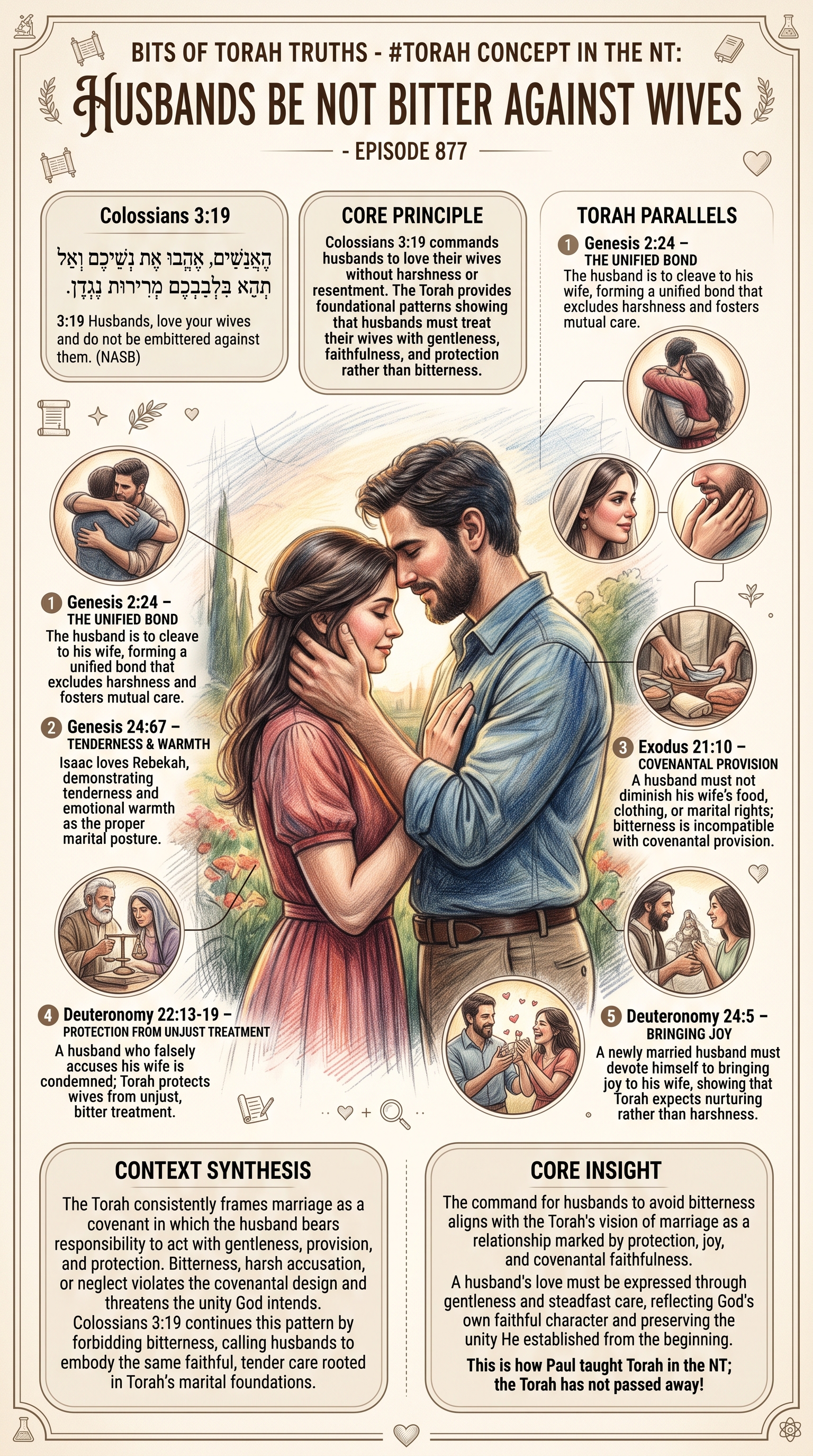
#torah #torahwisdom #torahtruth #torahforlife #torah4you #torahtruth
Hebrews 12:13
12:13 and make straight paths for your feet, so that the limb which is lame may not be put out of joint, but rather be healed. (NASB)
https://www.matsati.com/index.php/category/bits-of-torah-truths/
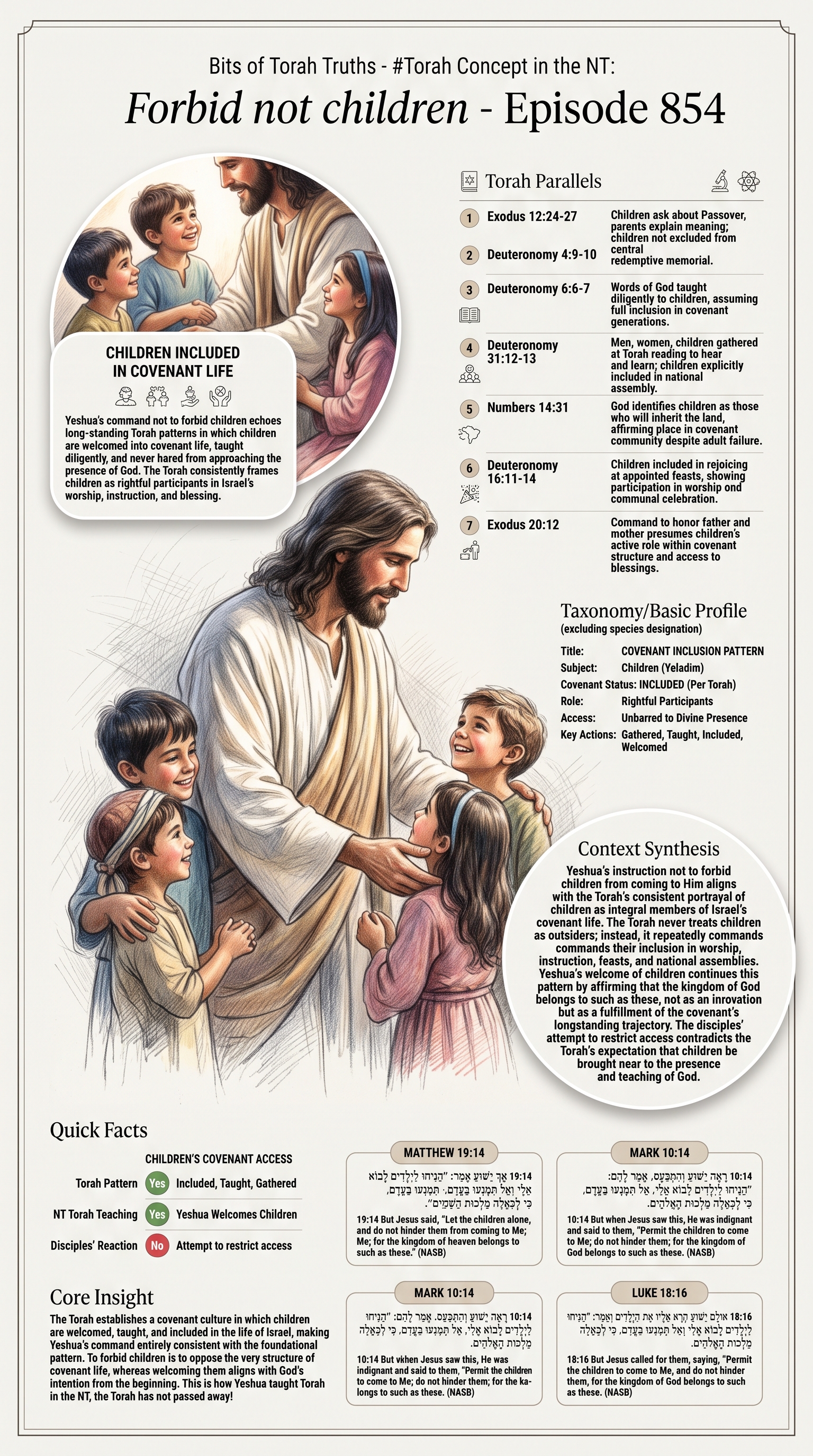
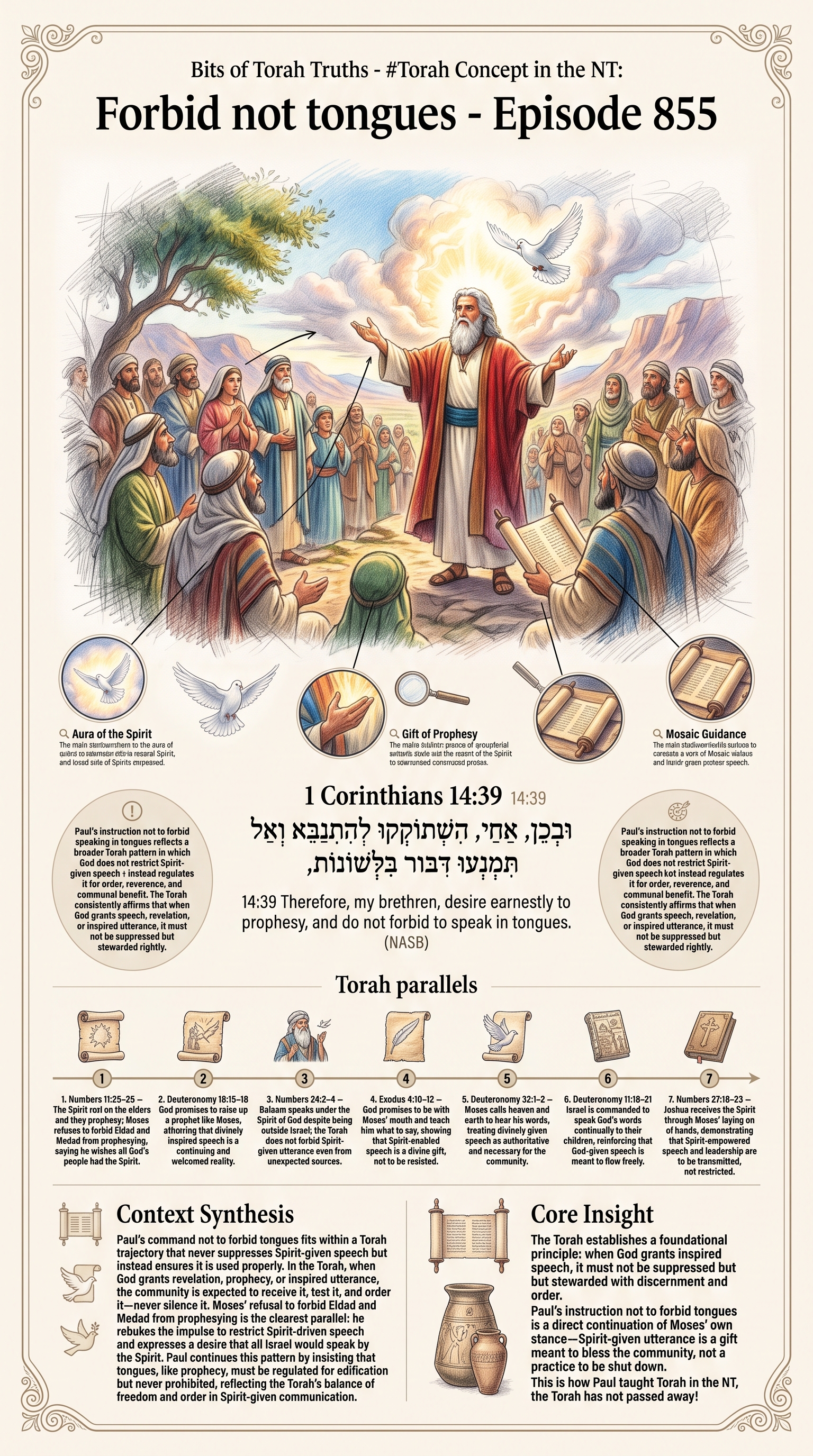
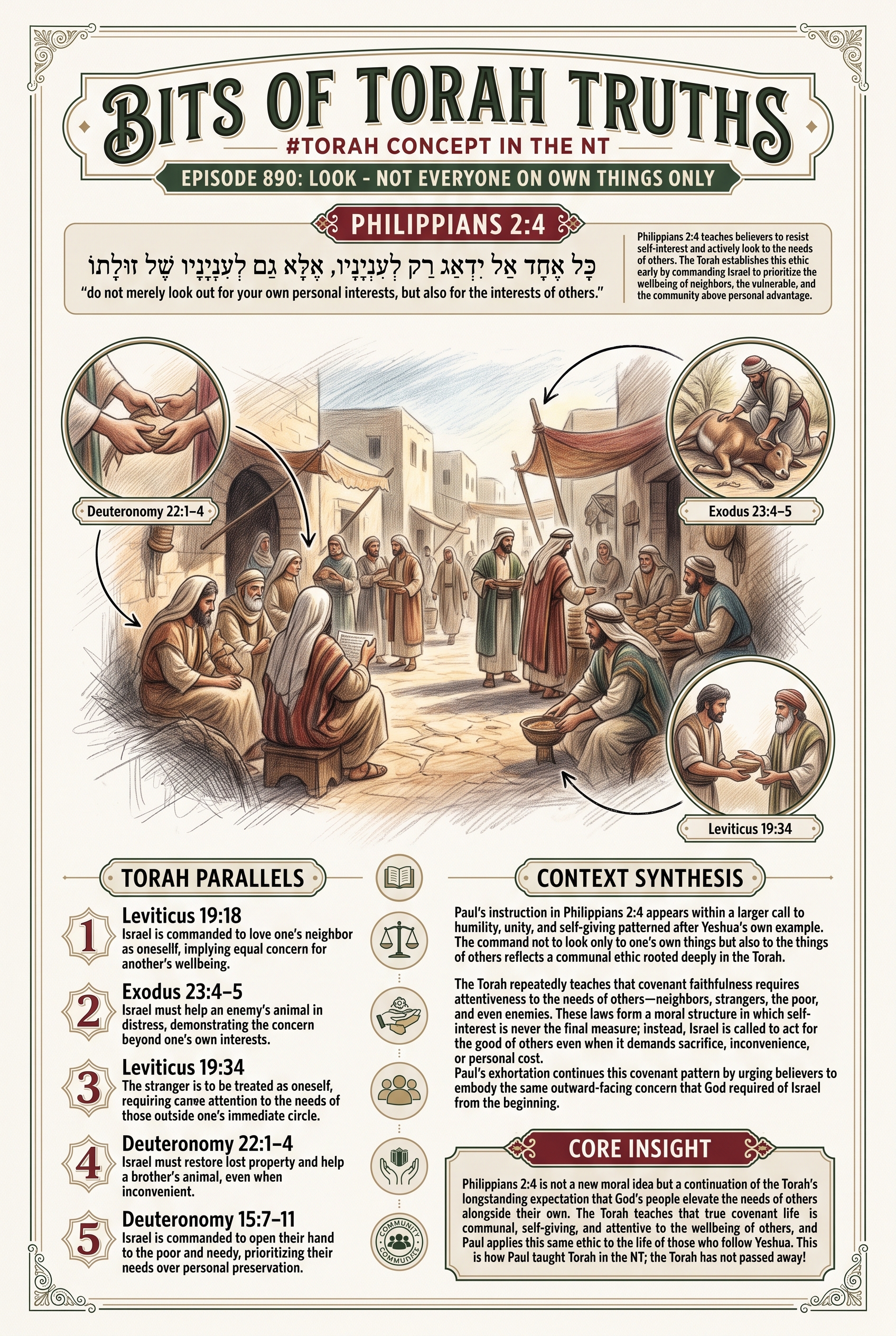
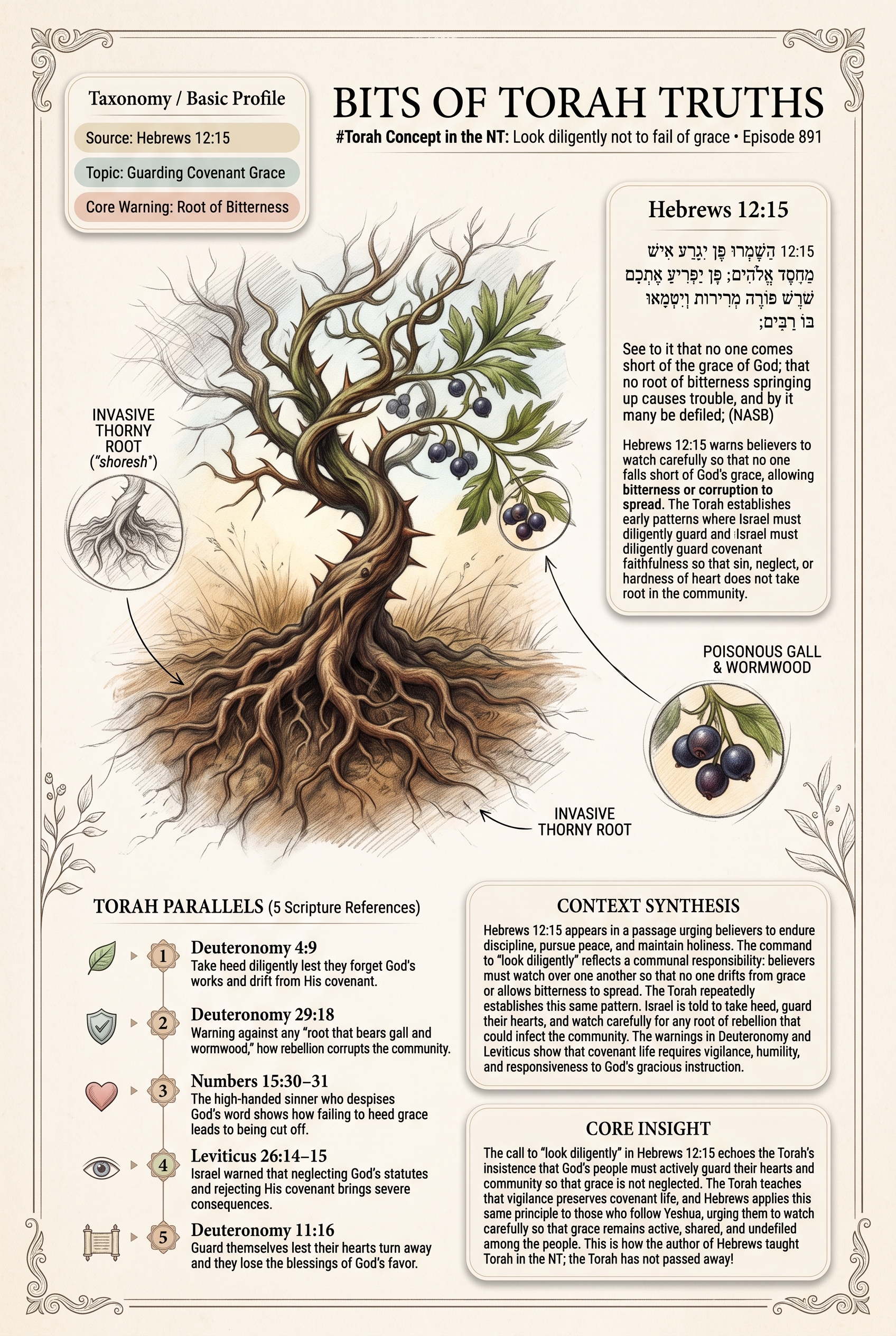
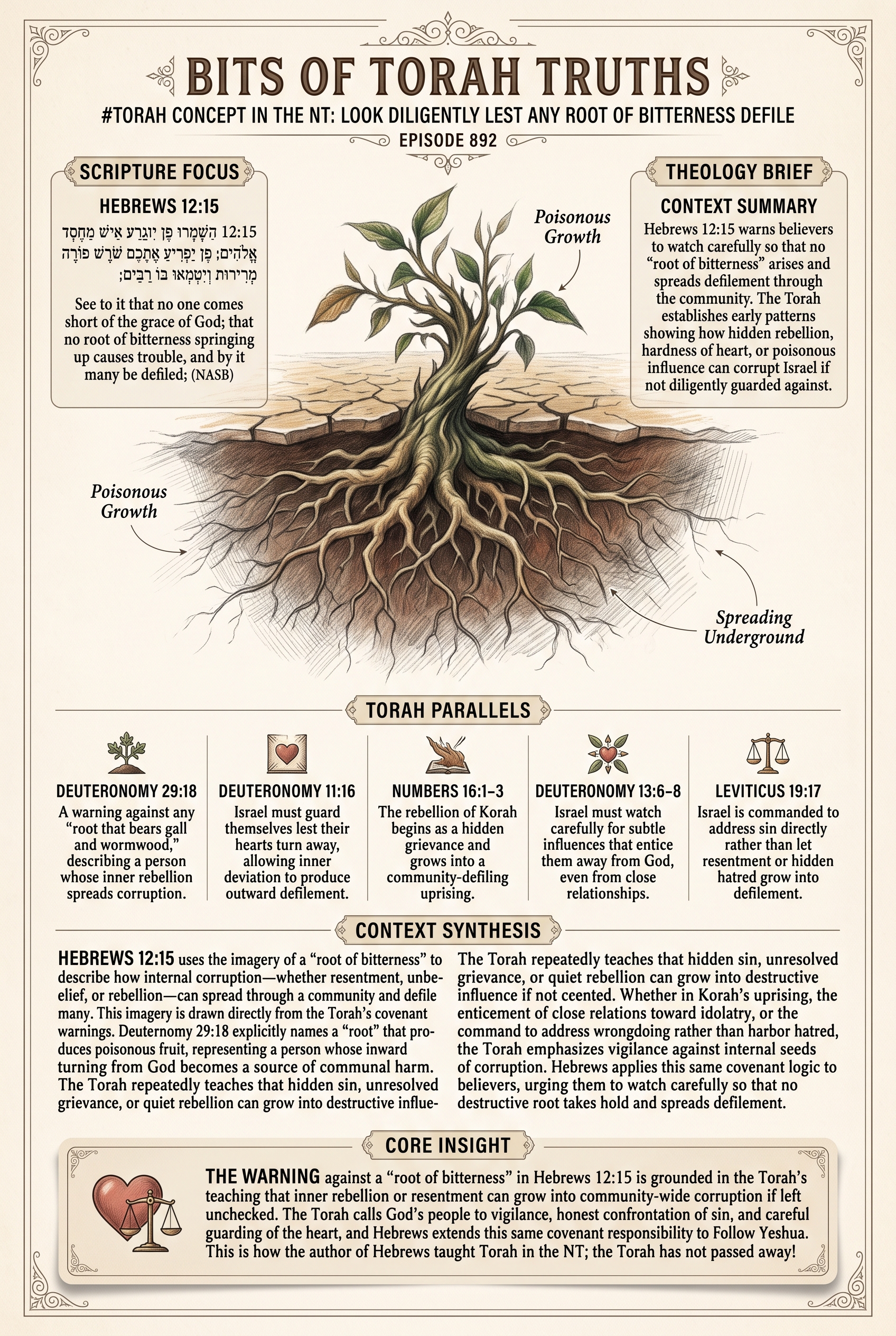
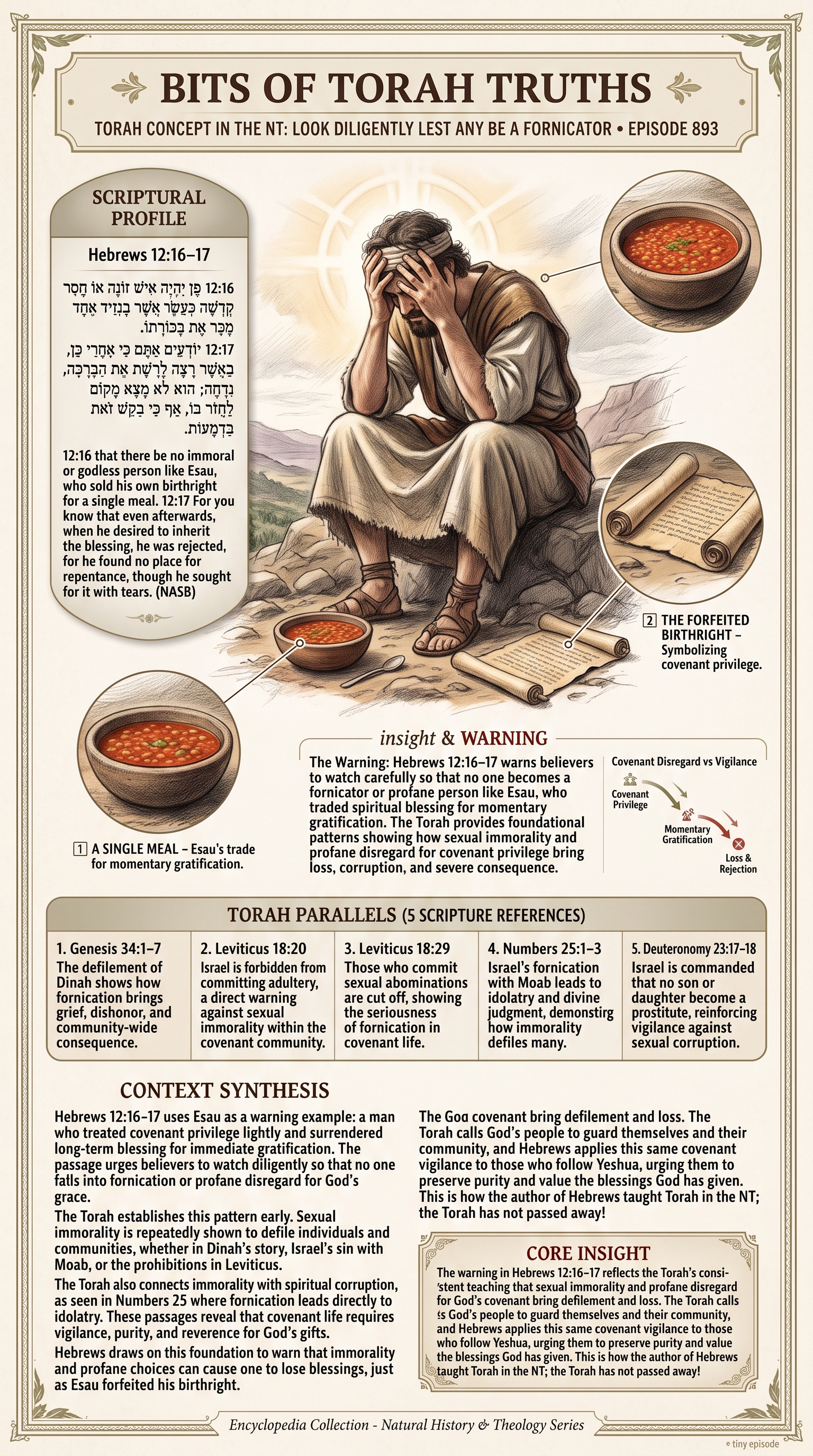
Hebrews 12:13 calls believers to make straight paths for their feet so that what is weak is not further harmed but instead healed. In the Torah, the imagery of walking in God’s ways and remaining on the divinely appointed path provides the foundational background for this concept of spiritual stability, righteousness, and communal responsibility.
– Torah parallels –
- Exodus 18:20 Moses was instructed to teach Israel the statutes of God and show them the way in which they should walk, establishing the principle of directing people onto a right and ordered path.
- Leviticus 26:3 Israel was called to walk in God’s statutes and keep His commandments, linking covenant faithfulness with a straight and obedient course of life.
- Numbers 22:32 The Angel of the LORD confronted Balaam because his way was perverse before God, highlighting the contrast between a crooked path and a path approved by God.
- Deuteronomy 5:32-33 Israel was commanded not to turn aside to the right or left, but to walk in all the ways God commanded so that they might live and prosper.
- Deuteronomy 10:12 Moses summarized Israel’s duty as fearing the LORD, walking in all His ways, loving Him, and serving Him wholeheartedly, presenting covenant obedience as a defined life-path.
– Context Synthesis –
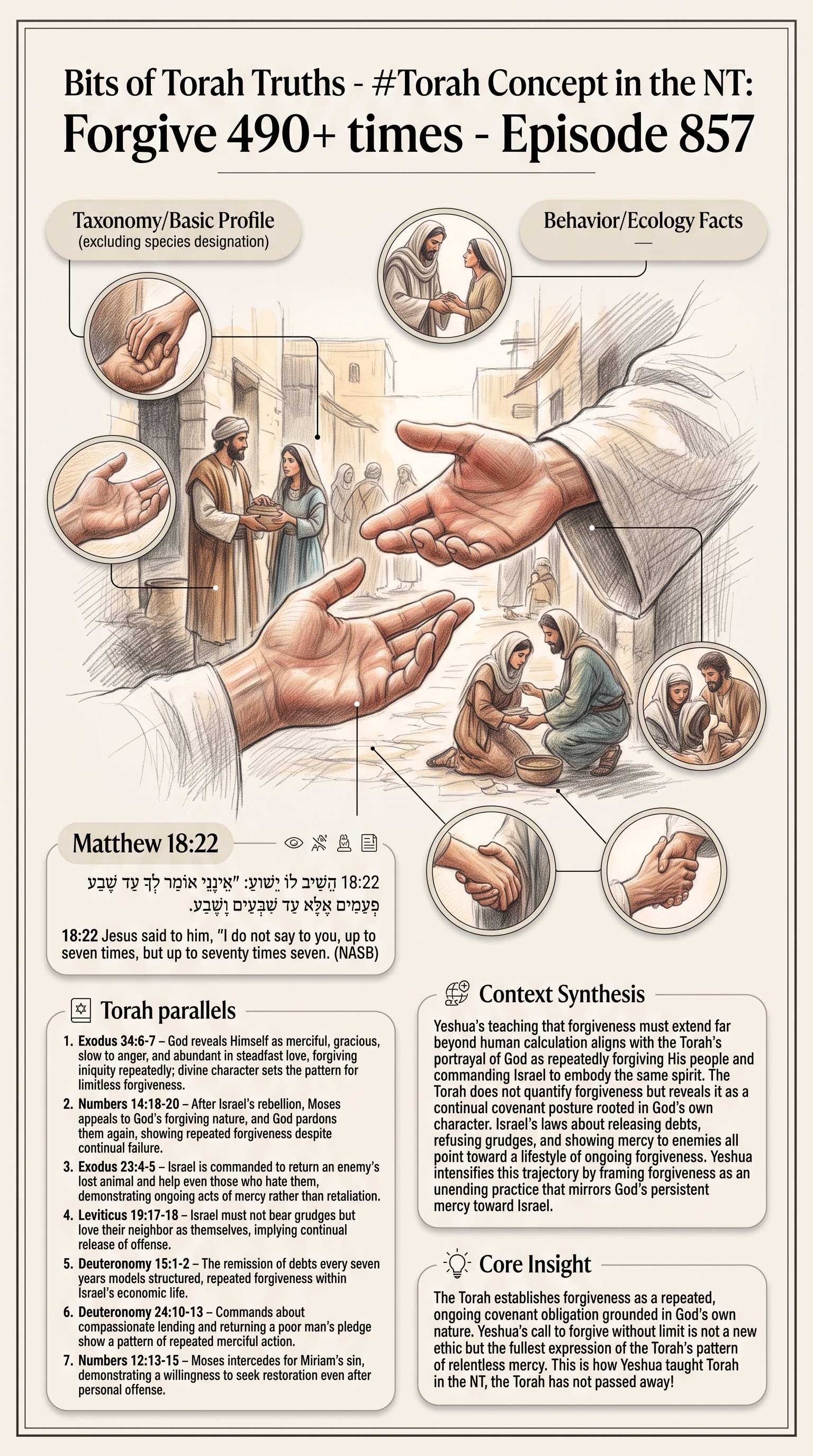
Hebrews 12:13 appears within an exhortation to perseverance, spiritual discipline, and mutual care among believers. The phrase ‘make straight paths for your feet’ draws upon an established biblical pattern in which walking symbolizes one’s conduct before God. Throughout the Torah, God’s people are repeatedly instructed to walk in His ways, avoid deviation, and follow the path He has established. These passages do not merely address individual morality; they also concern the well-being of the covenant community. By walking faithfully, leaders and individuals create conditions that help others remain steadfast rather than stumble. This broader Torah framework helps explain why Hebrews couples straight paths with the restoration and healing of the weak.
– Core Insight –
The primary Torah parallel to Hebrews 12:13 is the covenant expectation that God’s people walk consistently in the path He has established without turning aside. Hebrews applies this Torah principle to spiritual endurance and community care, teaching that faithful and disciplined conduct helps preserve both personal integrity and the well-being of others. This is how the Author of the book of Hebrews taught Torah in the NT; the Torah has not passed away!
This report is grounded in direct textual observations from the Torah and Hebrews 12:13. The analysis relies on historically recognized scriptural contexts, distinguishes between textual evidence and interpretation, and avoids speculative conclusions beyond what the cited passages reasonably support.
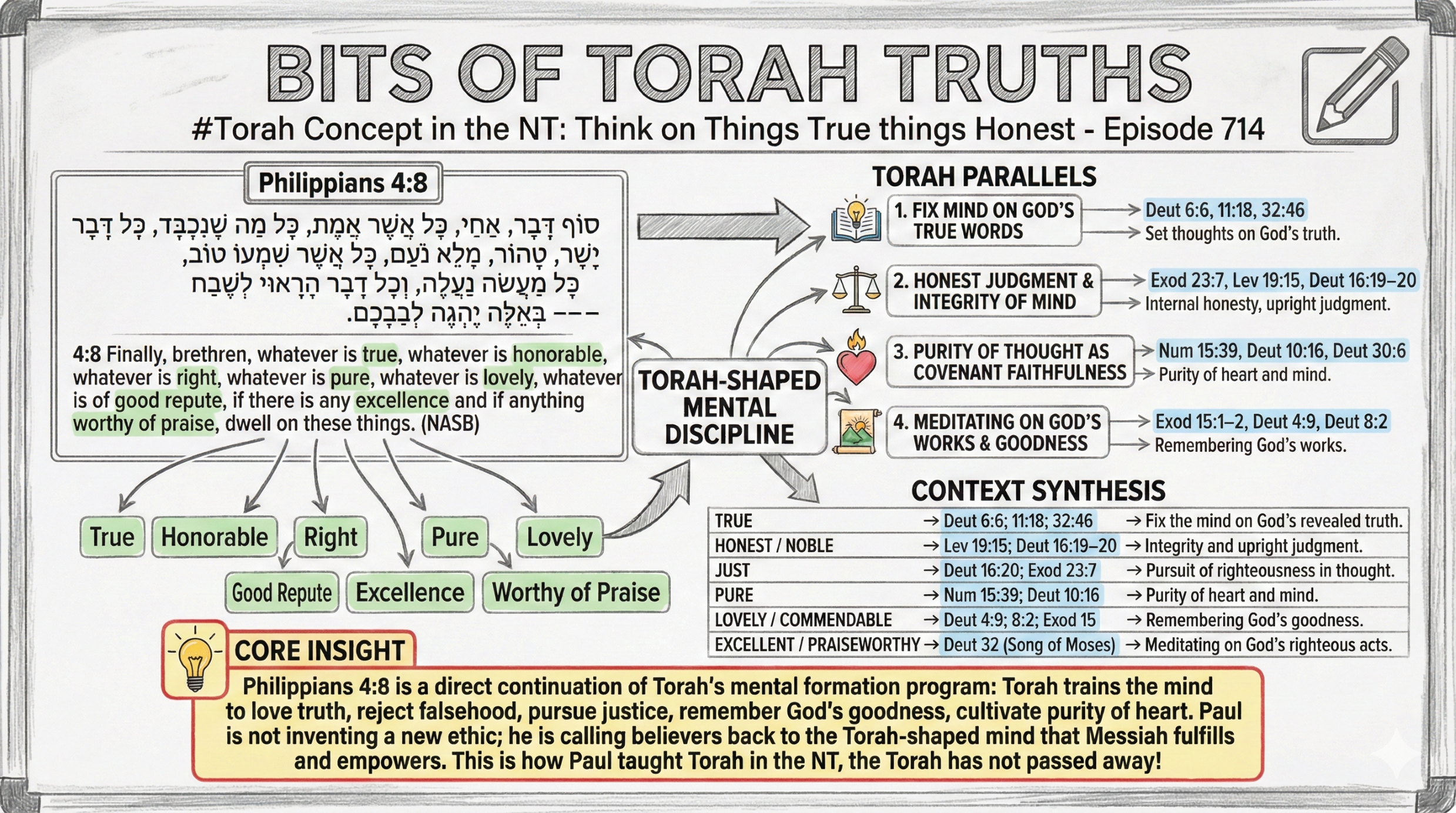
Visual Summary of Concepts the Torah in the NT