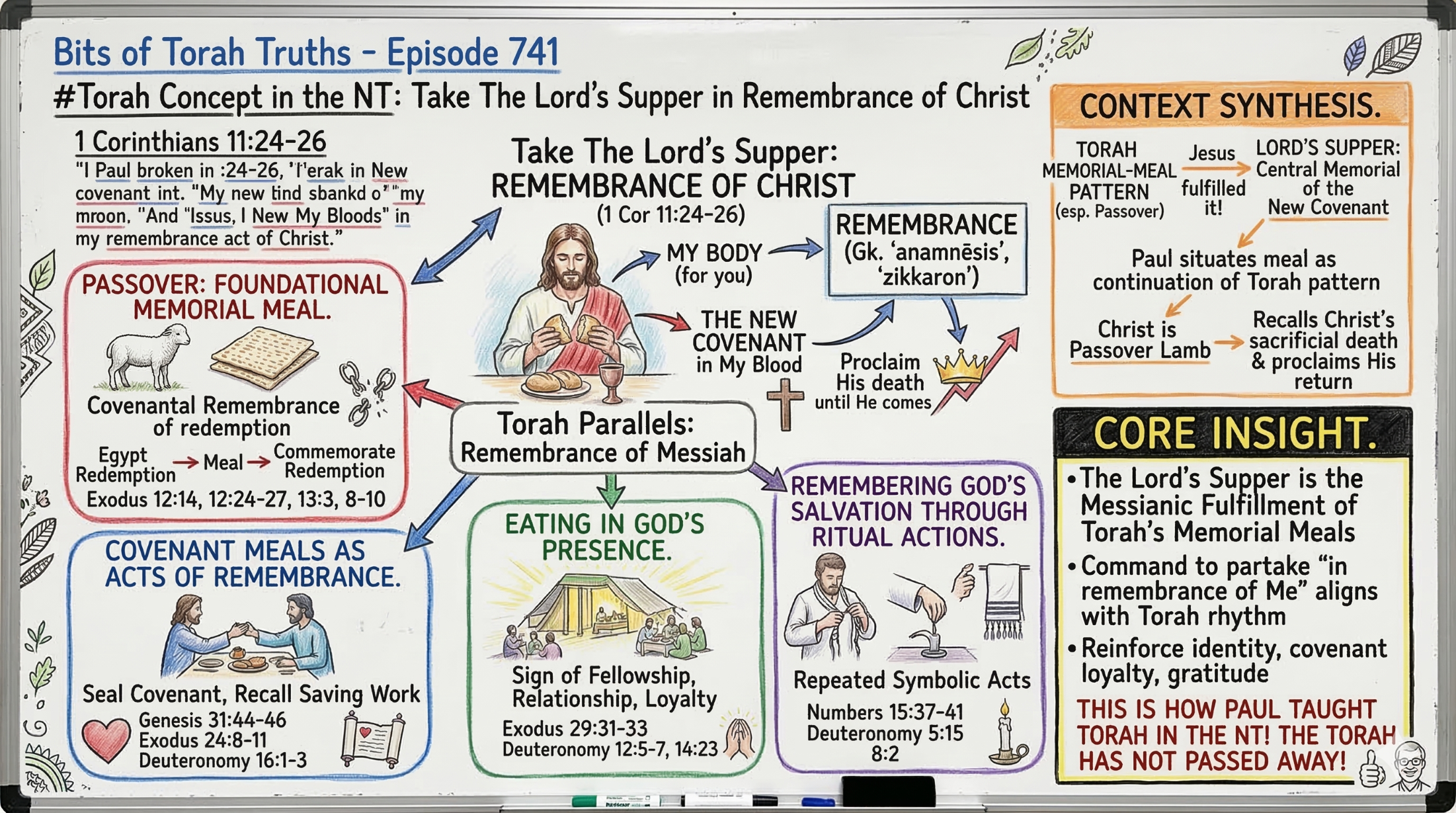
Bits of Torah Truths – #Torah Concept in the NT: You shall not Covet – Episode 776
Romans 13:9
הֵן הַמִּצְווֹת ״לֹא תִנְאַף״, ״לֹא תִרְצַח״, ״לֹא תִגְנֹב״, ״לֹא תַחְמֹד״, וְכָל מִצְוָה אַחֶרֶת, כְּלוּלוֹת בַּמַּאֲמָר ״וְאָהַבְתָּ לְרֵעֲךָ כָּמוֹךָ.״
#torah #torahwisdom #torahtruth #torahforlife #torah4you #torahtruth
Romans 13:9
13:9 For this, “YOU SHALL NOT COMMIT ADULTERY, YOU SHALL NOT MURDER, YOU SHALL NOT STEAL, YOU SHALL NOT COVET,” and if there is any other commandment, it is summed up in this saying, “YOU SHALL LOVE YOUR NEIGHBOR AS YOURSELF.” (NASB)
https://www.matsati.com/index.php/category/bits-of-torah-truths/
The NT command “You shall not covet” (Romans 13:9) directly reflects the Torah’s prohibition against inward desire that seeks to grasp what belongs to another. Torah treats coveting not merely as an internal impulse but as the root of actions that violate neighbor-love and disrupt covenant order.
– Torah parallels –
- Exodus 20:17 — The tenth commandment forbids coveting a neighbor’s house, wife, servants, animals, or anything that belongs to him.
- Deuteronomy 5:21 — Moses reiterates the command, distinguishing between coveting and desiring, showing the depth of the heart-level prohibition.
- Exodus 18:21 — Leaders must hate covetousness, indicating that coveting corrupts judgment and community leadership.
- Deuteronomy 7:25 — Israel is warned not to covet the silver or gold of idols, linking coveting to idolatry and spiritual compromise.
- Joshua 7:20–21 (referenced as Torah-era narrative) — Achan’s confession shows the pattern: seeing, coveting, taking, illustrating how coveting leads to sin and communal harm.
- Deuteronomy 17:16–17 — Kings are warned not to multiply horses, wives, or wealth, guarding against covetous ambition that leads to oppression.
- Exodus 22:10–13 — Laws of stewardship imply that coveting another’s goods leads to misusing or misrepresenting entrusted property.
- Leviticus 19:18 — The command to love one’s neighbor as oneself stands as the opposite of coveting, framing the heart ethic behind the law.
– Context Synthesis –
Paul’s use of “You shall not covet” in Romans 13:9 assumes the Torah’s understanding that coveting is the internal seed from which theft, adultery, false witness, and other sins grow. In the Torah, coveting is not merely wanting something but desiring it in a way that disregards God’s boundaries and the wellbeing of one’s neighbor. The New Testament continues this framework by teaching that love fulfills the law because love refuses to grasp what God has not given. Coveting is therefore a heart-level violation that undermines the relational fabric of the covenant community.
– Core Insight –
The Torah reveals that coveting is a distortion of desire that places self above God’s order and neighbor’s good. Paul affirms this same truth, showing that the gospel calls believers to transformed desires that align with love, contentment, and trust in God’s provision. This is how Paul taught Torah in the NT, the Torah has not passed away!
Visual Summary of Concepts the Torah in the NT