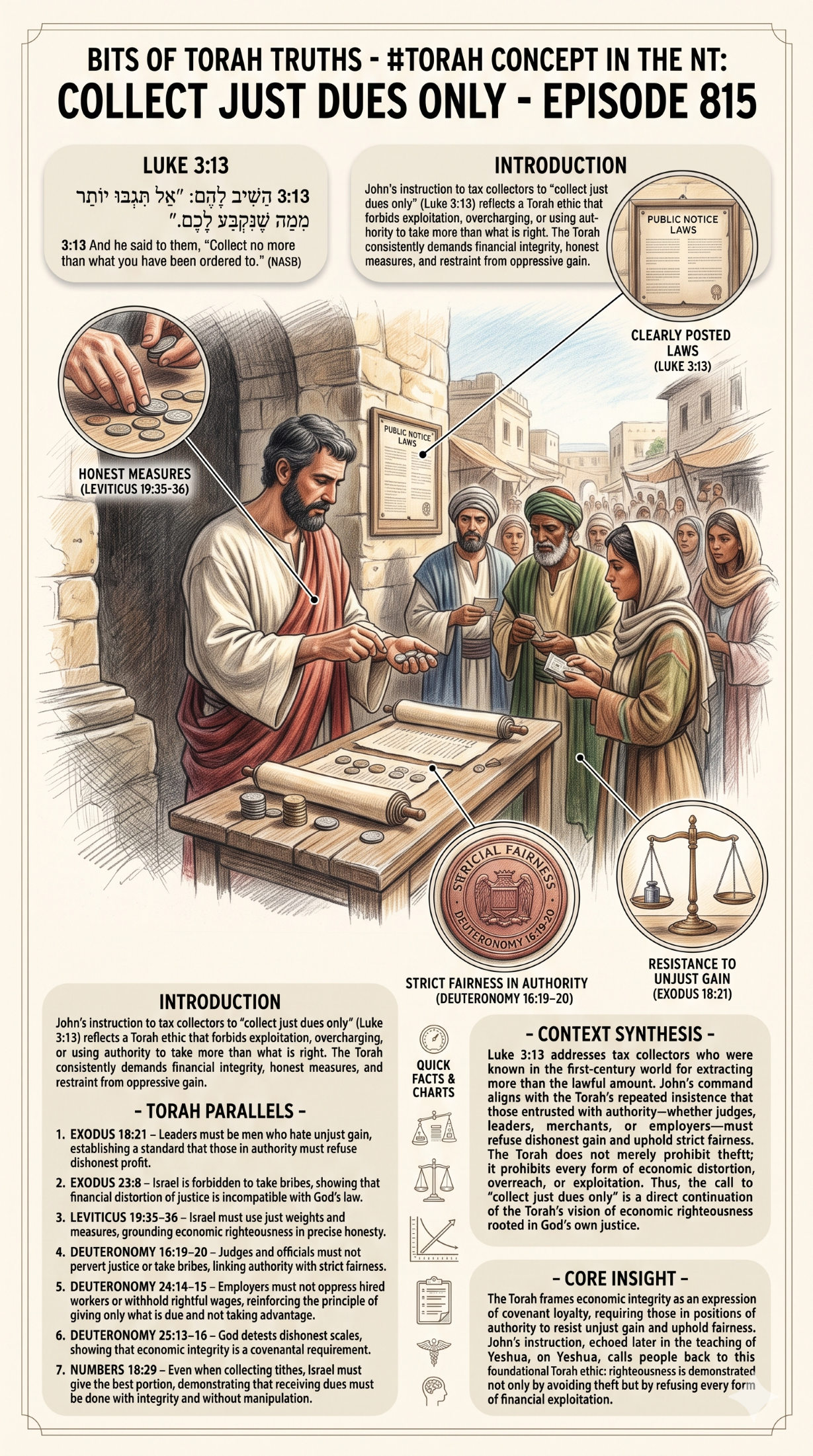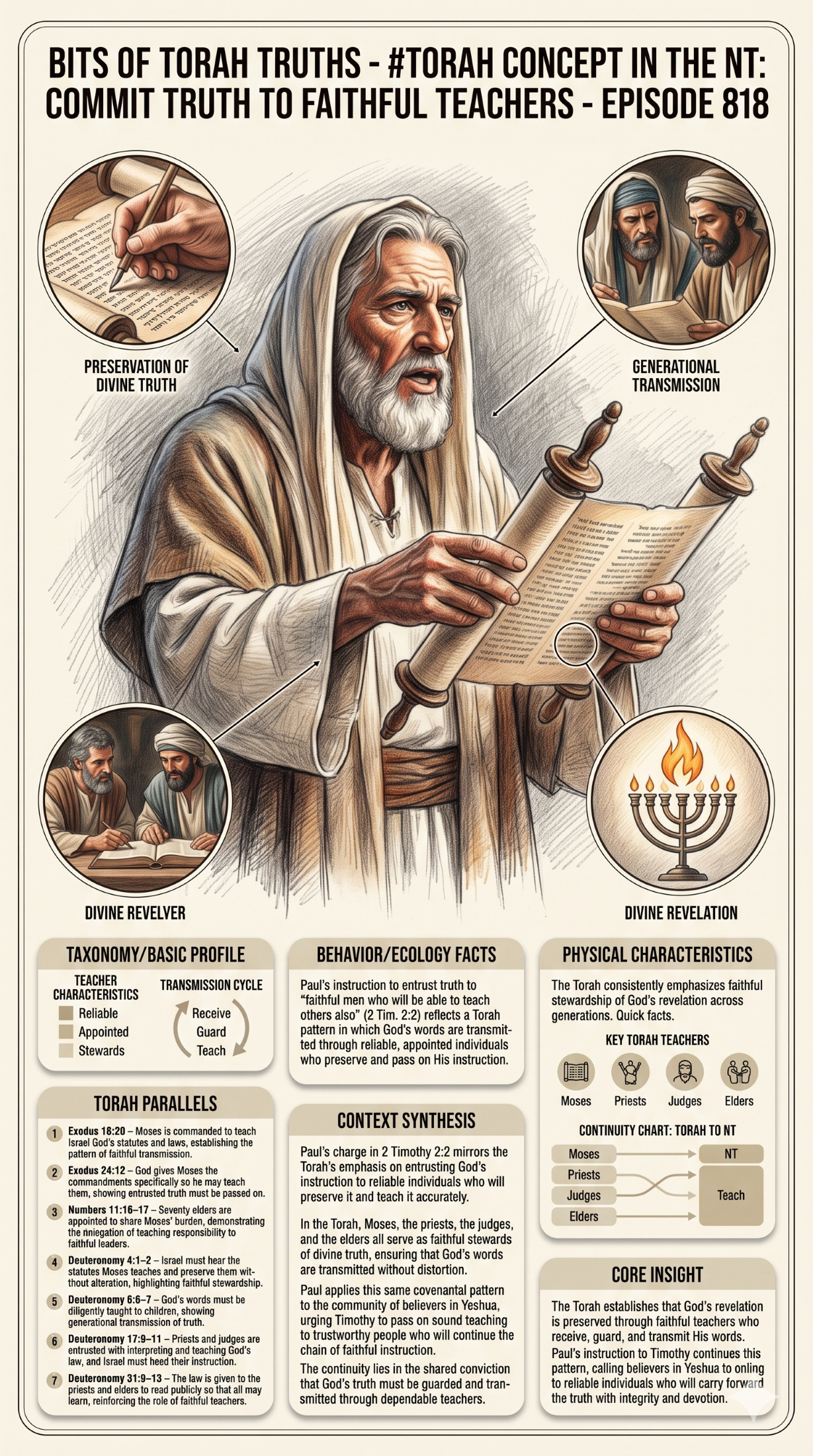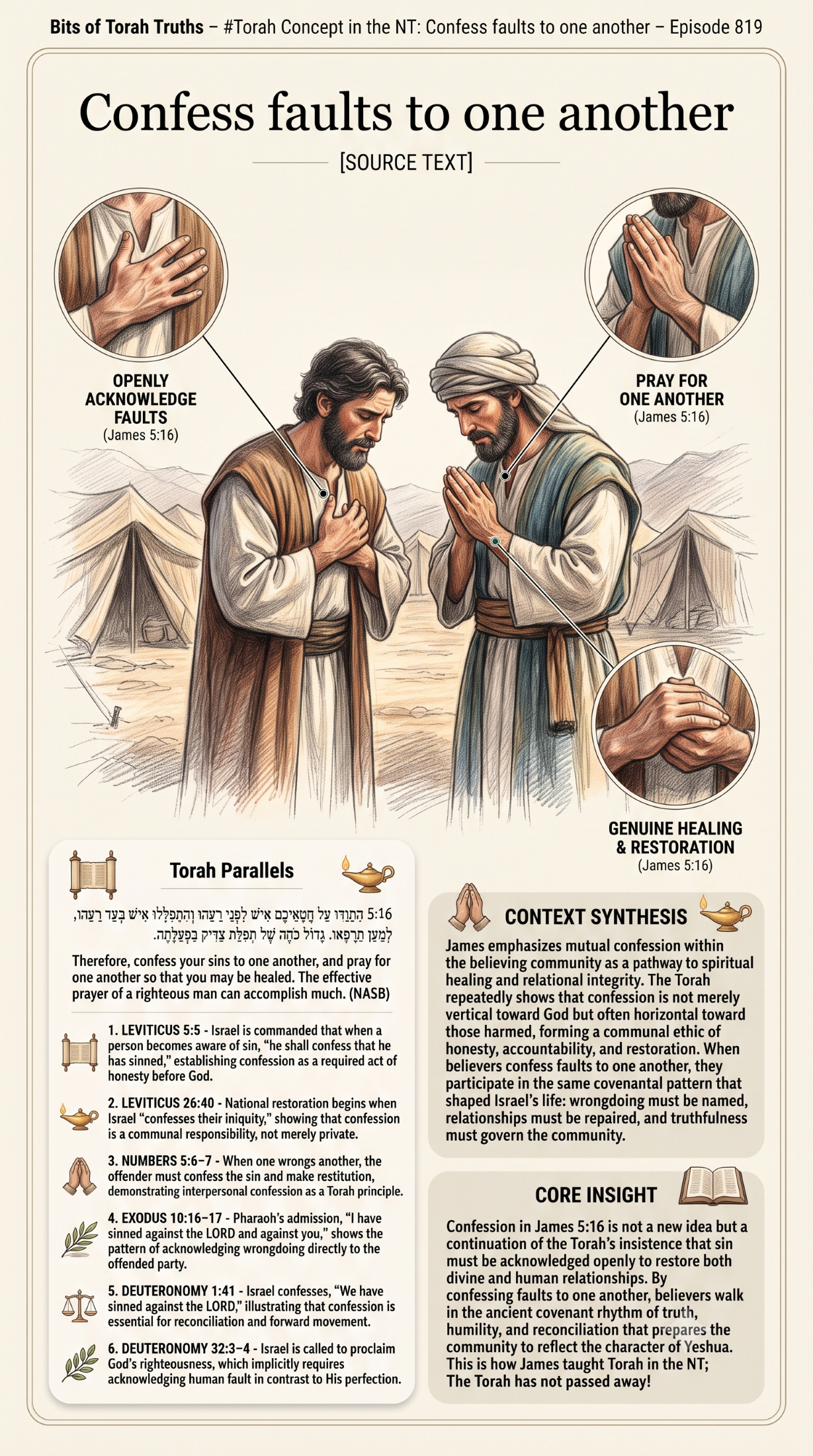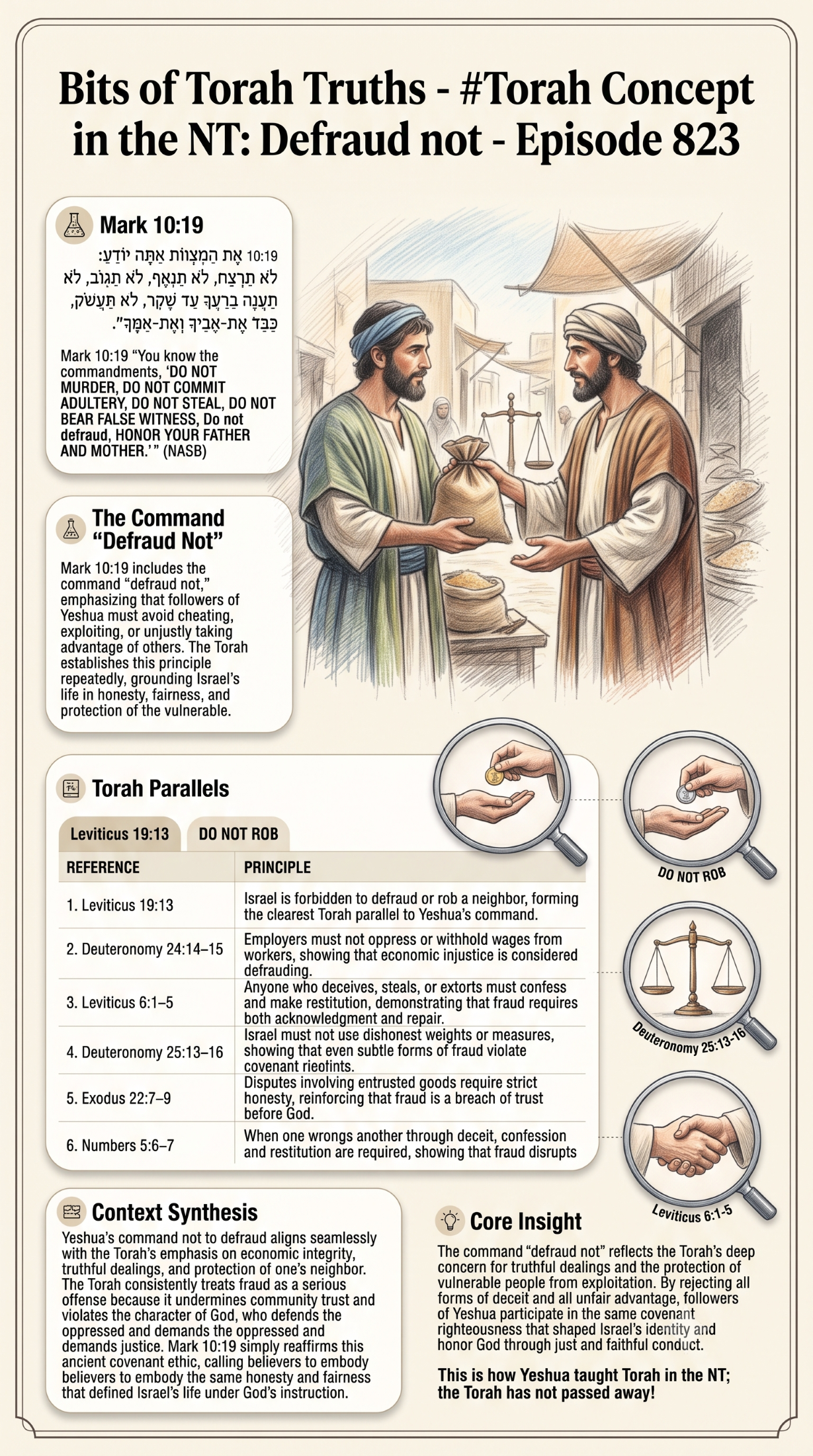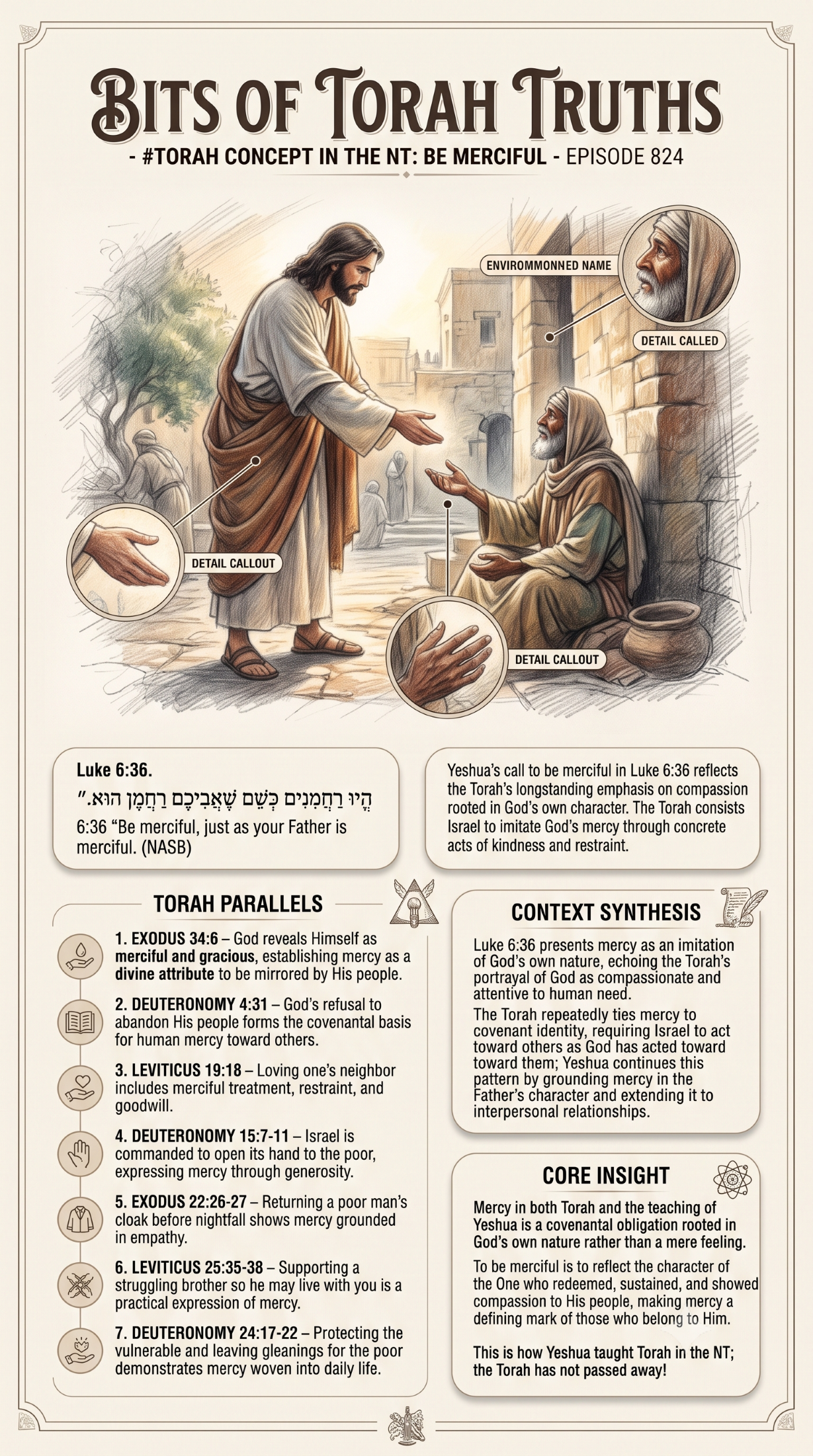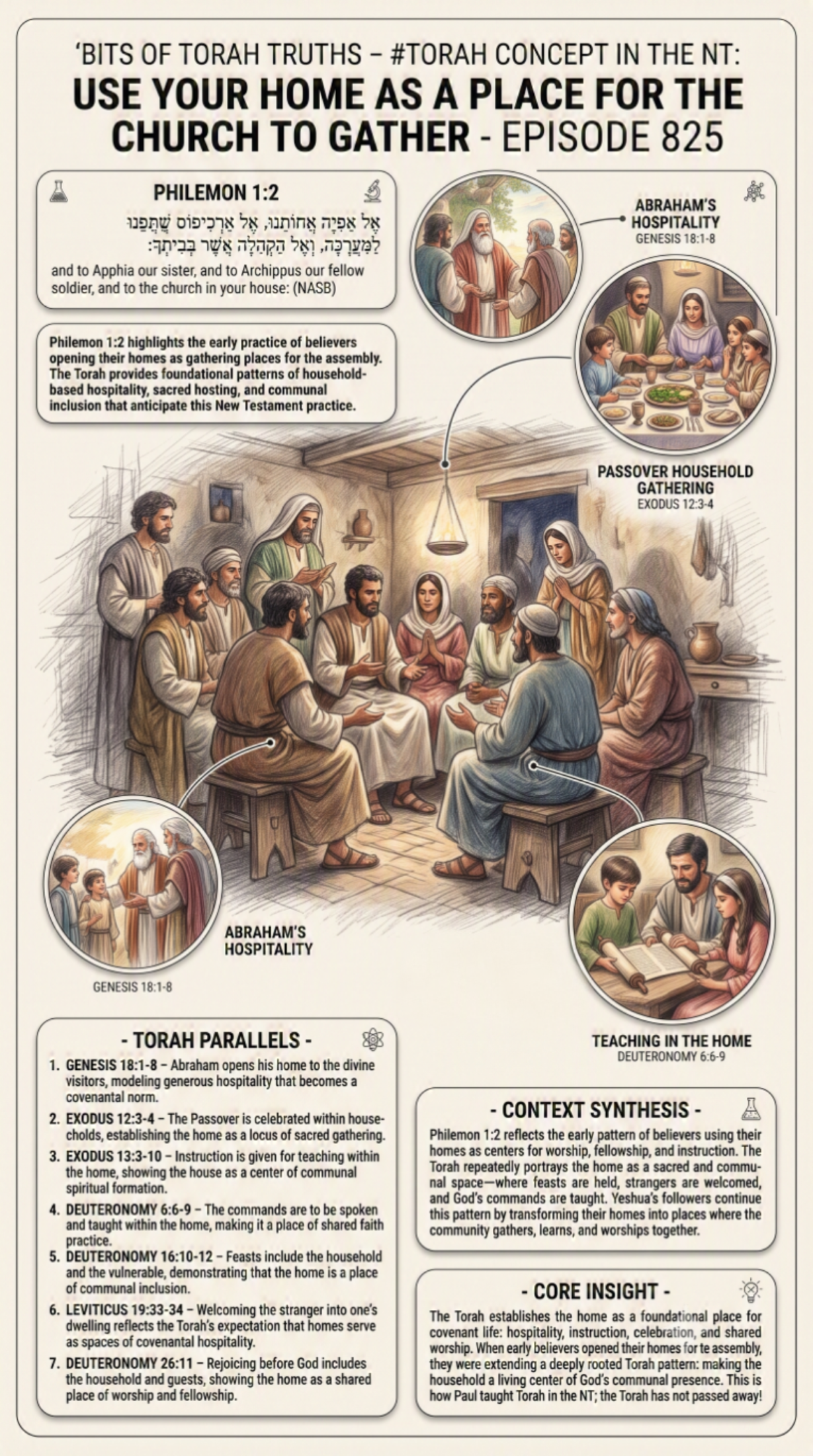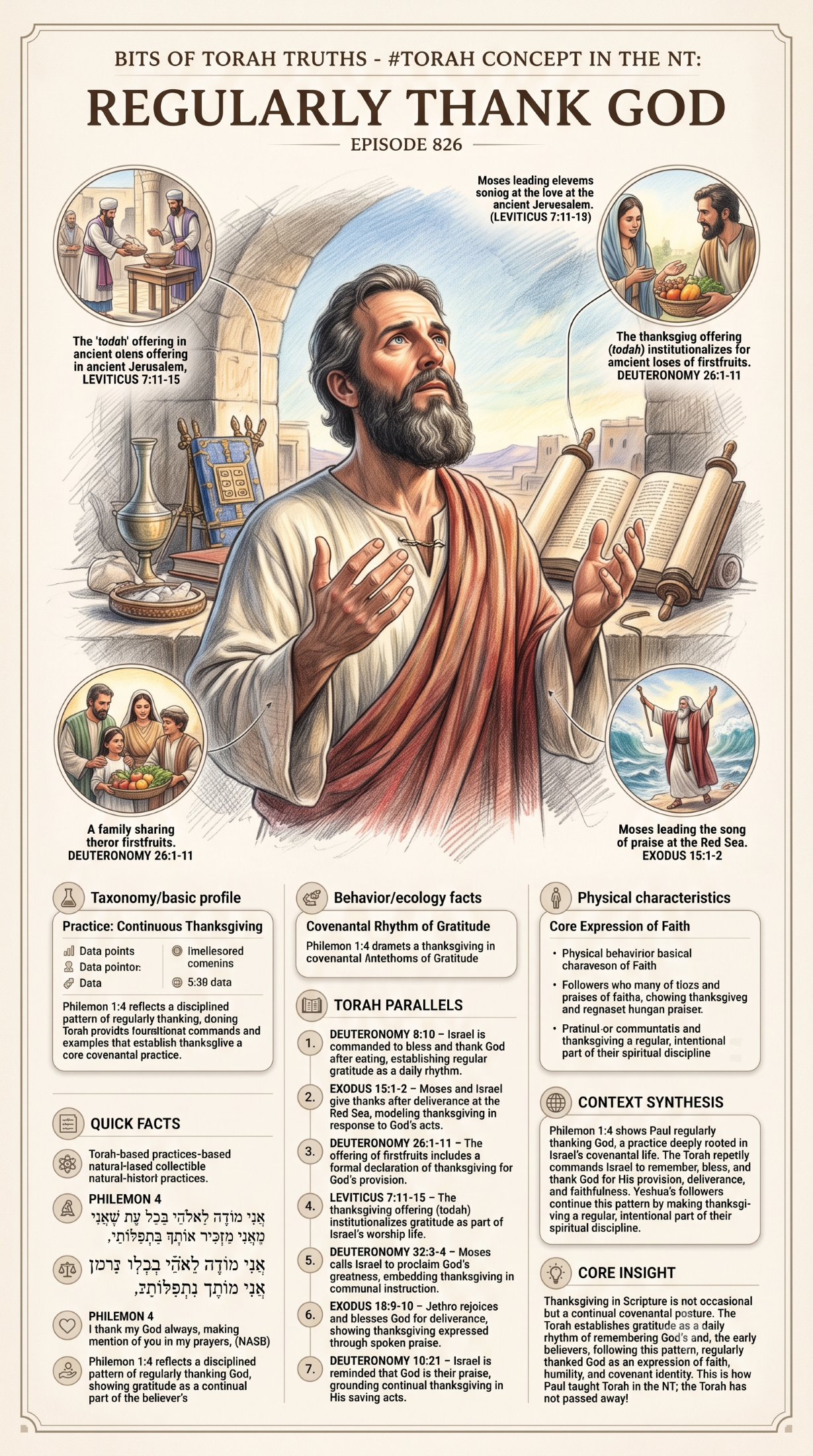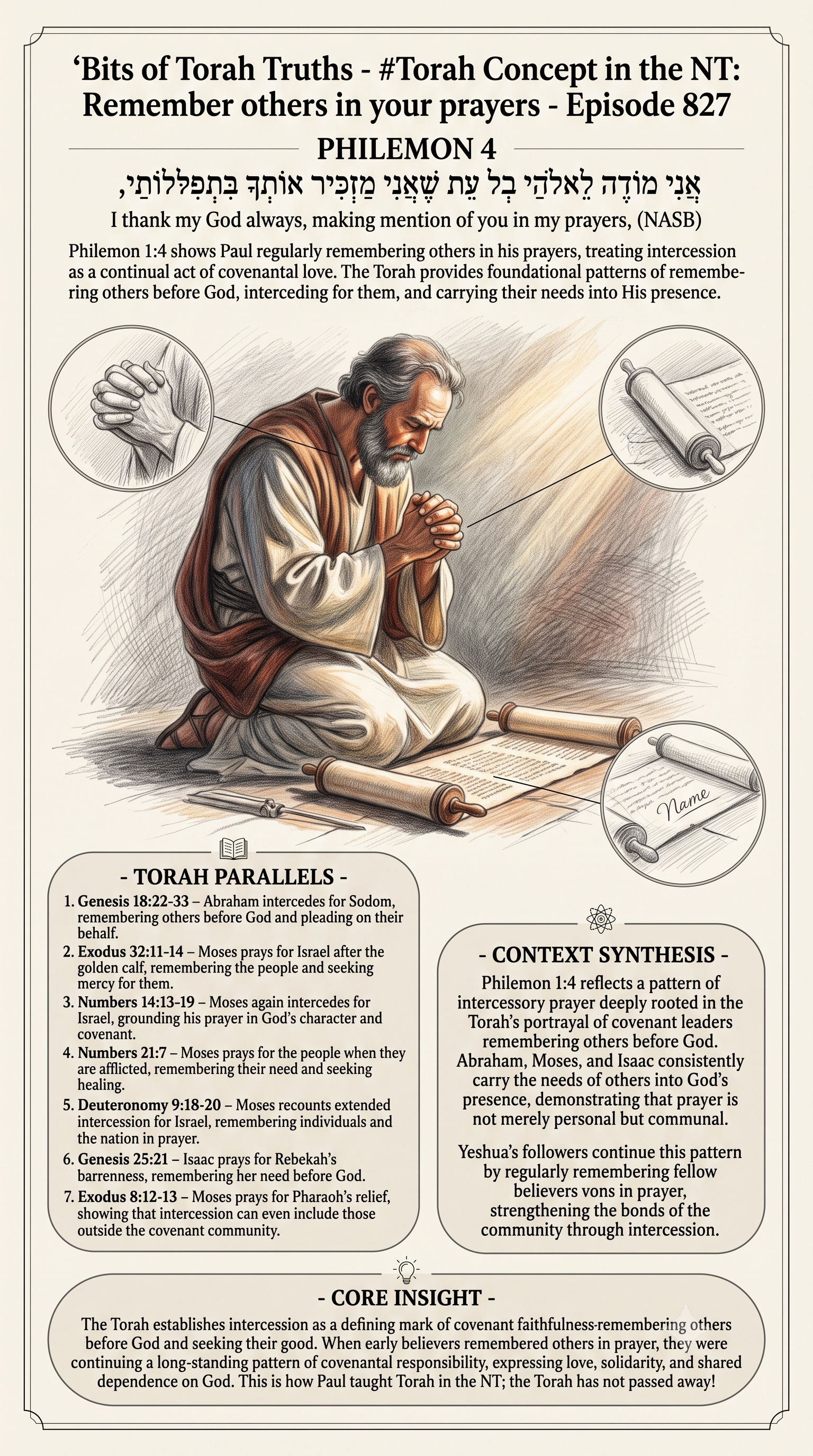
Bits of Torah Truths – #Torah Concept in the NT: Have no respect of person – Episode 870
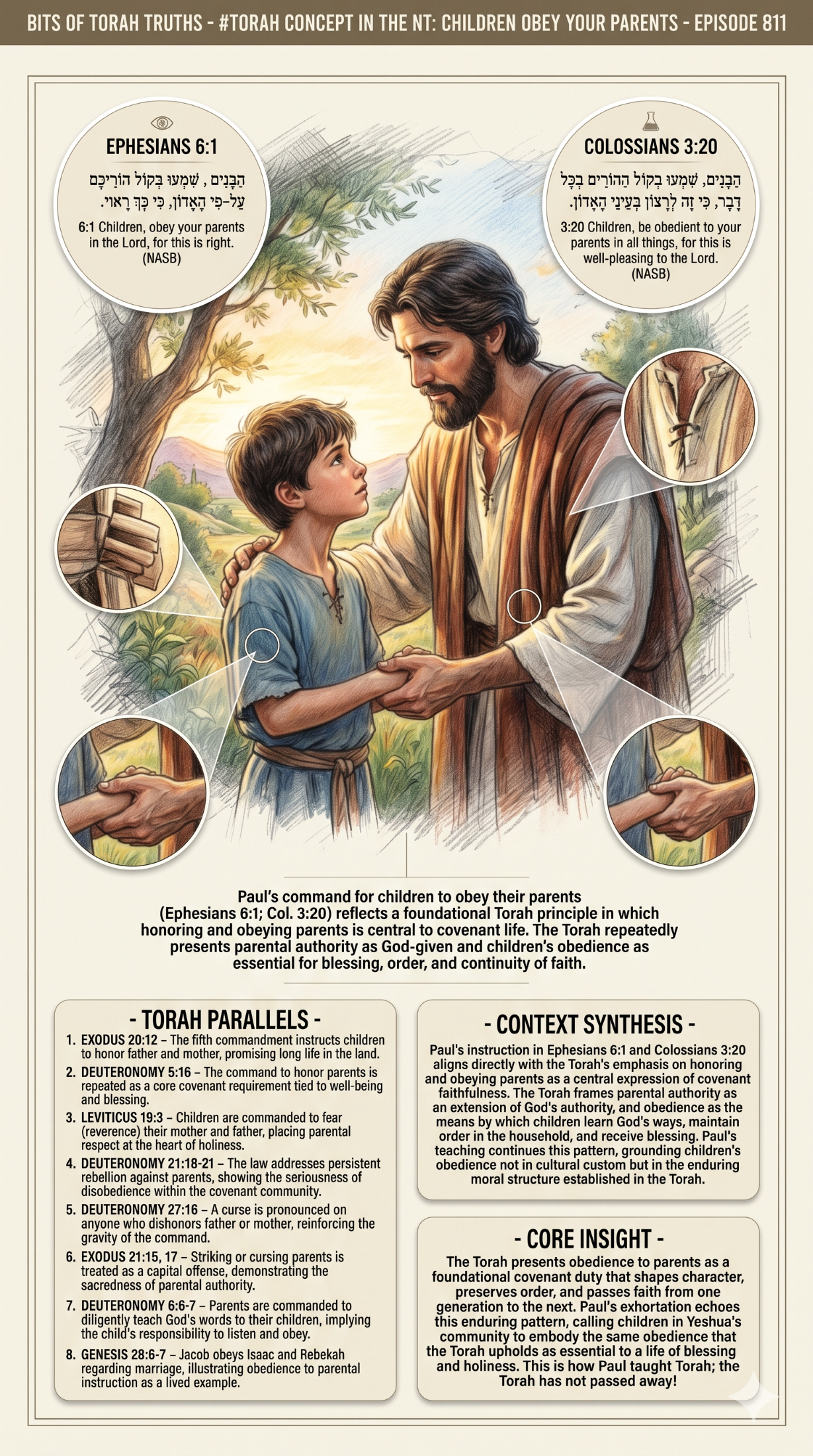
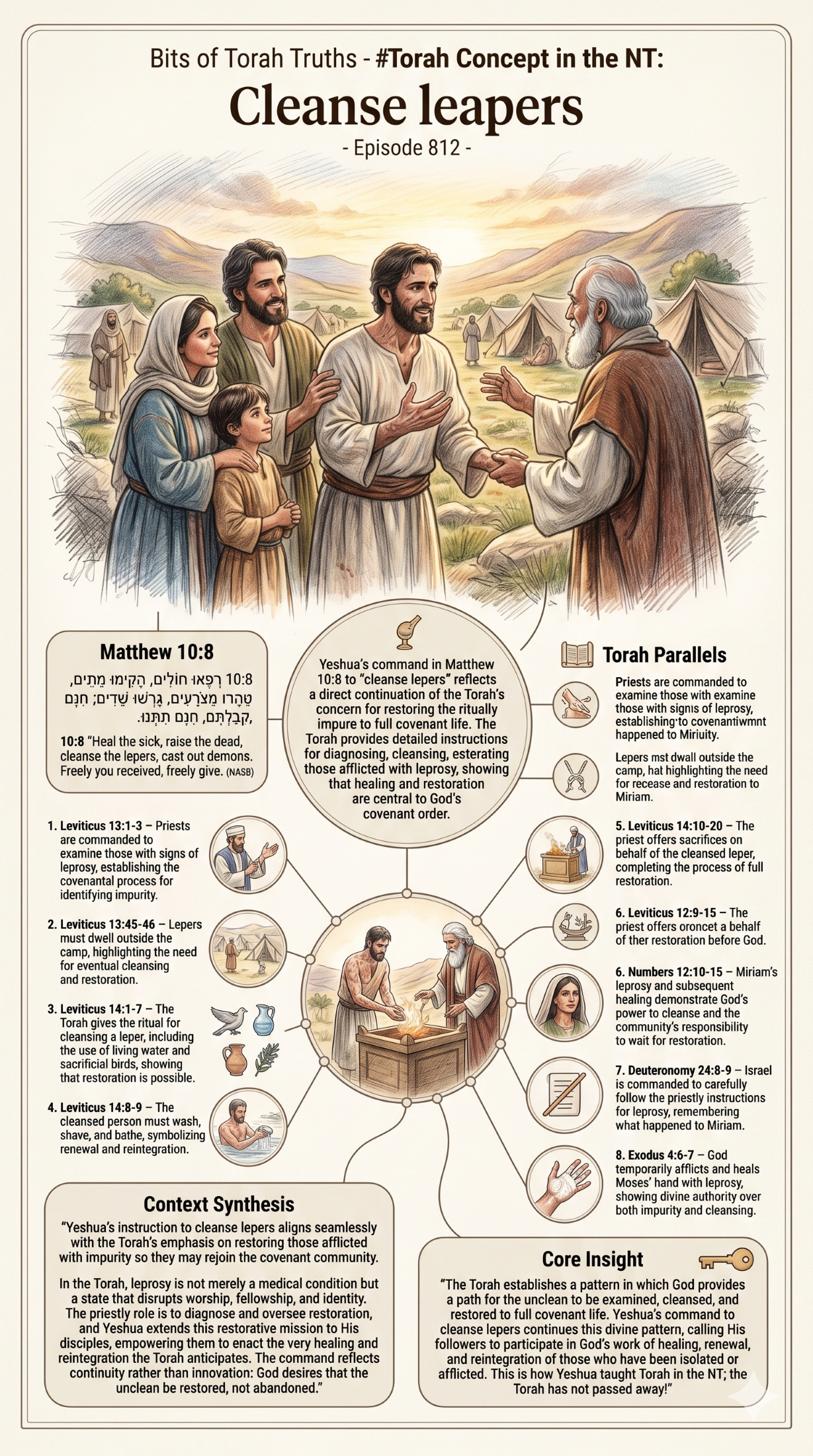
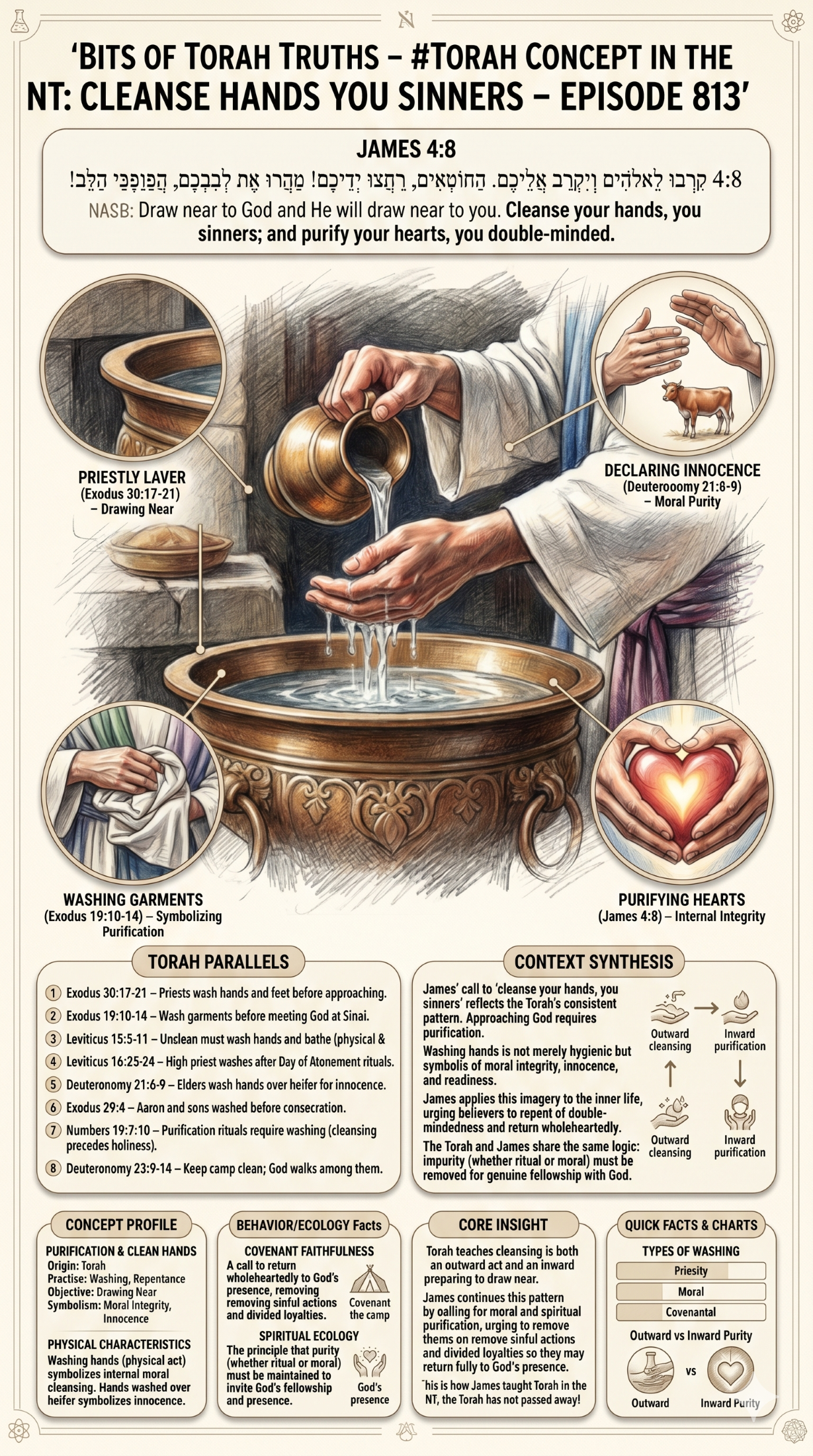
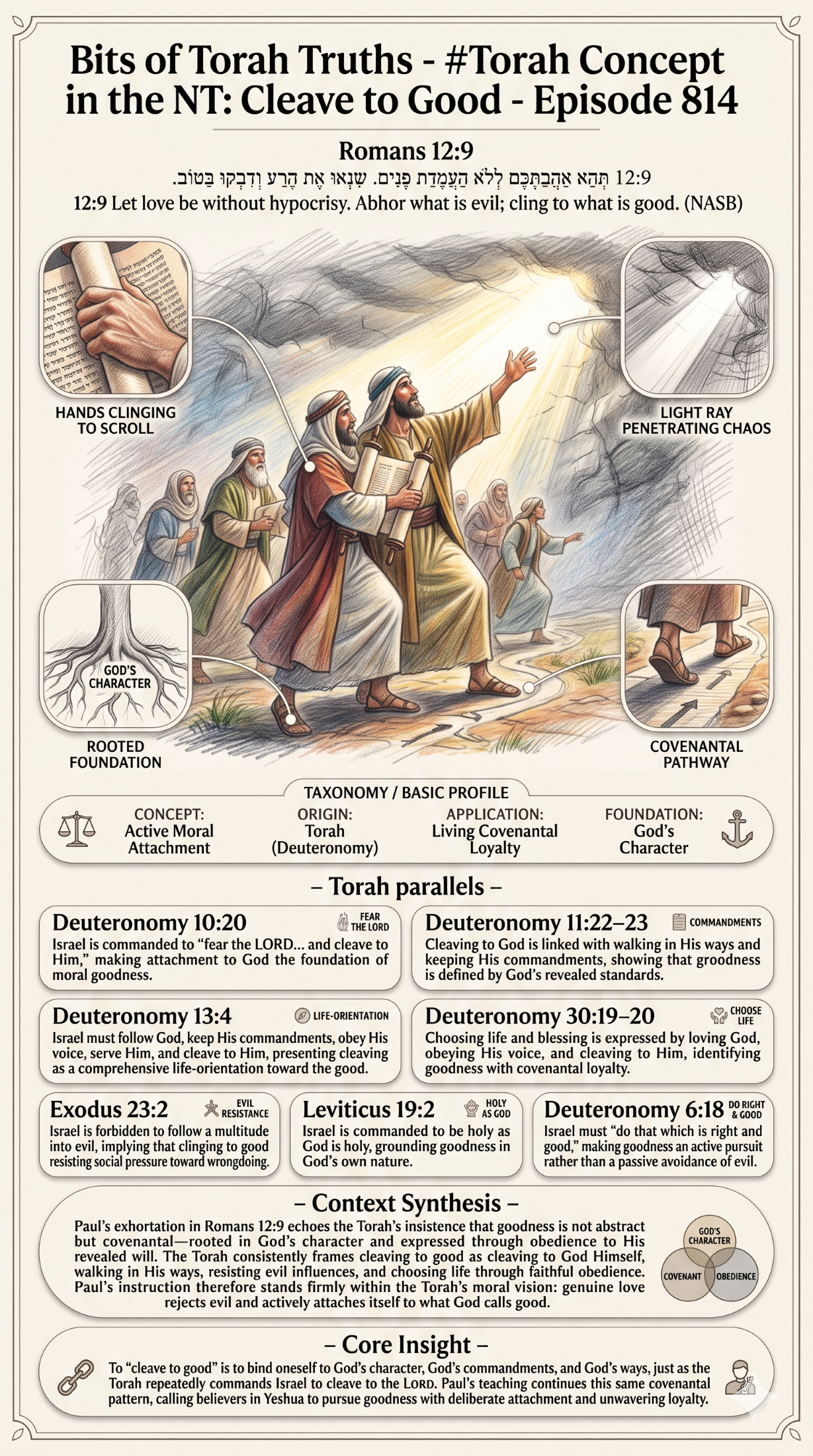
1 Timothy 5:21
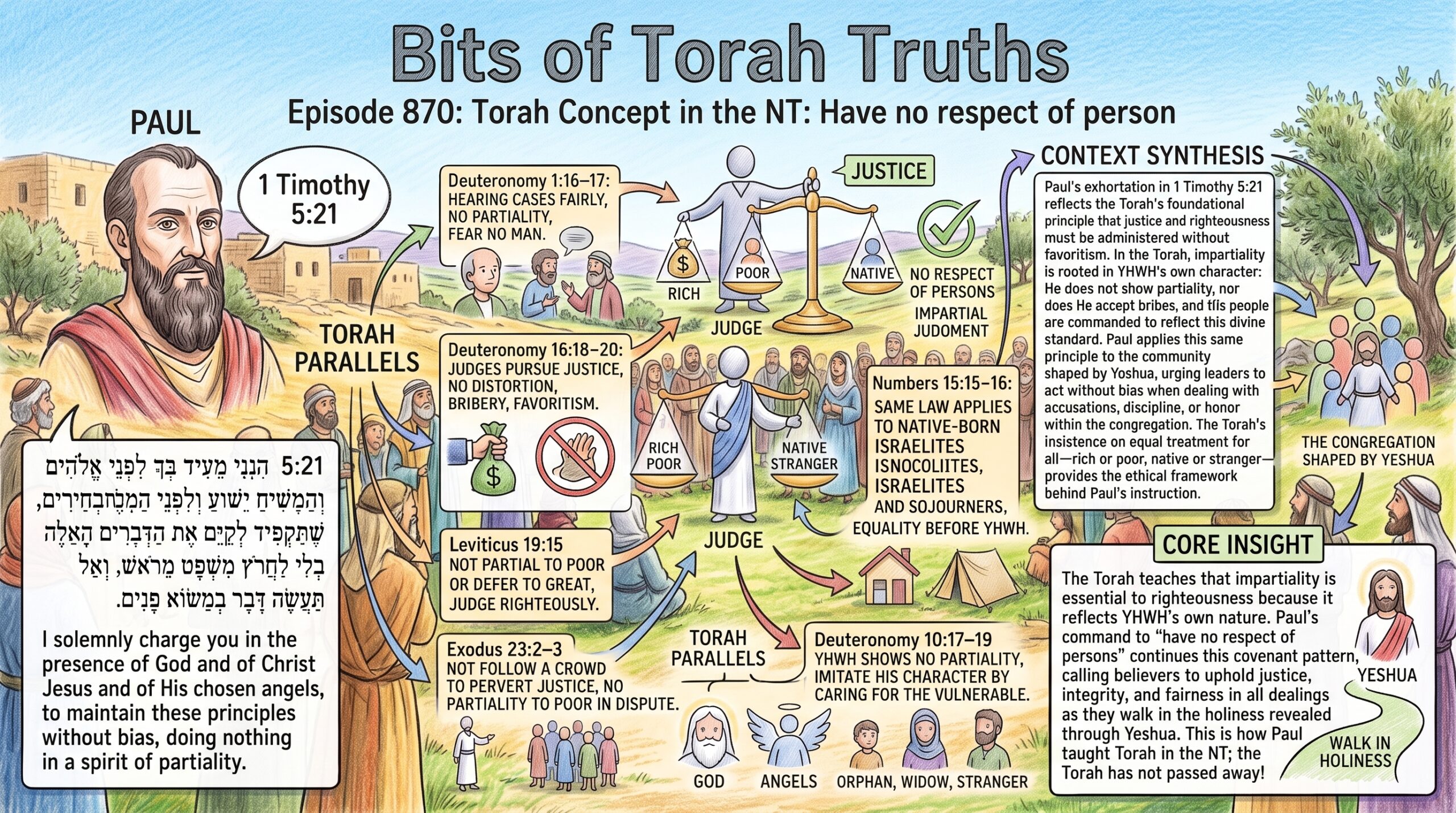
הִנְנִי מֵעִיד בְּךָ לִפְנֵי אֱלֹהִים וְהַמָּשִׁיחַ יֵשׁוּעַ וְלִפְנֵי הַמַּלְאָכִים הַבְּחִירִים, שֶׁתַּקְפִּיד לְקַיֵּם אֶת הַדְּבָרִים הָאֵלֶּה בְּלִי לַחֲרֹץ מִשְׁפָּט מֵרֹאשׁ, וְאַל תַּעֲשֶׂה דָּבָר בְּמַשּׂוֹא פָּנִים.
#torah#torahwisdom#torahtruth#torahforlife#torah4you#torahtruth
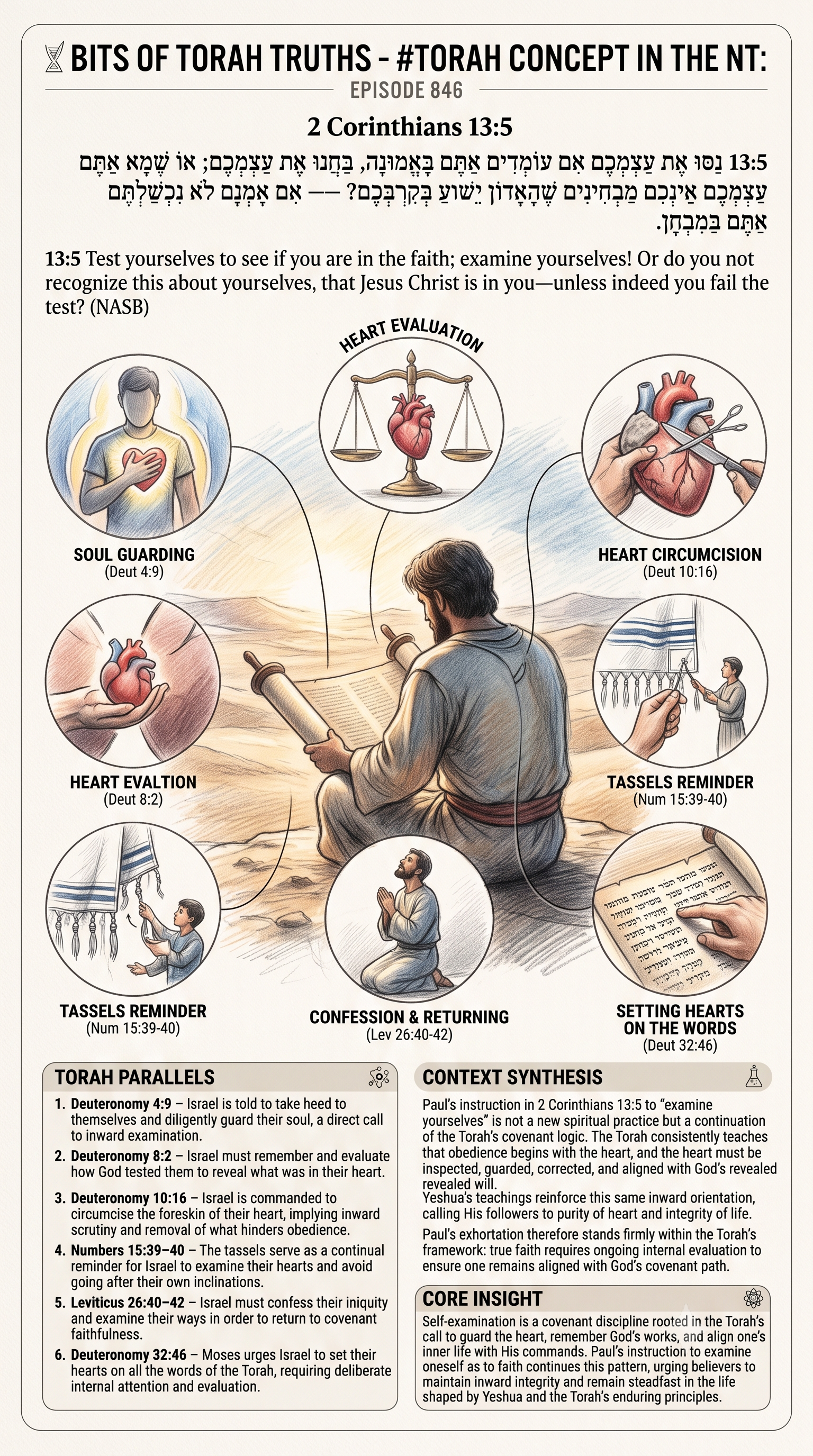
1 Timothy 5:21
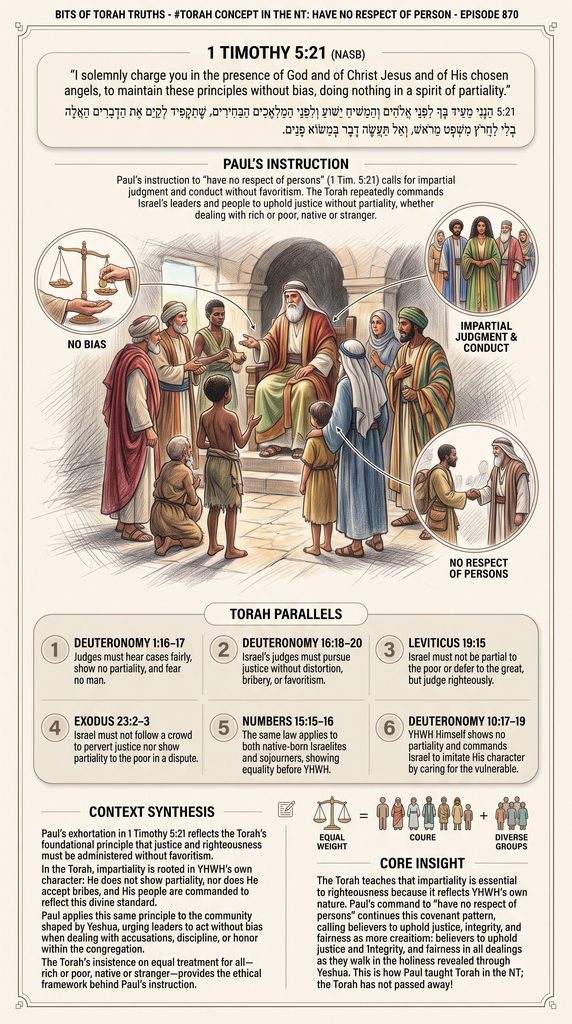
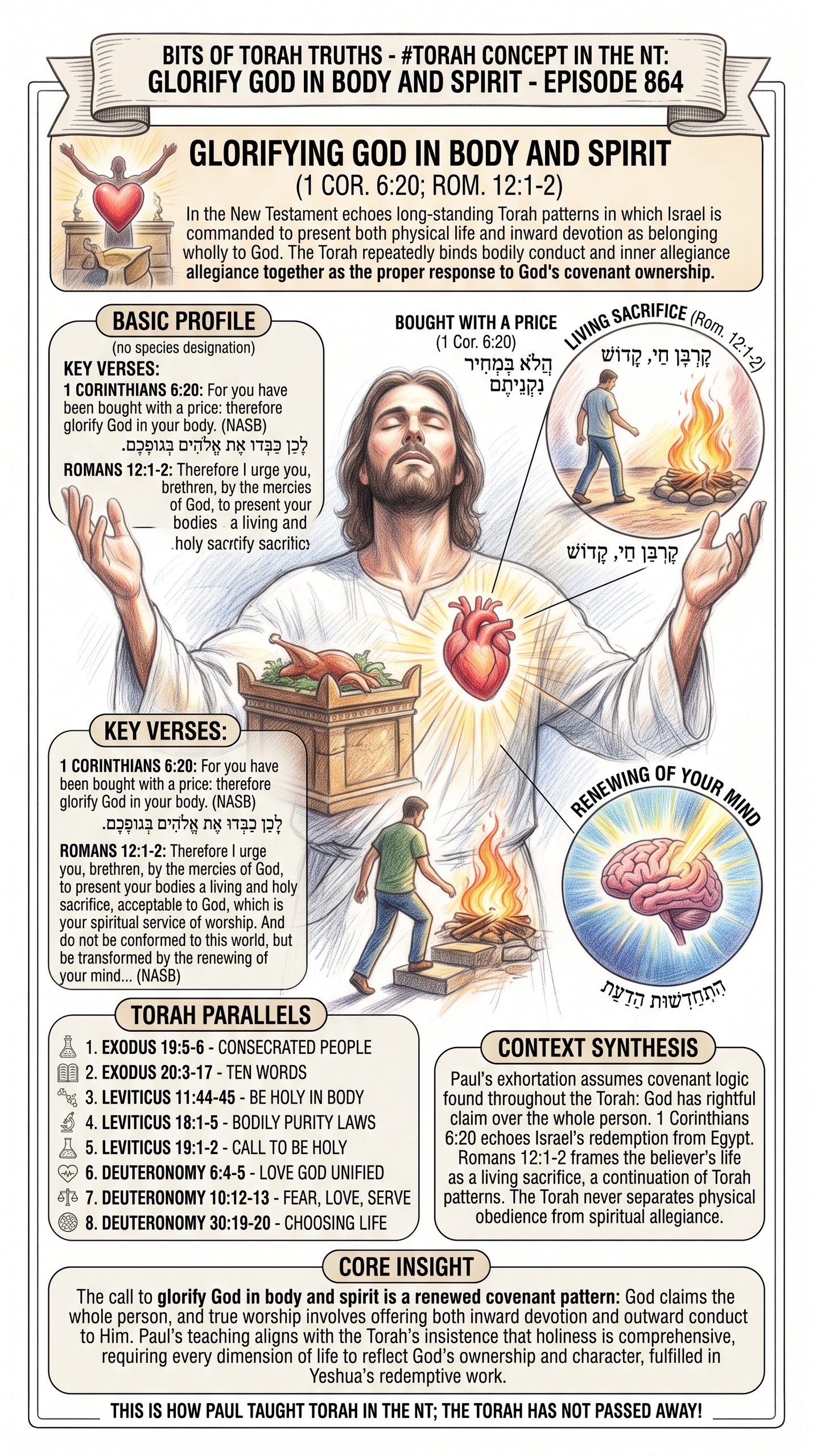
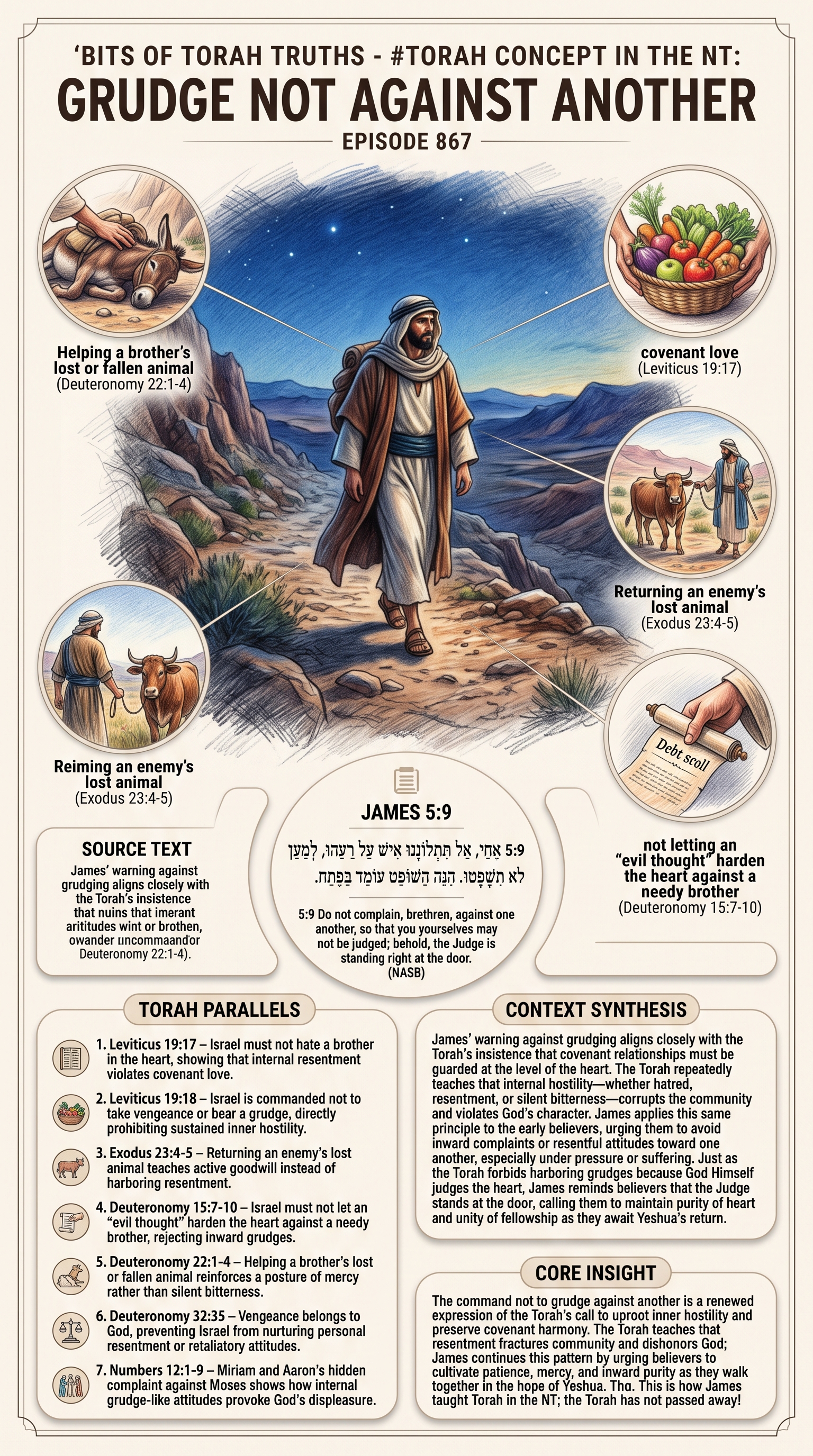
5:21 I solemnly charge you in the presence of God and of Christ Jesus and of His chosen angels, to maintain these principles without bias, doing nothing in a spirit of partiality. (NASB)
https://www.matsati.com/index.php/category/bits-of-torah-truths/
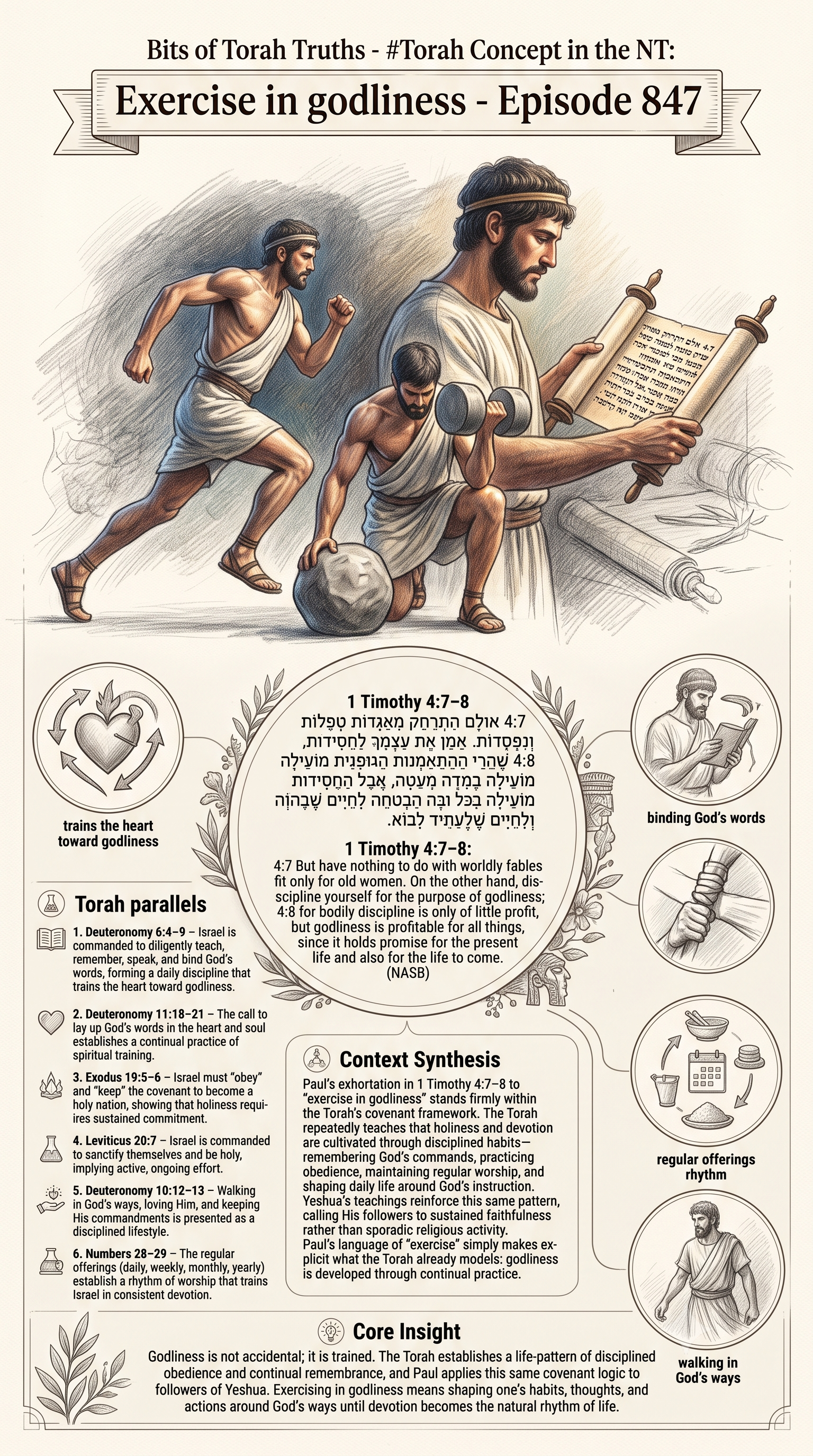
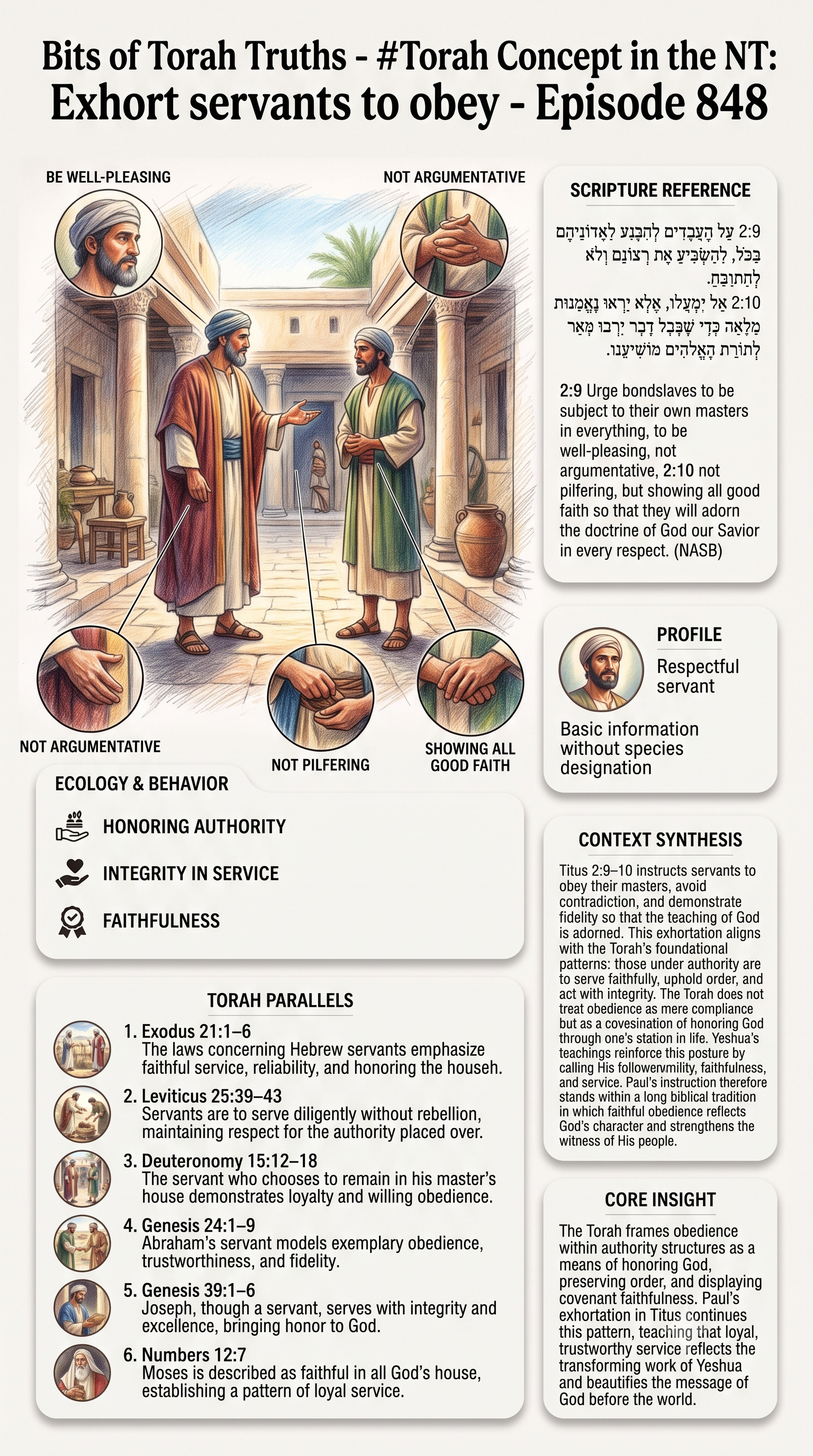
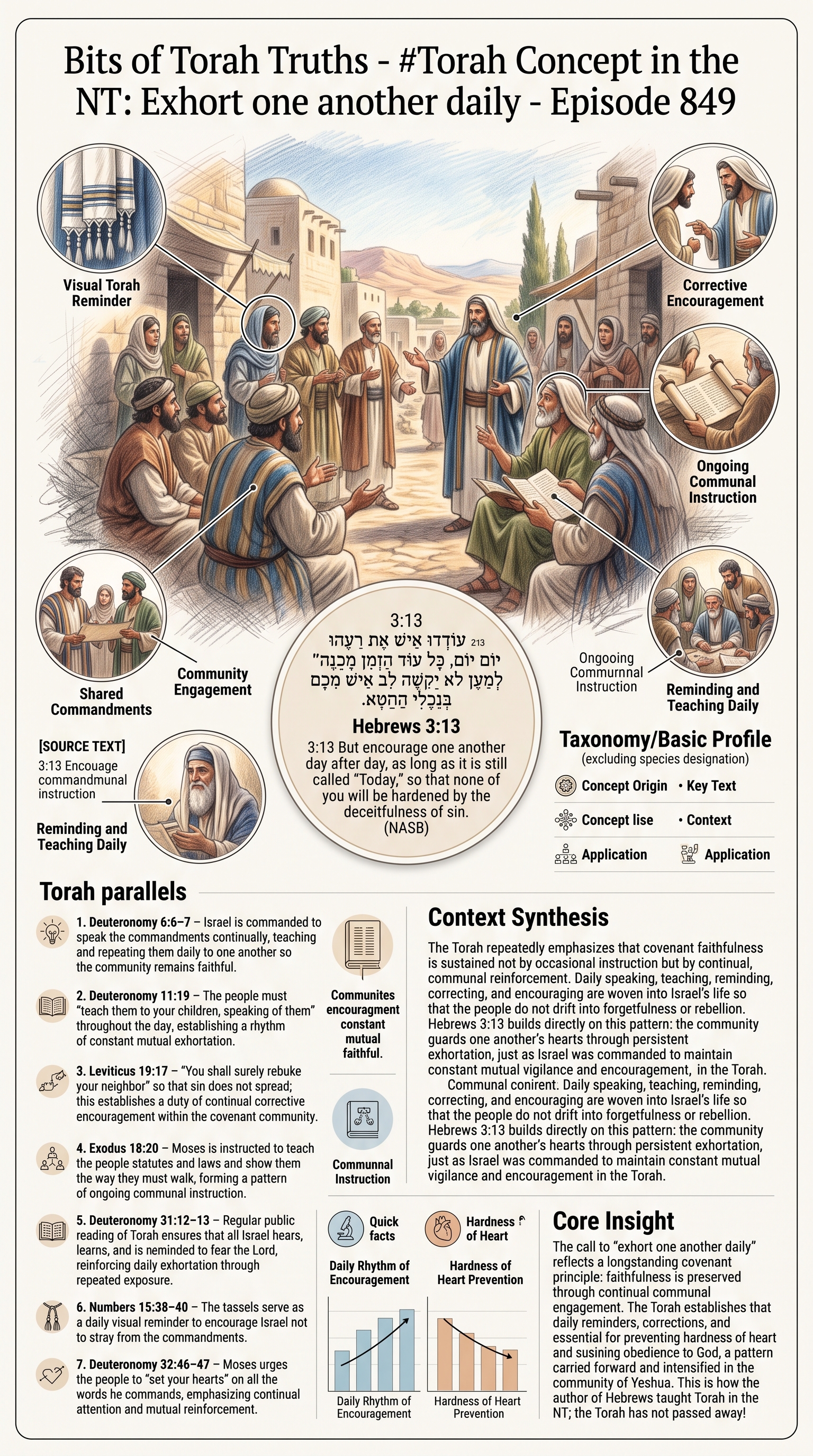
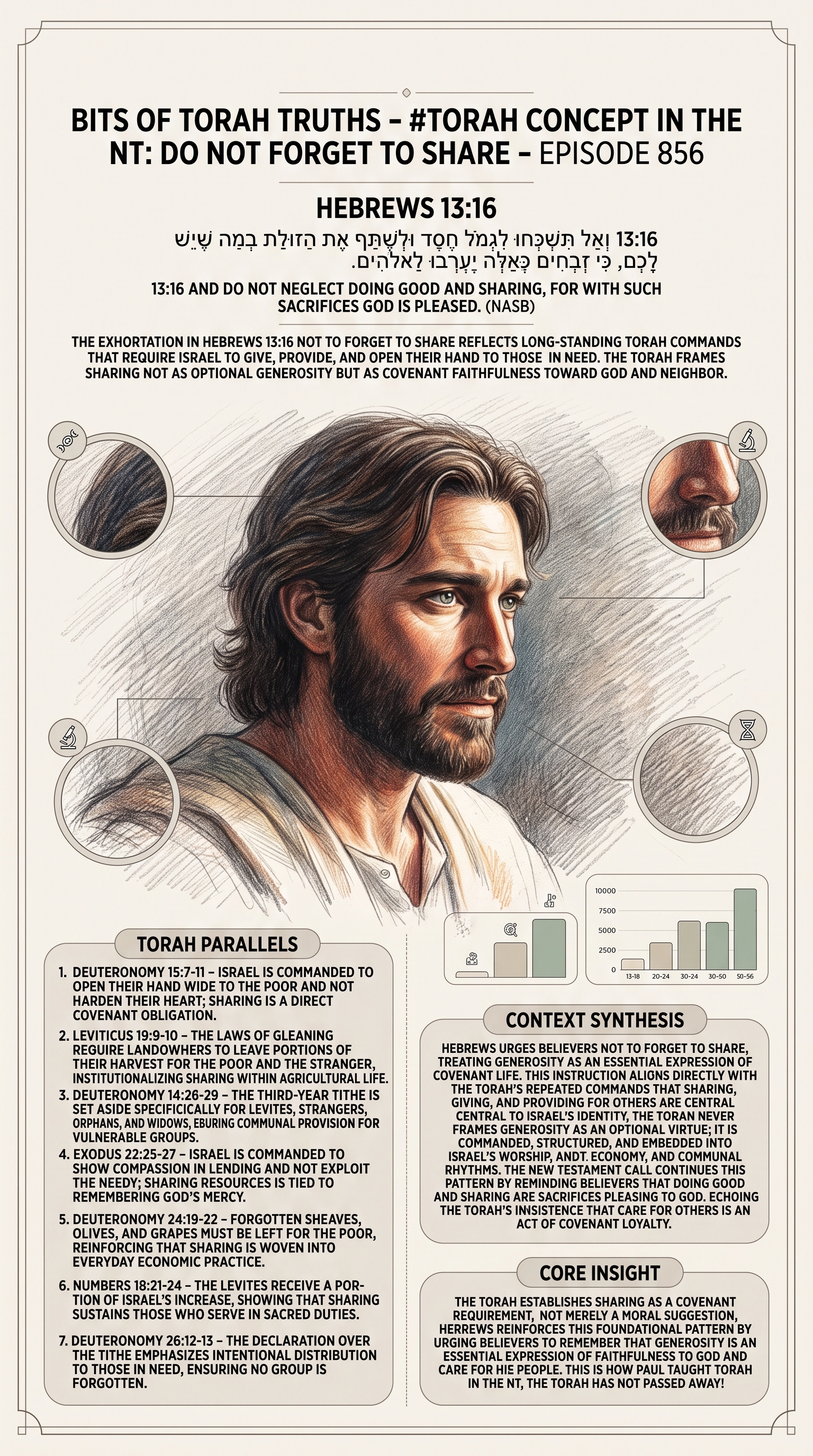
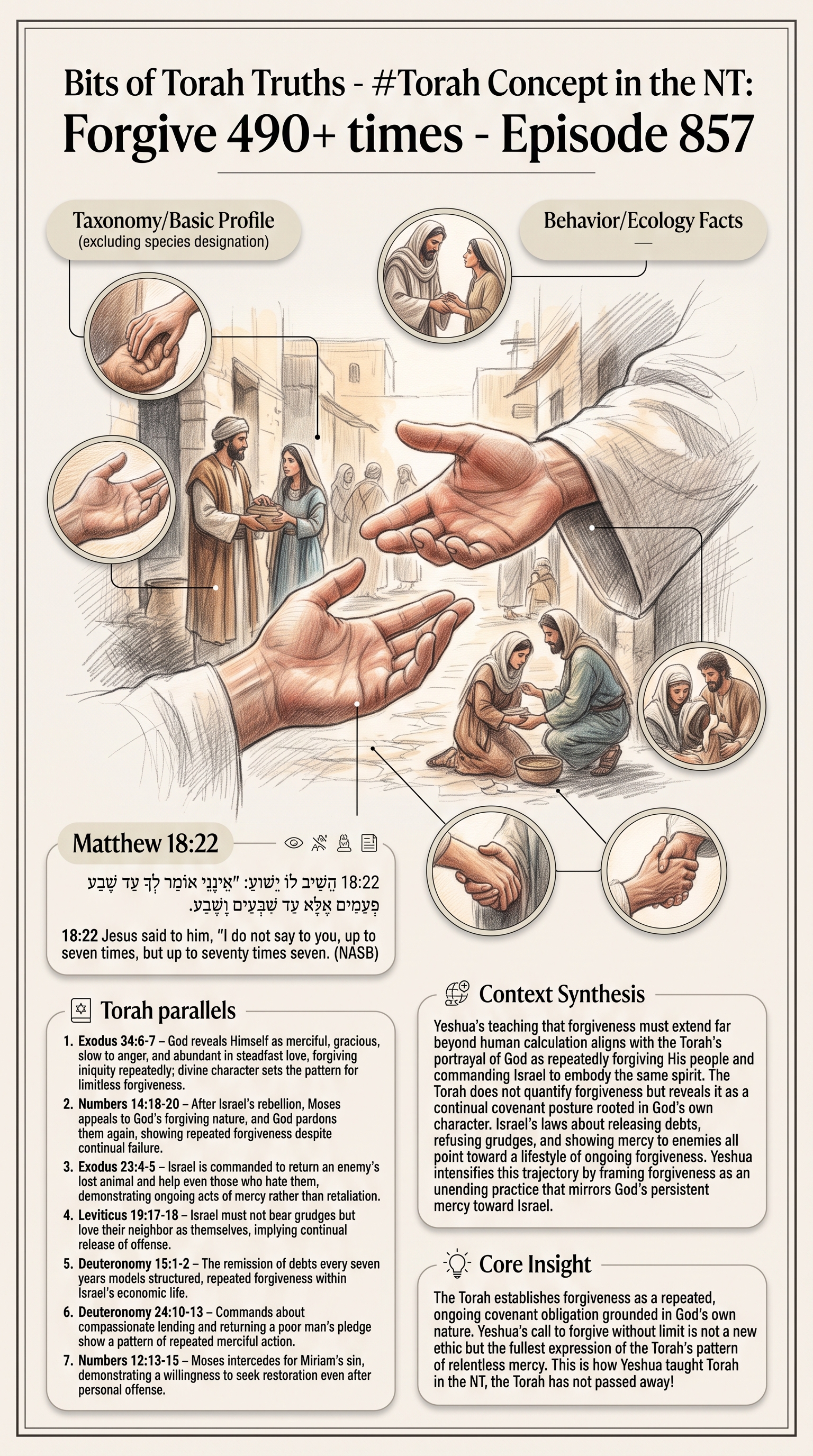
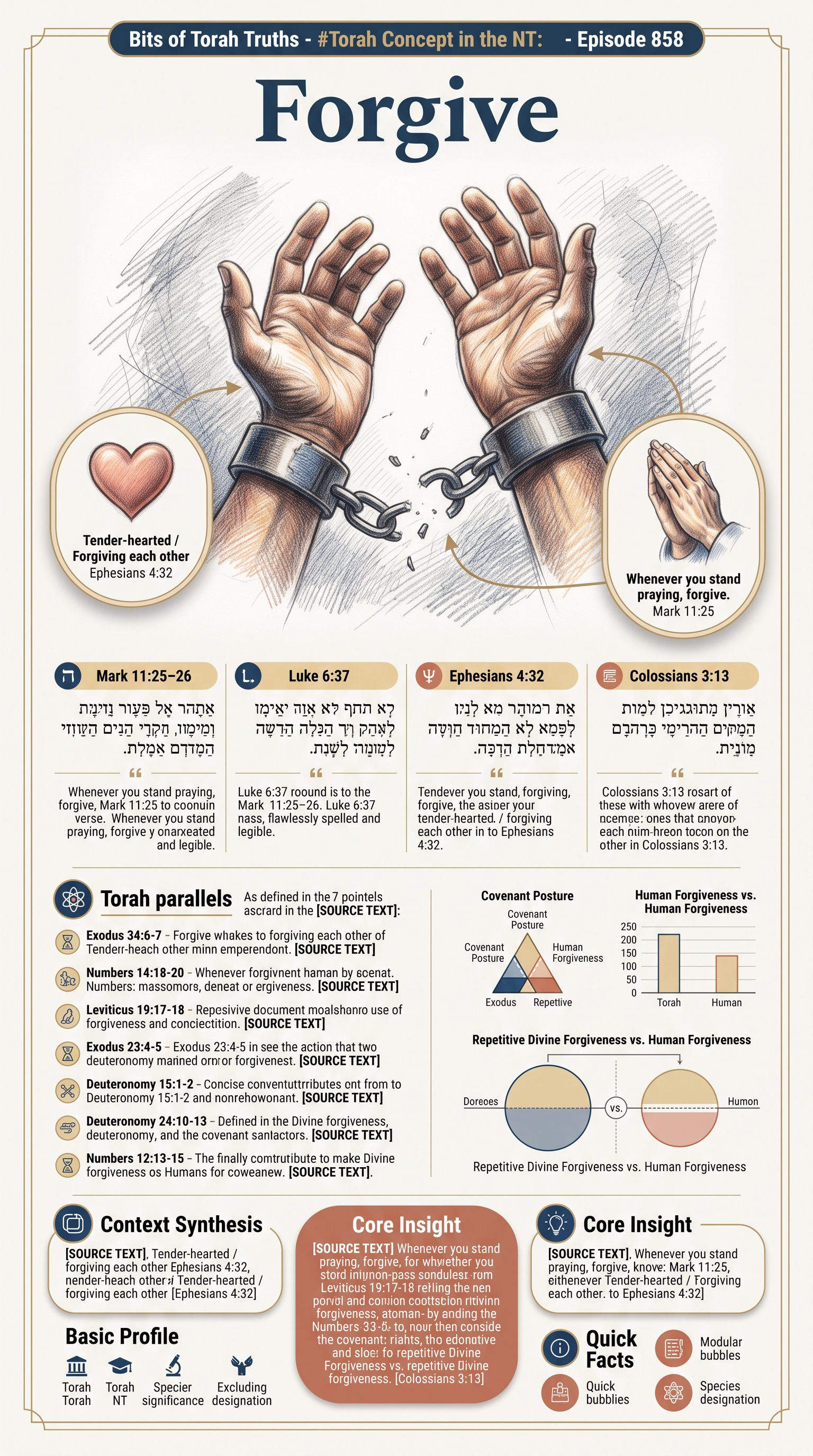
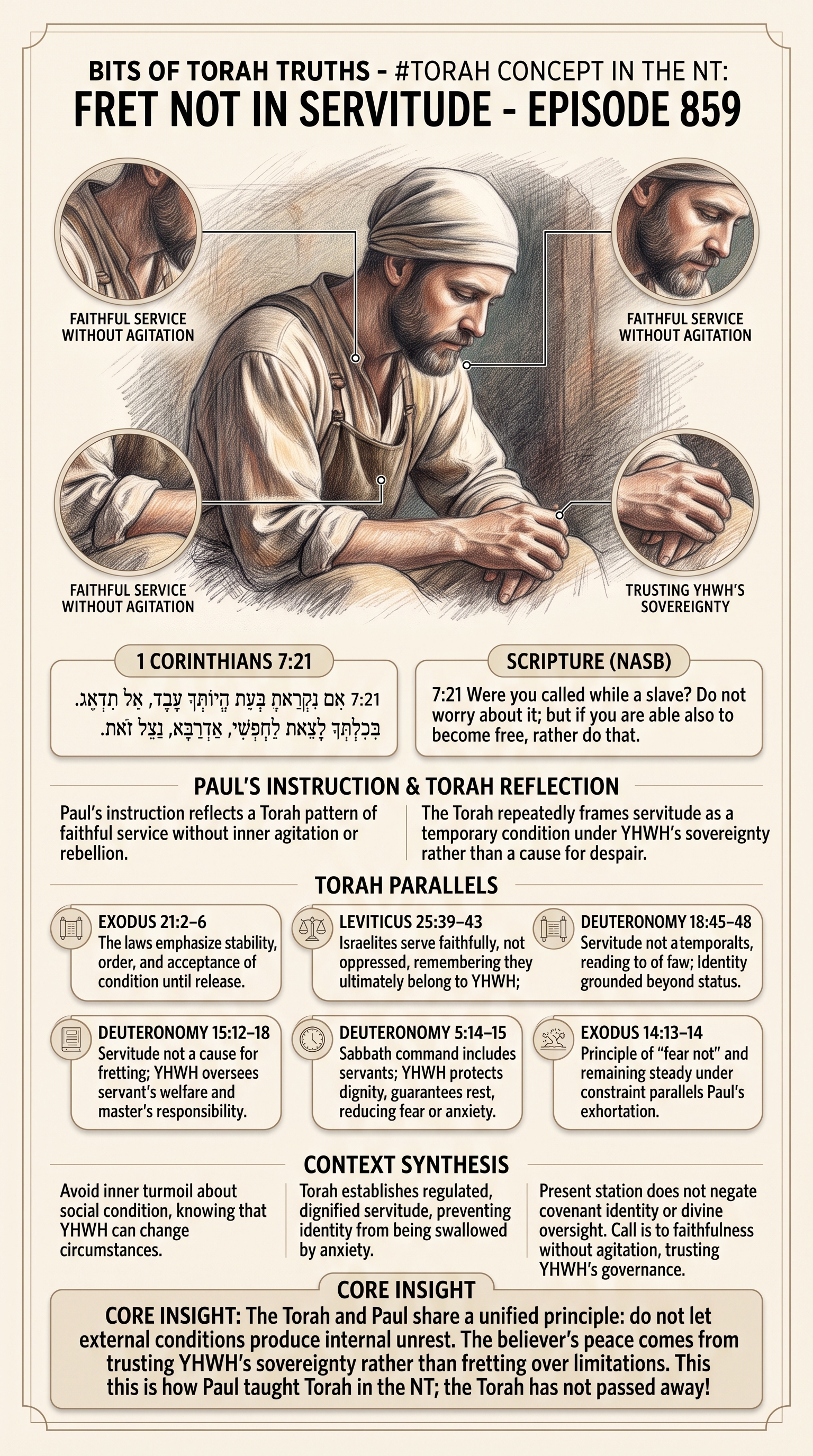
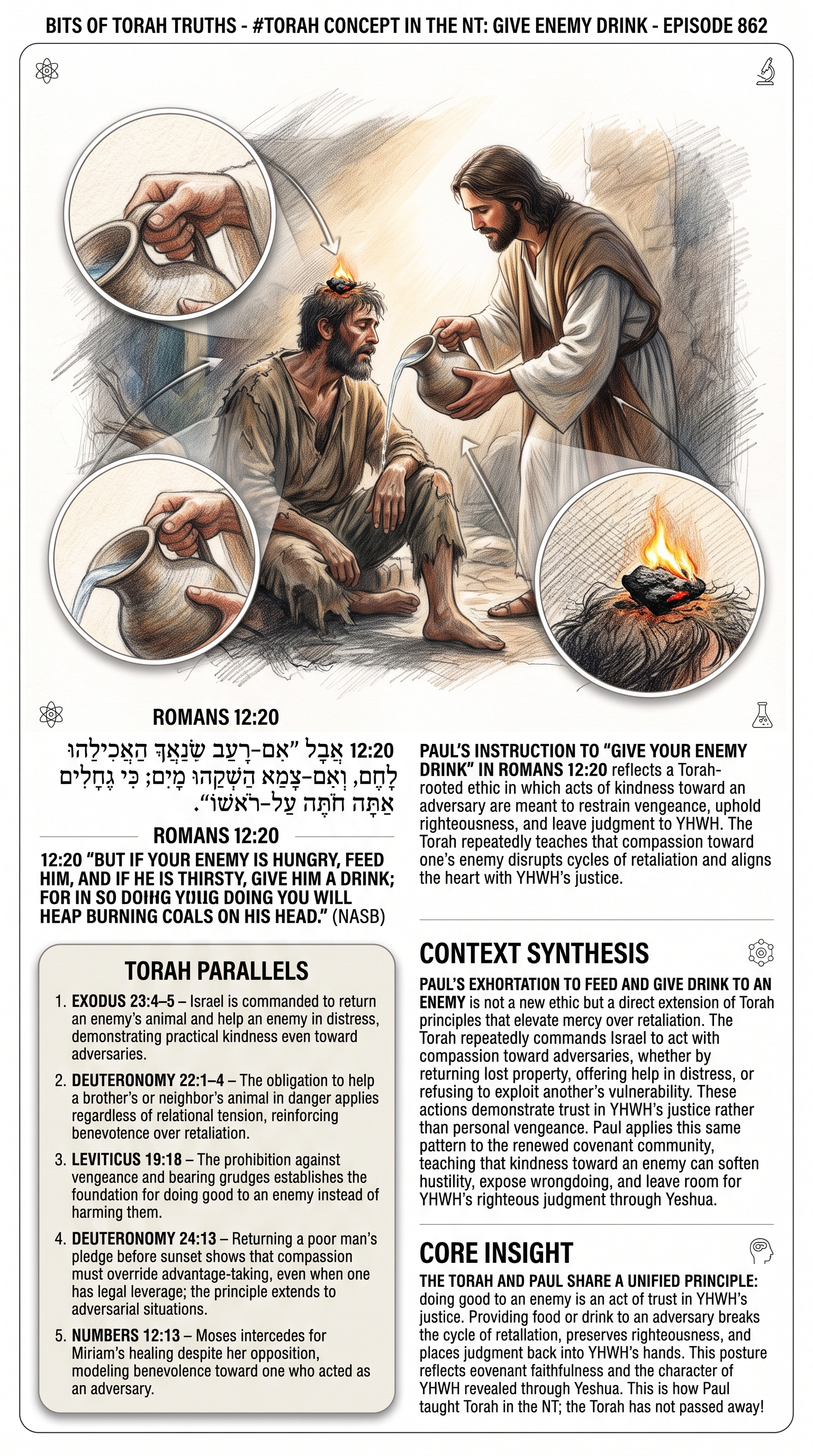
Paul’s instruction to “have no respect of persons” (1 Tim. 5:21) calls for impartial judgment and conduct without favoritism. The Torah repeatedly commands Israel’s leaders and people to uphold justice without partiality, whether dealing with rich or poor, native or stranger.
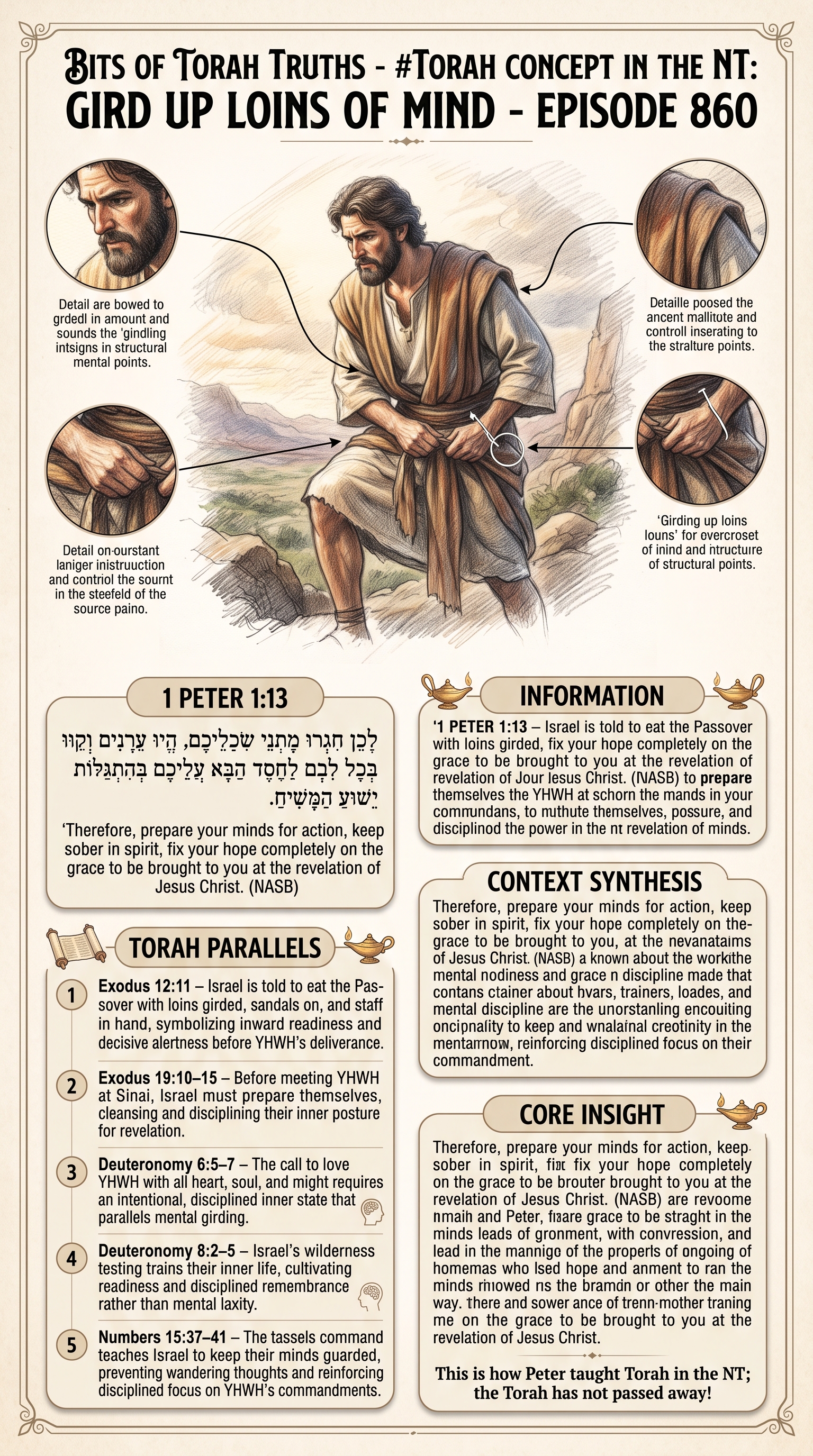
– Torah parallels –
- Deuteronomy 1:16–17 – Judges must hear cases fairly, show no partiality, and fear no man.
- Deuteronomy 16:18–20 – Israel’s judges must pursue justice without distortion, bribery, or favoritism.
- Leviticus 19:15 – Israel must not be partial to the poor or defer to the great, but judge righteously.
- Exodus 23:2–3 – Israel must not follow a crowd to pervert justice nor show partiality to the poor in a dispute.
- Numbers 15:15–16 – The same law applies to both native-born Israelites and sojourners, showing equality before YHWH.
- Deuteronomy 10:17–19 – YHWH Himself shows no partiality and commands Israel to imitate His character by caring for the vulnerable.
– Context Synthesis –
Paul’s exhortation in 1 Timothy 5:21 reflects the Torah’s foundational principle that justice and righteousness must be administered without favoritism. In the Torah, impartiality is rooted in YHWH’s own character: He does not show partiality, nor does He accept bribes, and His people are commanded to reflect this divine standard. Paul applies this same principle to the community shaped by Yeshua, urging leaders to act without bias when dealing with accusations, discipline, or honor within the congregation. The Torah’s insistence on equal treatment for all, rich or poor, native or stranger, provides the ethical framework behind Paul’s instruction.
– Core Insight –
The Torah teaches that impartiality is essential to righteousness because it reflects YHWH’s own nature. Paul’s command to “have no respect of persons” continues this covenant pattern, calling believers to uphold justice, integrity, and fairness in all dealings as they walk in the holiness revealed through Yeshua. This is how Paul taught Torah in the NT; the Torah has not passed away!
Visual Summary of Concepts the Torah in the NT