Bits of Torah Truths – #Torah Concept in the NT: Do Not Walk As Fools – Episode 779
Ephesians 5:15
וְעַתָּה שִׂימוּ לִבְּכֶם לְהִתְהַלֵּךְ בִּזְהִירוּת –– לֹא כִּכְסִילִים, אֶלָּא כַּחֲכָמִים
#torah #torahwisdom #torahtruth #torahforlife #torah4you #torahtruth
Ephesians 5:15
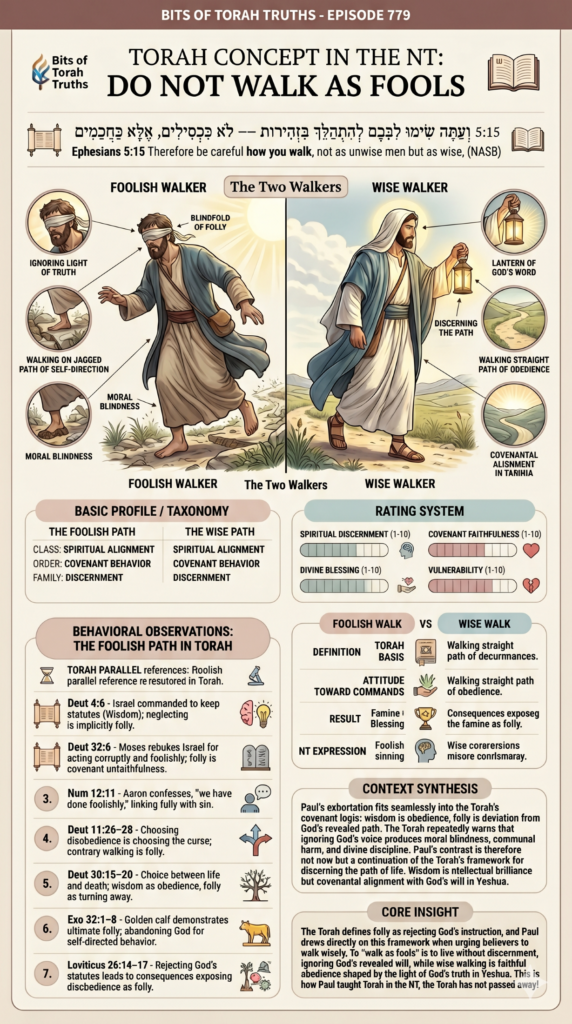
5:15 Therefore be careful how you walk, not as unwise men but as wise, (NASB)
https://www.matsati.com/index.php/category/bits-of-torah-truths/
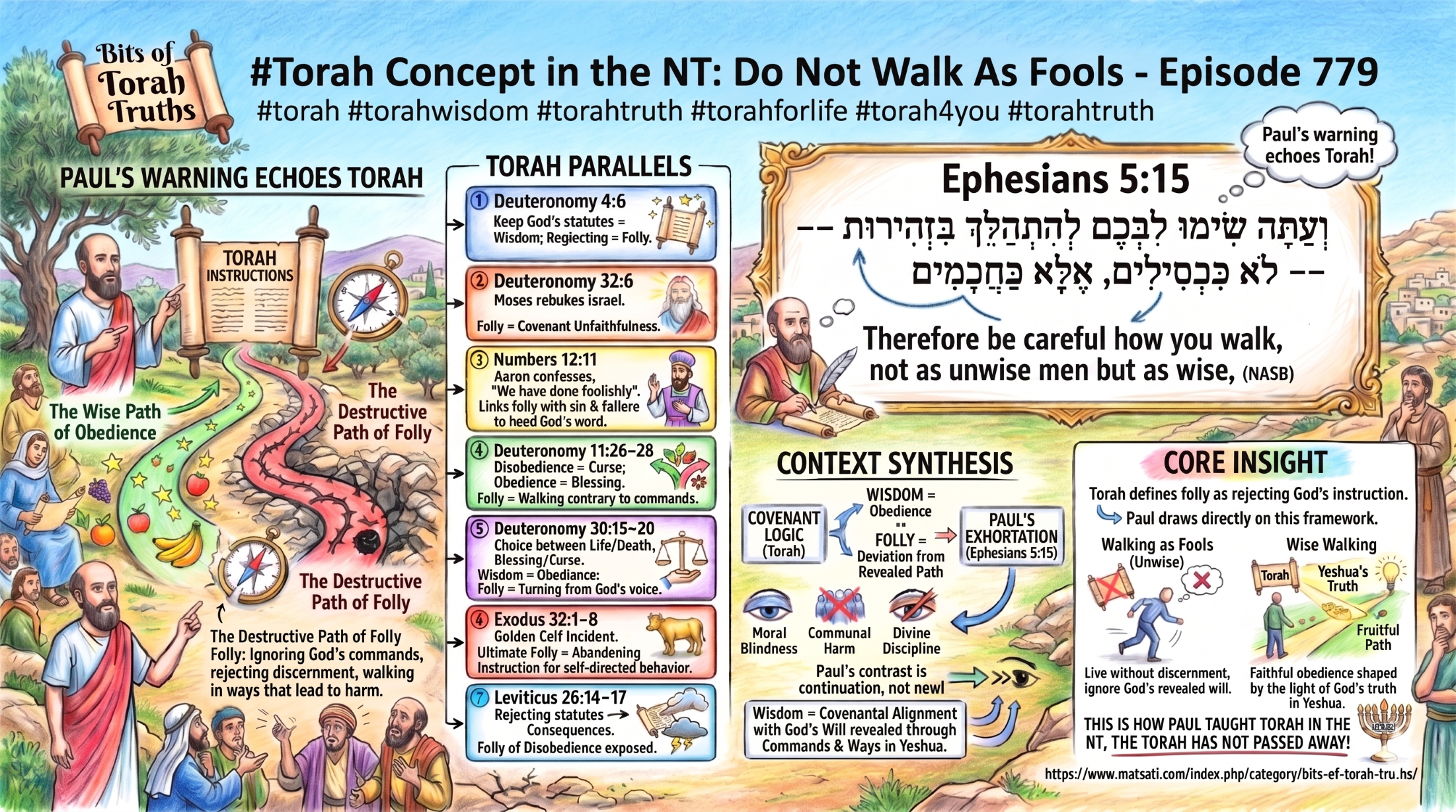
Paul’s warning not to “walk as fools” (Ephesians 5:15) echoes Torah instructions that distinguish the wise path of obedience from the destructive path of folly. The Torah consistently frames folly as ignoring God’s commands, rejecting discernment, and walking in ways that lead to harm.
– Torah parallels –
- Deuteronomy 4:6 – Israel is commanded to keep God’s statutes because doing so is wisdom; neglecting them is implicitly folly.
- Deuteronomy 32:6 – Moses rebukes Israel for acting corruptly and foolishly toward God, showing that folly is covenant unfaithfulness.
- Numbers 12:11 – Aaron confesses, “we have done foolishly,” linking folly with sin and failure to heed God’s word.
- Deuteronomy 11:26–28 – Choosing disobedience is choosing the curse; walking contrary to God’s commands is the Torah’s definition of foolish walking.
- Deuteronomy 30:15–20 – The choice between life and death, blessing and curse, frames wisdom as obedience and folly as turning away from God’s voice.
- Exodus 32:1–8 – The golden calf incident demonstrates the ultimate folly: abandoning God’s instruction for self‑directed behavior.
- Leviticus 26:14–17 – Rejecting God’s statutes leads to consequences that expose the foolishness of disobedience.
– Context Synthesis –
Paul’s exhortation to walk “not as fools but as wise” fits seamlessly into the Torah’s covenant logic: wisdom is obedience, folly is deviation from God’s revealed path. The Torah repeatedly warns that ignoring God’s voice produces moral blindness, communal harm, and divine discipline. Paul’s contrast between foolish and wise walking is therefore not new but a continuation of the Torah’s framework for discerning the path of life. In both Torah and Paul, wisdom is not intellectual brilliance but covenantal alignment with God’s will revealed through His commands and His ways made known in Yeshua.
– Core Insight –
The Torah defines folly as rejecting God’s instruction, and Paul draws directly on this framework when urging believers to walk wisely. To “walk as fools” is to live without discernment, ignoring God’s revealed will, while wise walking is faithful obedience shaped by the light of God’s truth in Yeshua. This is how Paul taught Torah in the NT, the Torah has not passed away!
Visual Summary of Concepts the Torah in the NT