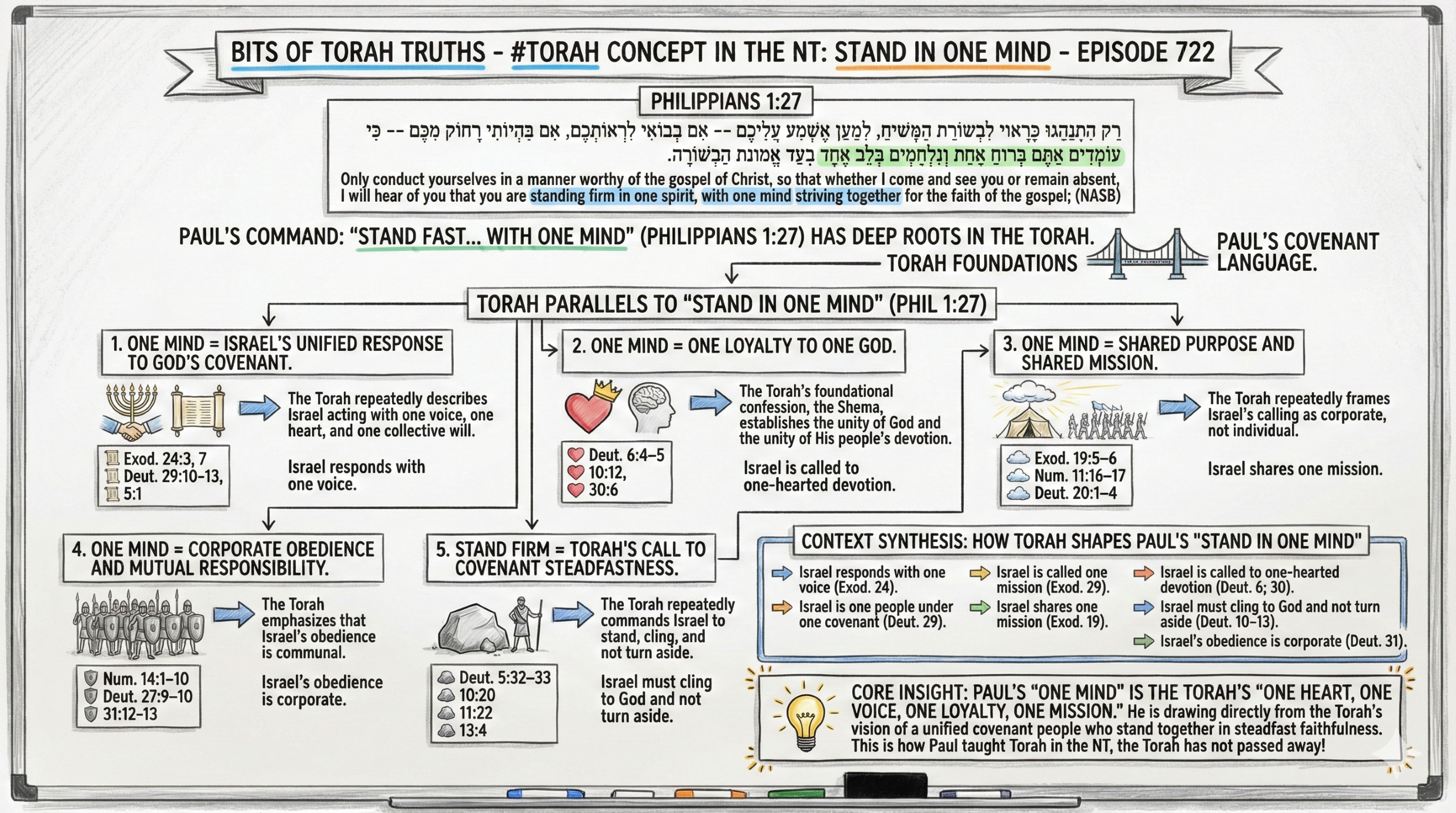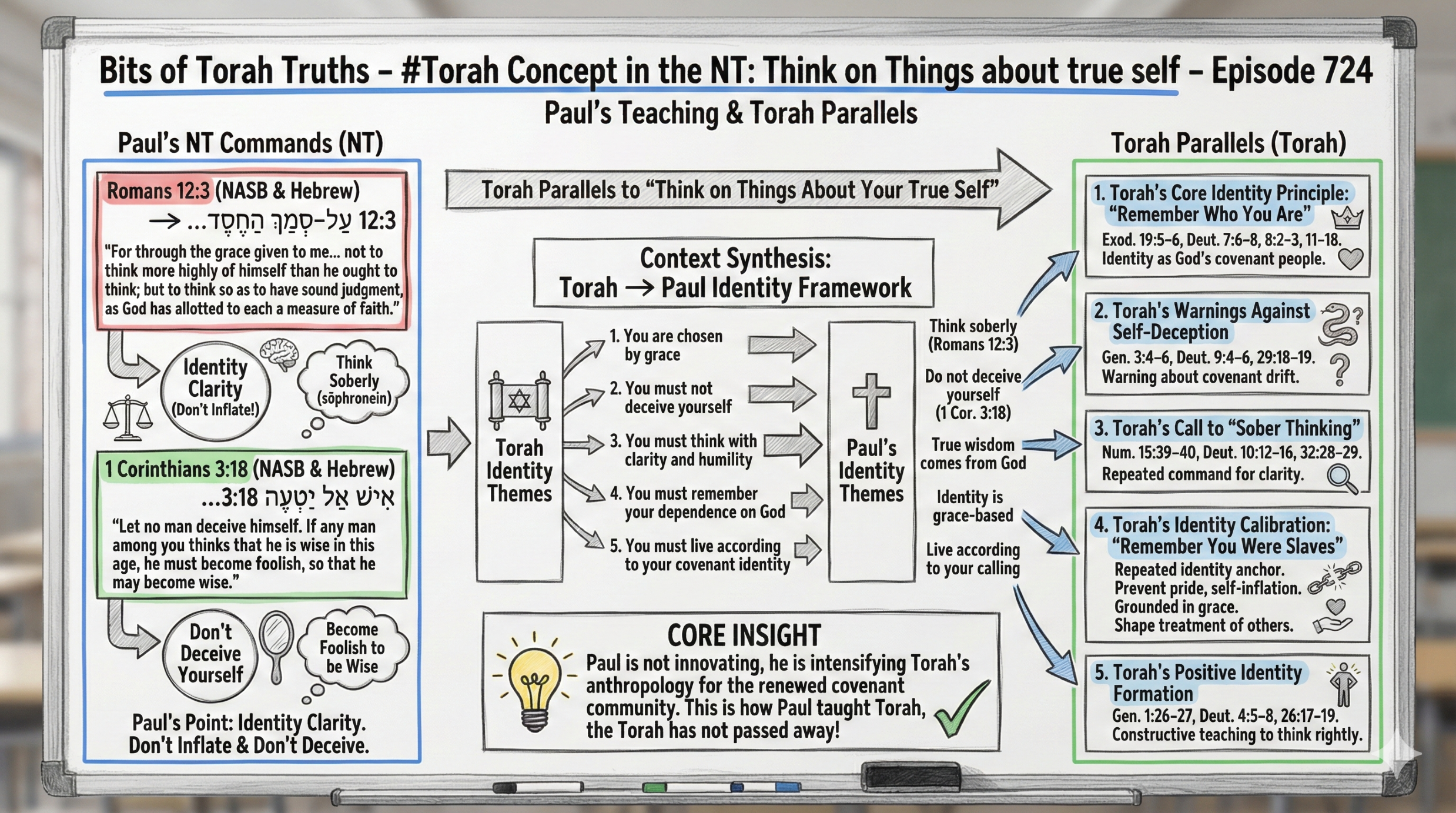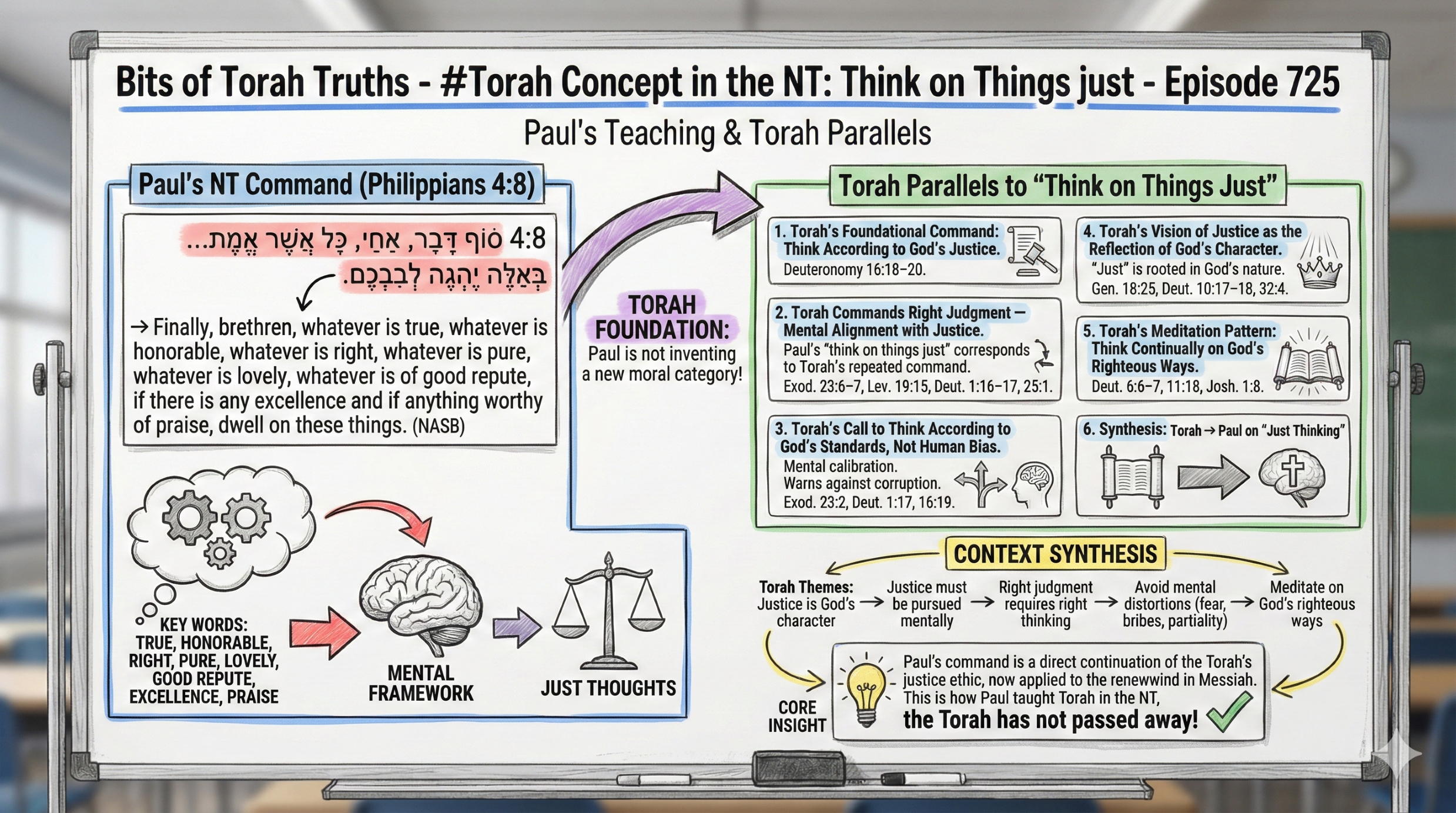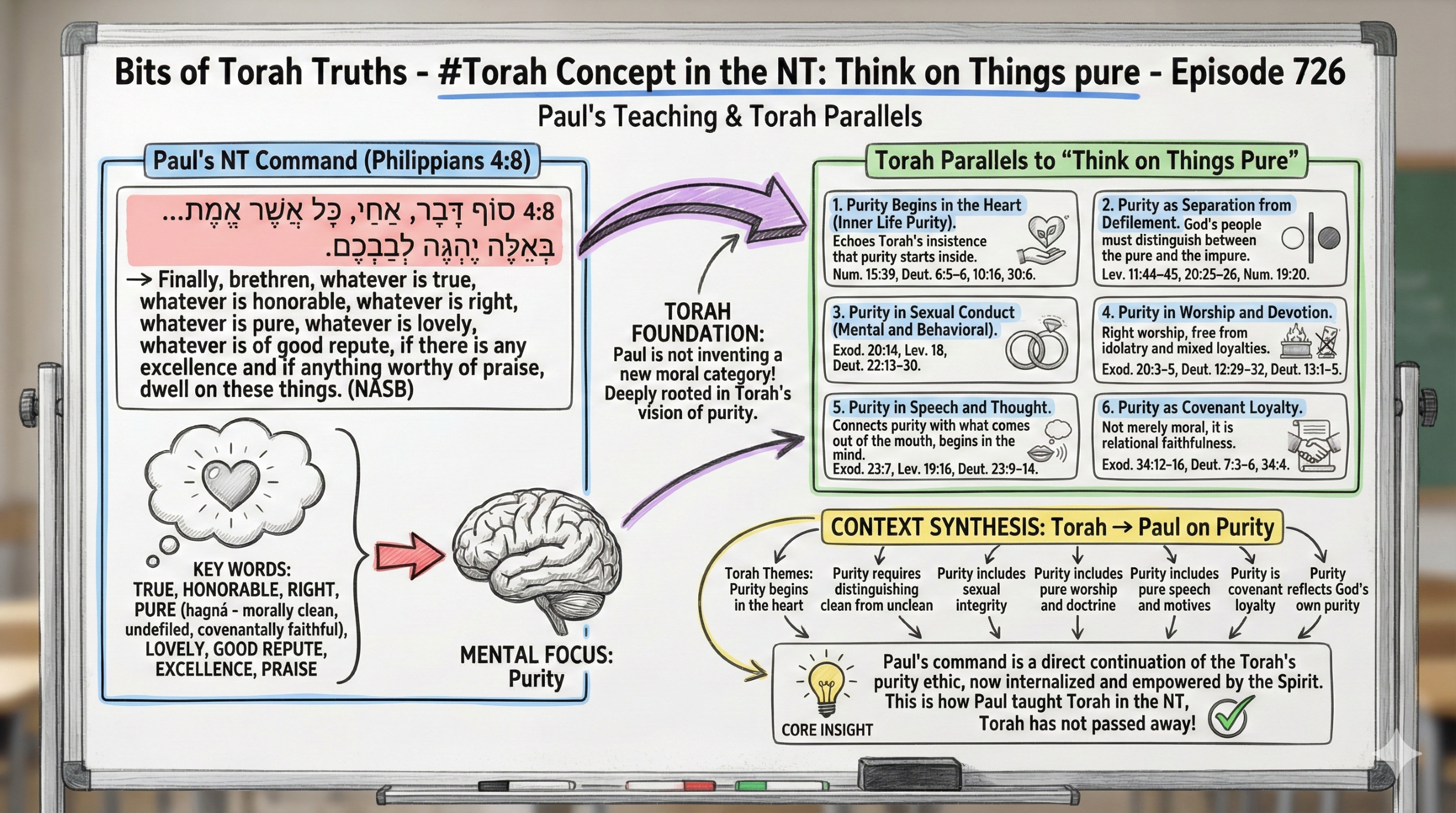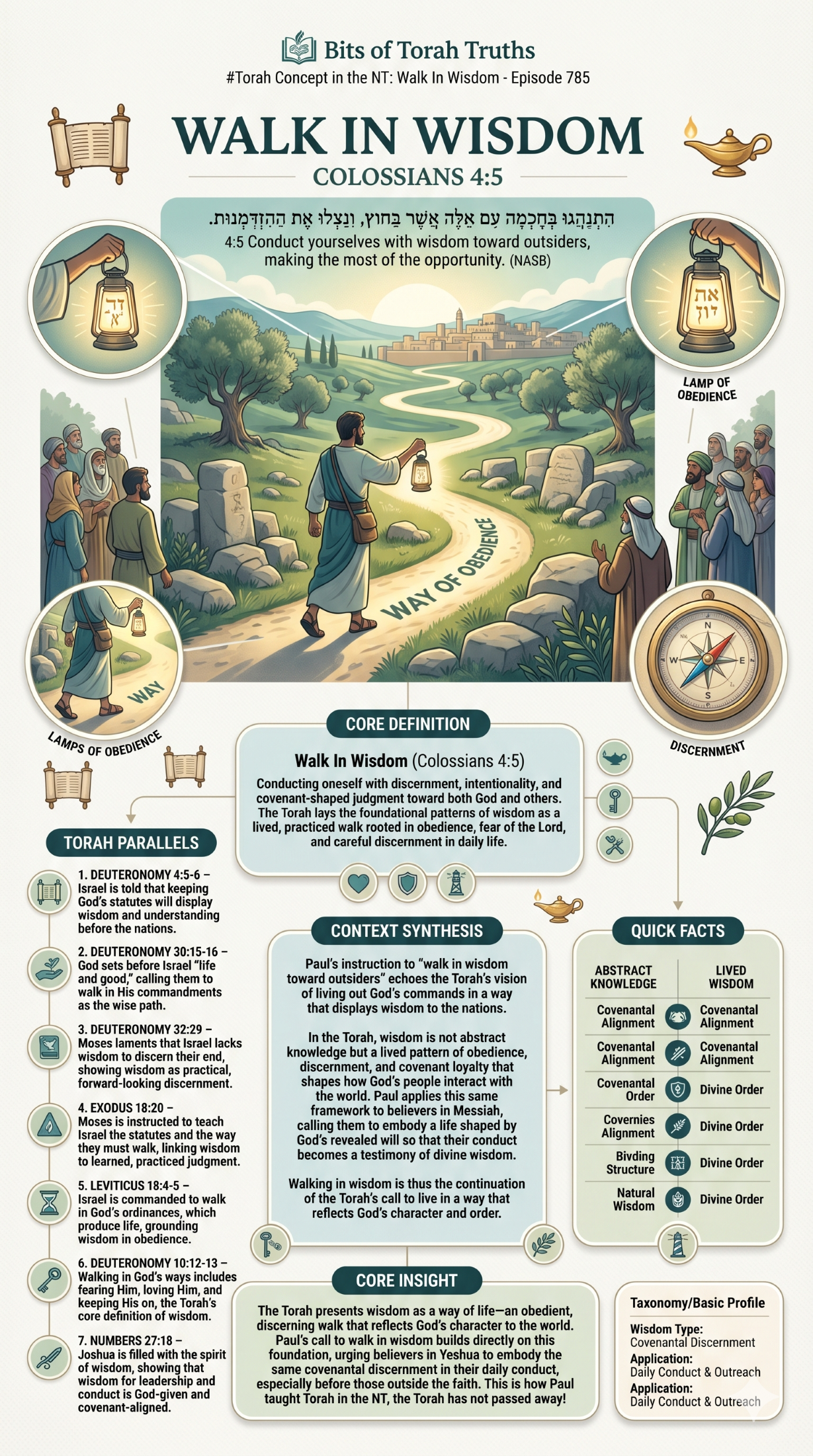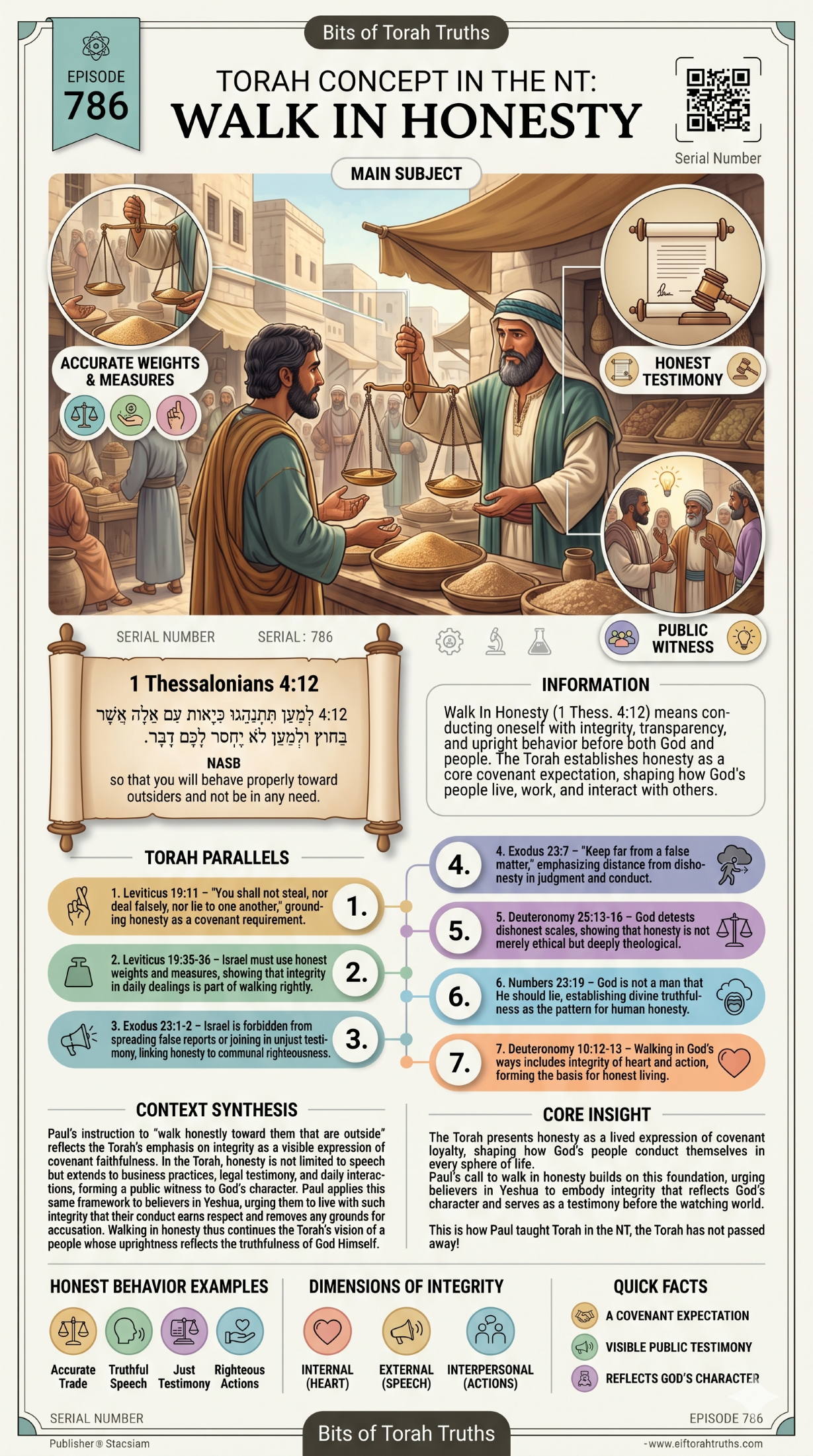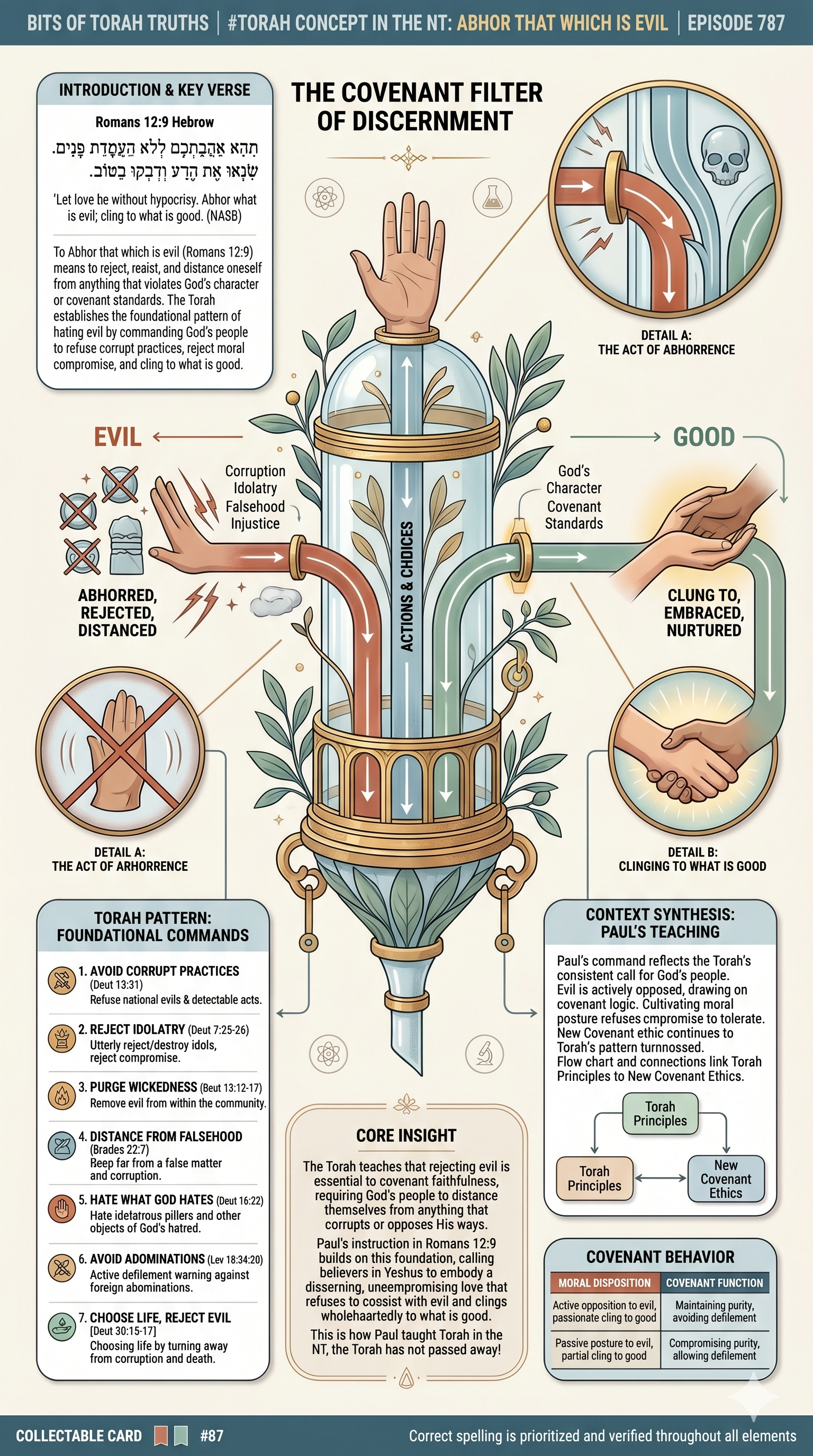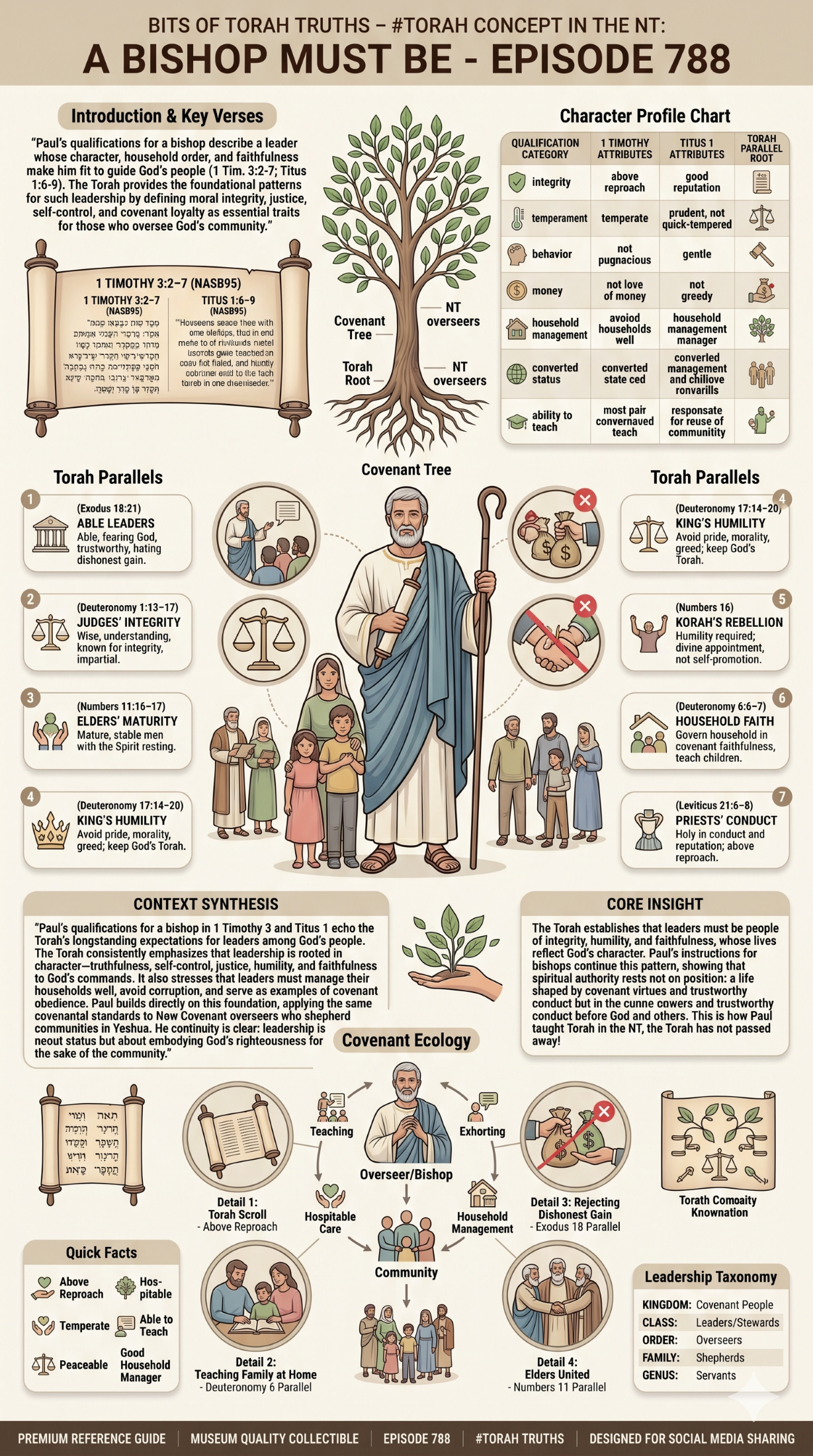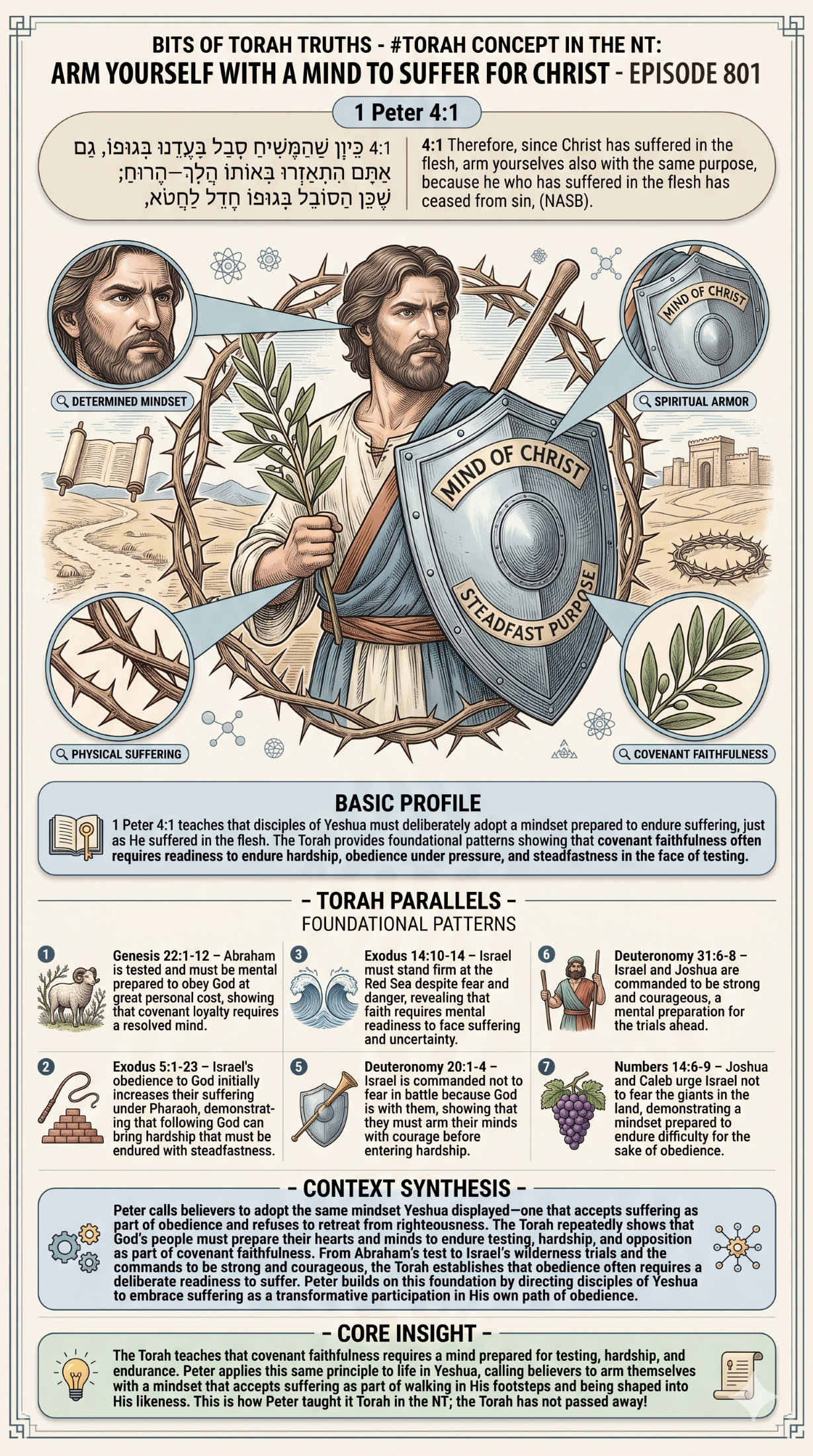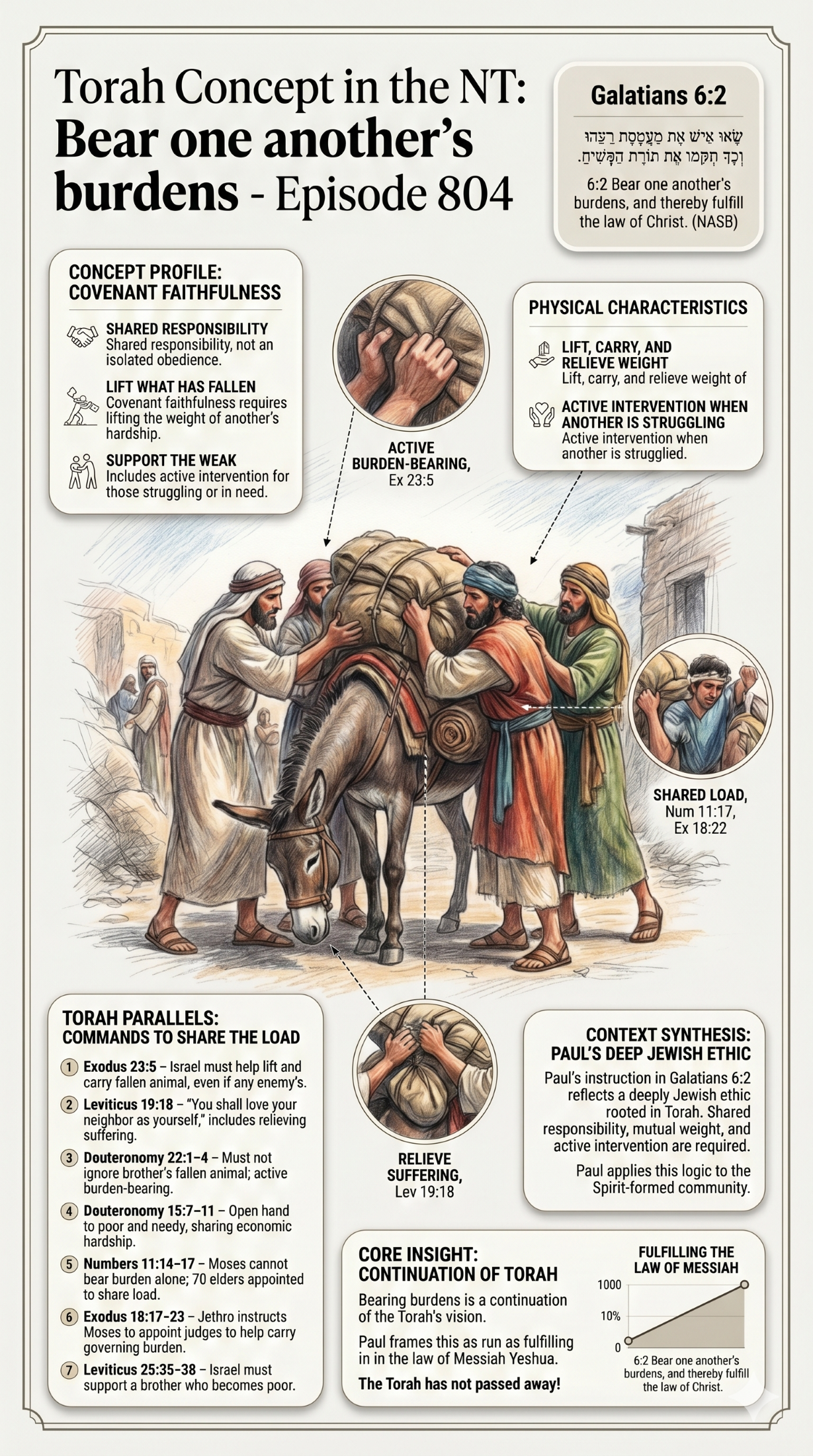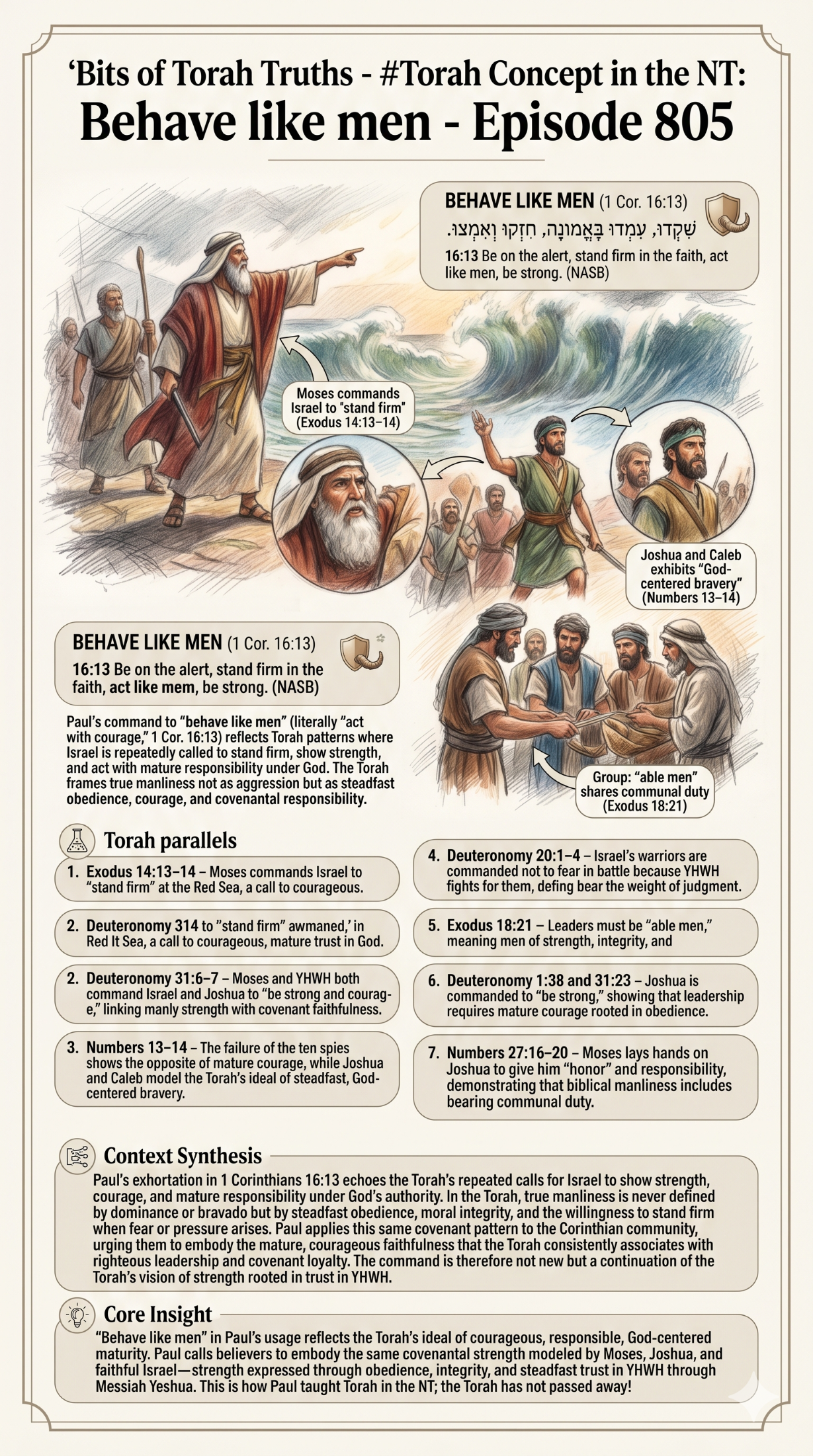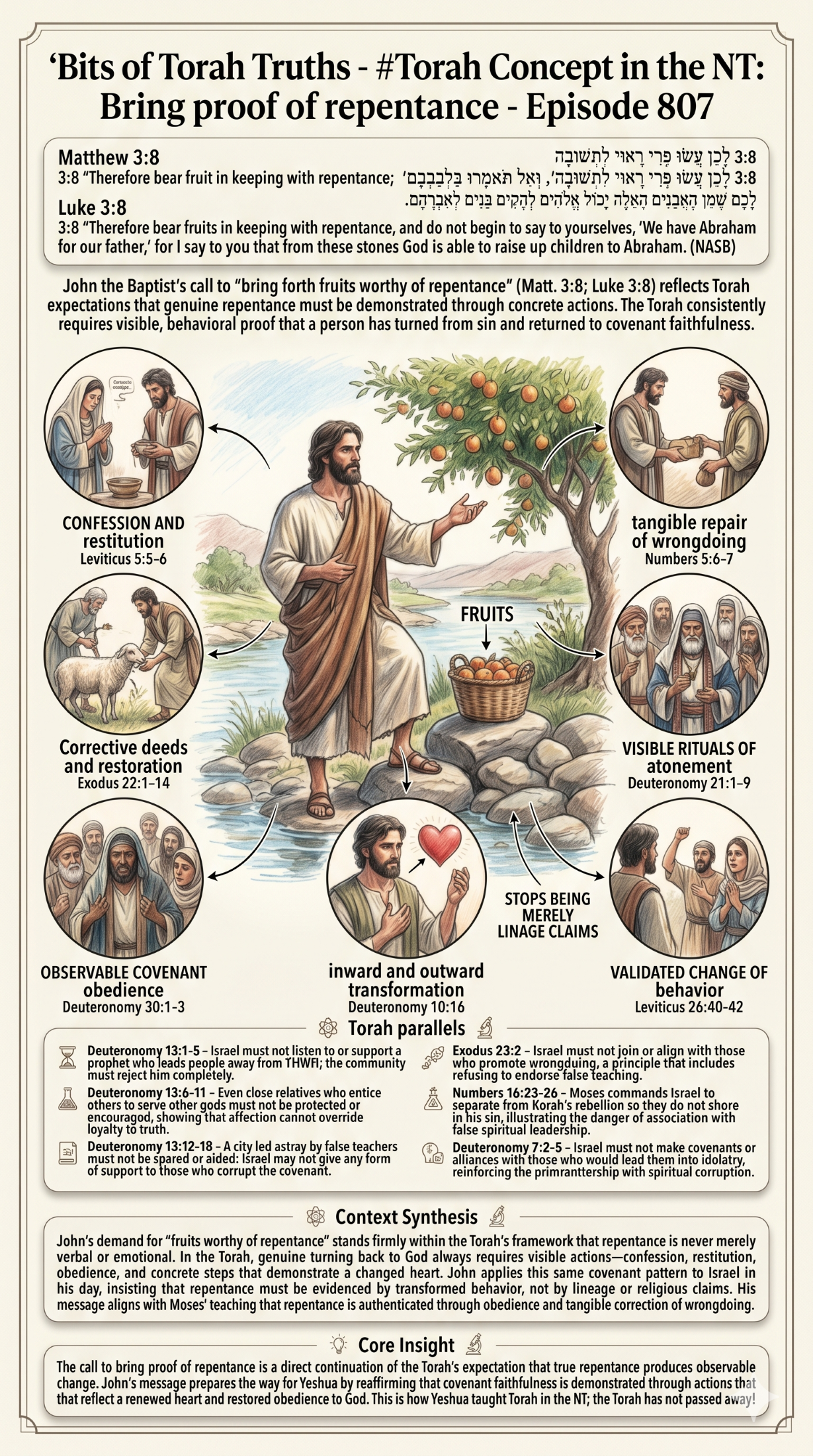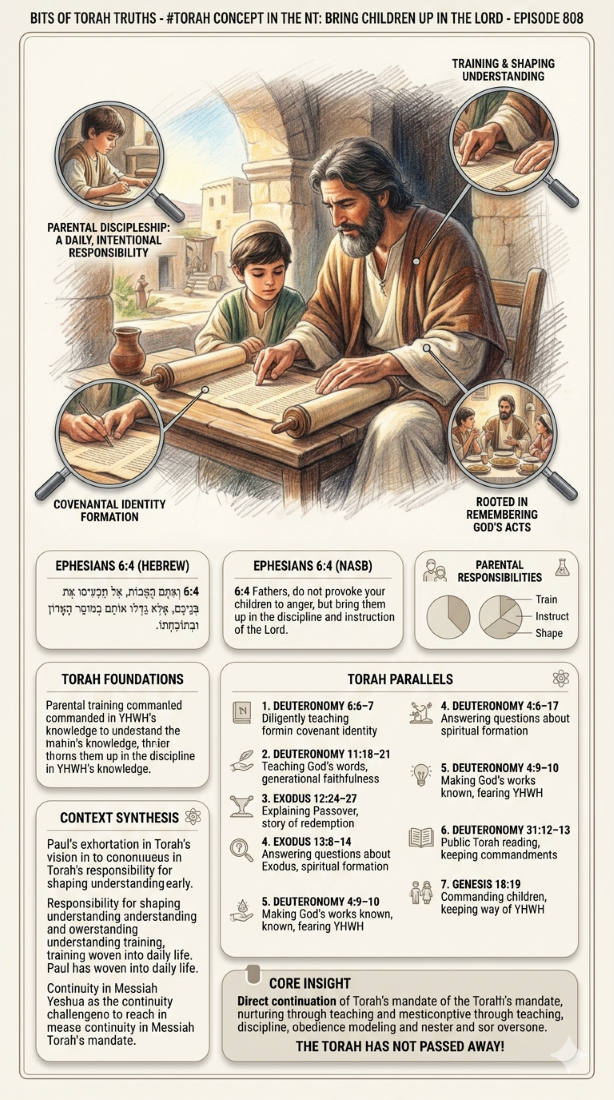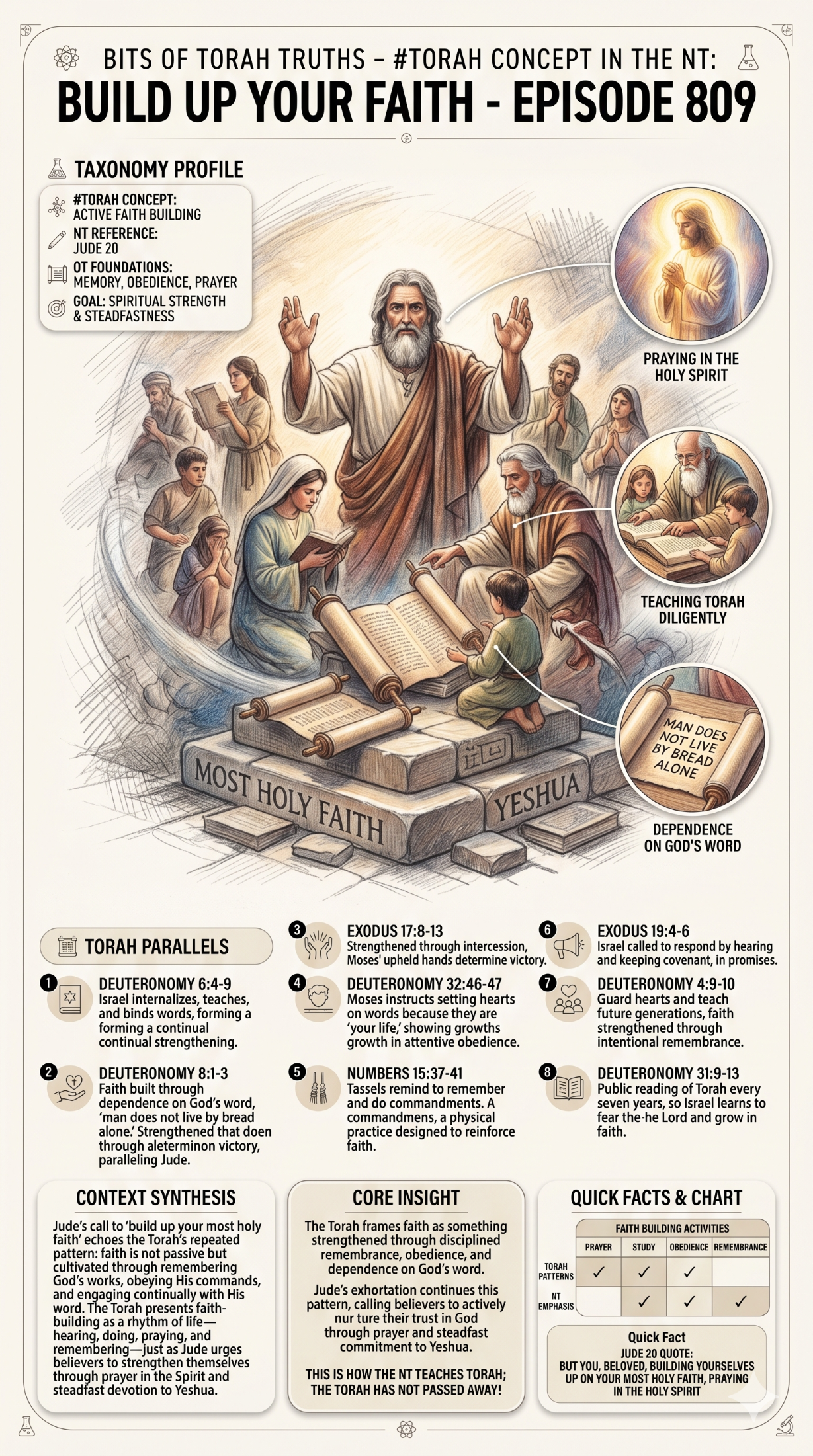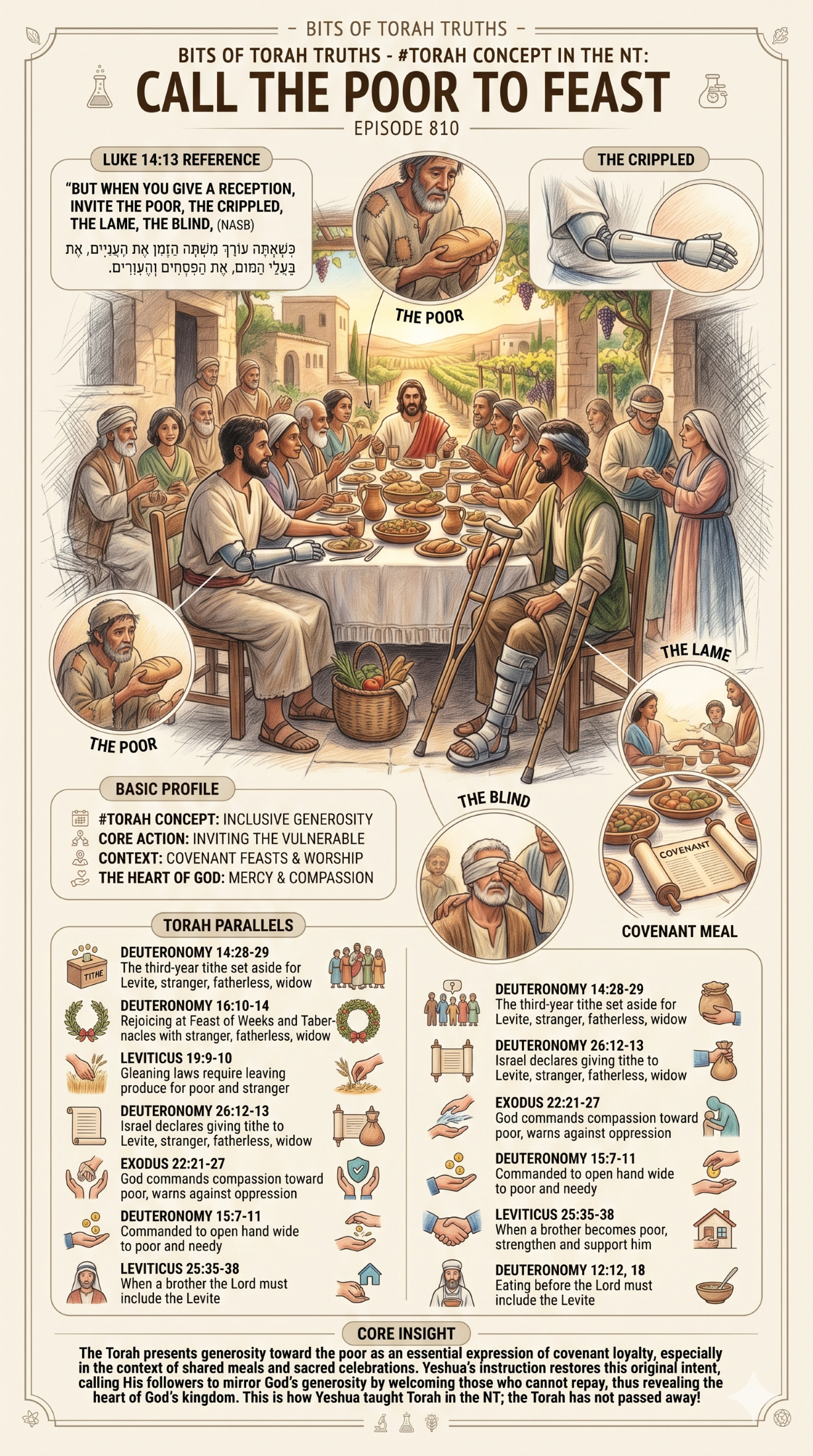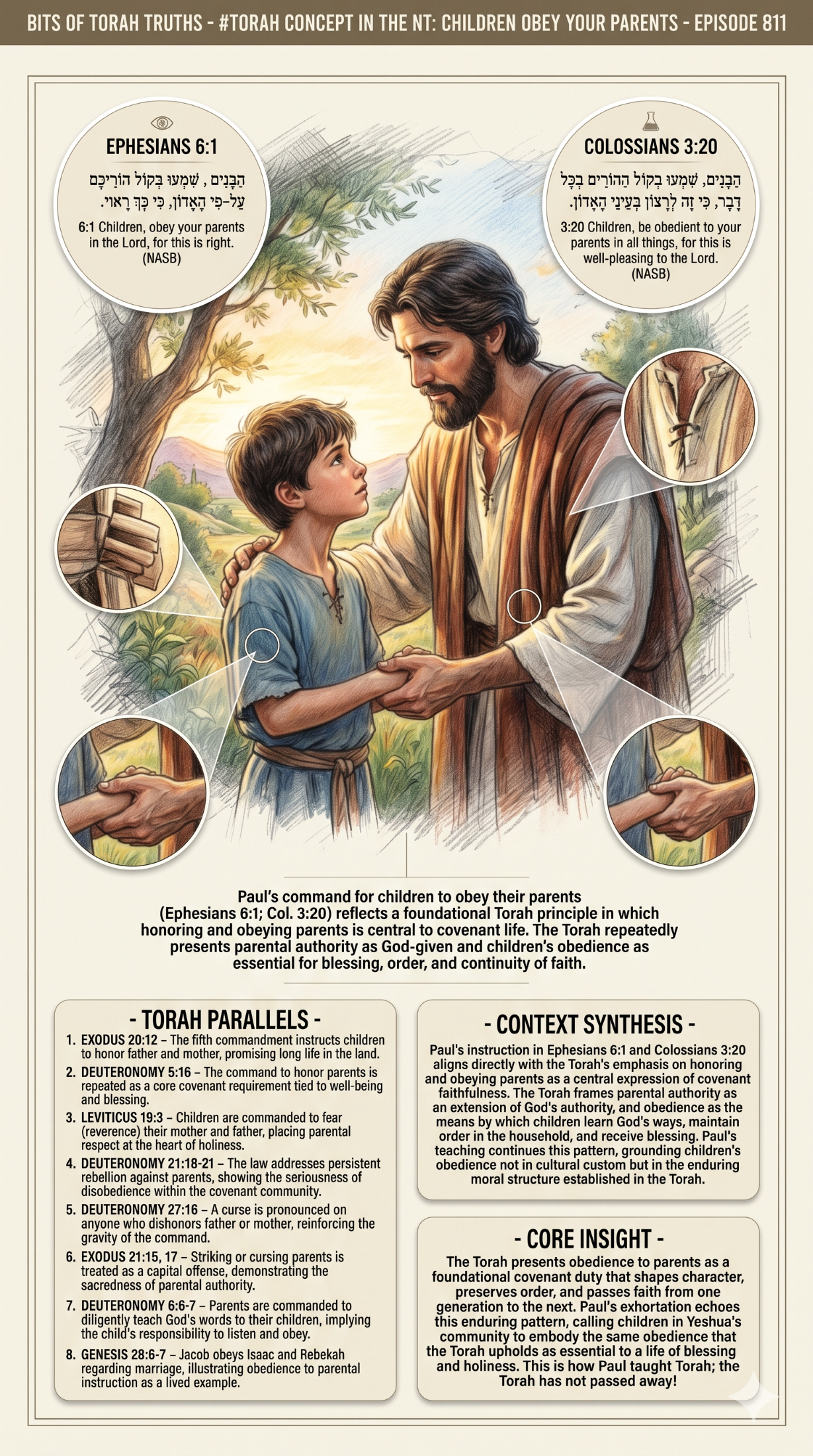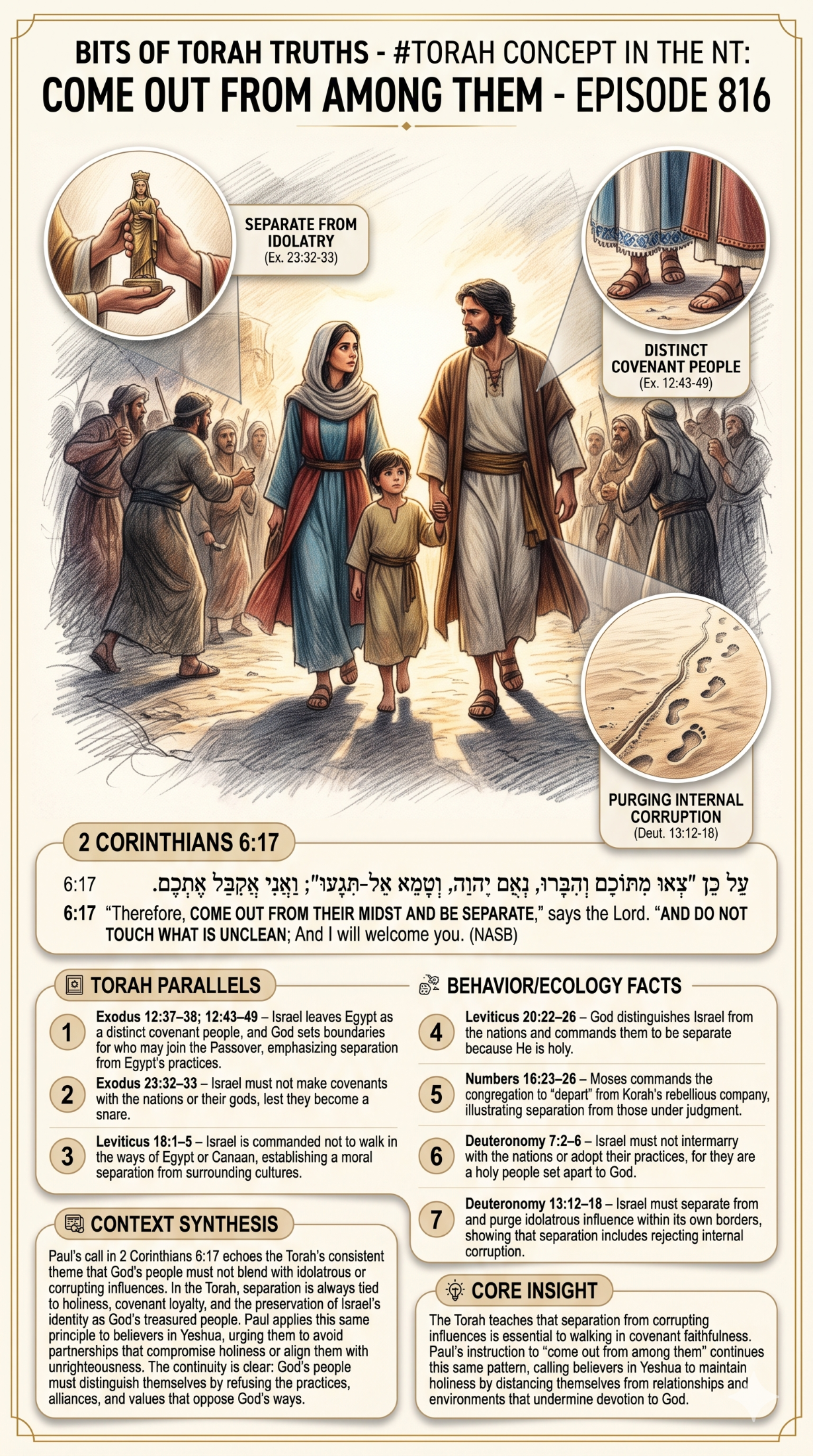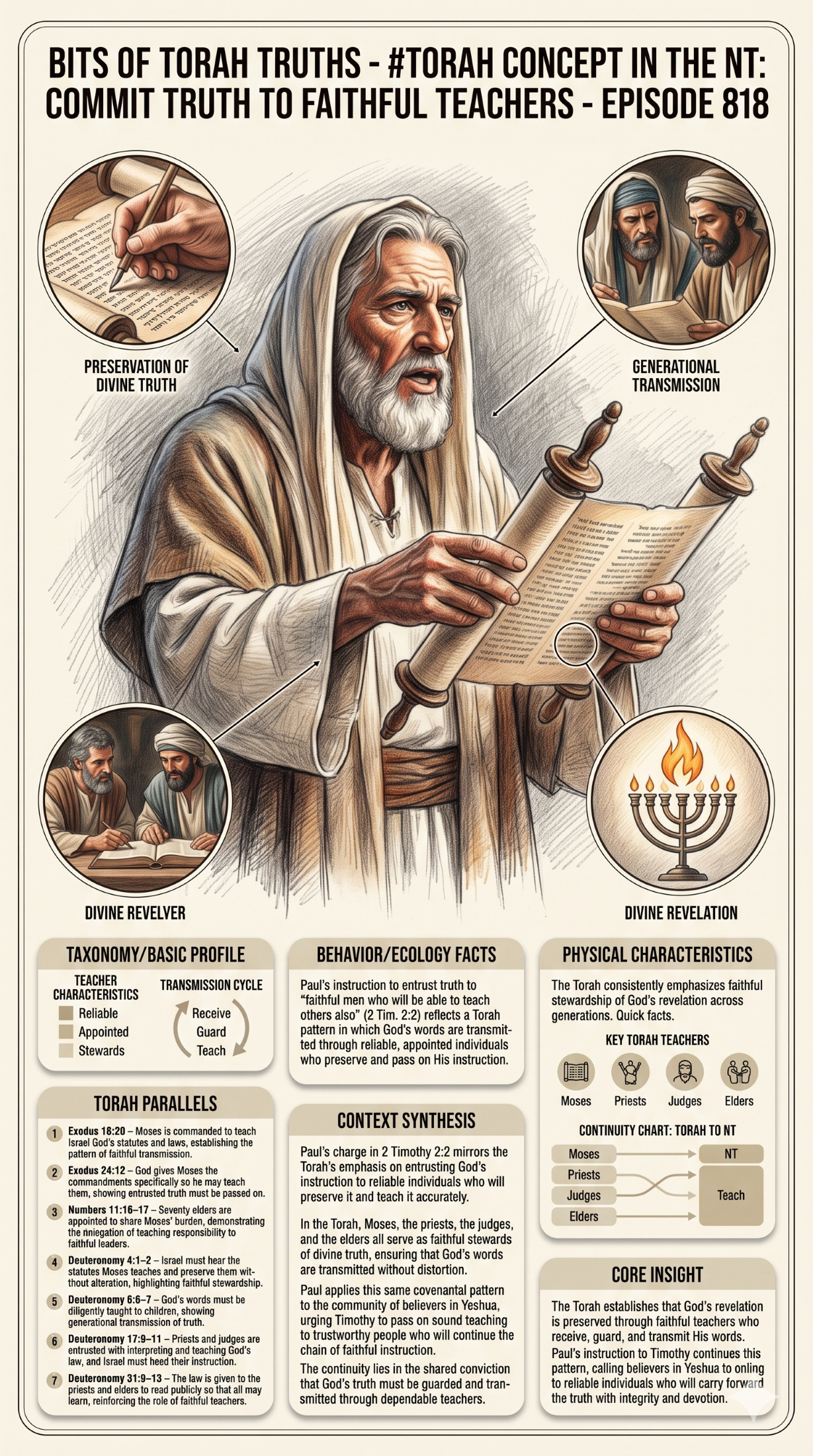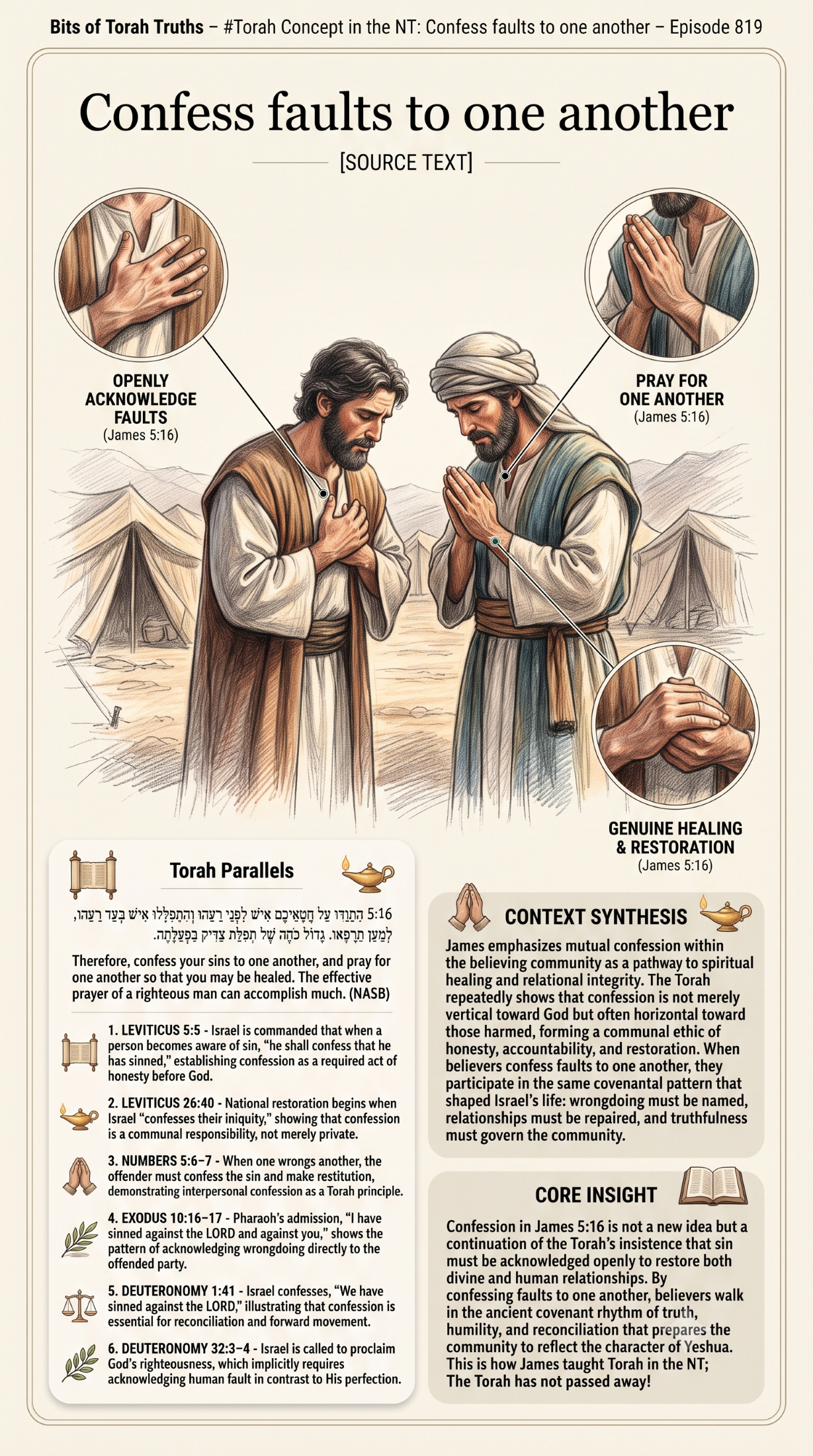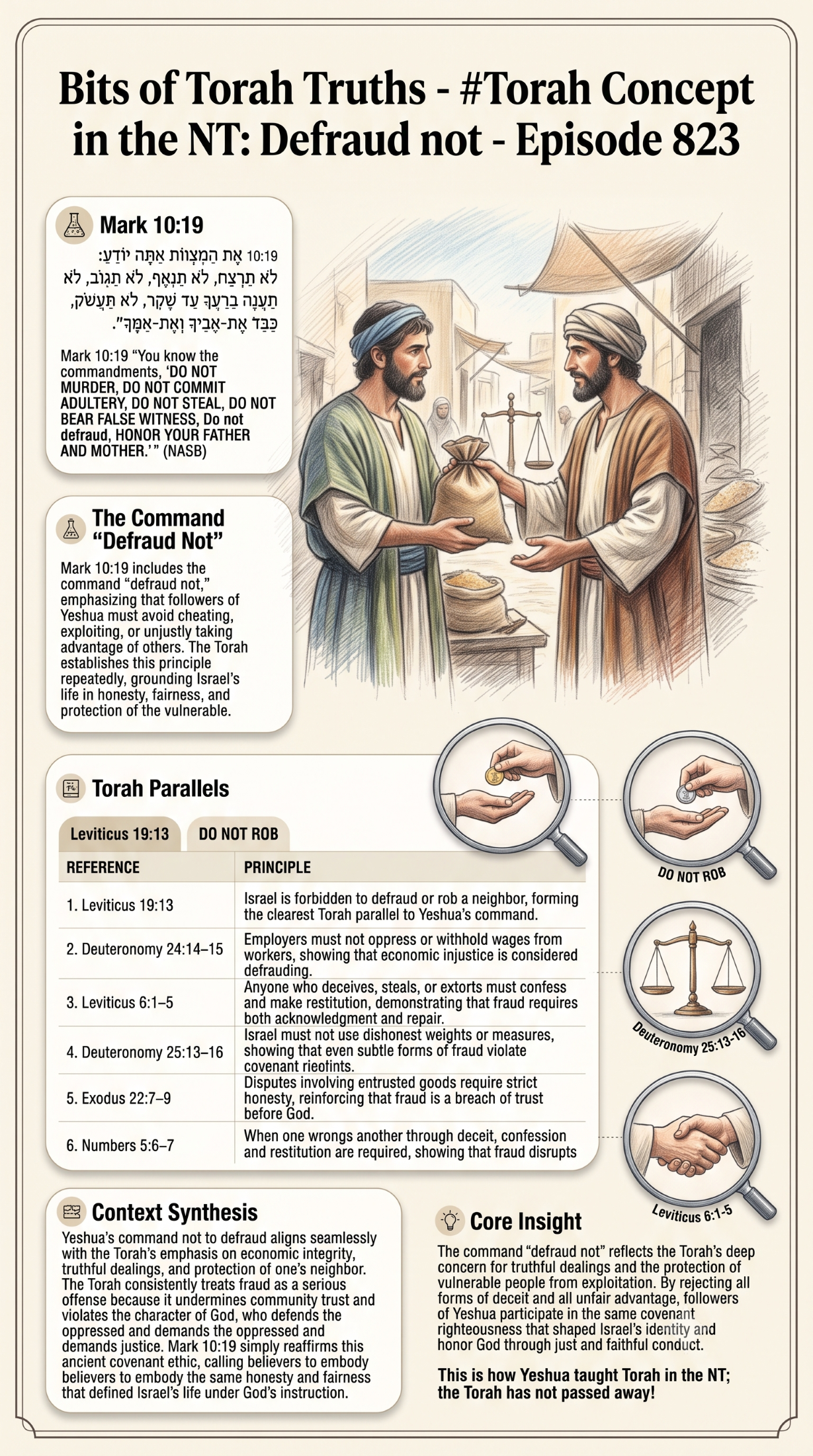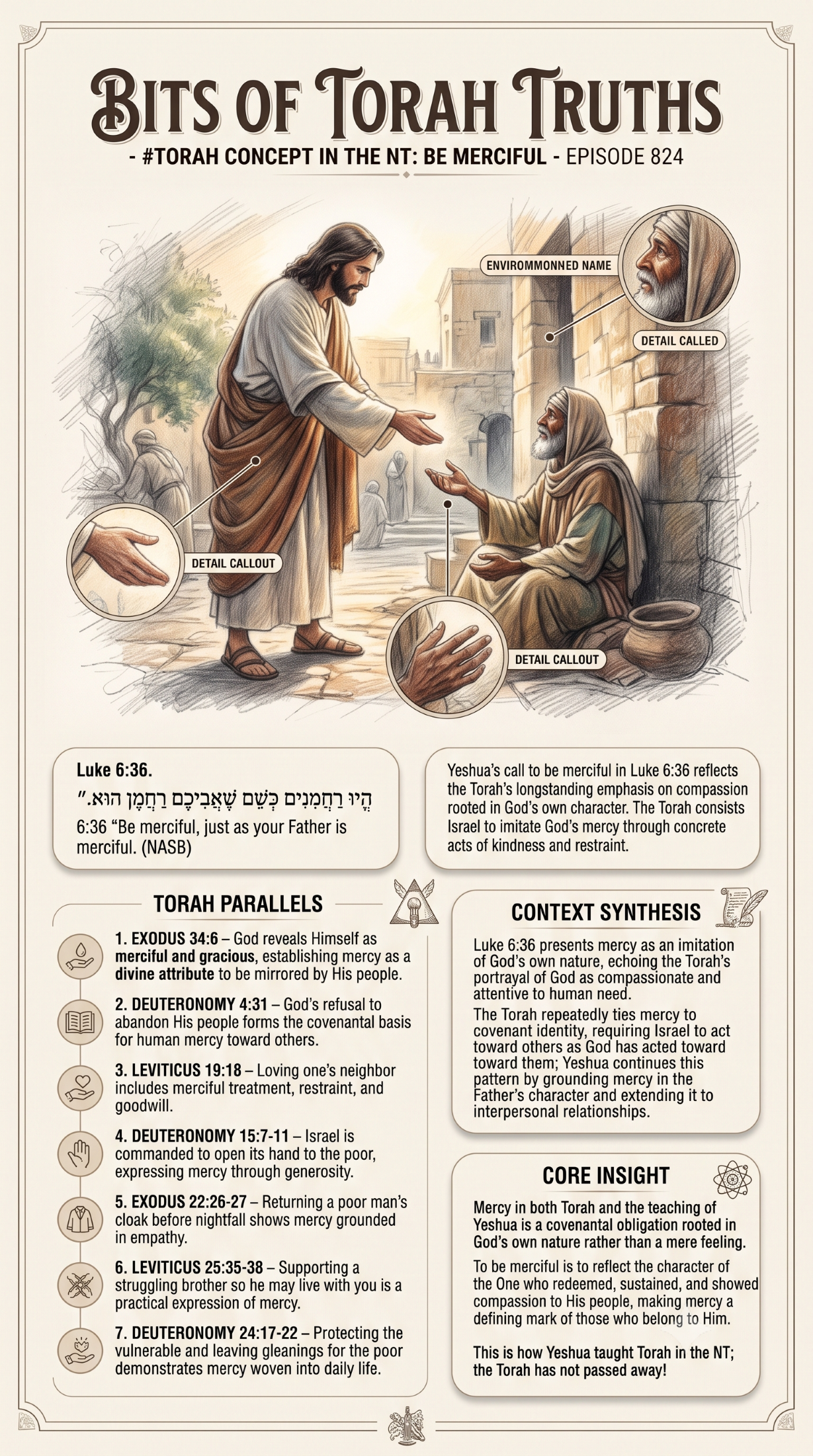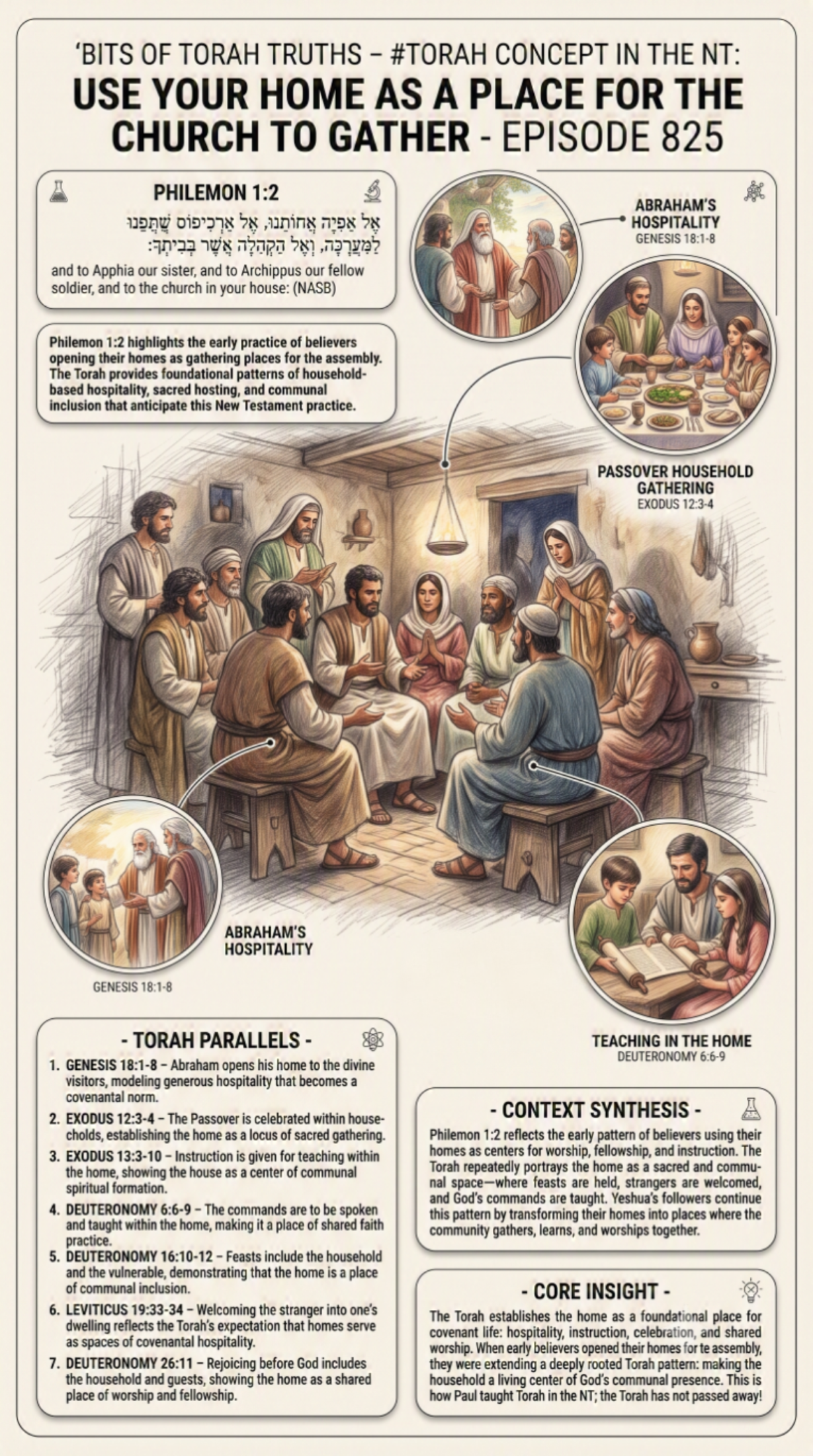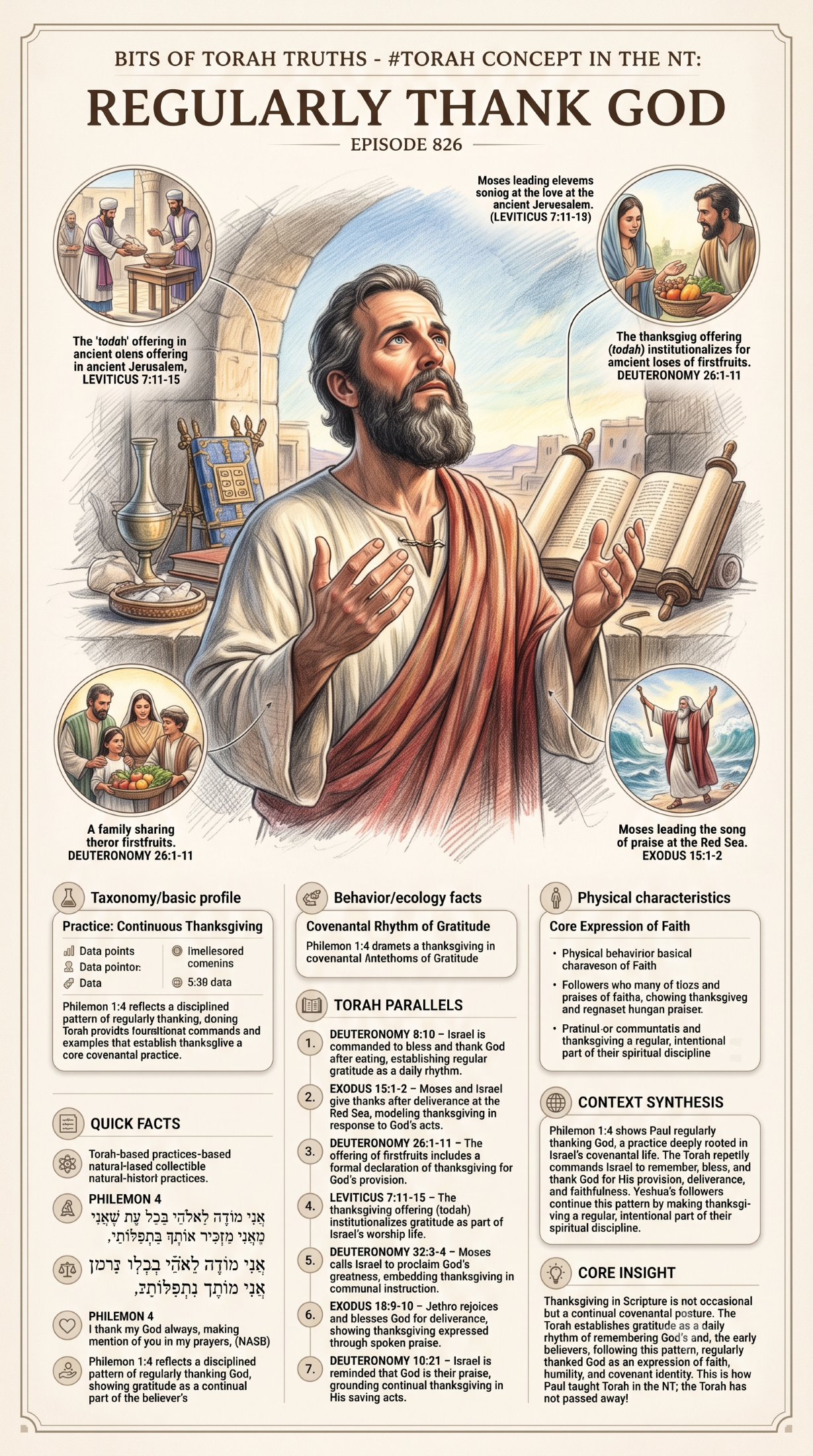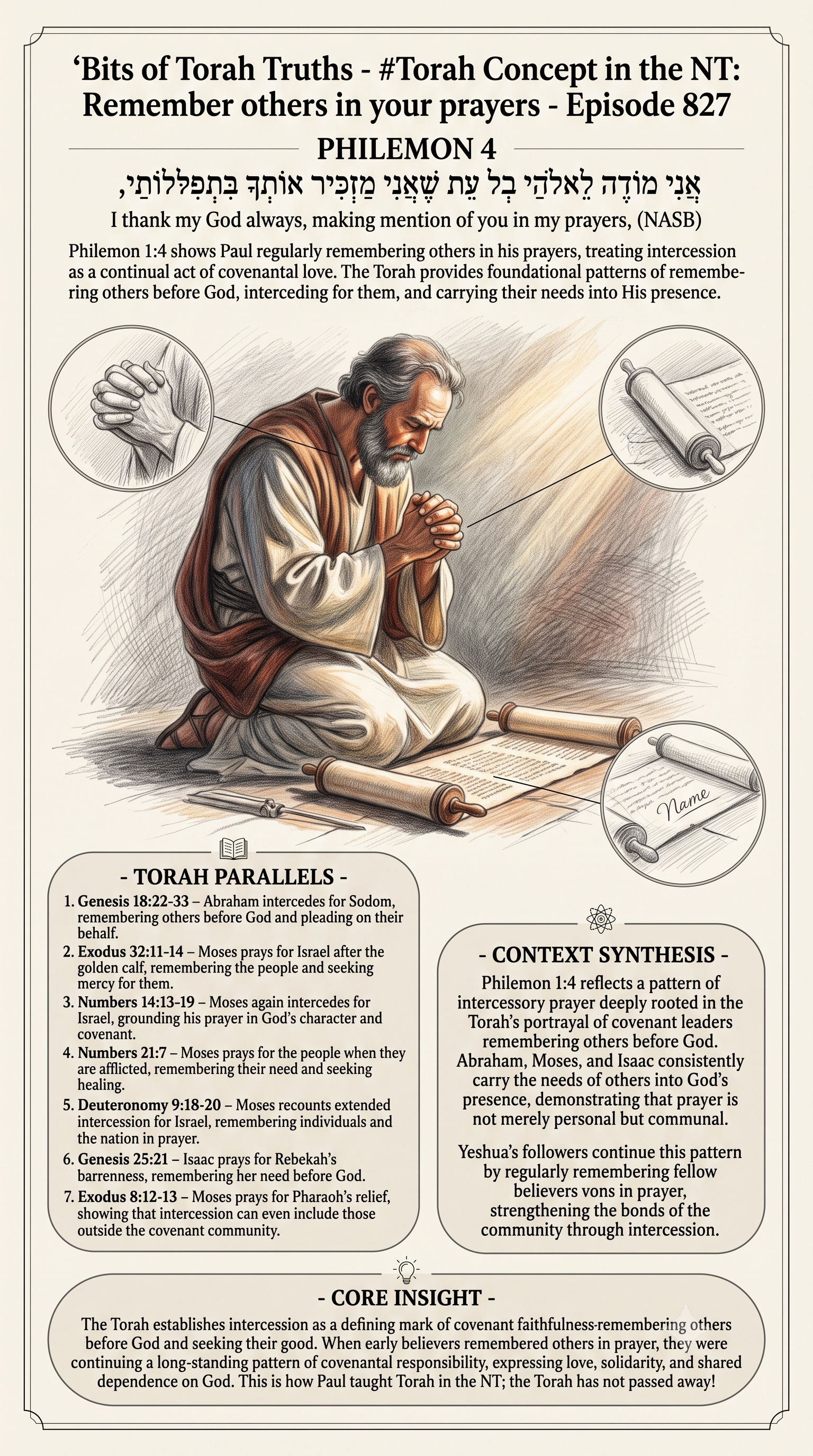
Bits of Torah Truths – #Torah Concept in the NT: Destroy none with non-essentials – Episode 839
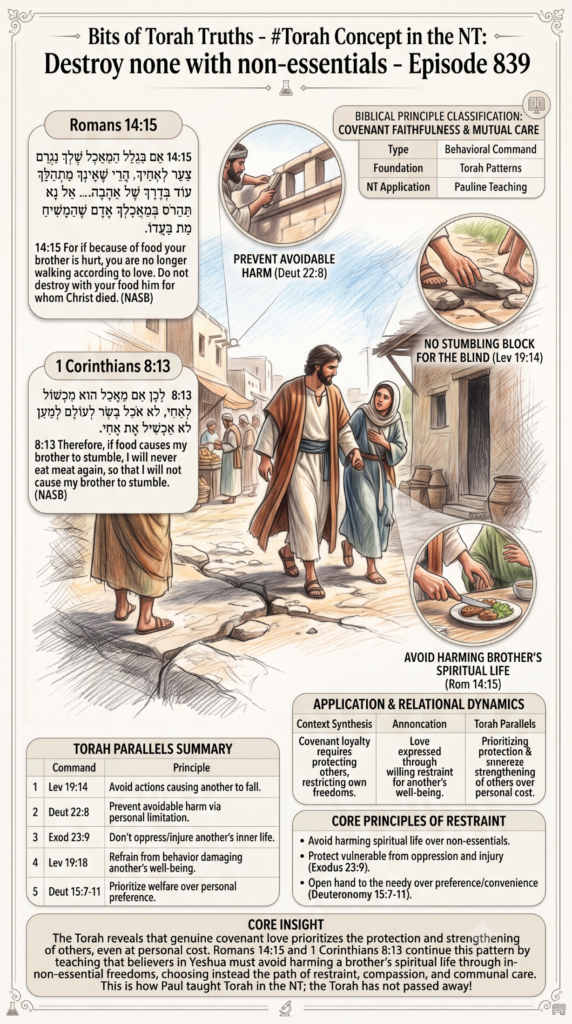
Romans 14:15
14:15 אִם בִּגְלַל הַמַּאֲכָל שֶׁלְּךָ נִגְרָם צַעַר לְאָחִיךָ, הֲרֵי שֶׁאֵינְךָ מִתְהַלֵּךְ עוֹד בְּדֶרֶךְ שֶׁל אַהֲבָה. אַל נָא תַּהֲרֹס בְּמַאֲכָלְךָ אָדָם שֶׁהַמָּשִׁיחַ מֵת בַּעֲדוֹ.
1 Corinthians 8:13
8:13 לָכֵן אִם מַאֲכָל הוּא מִכְשׁוֹל לְאָחִי, לֹא אֹכַל בָּשָׂר לְעוֹלָם לְמַעַן לֹא אַכְשִׁיל אֶת אָחִי.
#torah #torahwisdom #torahtruth #torahforlife #torah4you #torahtruth
Romans 14:15
14:15 For if because of food your brother is hurt, you are no longer walking according to love. Do not destroy with your food him for whom Christ died. (NASB)
1 Corinthians 8:13
8:13 Therefore, if food causes my brother to stumble, I will never eat meat again, so that I will not cause my brother to stumble. (NASB)
https://www.matsati.com/index.php/category/bits-of-torah-truths/
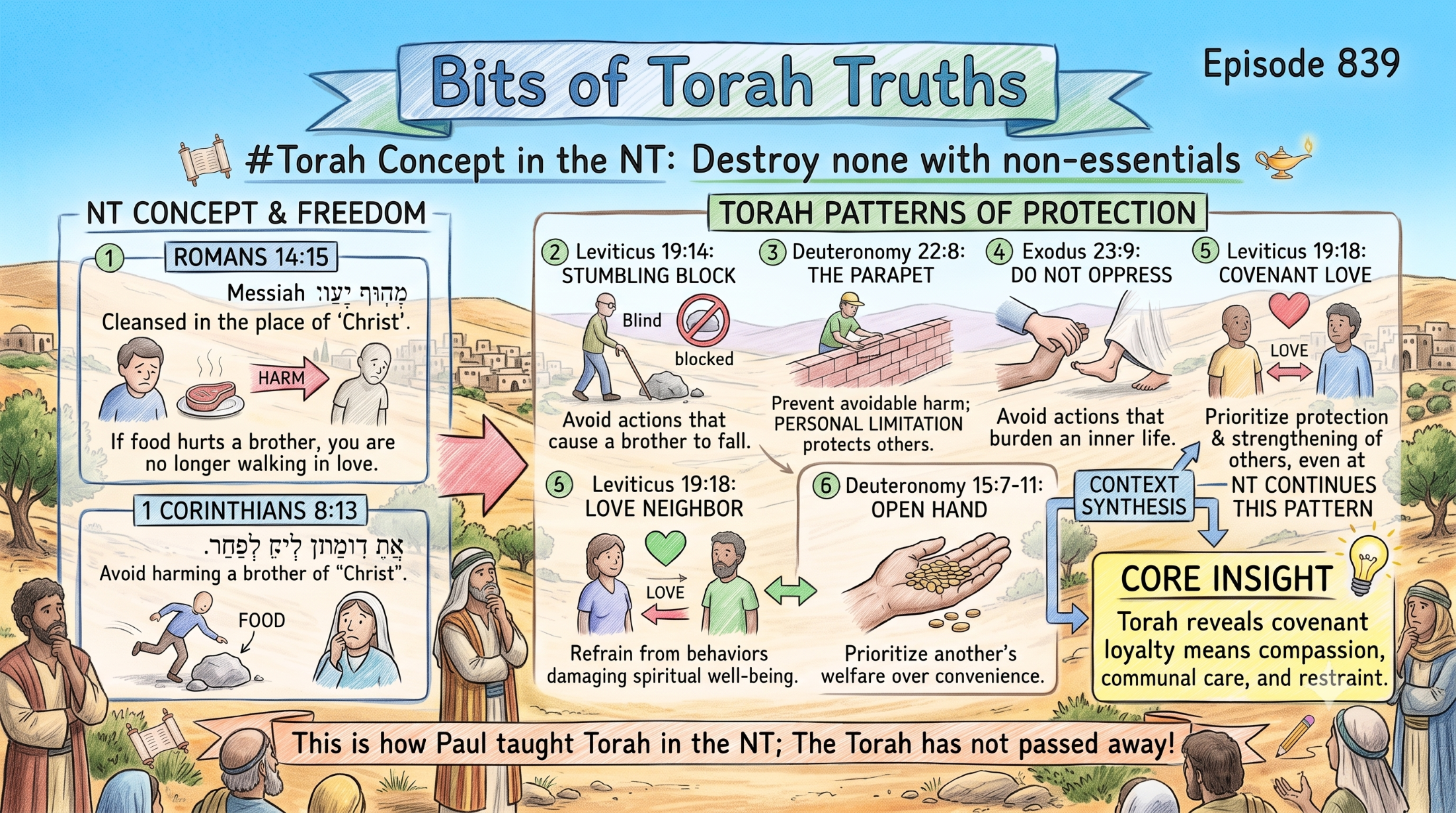
Romans 14:15 and 1 Corinthians 8:13 teach that believers must avoid harming a brother’s spiritual well‑being over matters that are non‑essential. The Torah contains foundational patterns showing that covenant faithfulness requires protecting others from harm, even when it means limiting one’s own freedoms.
– Torah parallels –
- Leviticus 19:14 – The command not to put a stumbling block before the blind establishes the principle of avoiding actions that cause another to fall or be harmed.
- Deuteronomy 22:8 – Building a parapet on one’s roof shows the responsibility to prevent avoidable harm to others, even when it requires personal limitation or extra effort.
- Exodus 23:9 – Israel is commanded not to oppress the vulnerable, teaching that one must avoid actions that burden or injure another’s inner life.
- Leviticus 19:18 – Loving one’s neighbor as oneself includes refraining from behaviors that would damage another’s spiritual or emotional well‑being.
- Deuteronomy 15:7-11 – The call to open one’s hand to the needy shows that covenant love prioritizes another’s welfare over personal preference or convenience.
– Context Synthesis –
Paul’s instruction in Romans 14:15 and 1 Corinthians 8:13 addresses situations where personal liberty, such as food choices, could spiritually harm a weaker brother. The Torah repeatedly teaches that covenant loyalty requires protecting others from harm, even when it means restricting one’s own actions. These passages show that love is expressed not merely through what one does, but through what one willingly refrains from doing for the sake of another’s well‑being. Paul builds on this foundation by urging believers in Yeshua to avoid destroying a brother’s faith over non‑essential matters.
– Core Insight –
The Torah reveals that genuine covenant love prioritizes the protection and strengthening of others, even at personal cost. Romans 14:15 and 1 Corinthians 8:13 continue this pattern by teaching that believers in Yeshua must avoid harming a brother’s spiritual life through non‑essential freedoms, choosing instead the path of restraint, compassion, and communal care. This is how Paul taught Torah in the NT; the Torah has not passed away!
Visual Summary of Concepts the Torah in the NT