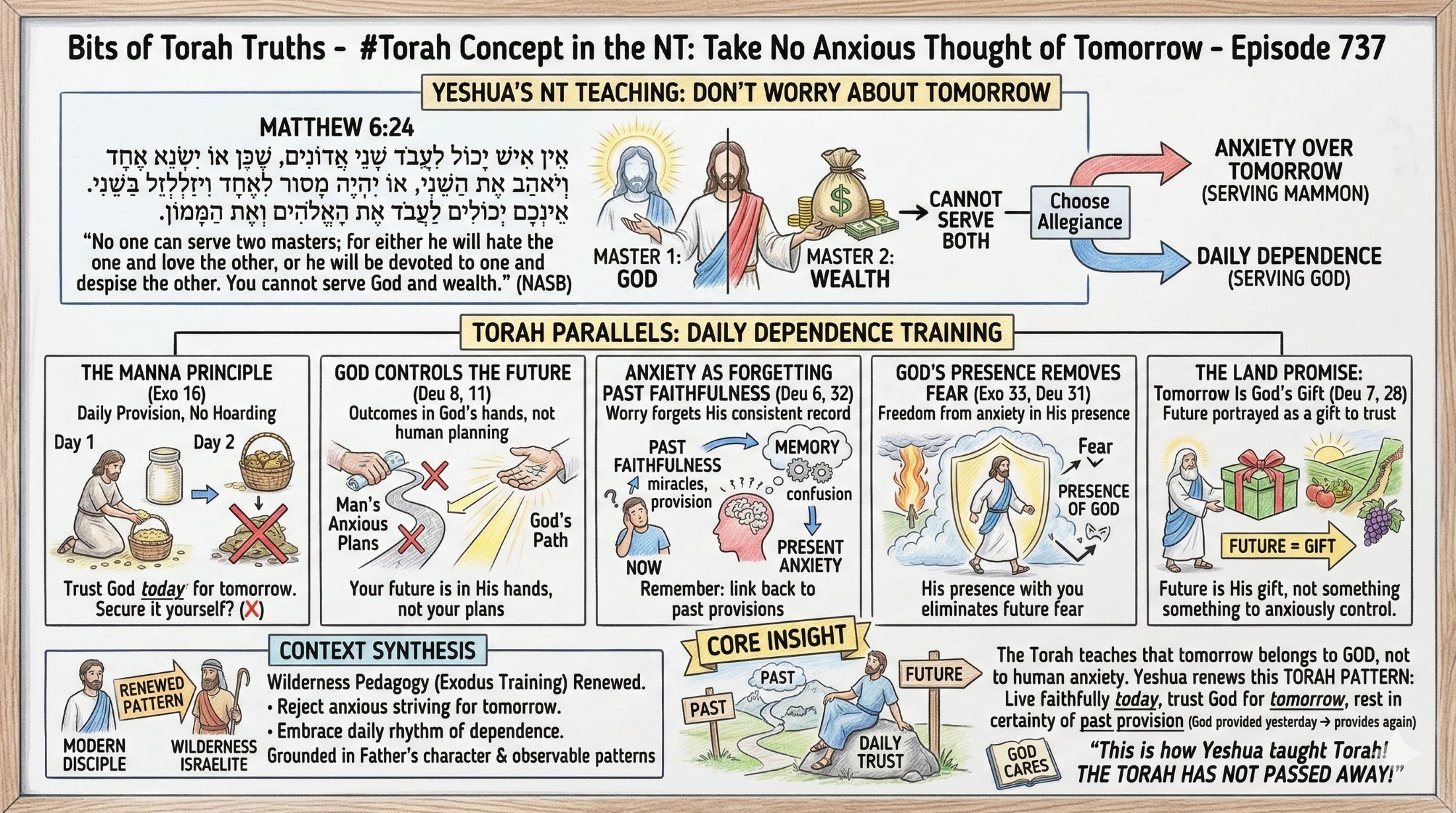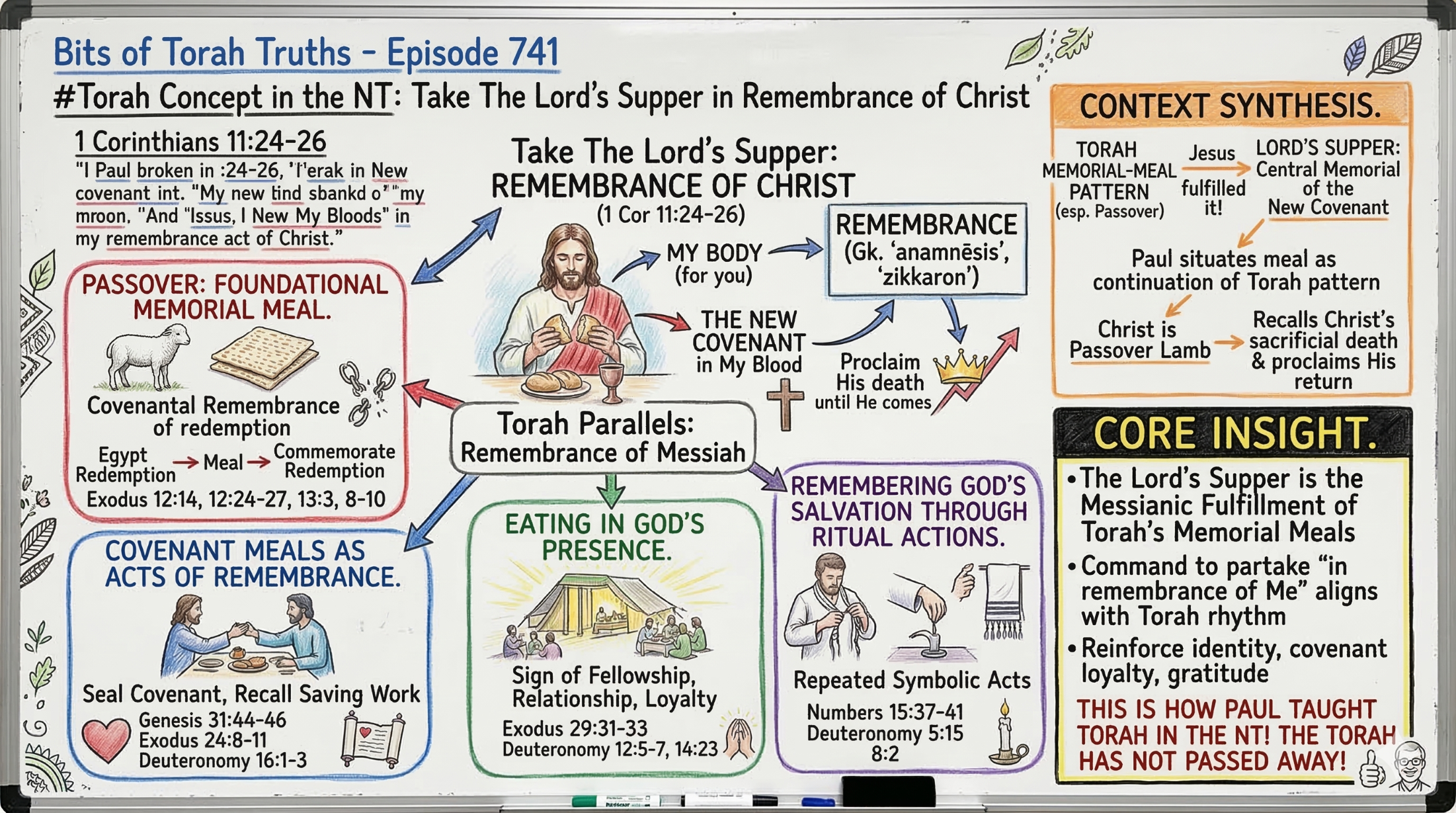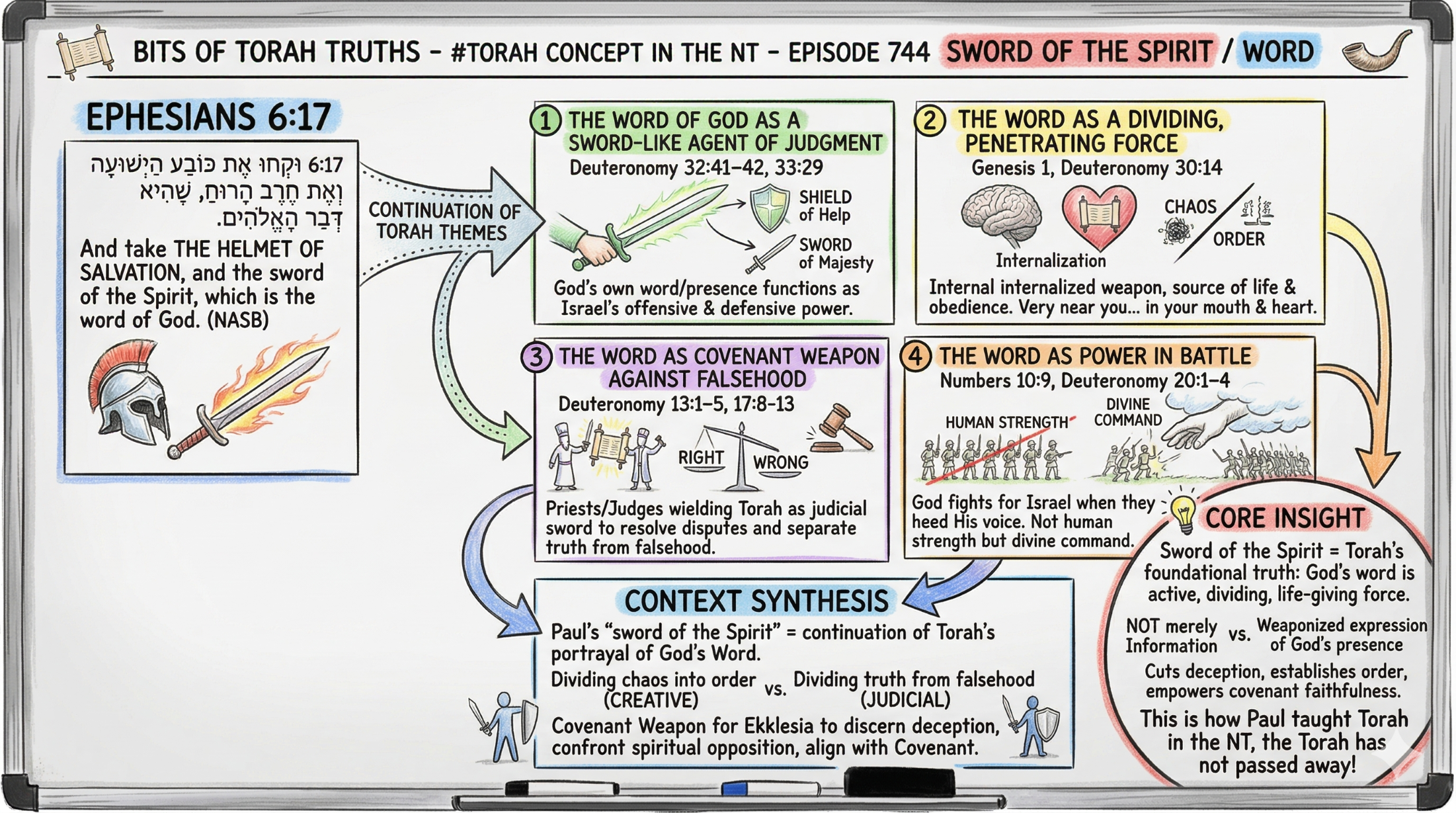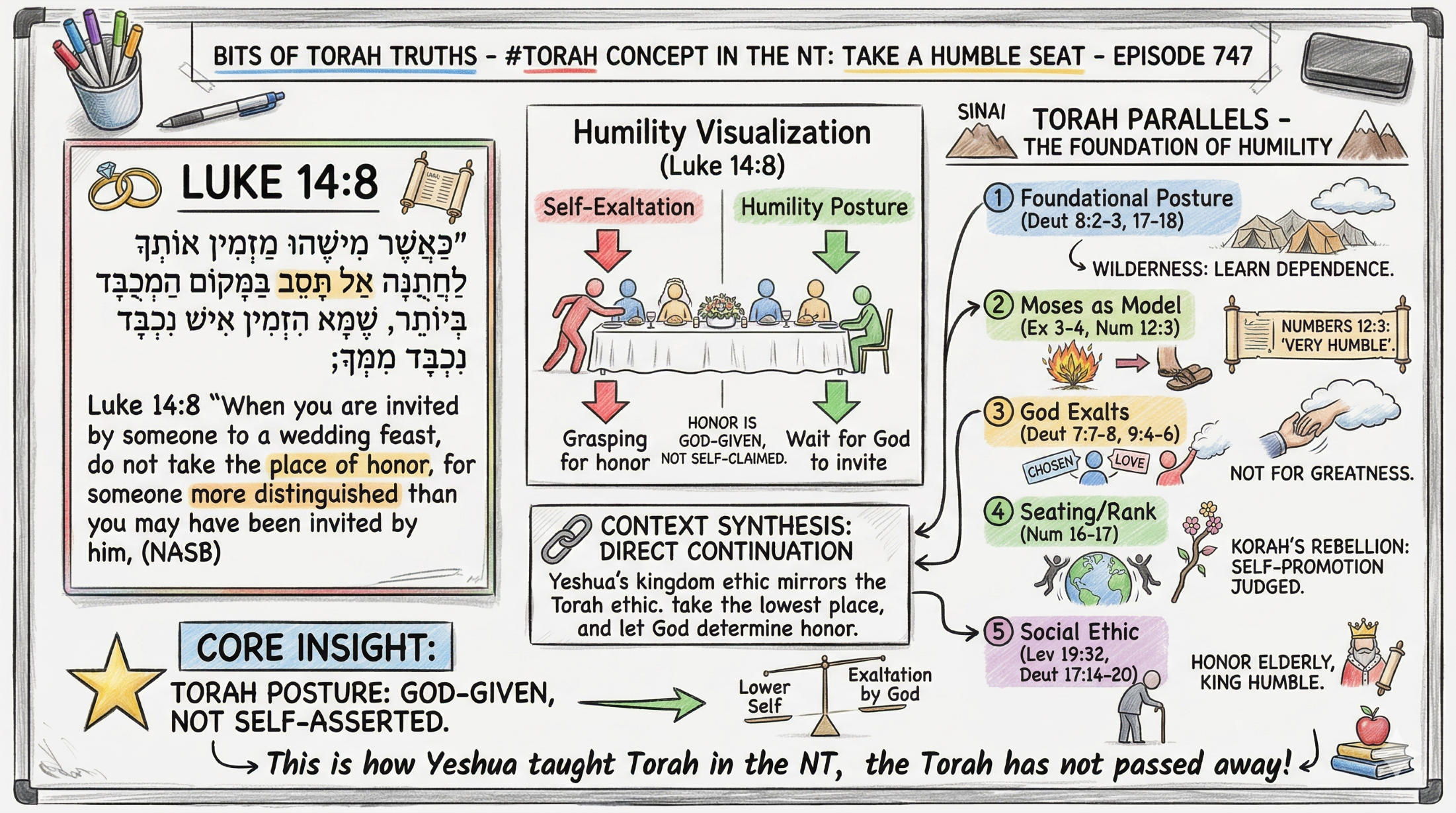
Bits of Torah Truths – #Torah Concept in the NT: Despise not prophesying – Episode 838
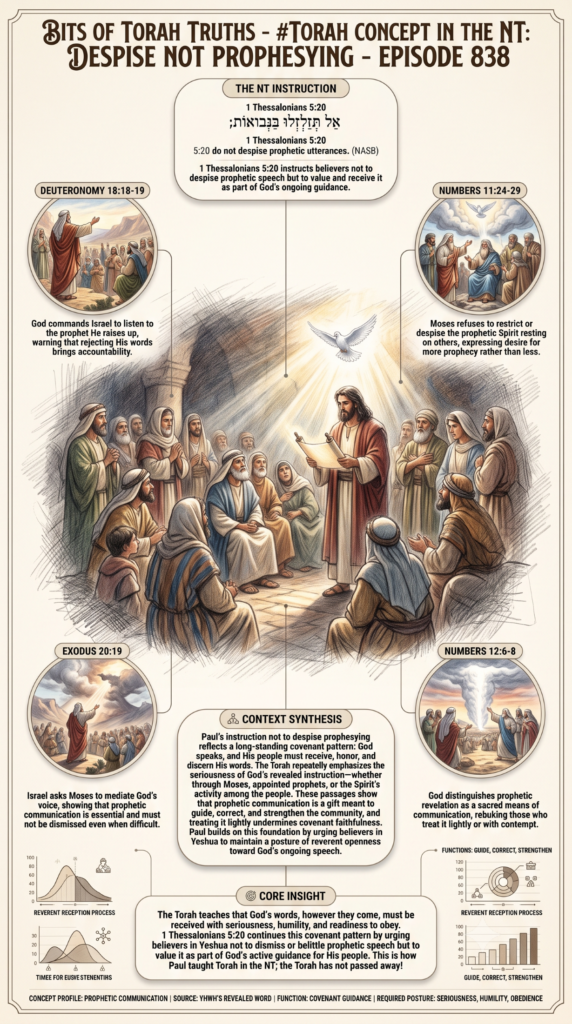
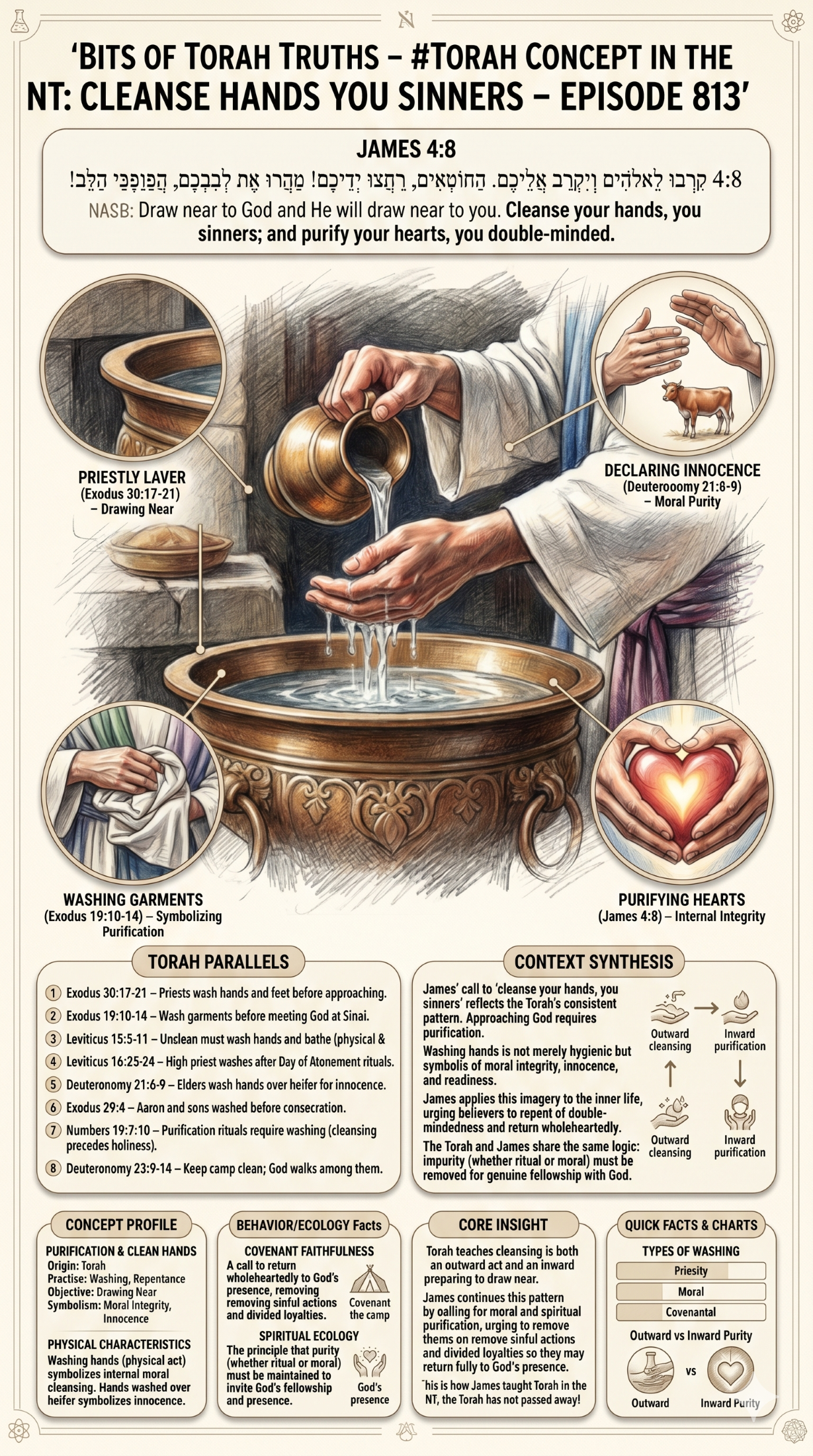
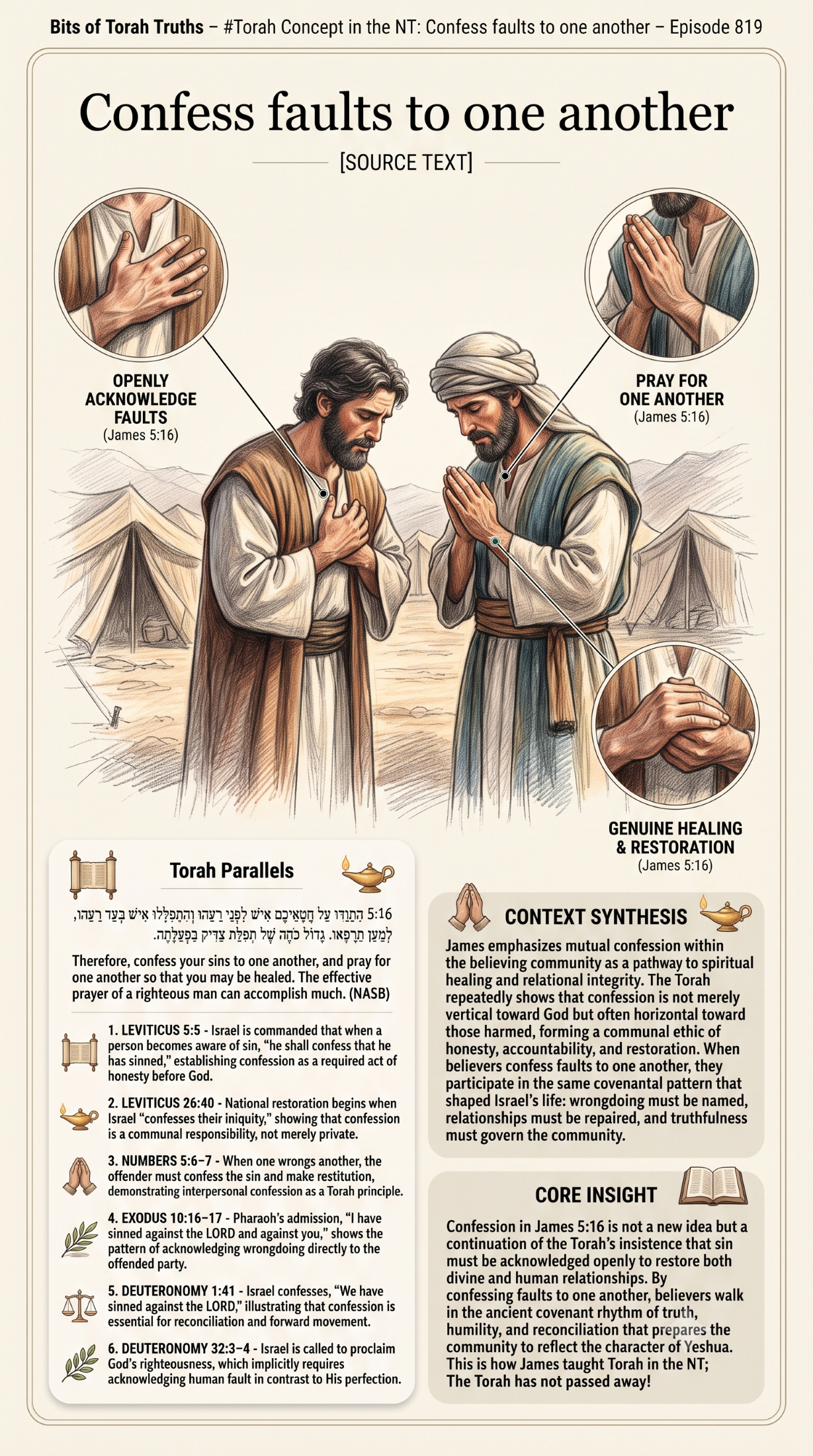
1 Thessalonians 5:20
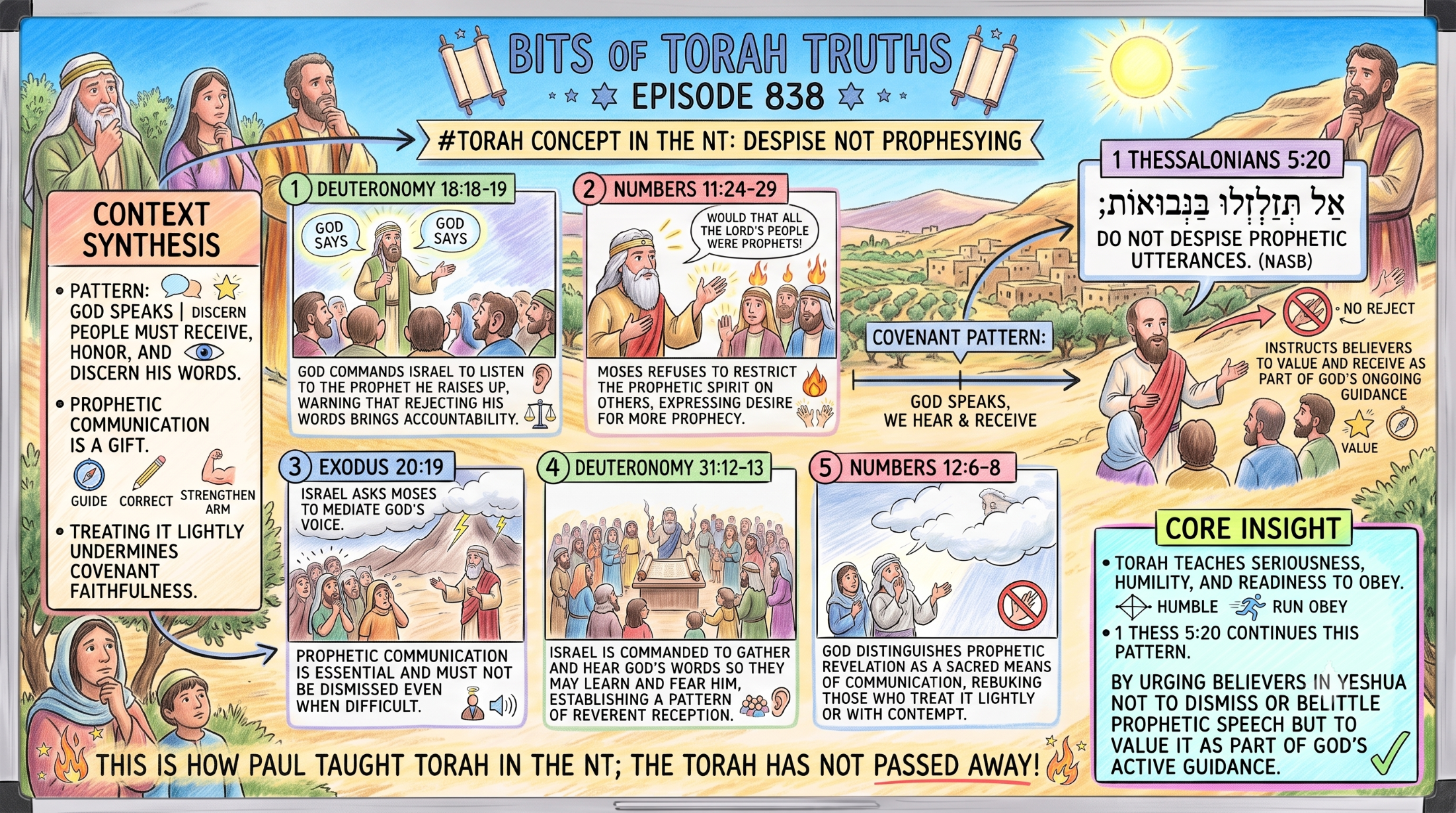
5:20 אַל תְּזַלְזְלוּ בַּנְּבוּאוֹת;
#torah #torahwisdom #torahtruth #torahforlife #torah4you #torahtruth
1 Thessalonians 5:20
5:20 do not despise prophetic utterances. (NASB)
https://www.matsati.com/index.php/category/bits-of-torah-truths
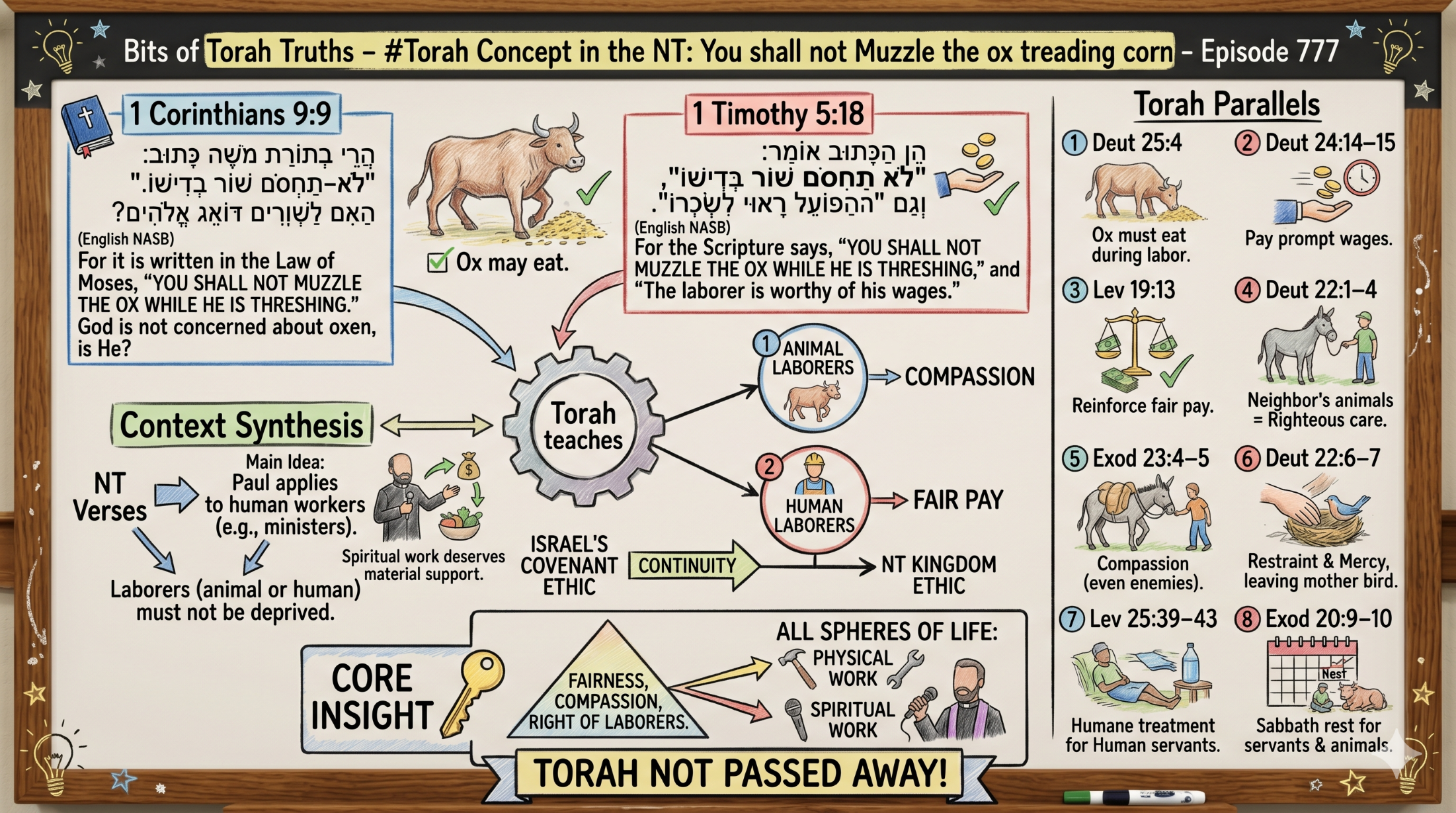
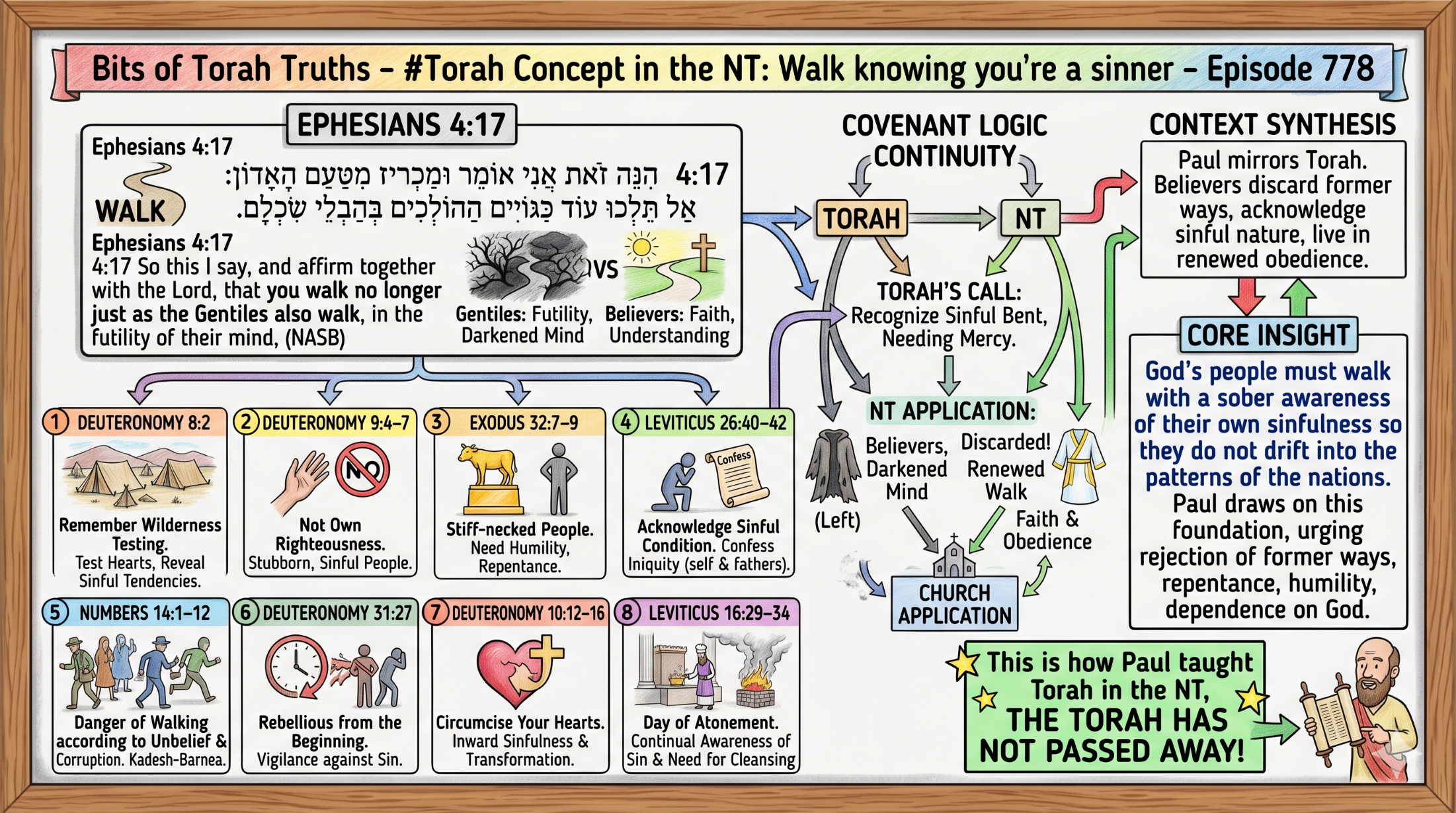
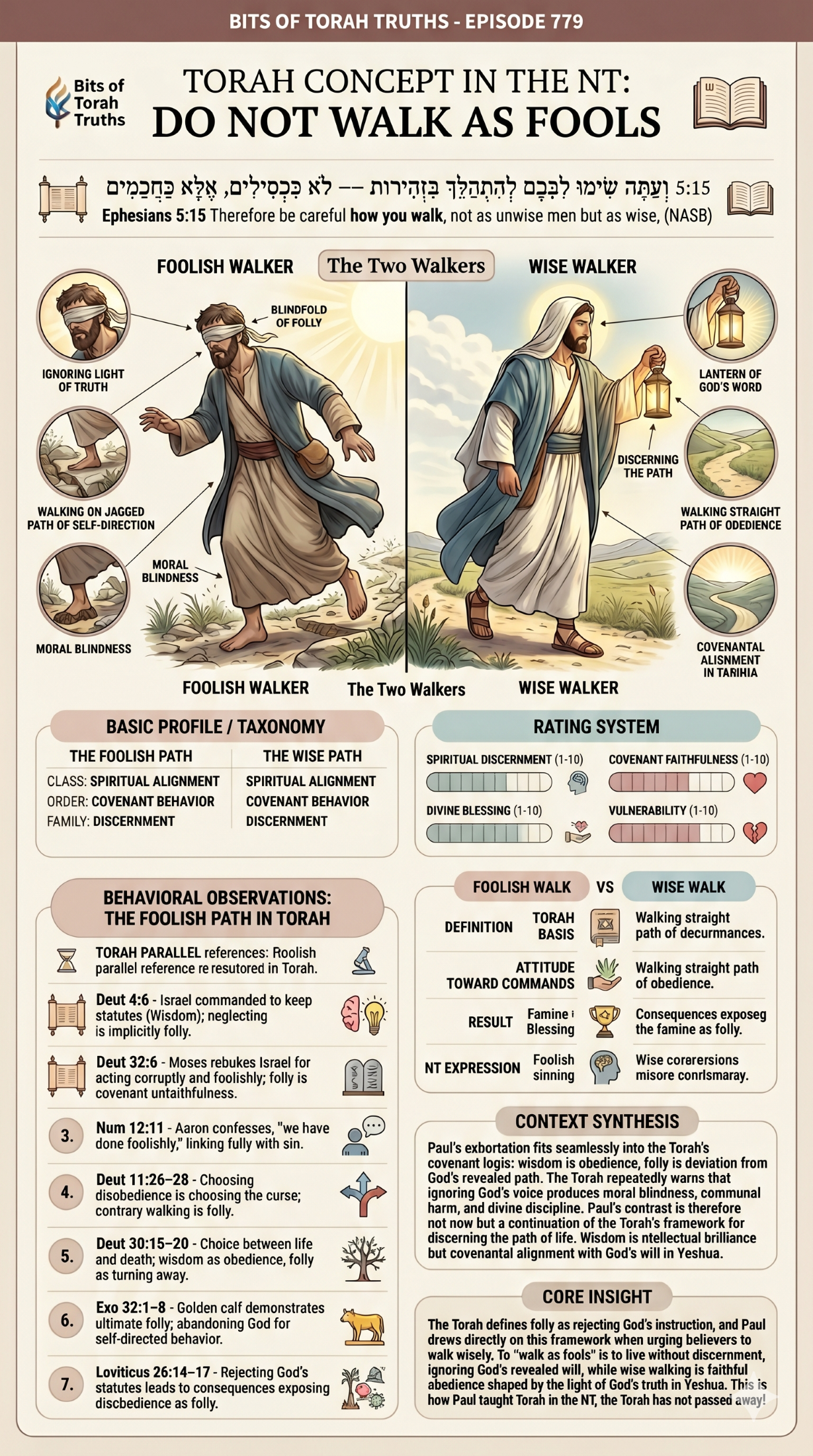
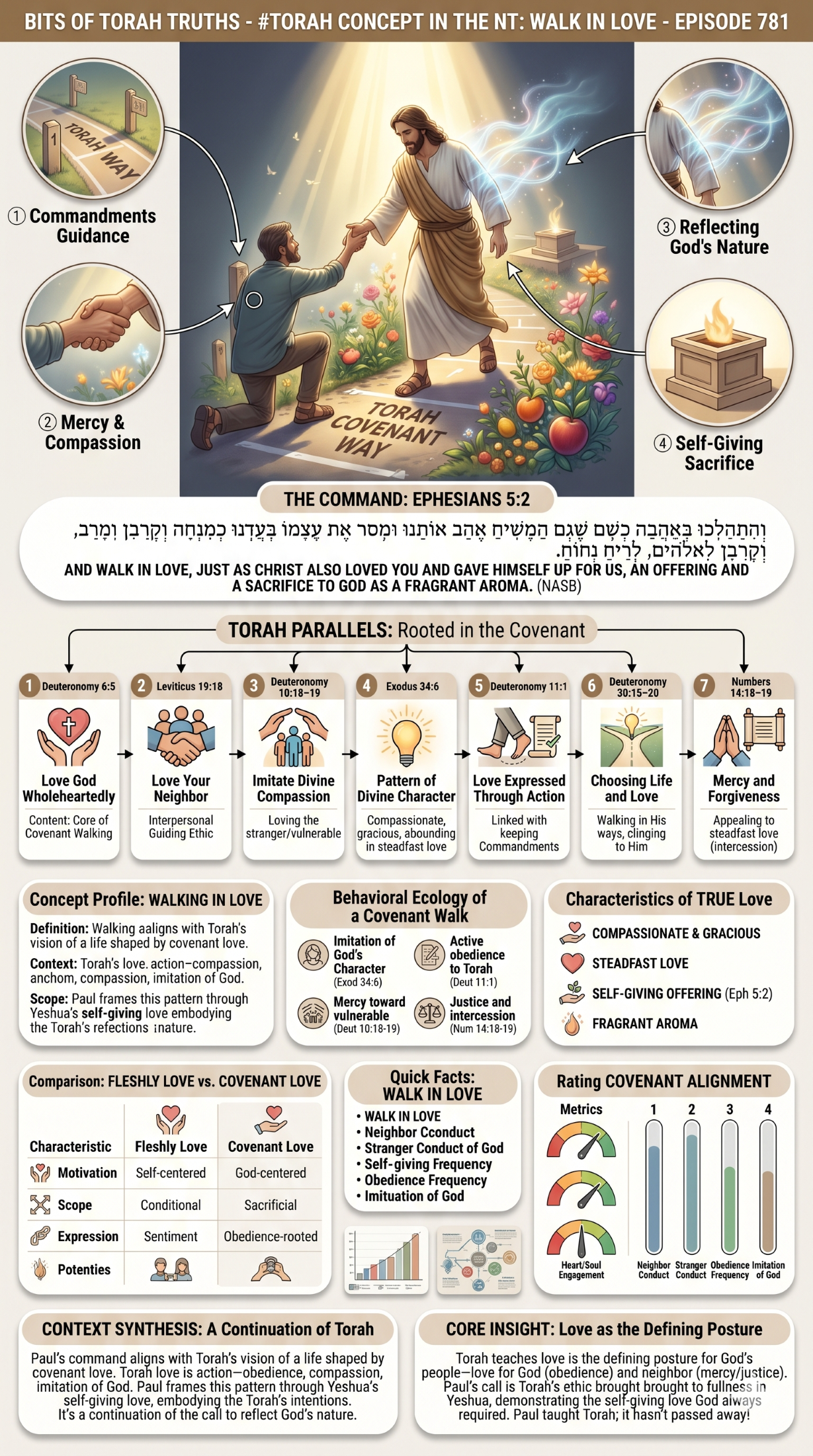
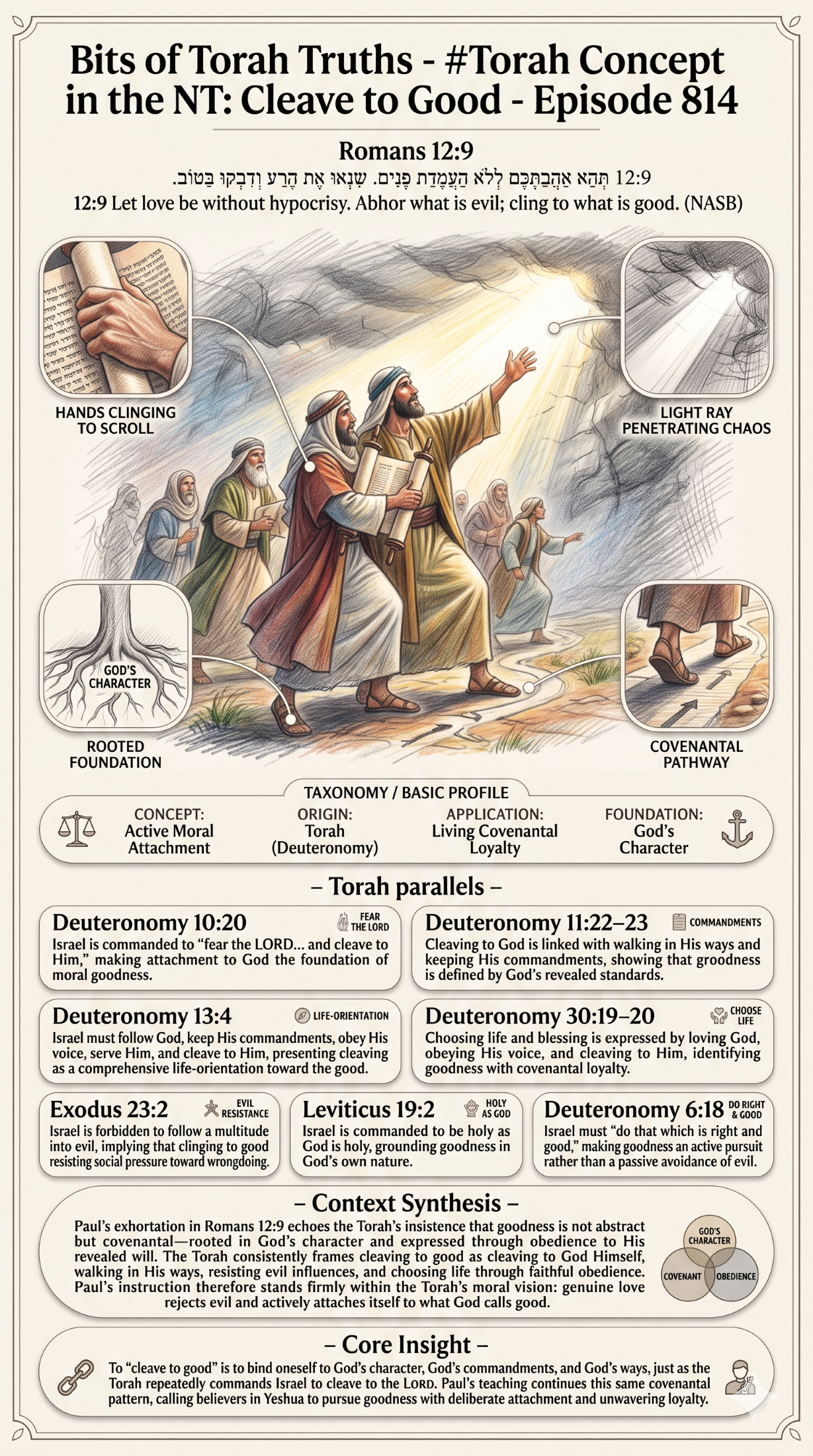
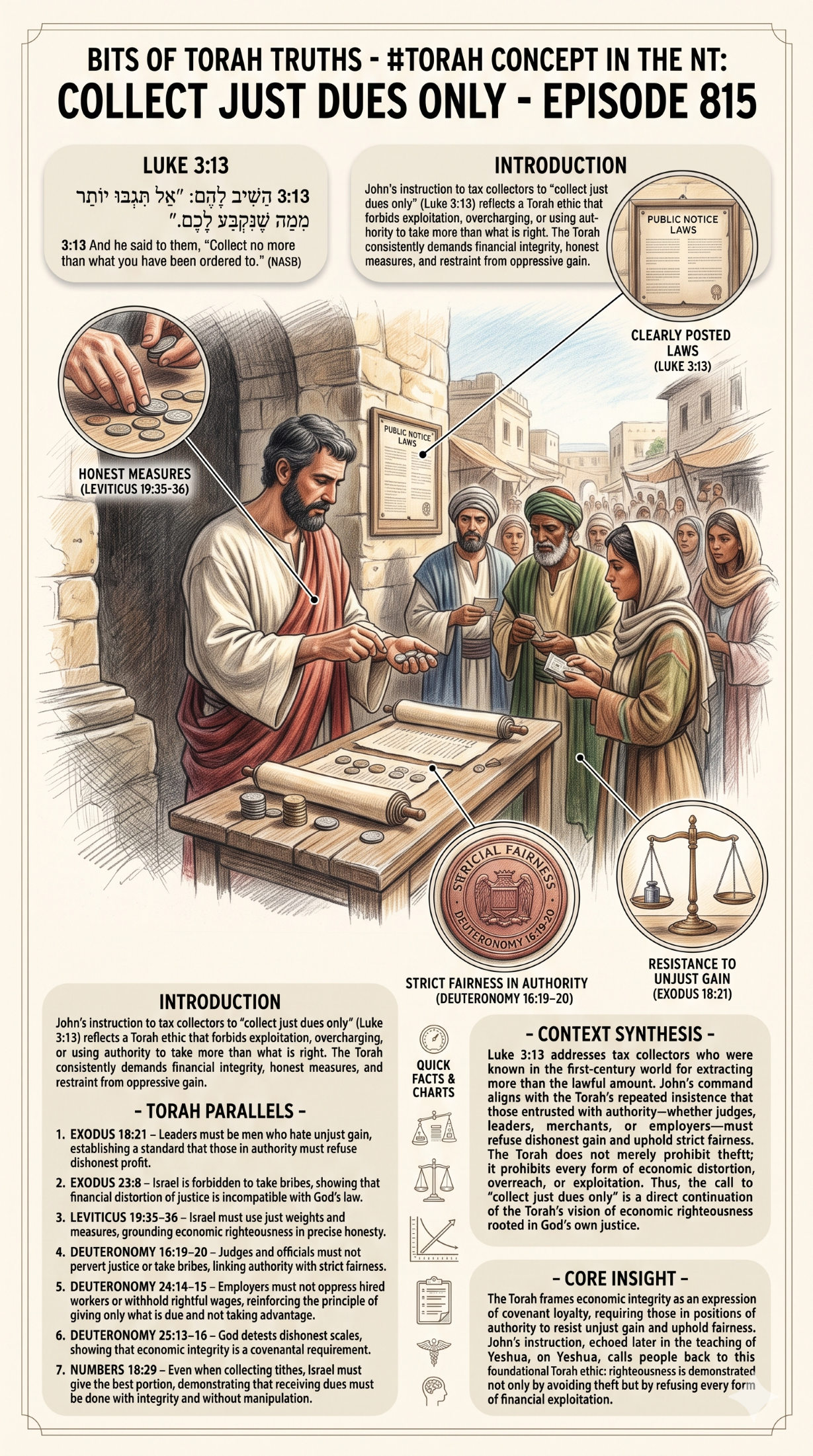
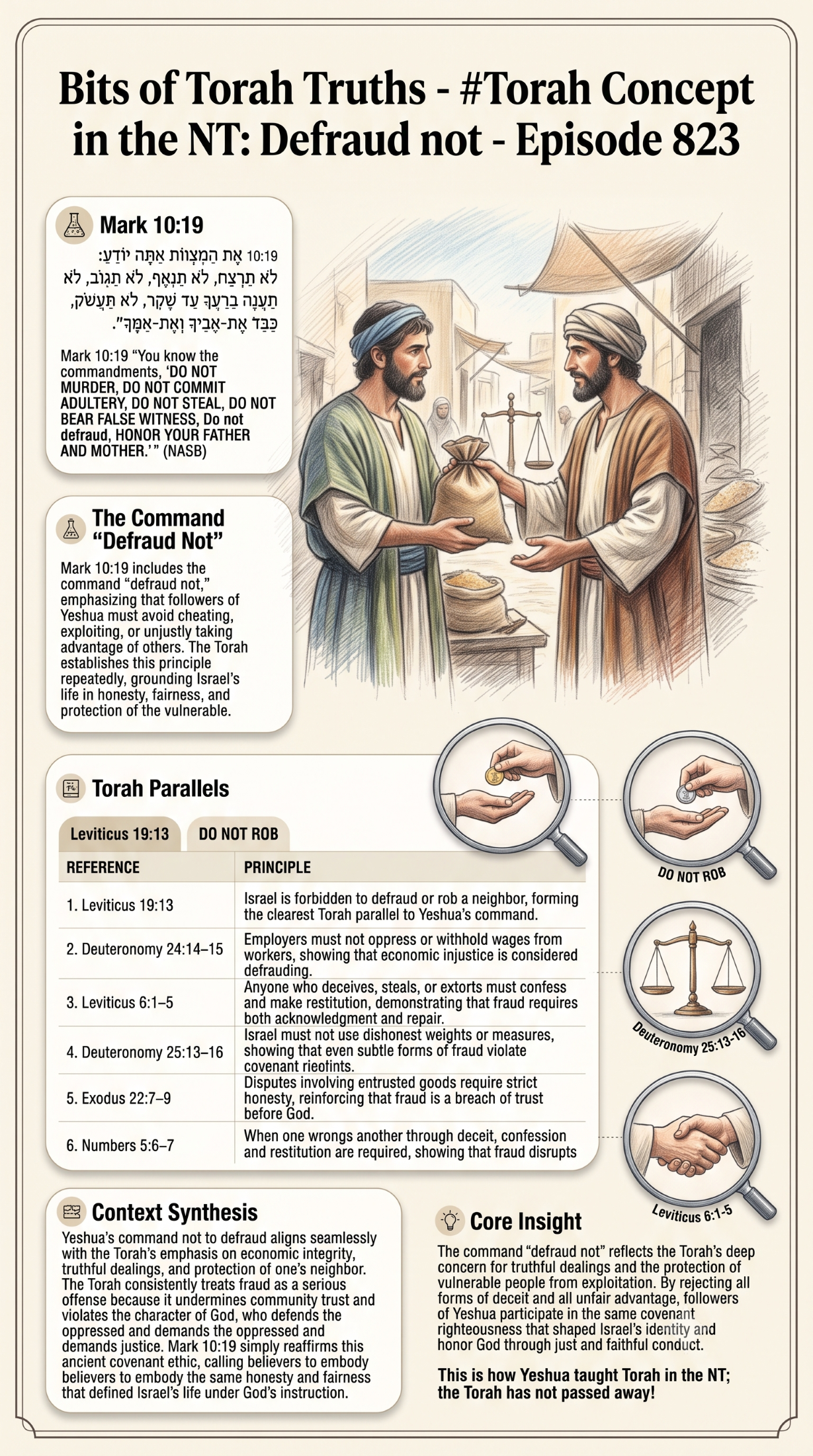
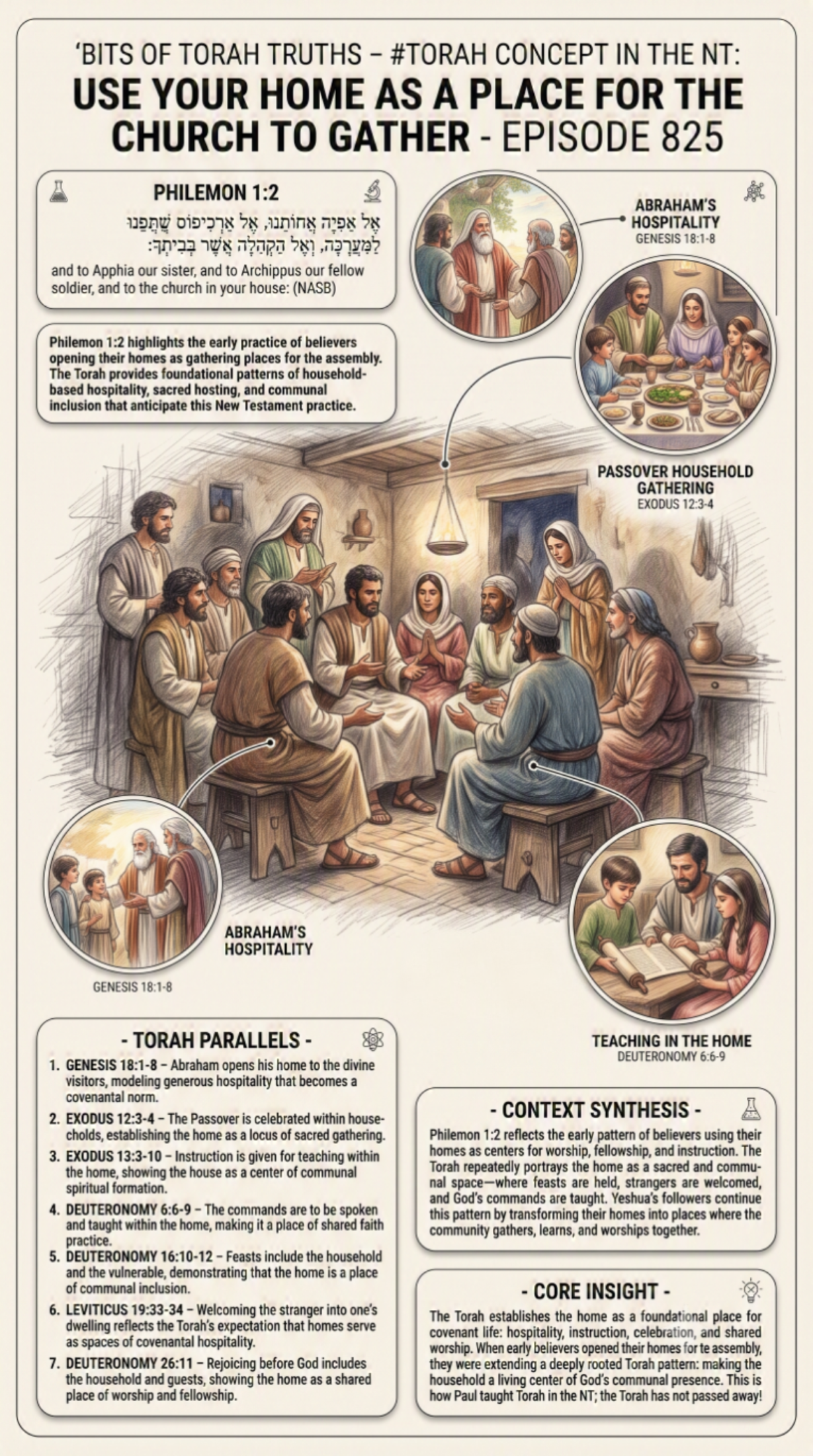
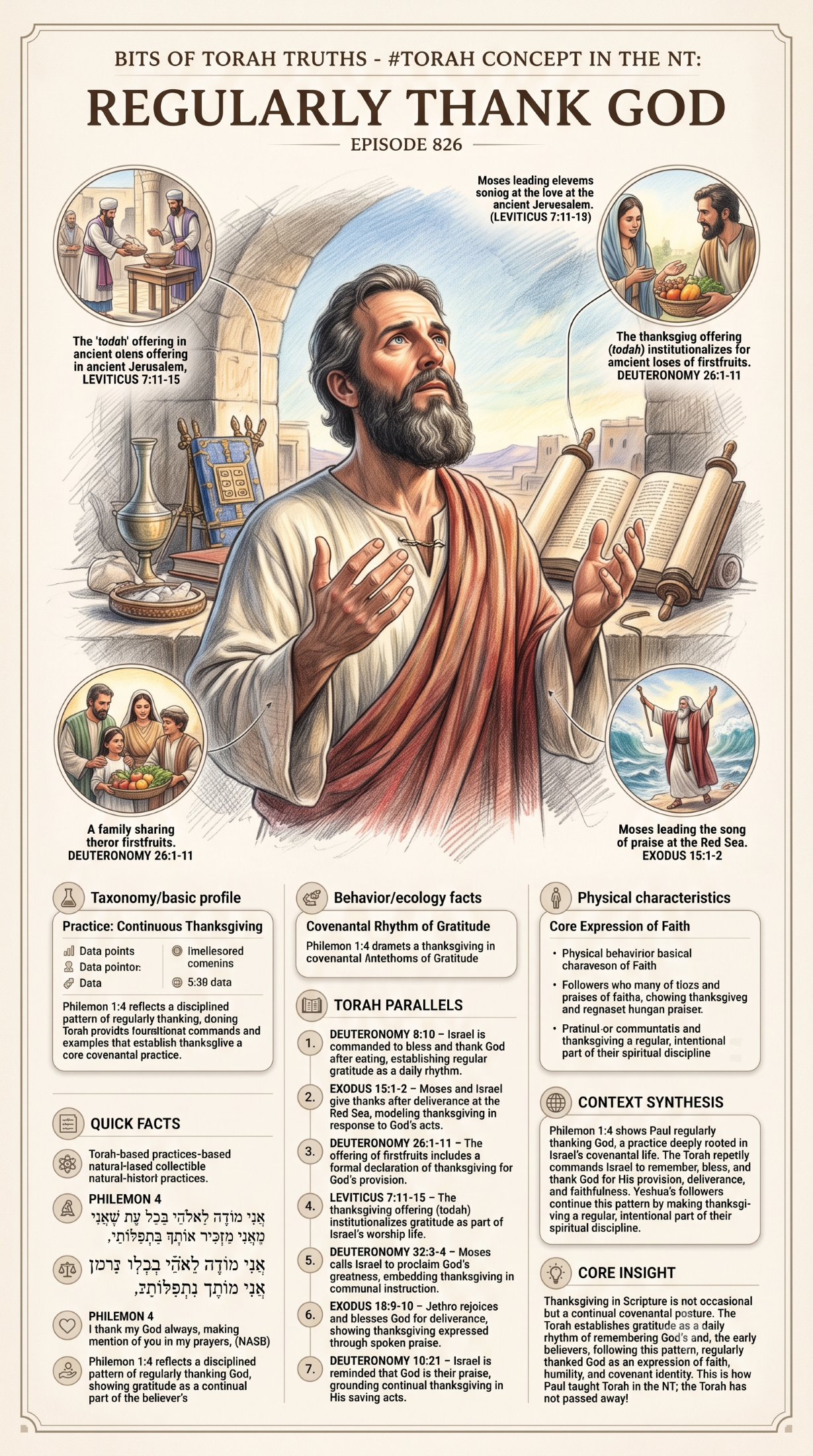
1 Thessalonians 5:20 instructs believers not to despise prophetic speech but to value and receive it as part of God’s ongoing guidance. The Torah contains foundational patterns showing that God’s revealed word, whether through direct speech or appointed messengers, must be honored, heeded, and never treated lightly.
– Torah parallels –
- Deuteronomy 18:18-19 – God commands Israel to listen to the prophet He raises up, warning that rejecting His words brings accountability.
- Numbers 11:24-29 – Moses refuses to restrict or despise the prophetic Spirit resting on others, expressing desire for more prophecy rather than less.
- Exodus 20:19 – Israel asks Moses to mediate God’s voice, showing that prophetic communication is essential and must not be dismissed even when difficult.
- Deuteronomy 31:12-13 – Israel is commanded to gather and hear God’s words so they may learn and fear Him, establishing a pattern of reverent reception of divine instruction.
- Numbers 12:6-8 – God distinguishes prophetic revelation as a sacred means of communication, rebuking those who treat it lightly or with contempt.
– Context Synthesis –
Paul’s instruction not to despise prophesying reflects a long-standing covenant pattern: God speaks, and His people must receive, honor, and discern His words. The Torah repeatedly emphasizes the seriousness of God’s revealed instruction, whether through Moses, appointed prophets, or the Spirit’s activity among the people. These passages show that prophetic communication is a gift meant to guide, correct, and strengthen the community, and treating it lightly undermines covenant faithfulness. Paul builds on this foundation by urging believers in Yeshua to maintain a posture of reverent openness toward God’s ongoing speech.
– Core Insight –
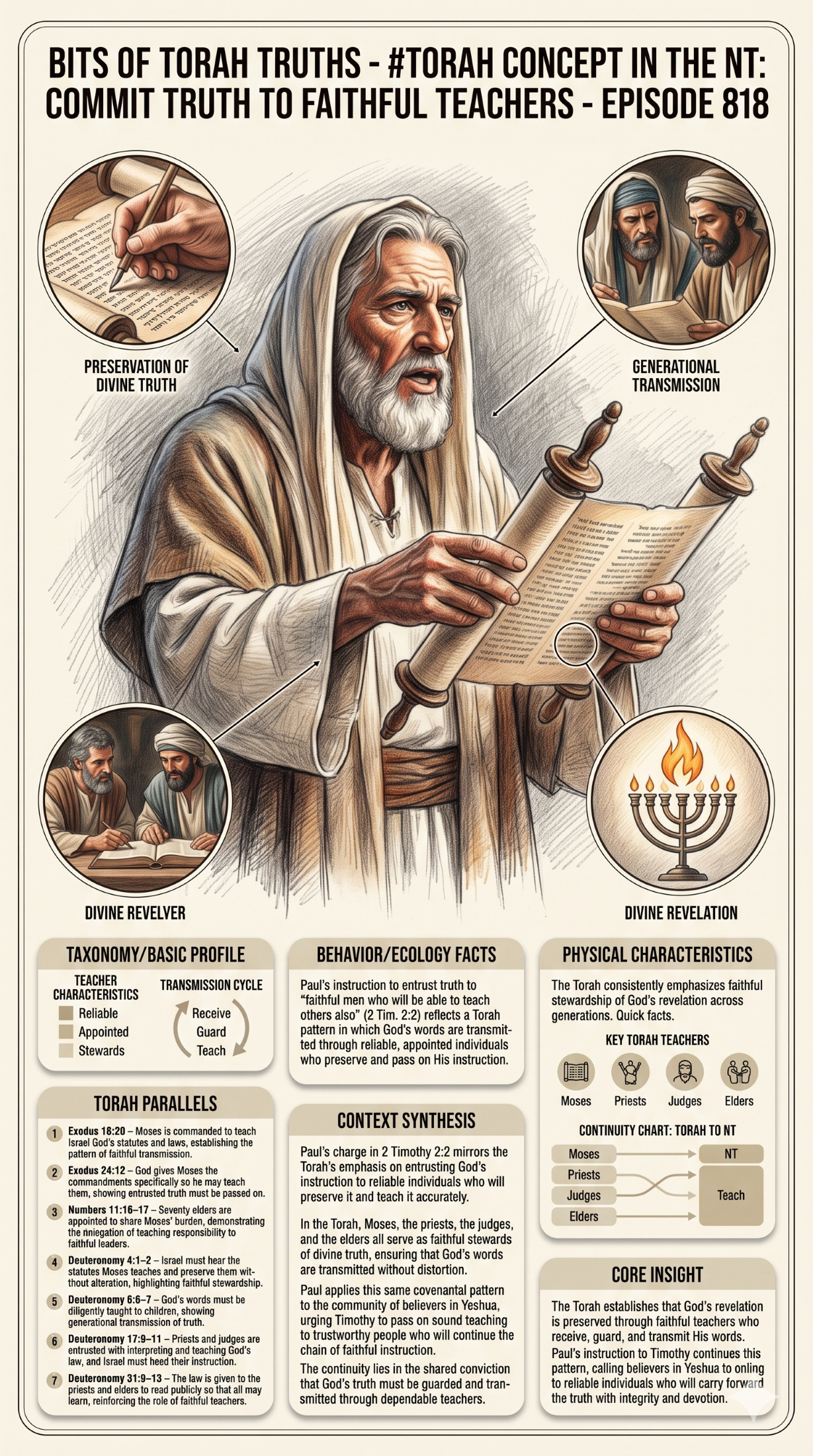
The Torah teaches that God’s words, however they come, must be received with seriousness, humility, and readiness to obey. 1 Thessalonians 5:20 continues this covenant pattern by urging believers in Yeshua not to dismiss or belittle prophetic speech but to value it as part of God’s active guidance for His people. This is how Paul taught Torah in the NT; the Torah has not passed away!
Visual Summary of Concepts the Torah in the NT