Bits of Torah Truths – #Torah Concept in the NT: You shall not Steal – Episode 774
Matthew 19:18
שָׁאַל הָאִישׁ׃ ״אֵיזֶה?״ הֵשִׁיב יֵשׁוּעַ׃ ״לֹא תִּרְצַח, לֹא תִּנְאַף, לֹא תִּגְנֹב, לֹא–תַעֲנֶה בְּרֵעֲךָ עֵד שָׁקֶר,
Mark 10:19
10:19 אֶת הַמִּצְווֹת אַתָּה יוֹדֵעַ׃ ׳לֹא תִרְצַח, לֹא תִנְאַף, לֹא תִגְנֹב, לֹא תַעֲנֶה בְרֵעֲךָ עֵד שָׁקֶר, לֹא תַּעֲשֹׁק, כַּבֵּד אֶת–אָבִיךָ וְאֶת–אִמֶּךָ.׳״
Luke 18:20
18:20 אֶת הַמִּצְווֹת אַתָּה יוֹדֵעַ׃ ׳לֹא תִנְאַף, לֹא תִרְצַח, לֹא תִגְנֹב, לֹא תַעֲנֶה בְרֵעֲךָ עֵד שָׁקֶר, כַּבֵּד אֶת אָבִיךָ וְאֶת אִמֶּךָ׳.״
Romans 13:9
13:9 הֵן הַמִּצְווֹת ״לֹא תִנְאַף״, ״לֹא תִרְצַח״, ״לֹא תִגְנֹב״, ״לֹא תַחְמֹד״, וְכָל מִצְוָה אַחֶרֶת, כְּלוּלוֹת בַּמַּאֲמָר ״וְאָהַבְתָּ לְרֵעֲךָ כָּמוֹךָ.״
#torah #torahwisdom #torahtruth #torahforlife #torah4you #torahtruth
Matthew 19:18
19:18 Then he said to Him, “Which ones?” And Jesus said, “YOU SHALL NOT COMMIT MURDER; YOU SHALL NOT COMMIT ADULTERY; YOU SHALL NOT STEAL; YOU SHALL NOT BEAR FALSE WITNESS; (NASB)
Mark 10:19
10:19 “You know the commandments, ‘DO NOT MURDER, DO NOT COMMIT ADULTERY, DO NOT STEAL, DO NOT BEAR FALSE WITNESS, Do not defraud, HONOR YOUR FATHER AND MOTHER.’ ” (NASB)
Luke 18:20
18:20 “You know the commandments, ‘DO NOT COMMIT ADULTERY, DO NOT MURDER, DO NOT STEAL, DO NOT BEAR FALSE WITNESS, HONOR YOUR FATHER AND MOTHER.’ ” (NASB)
Romans 13:9
13:9 For this, “YOU SHALL NOT COMMIT ADULTERY, YOU SHALL NOT MURDER, YOU SHALL NOT STEAL, YOU SHALL NOT COVET,” and if there is any other commandment, it is summed up in this saying, “YOU SHALL LOVE YOUR NEIGHBOR AS YOURSELF.” (NASB)
https://www.matsati.com/index.php/category/bits-of-torah-truths/
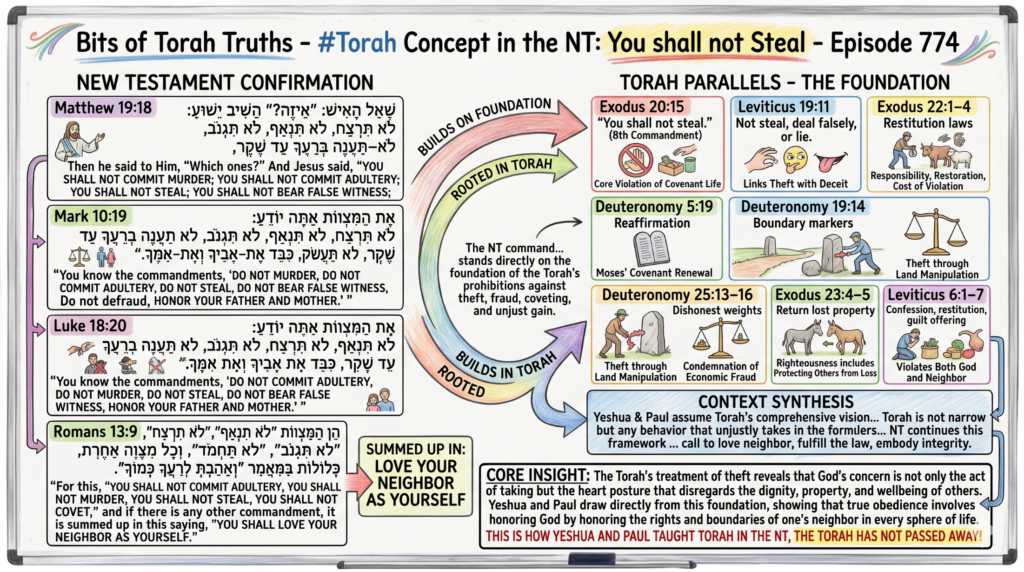
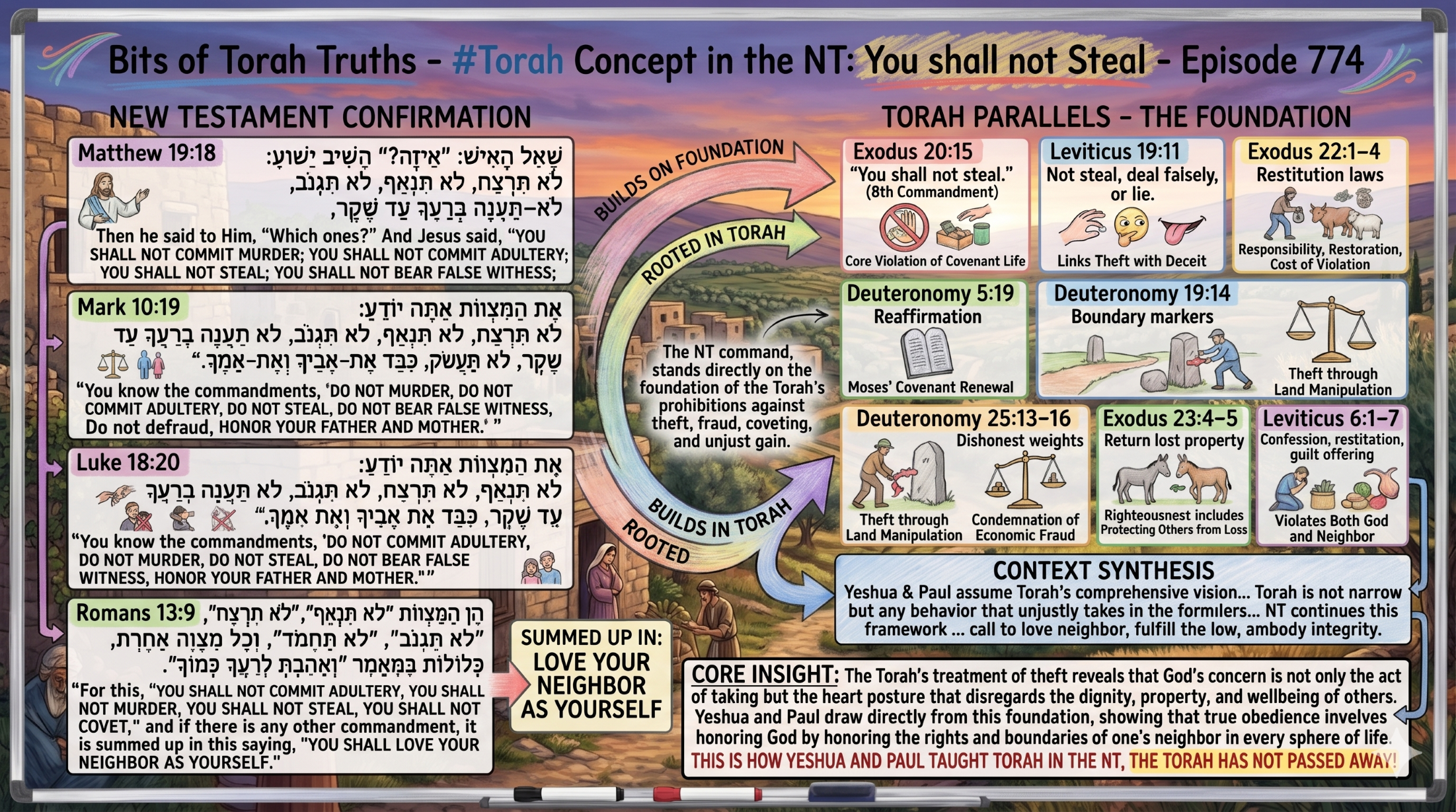
The NT command “You shall not steal” (Matt. 19:18; Mark 10:19; Luke 18:20; Romans 13:9) stands directly on the foundation of the Torah’s prohibitions against theft, fraud, coveting, and unjust gain. The Torah frames stealing not merely as a legal violation but as a breach of covenantal loyalty, community trust, and reverence for God’s order.
– Torah parallels –
- Exodus 20:15 — “You shall not steal,” the eighth commandment, establishing theft as a core violation of covenant life.
- Leviticus 19:11 — Israel is commanded not to steal, deal falsely, or lie to one another, linking theft with broader patterns of deceit.
- Exodus 22:1–4 — Detailed restitution laws for stolen property, emphasizing responsibility, restoration, and the cost of violating another’s rights.
- Deuteronomy 5:19 — Reaffirmation of the command not to steal within Moses’ covenant renewal.
- Deuteronomy 19:14 — Prohibition against moving boundary markers, a form of theft through land manipulation.
- Deuteronomy 25:13–16 — Condemnation of dishonest weights and measures, identifying economic fraud as theft before God.
- Exodus 23:4–5 — Commands to return a neighbor’s lost property, showing that righteousness includes protecting others from loss.
- Leviticus 6:1–7 — Theft, fraud, or deceit requires confession, restitution, and a guilt offering, showing that stealing violates both God and neighbor.
– Context Synthesis –
Yeshua’s reaffirmation of “You shall not steal” in the Gospels and Paul’s repetition of the command in Romans 13:9 both assume the Torah’s comprehensive vision of justice, honesty, and neighbor-love. The Torah does not treat theft as a narrow act but as any behavior that unjustly takes, withholds, or manipulates what belongs to another. The NT continues this framework by calling believers to love their neighbor, fulfill the law, and embody integrity in all dealings. The continuity shows that the kingdom ethic Yeshua teaches is rooted in the covenant ethic God gave Israel.
– Core Insight –
The Torah’s treatment of theft reveals that God’s concern is not only the act of taking but the heart posture that disregards the dignity, property, and wellbeing of others. Yeshua and Paul draw directly from this foundation, showing that true obedience involves honoring God by honoring the rights and boundaries of one’s neighbor in every sphere of life. This is how Yeshua and Paul taught Torah in the NT, the Torah has not passed away!
Visual Summary of Concepts the Torah in the NT