Bits of Torah Truths – #Torah Concept in the NT: Take Heed to Yourself and to the Doctrine – Episode 764
1 Timothy 4:16
הַשְׁגַּח עַל עַצְמְךָ וְשִׁית לִבְּךָ לְהוֹרָאָה. הַתְמֵד בָּזֶה, כִּי בַּעֲשׂוֹתְךָ כֵּן תּוֹשִׁיעַ גַּם אֶת עַצְמְךָ וְגַם אֶת הַשּׁוֹמְעִים אֵלֶיךָ.
#torah#torahwisdom#torahtruth#torahforlife#torah4you#torahtruth
1 Timothy 4:16
4:16 Pay close attention to yourself and to your teaching; persevere in these things, for as you do this you will ensure salvation both for yourself and for those who hear you. (NASB)
https://www.matsati.com/index.php/category/bits-of-torah-truths/
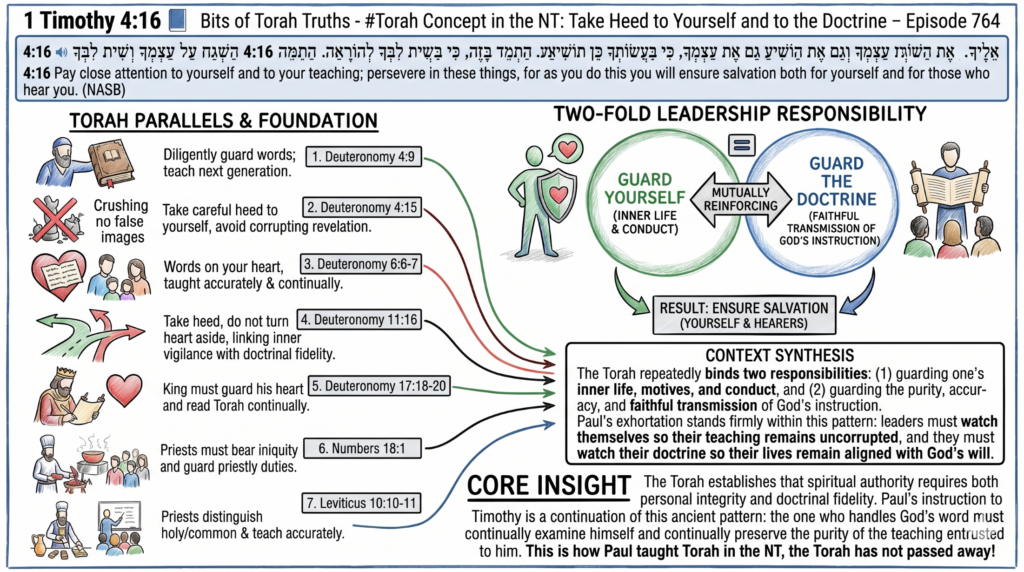
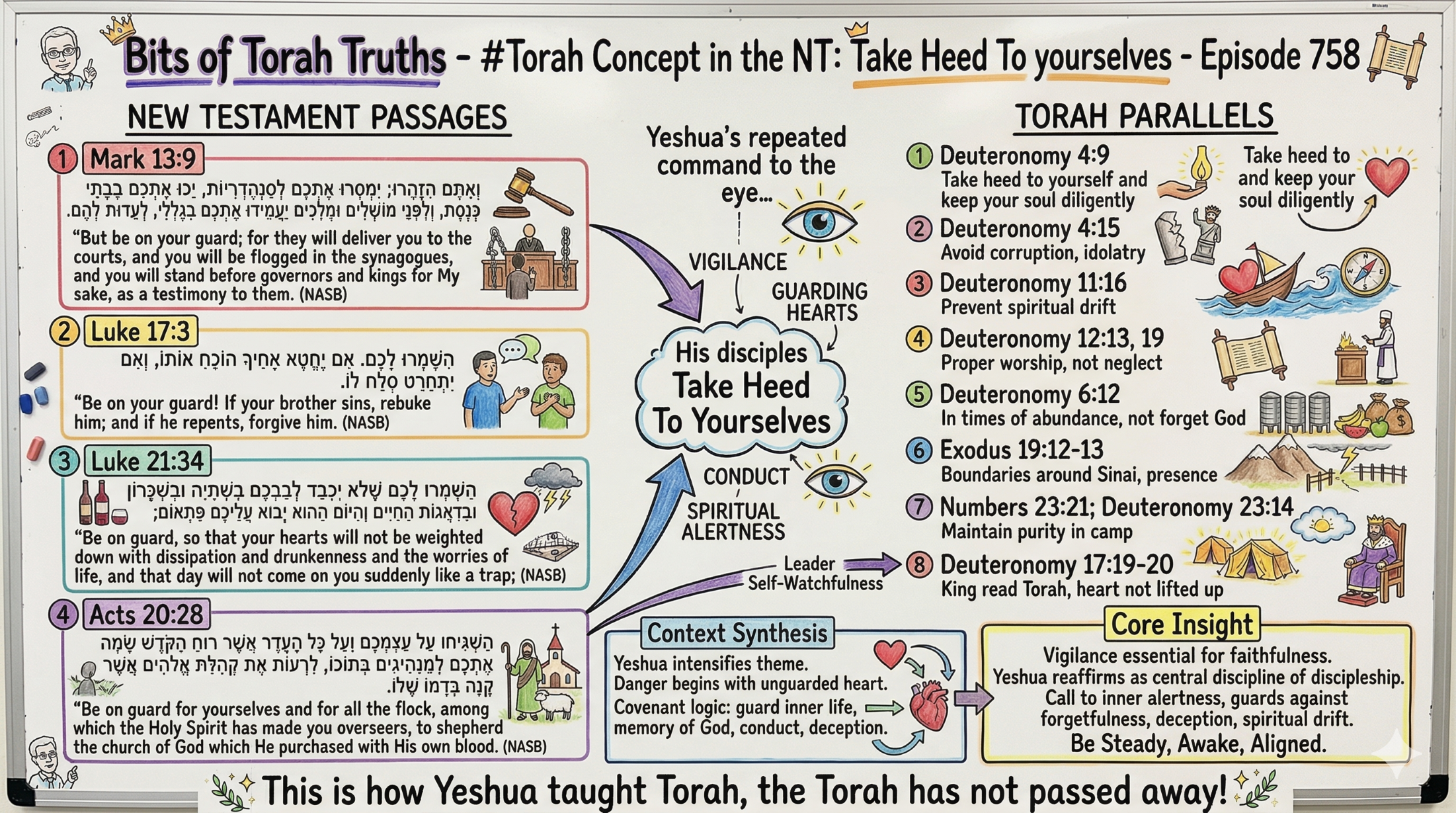
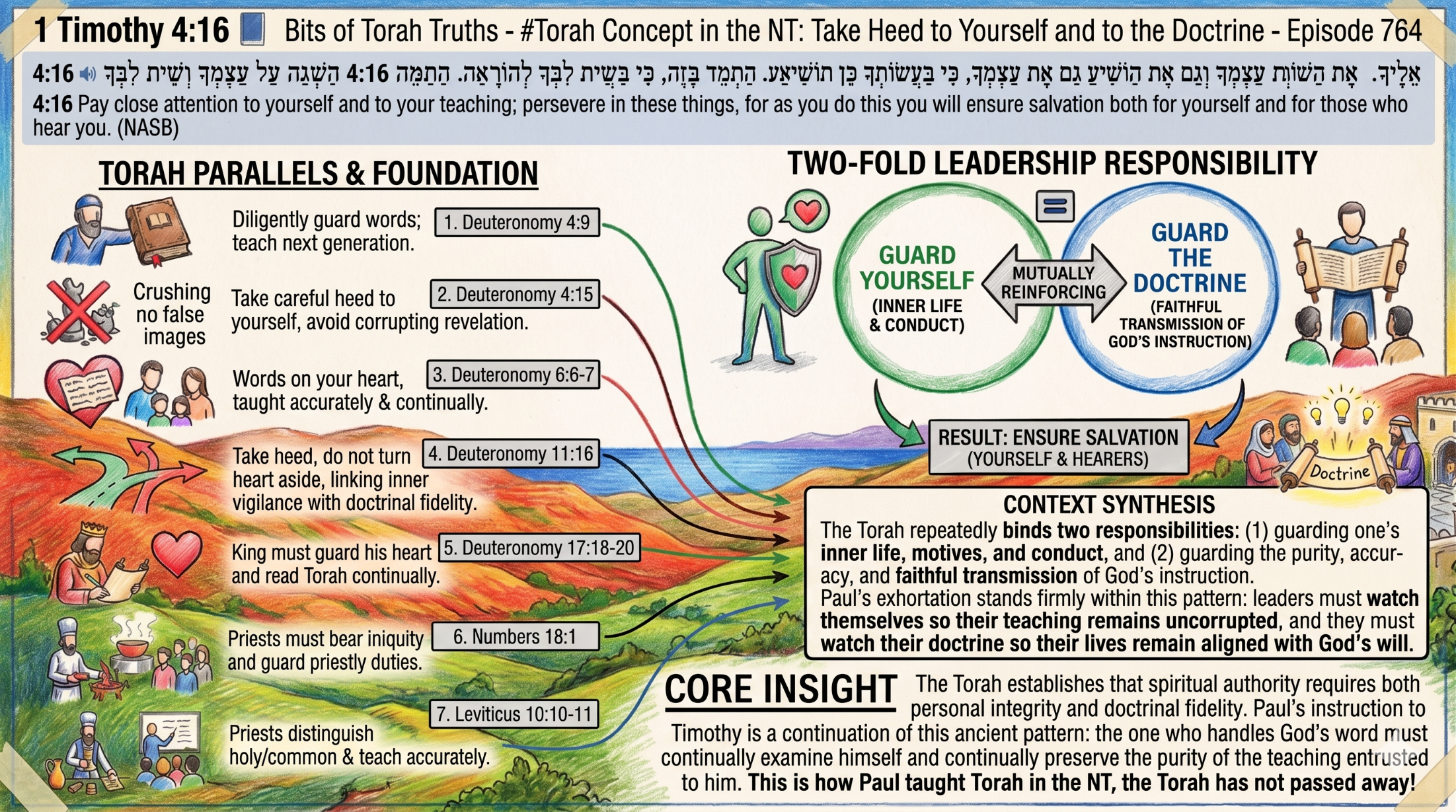
Paul’s charge to “take heed to yourself and to the doctrine” (1 Tim 4:16) echoes long‑standing Torah expectations that leaders guard their inner life and faithfully preserve God’s instruction. The Torah consistently binds personal integrity and accurate transmission of God’s words as inseparable responsibilities.
– Torah parallels –
- Deuteronomy 4:9 – Israel is commanded to “take heed to yourself” and diligently guard the words given, lest they forget or fail to teach them to the next generation.
- Deuteronomy 4:15 – Israel must “take careful heed to yourselves” to avoid corrupting the revelation with false images or distortions.
- Deuteronomy 6:6–7 – The words of God must be internalized (“upon your heart”) and then taught accurately and continually.
- Deuteronomy 11:16 – A warning to “take heed to yourselves” so the heart is not turned aside, linking inner vigilance with doctrinal fidelity.
- Deuteronomy 17:18–20 – The king must write his own copy of the Torah, read it continually, and guard his heart so he does not turn aside from the commandments.
- Numbers 18:1 – Priests are charged to “bear the iniquity of the sanctuary” and guard the priestly duties, showing that leaders must watch both themselves and the sacred trust given to them.
- Leviticus 10:10–11 – Priests must distinguish between holy and common and teach Israel accurately, tying personal discipline to doctrinal precision.
– Context Synthesis –
The Torah repeatedly binds two responsibilities: (1) guarding one’s inner life, motives, and conduct, and (2) guarding the purity, accuracy, and faithful transmission of God’s instruction. Paul’s exhortation to Timothy stands firmly within this pattern: leaders must watch themselves so that their teaching remains uncorrupted, and they must watch their doctrine so that their lives remain aligned with God’s will. The Torah presents these as mutually reinforcing—inner vigilance protects the word, and guarding the word protects the inner life.
– Core Insight –
The Torah establishes that spiritual authority requires both personal integrity and doctrinal fidelity. Paul’s instruction to Timothy is a continuation of this ancient pattern: the one who handles God’s word must continually examine himself and continually preserve the purity of the teaching entrusted to him. This is how Paul taught Torah in the NT, the Torah has not passed away!
Visual Summary of Concepts the Torah in the NT