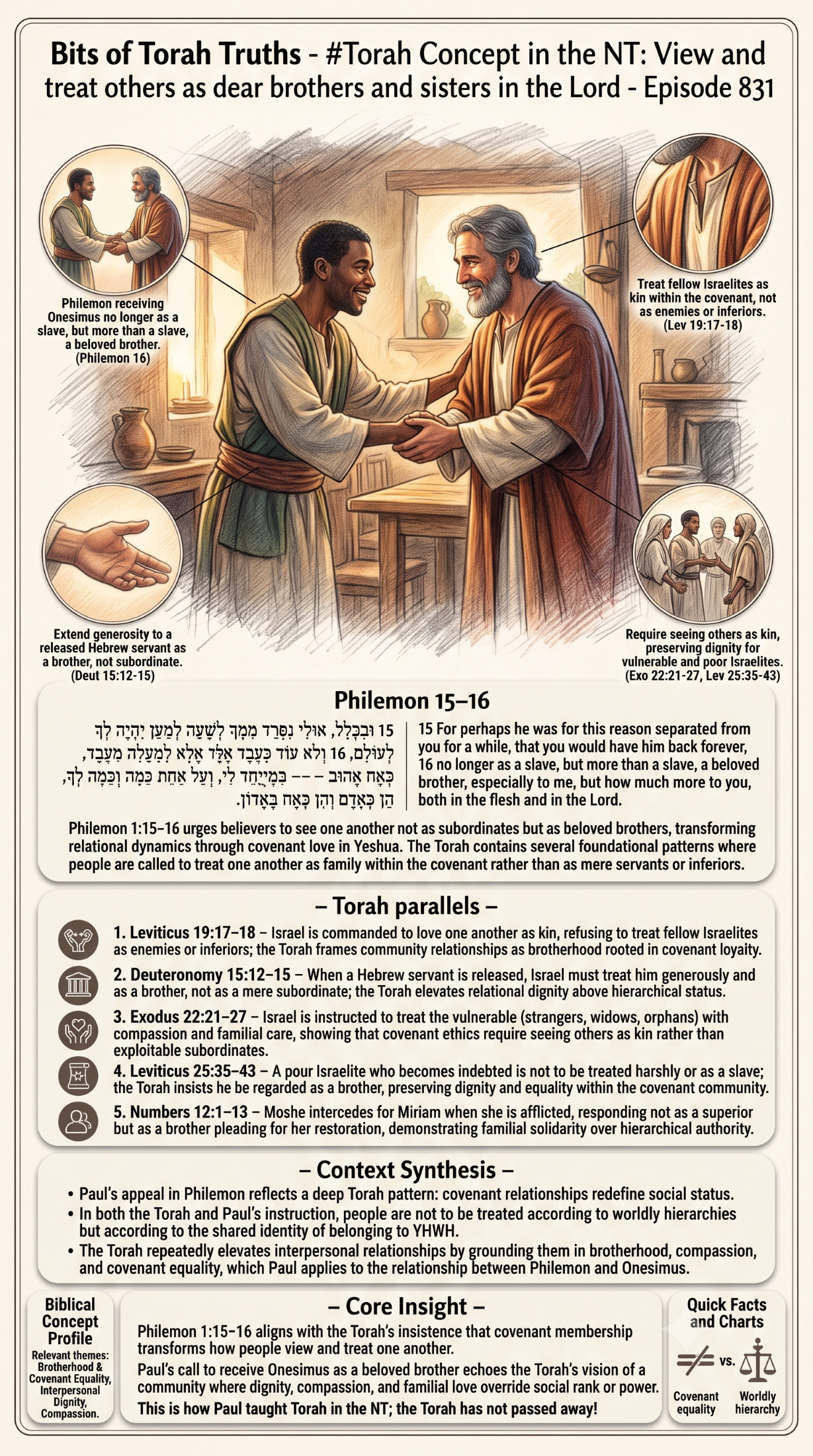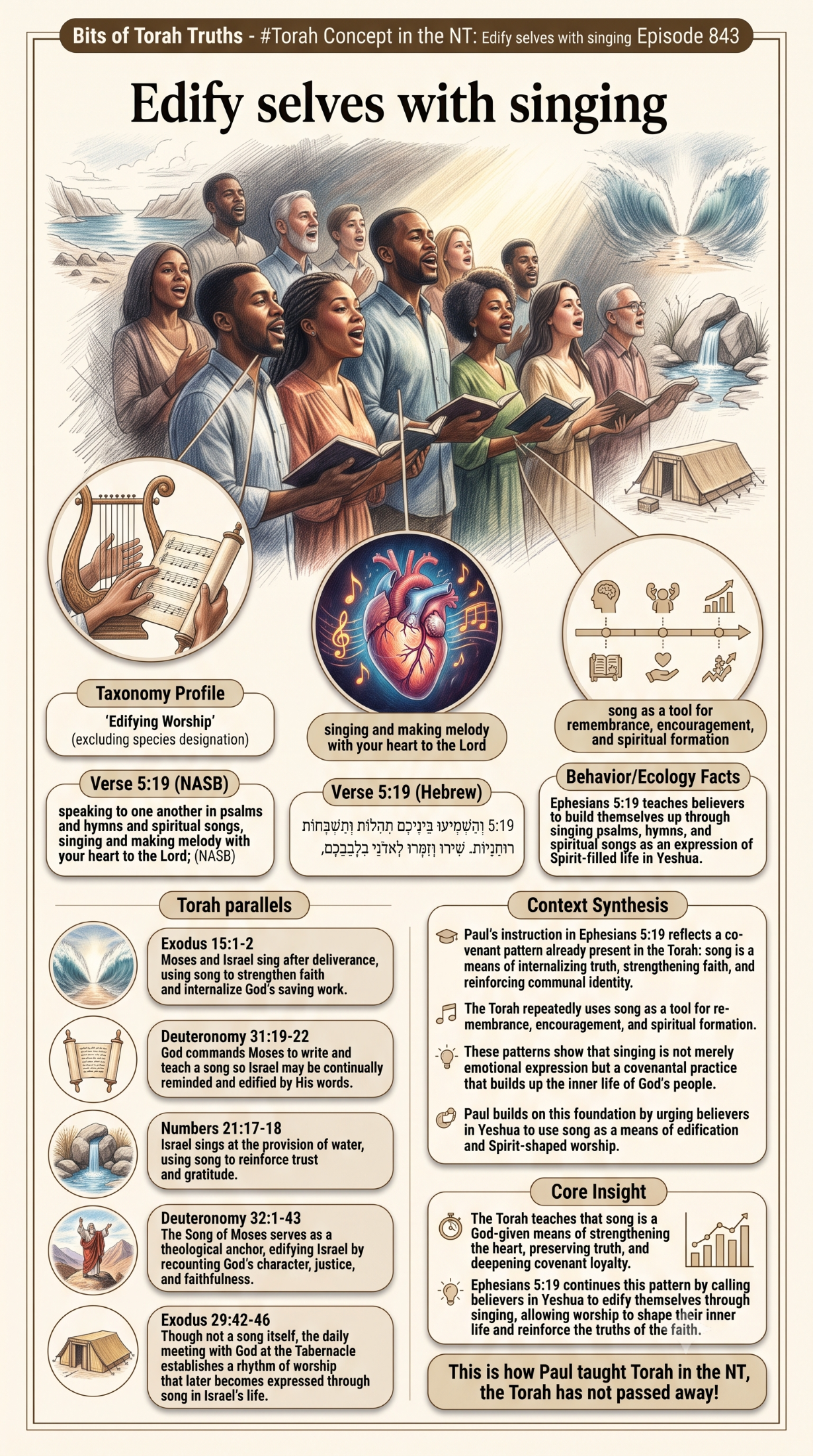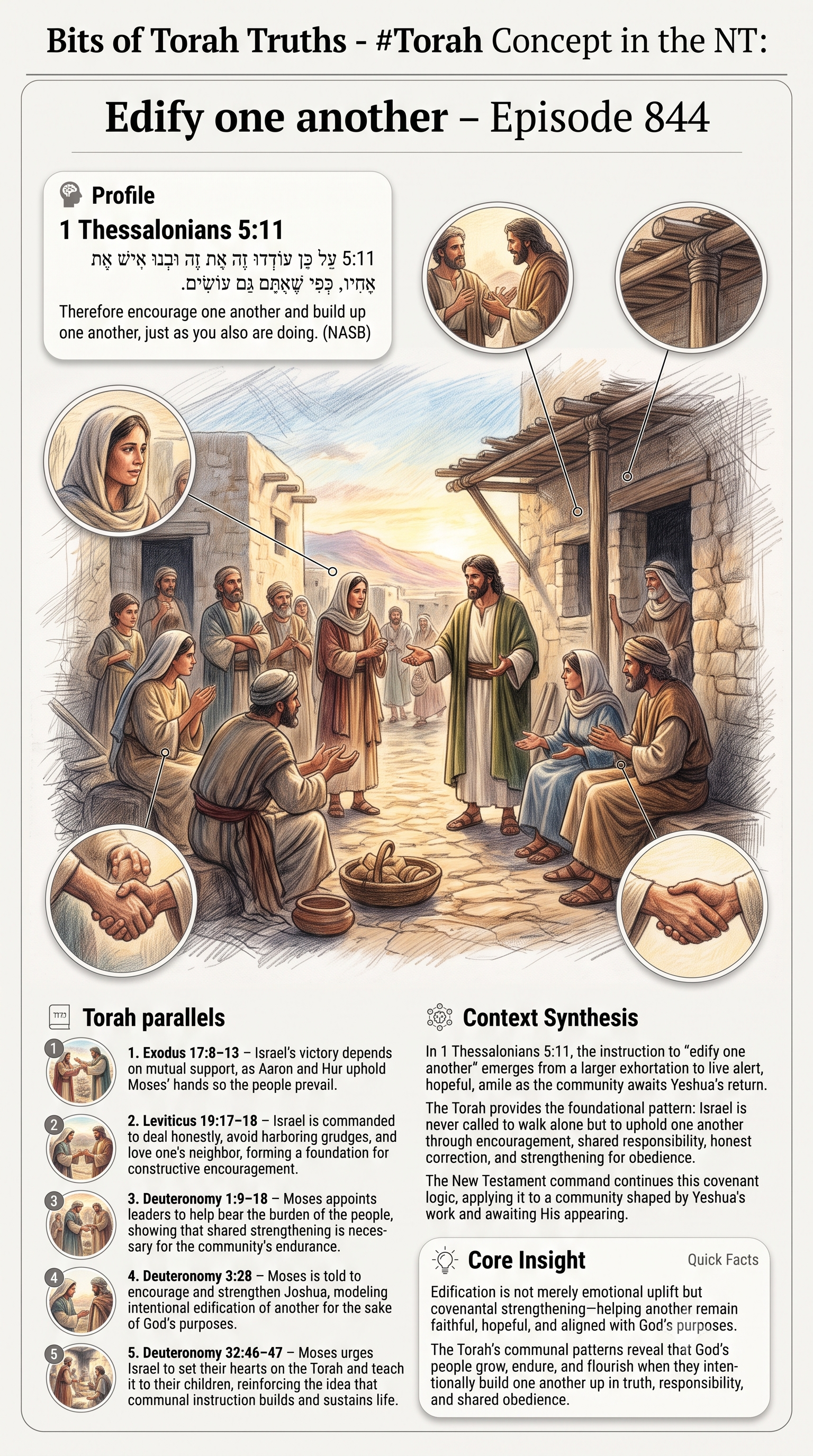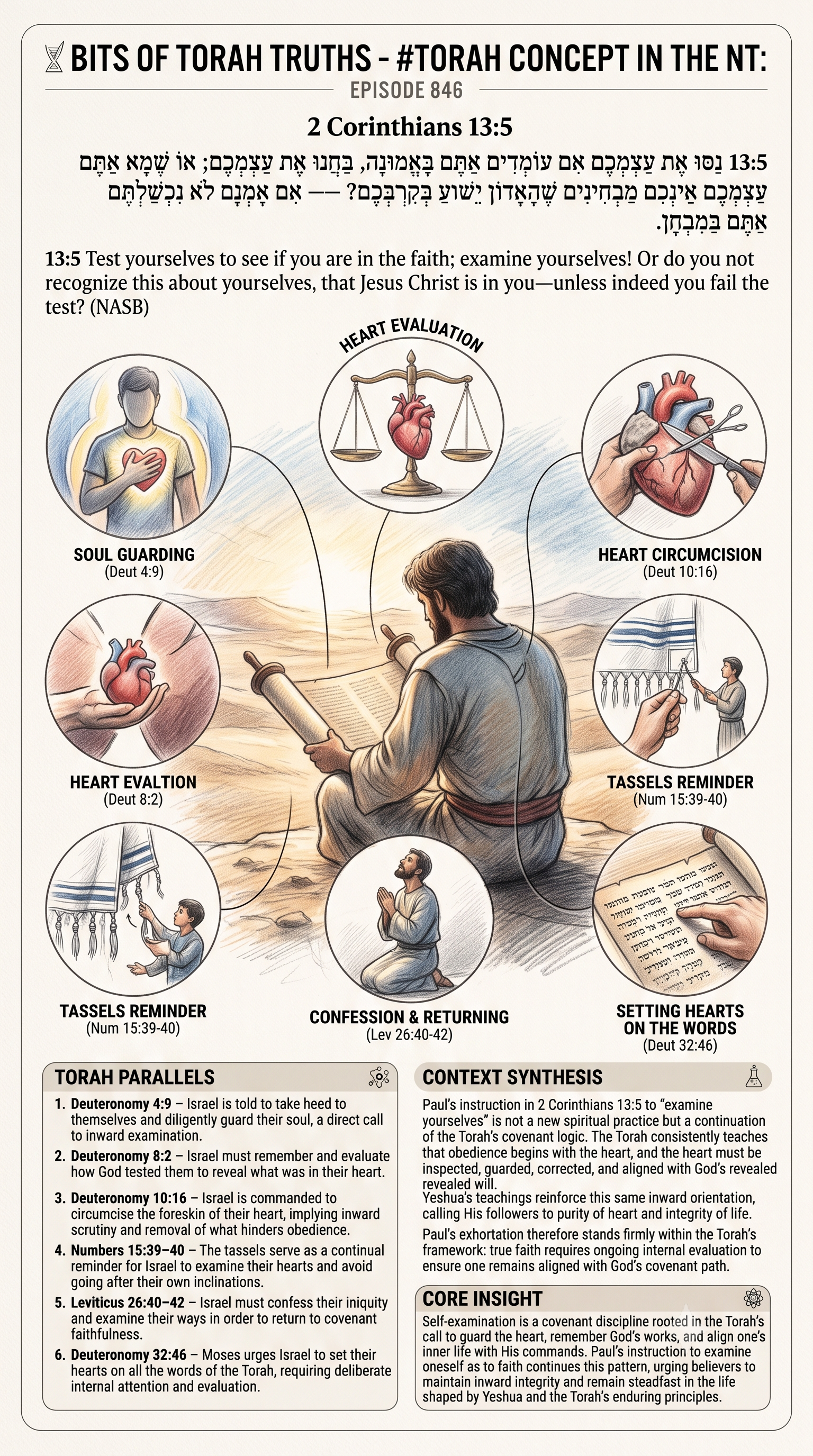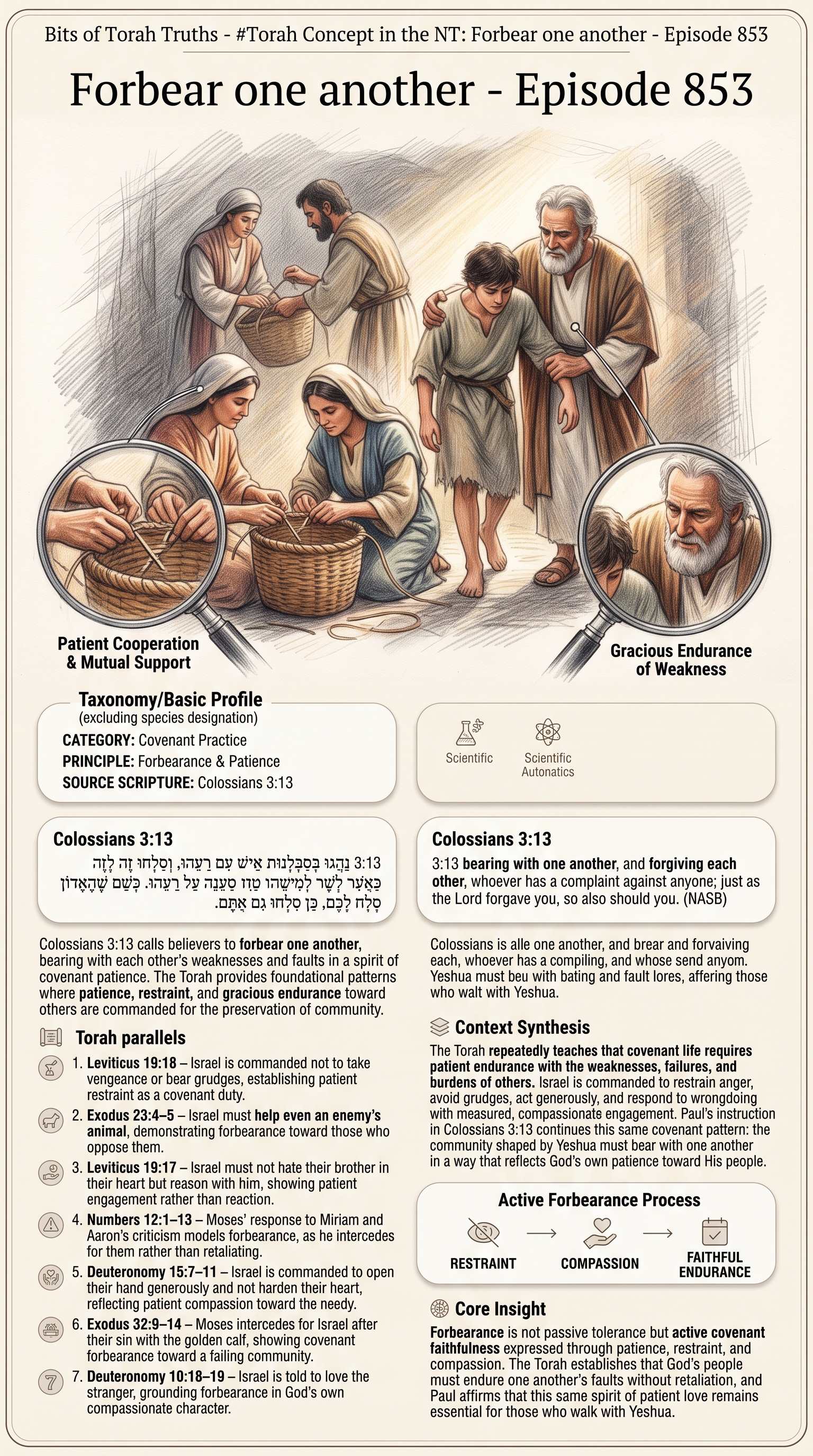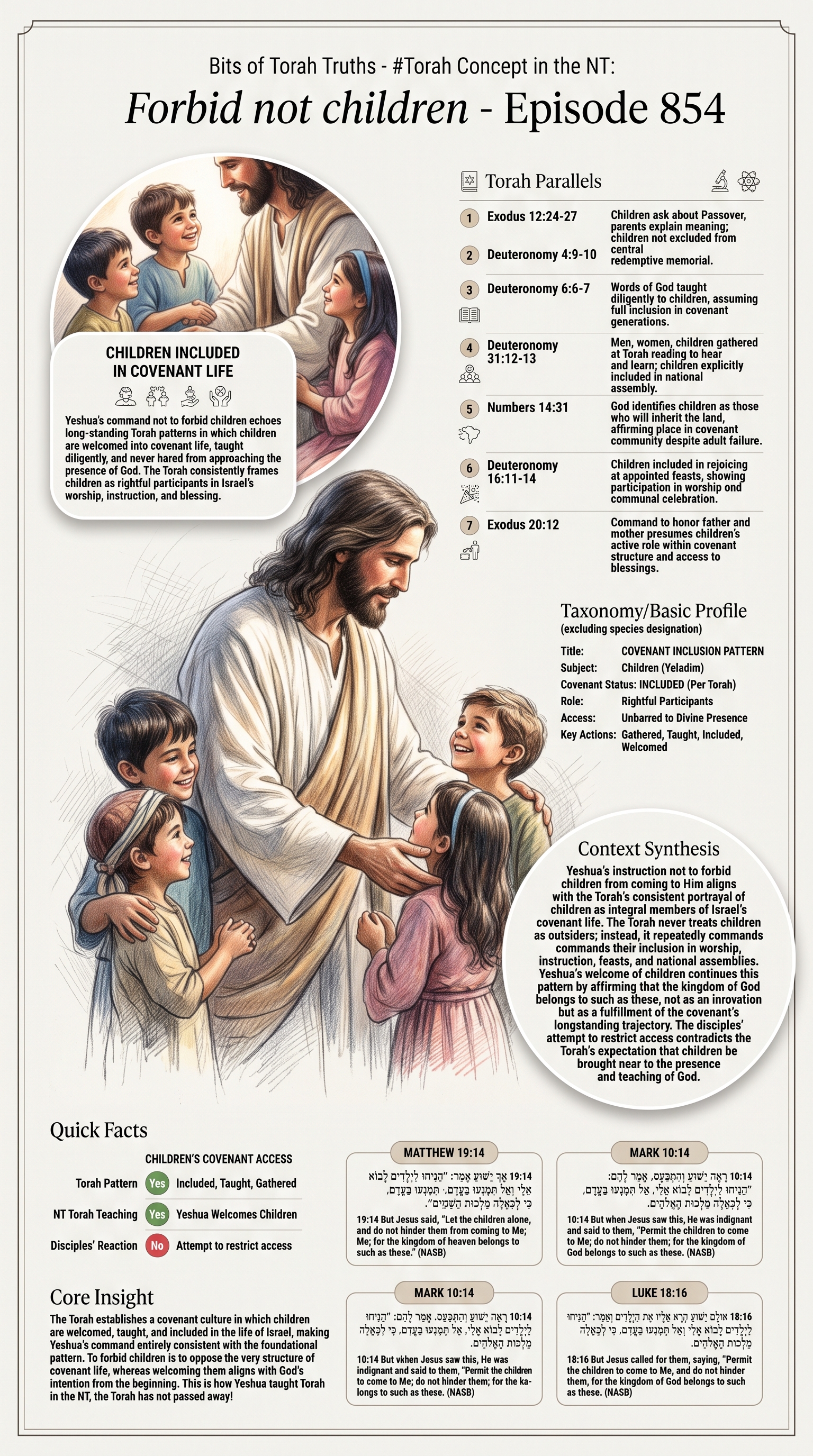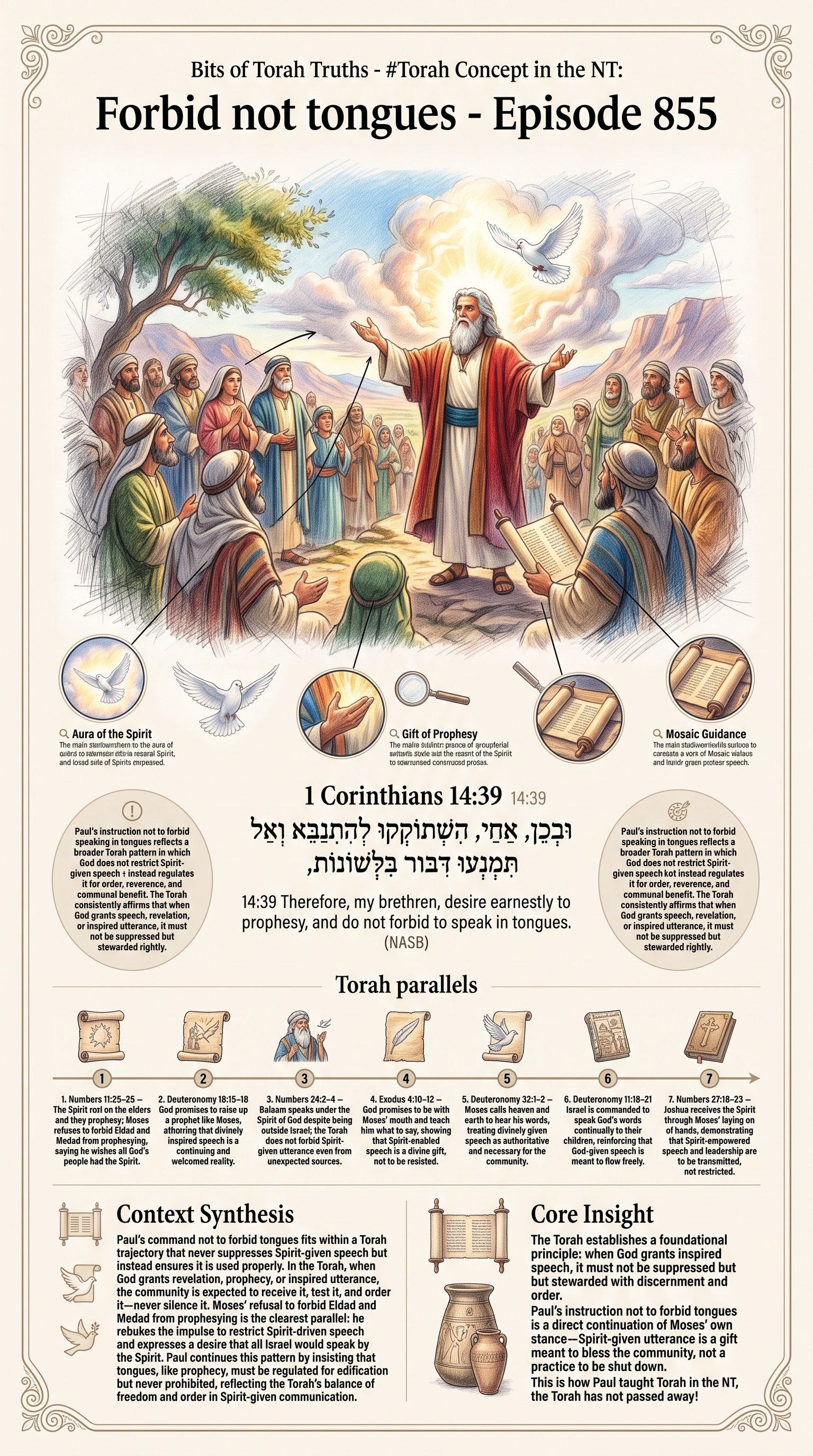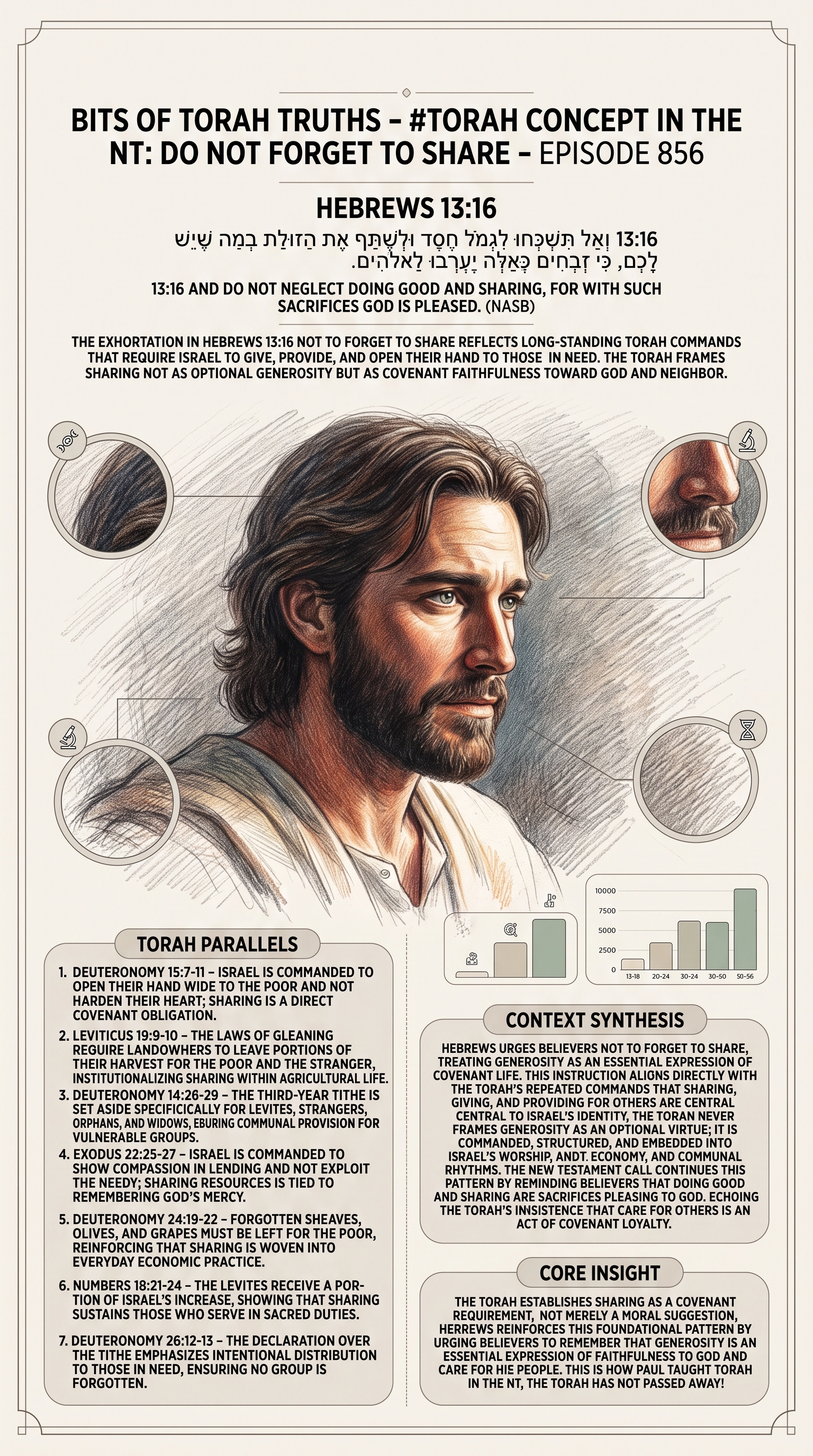
Bits of Torah Truths – #Torah Concept in the NT: Give enemy drink – Episode 862
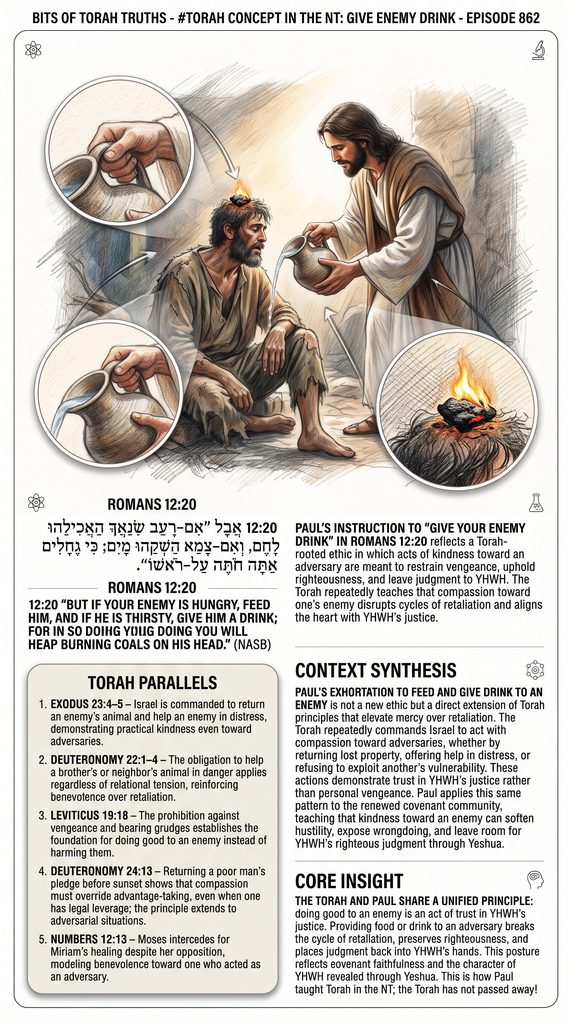
Romans 12:20
אֲבָל ״אִם–רָעֵב שׂנַאֲךָ הַאֲכִילֵהוּ לָחֶם, וְאִם–צָמֵא הַשְׁקֵהוּ מָיִם; כִּי גֶחָלִים אַתָּה חֹתֶה עַל–רֹאשׁוֹ.״
#torah#torahwisdom#torahtruth#torahforlife#torah4you#torahtruth
Romans 12:20
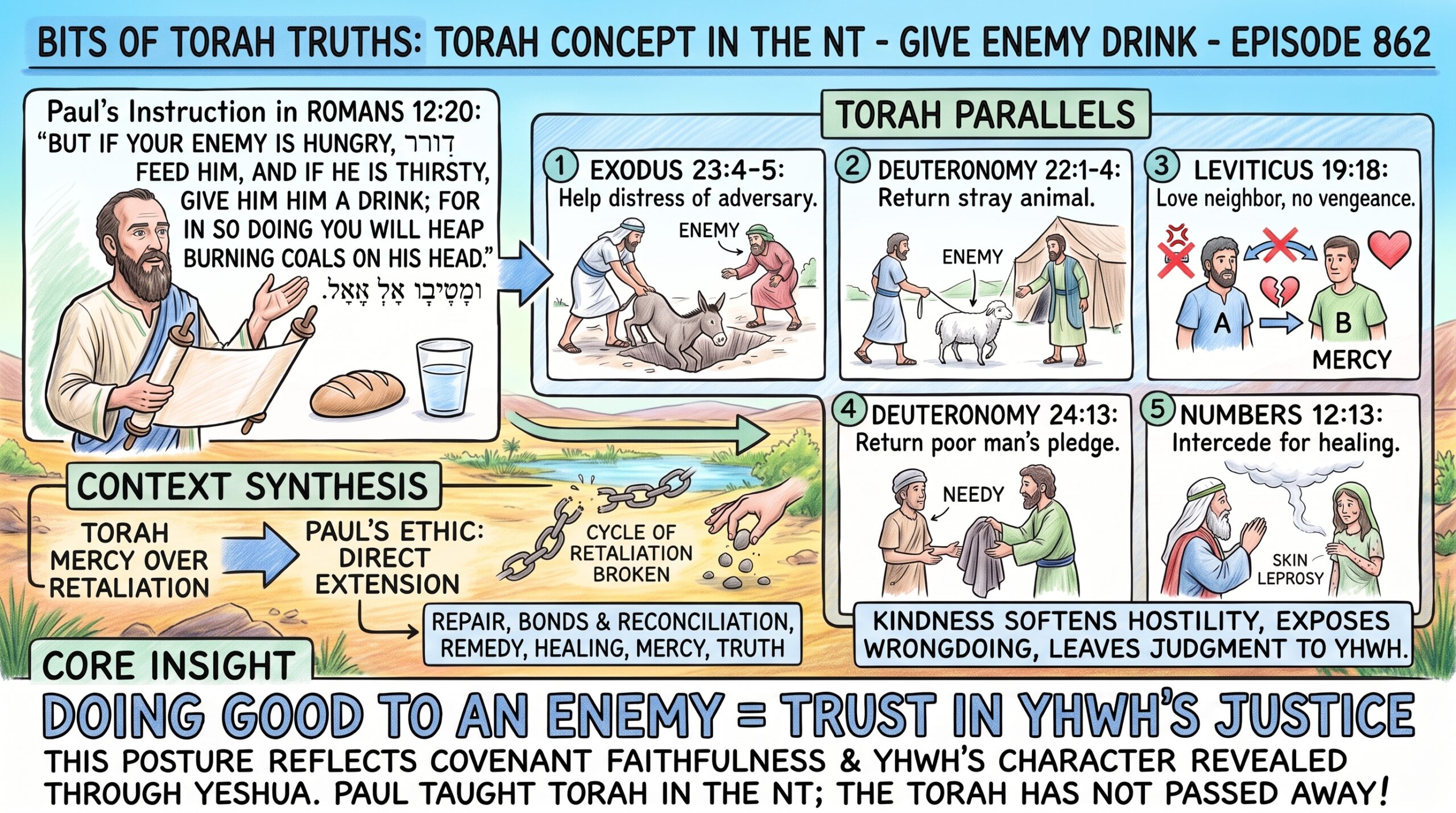
12:20 “BUT IF YOUR ENEMY IS HUNGRY, FEED HIM, AND IF HE IS THIRSTY, GIVE HIM A DRINK; FOR IN SO DOING YOU WILL HEAP BURNING COALS ON HIS HEAD.” (NASB)
https://www.matsati.com/index.php/category/bits-of-torah-truths/
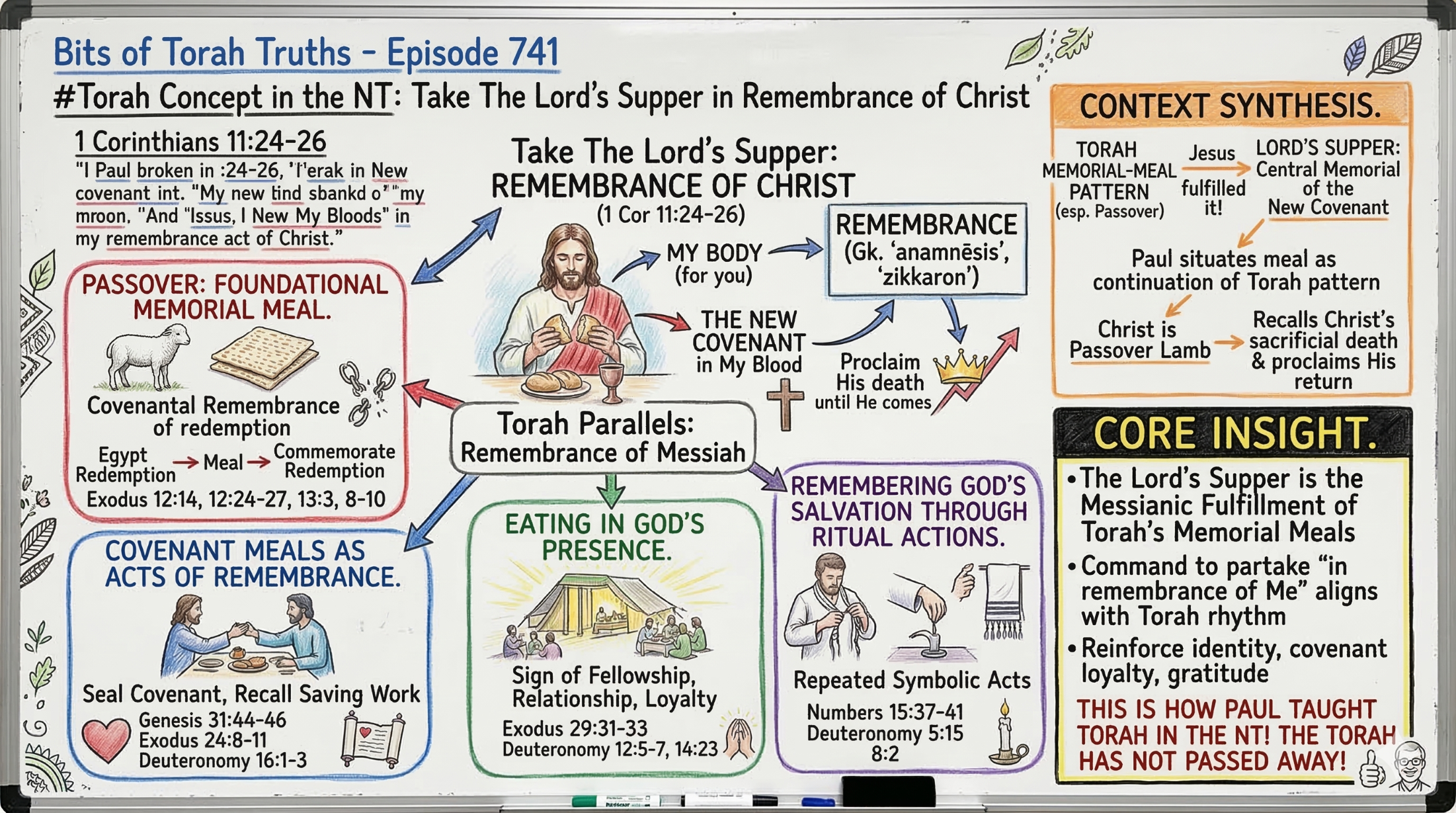
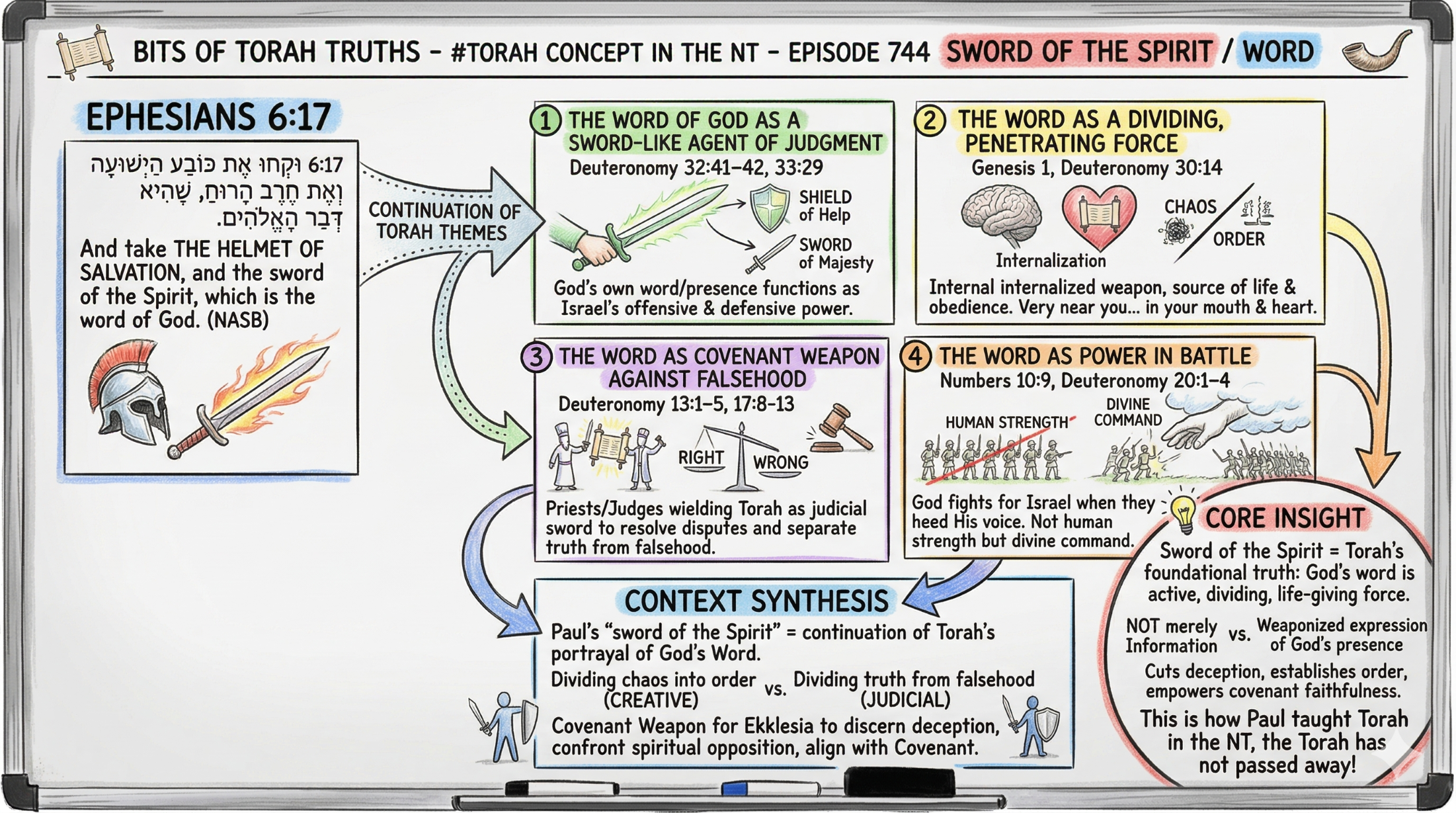
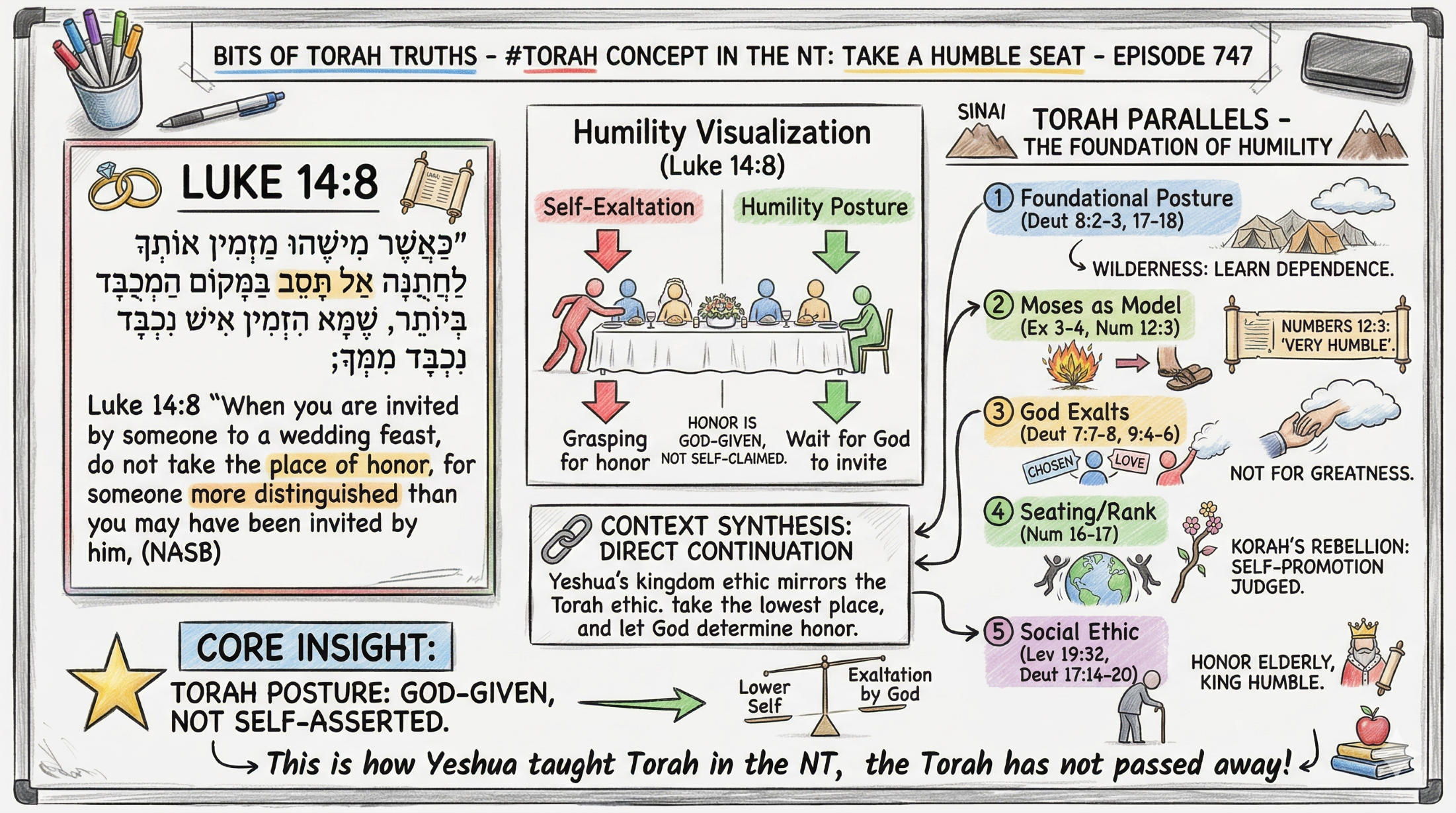
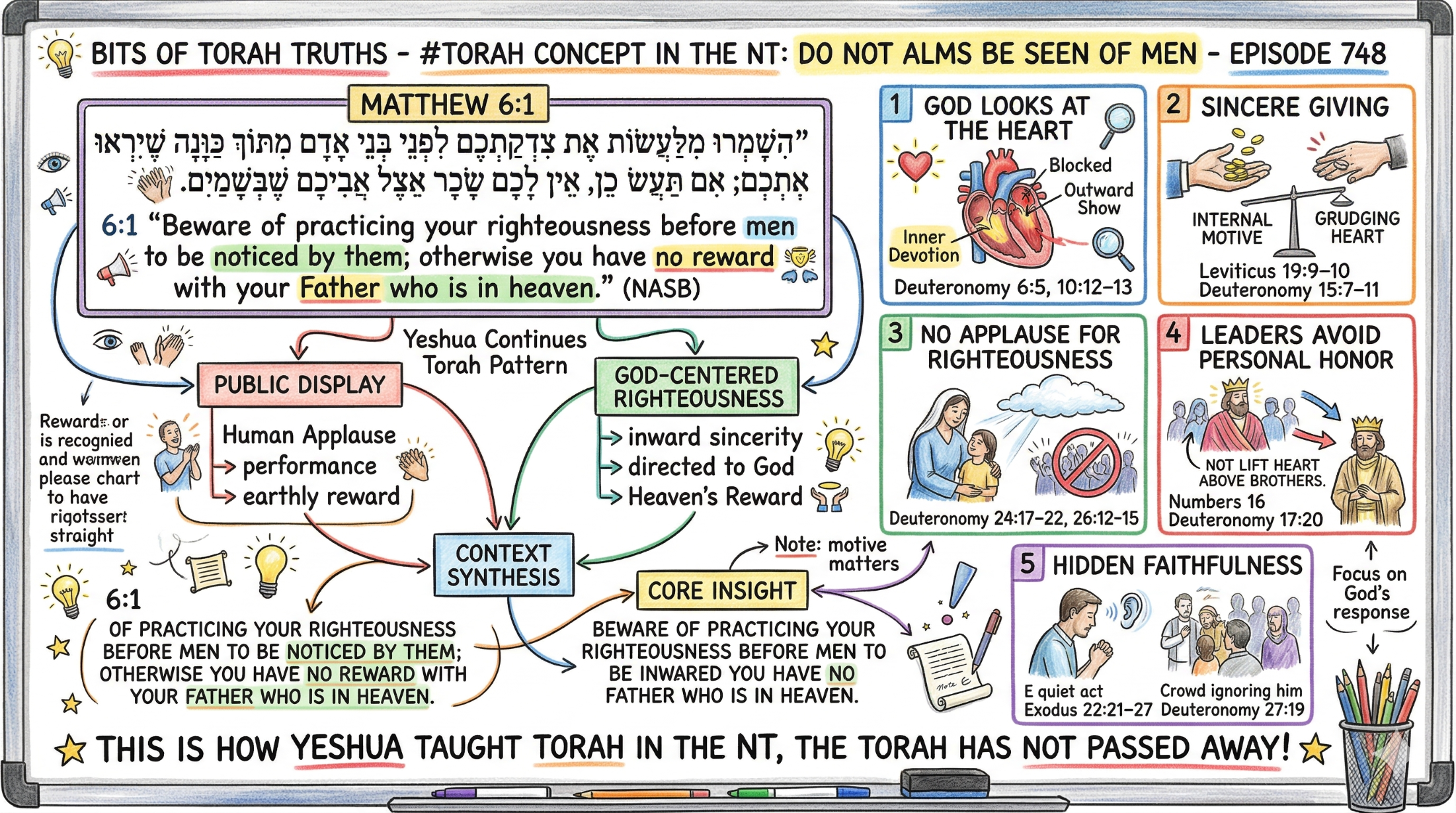
Paul’s instruction to “give your enemy drink” in Romans 12:20 reflects a Torah-rooted ethic in which acts of kindness toward an adversary are meant to restrain vengeance, uphold righteousness, and leave judgment to YHWH. The Torah repeatedly teaches that compassion toward one’s enemy disrupts cycles of retaliation and aligns the heart with YHWH’s justice.
– Torah parallels –
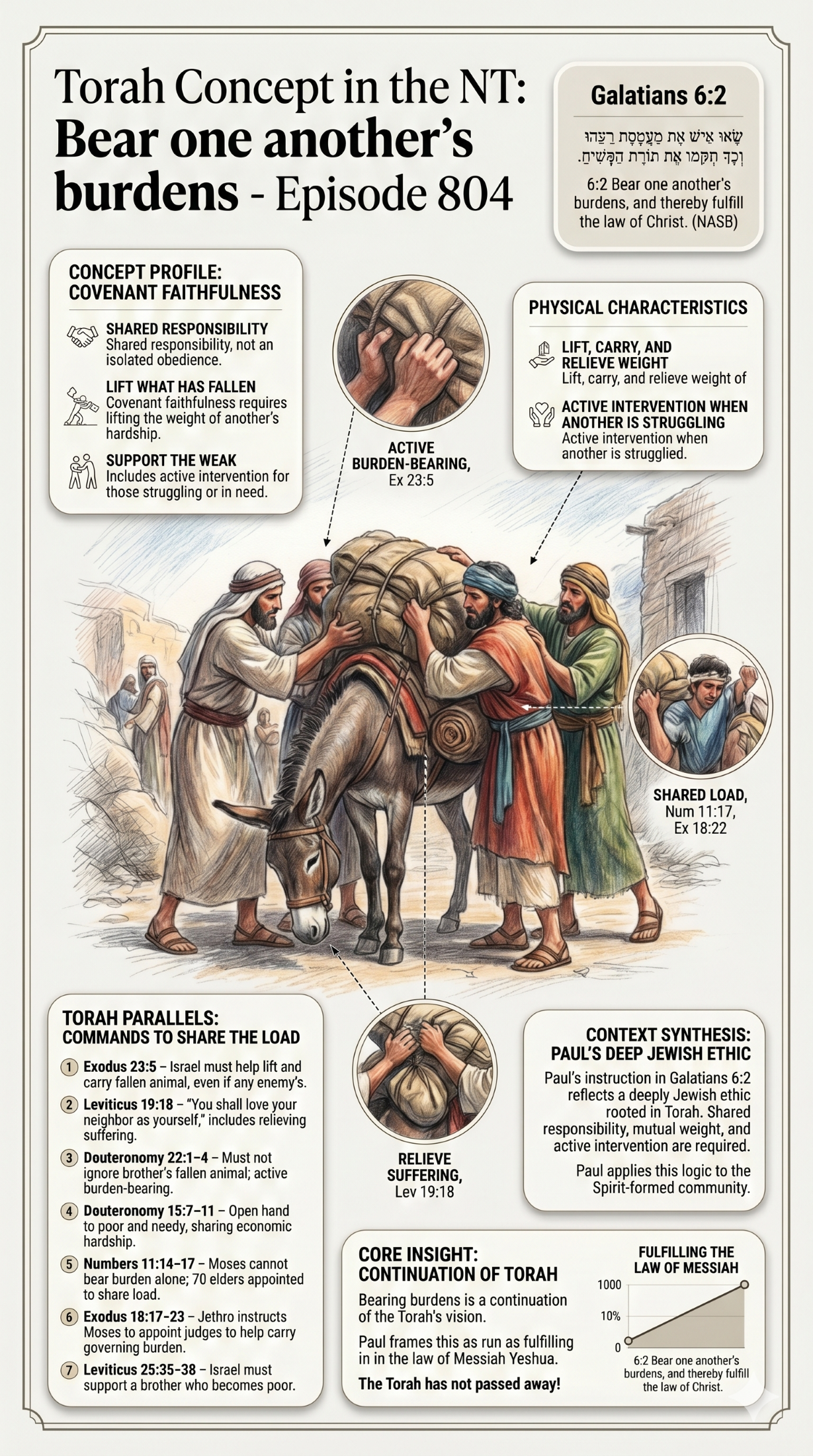
- Exodus 23:4–5 – Israel is commanded to return an enemy’s animal and help an enemy in distress, demonstrating practical kindness even toward adversaries.
- Deuteronomy 22:1–4 – The obligation to help a brother’s or neighbor’s animal in danger applies regardless of relational tension, reinforcing benevolence over retaliation.
- Leviticus 19:18 – The prohibition against vengeance and bearing grudges establishes the foundation for doing good to an enemy instead of harming them.
- Deuteronomy 24:13 – Returning a poor man’s pledge before sunset shows that compassion must override advantage-taking, even when one has legal leverage; the principle extends to adversarial situations.
- Numbers 12:13 – Moses intercedes for Miriam’s healing despite her opposition, modeling benevolence toward one who acted as an adversary.
– Context Synthesis –
Paul’s exhortation to feed and give drink to an enemy is not a new ethic but a direct extension of Torah principles that elevate mercy over retaliation. The Torah repeatedly commands Israel to act with compassion toward adversaries, whether by returning lost property, offering help in distress, or refusing to exploit another’s vulnerability. These actions demonstrate trust in YHWH’s justice rather than personal vengeance. Paul applies this same pattern to the renewed covenant community, teaching that kindness toward an enemy can soften hostility, expose wrongdoing, and leave room for YHWH’s righteous judgment through Yeshua.
– Core Insight –
The Torah and Paul share a unified principle: doing good to an enemy is an act of trust in YHWH’s justice. Providing food or drink to an adversary breaks the cycle of retaliation, preserves righteousness, and places judgment back into YHWH’s hands. This posture reflects covenant faithfulness and the character of YHWH revealed through Yeshua. This is how Paul taught Torah in the NT; the Torah has not passed away!
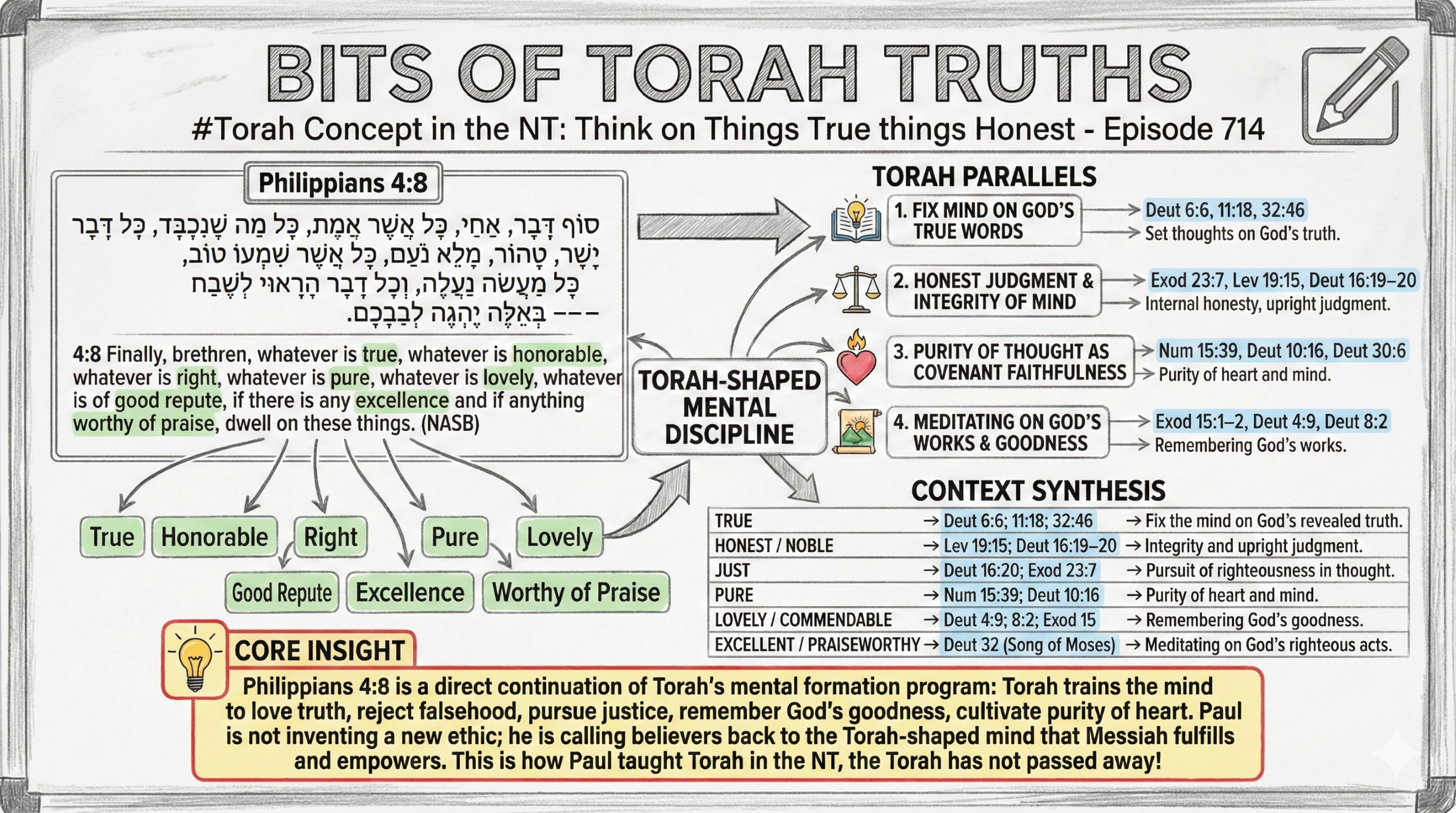
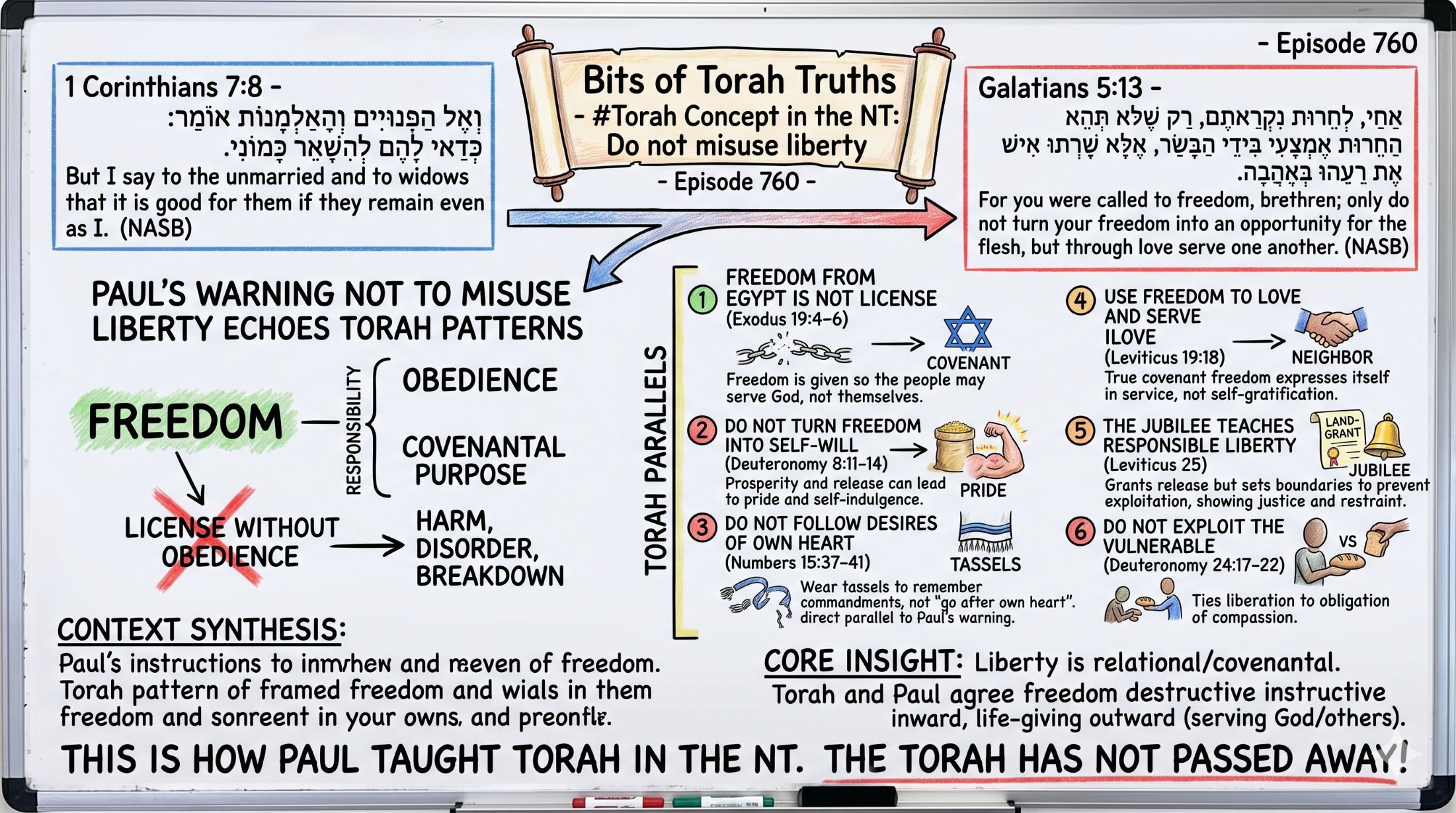
Visual Summary of Concepts the Torah in the NT