Bits of Torah Truths – #Torah Concept in the NT: Cleanse hands you sinners – Episode 813
James 4:8
קִרְבוּ לֵאלֹהִים וְיִקְרַב אֲלֵיכֶם. הַחוֹטְאִים, רַחֲצוּ יְדֵיכֶם! טַהֲרוּ אֶת לְבַבְכֶם, הֲפַכְפַּכֵּי הַלֵּב!
#torah#torahwisdom#torahtruth#torahforlife#torah4you#torahtruth
James 4:8
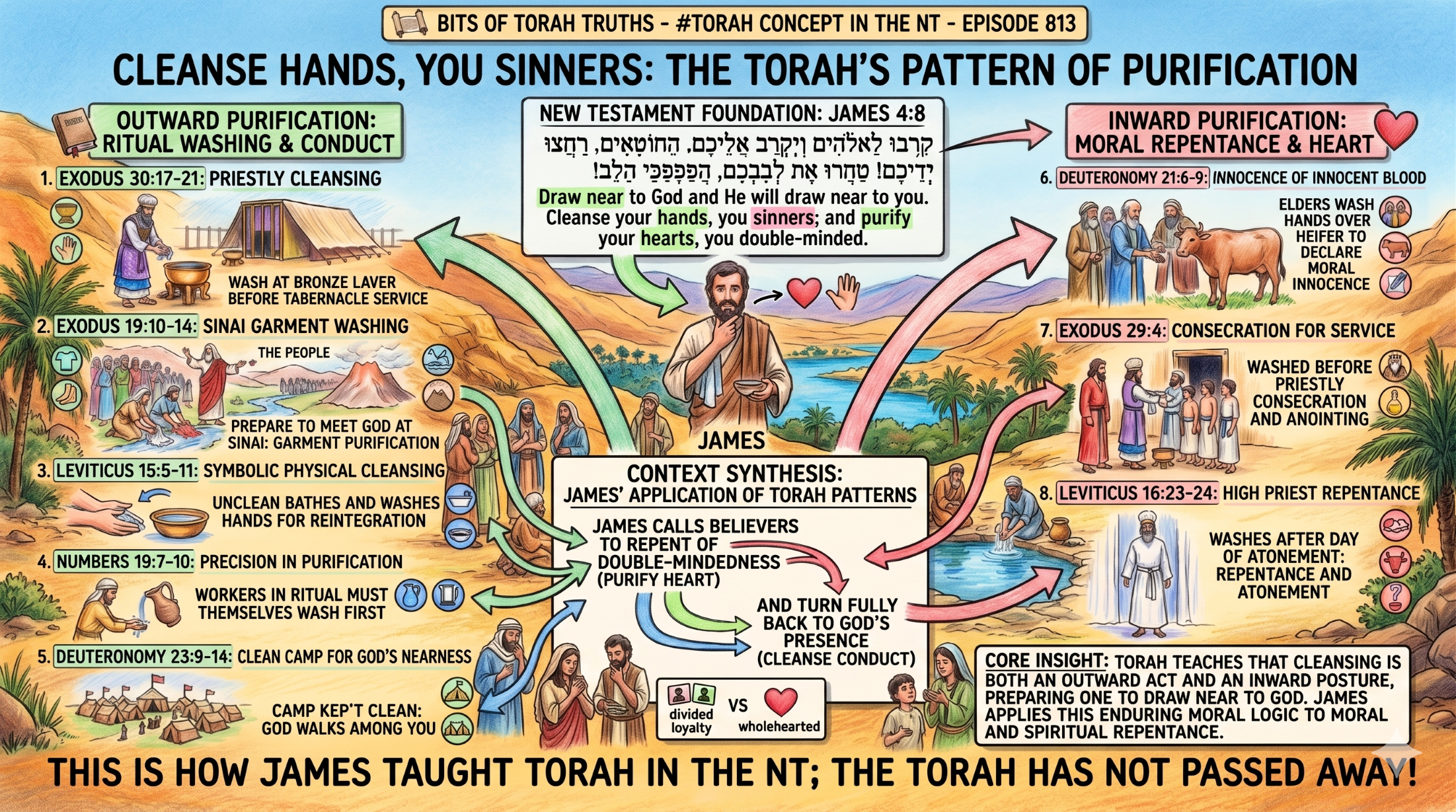
4:8 Draw near to God and He will draw near to you. Cleanse your hands, you sinners; and purify your hearts, you double-minded. (NASB)
https://www.matsati.com/index.php/category/bits-of-torah-truths/
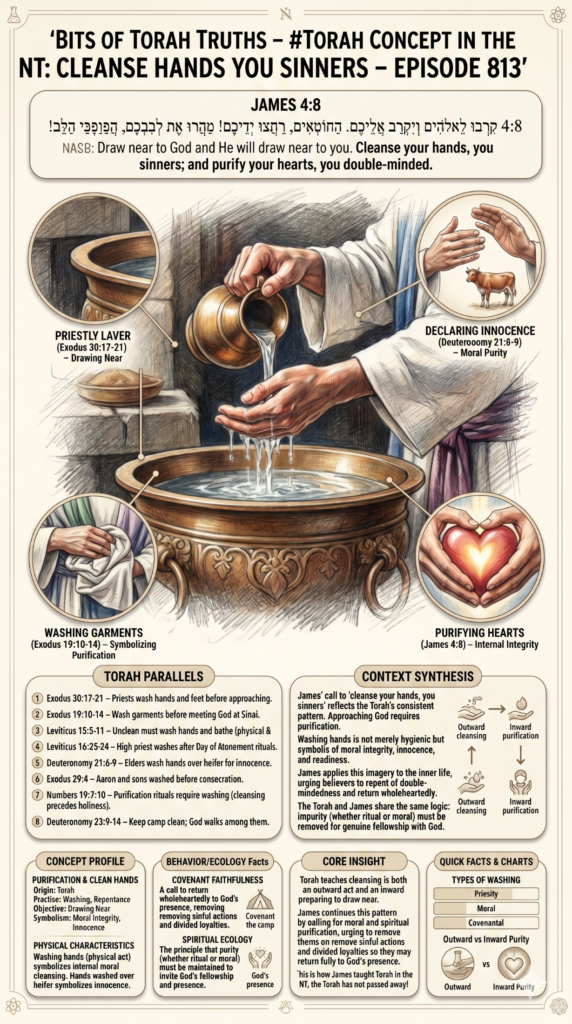
James 4:8 calls sinners to cleanse their hands and purify their hearts, echoing the Torah’s emphasis on outward and inward purification as essential for approaching God. The Torah repeatedly links ritual washing, moral repentance, and covenant faithfulness.
– Torah parallels –
- Exodus 30:17‑21 – Priests must wash their hands and feet at the bronze laver before approaching God, showing that cleansing is required for drawing near.
- Exodus 19:10‑14 – Before meeting God at Sinai, the people must wash their garments, symbolizing purification before entering His presence.
- Leviticus 15:5‑11 – Those who become unclean must wash their hands and bathe, demonstrating that cleansing is both physical and symbolic.
- Leviticus 16:23‑24 – The high priest washes his body after the Day of Atonement rituals, linking cleansing with repentance and atonement.
- Deuteronomy 21:6‑9 – Elders wash their hands over the heifer to declare innocence, showing that hand‑cleansing symbolizes moral purity.
- Exodus 29:4 – Aaron and his sons are washed with water before being consecrated, illustrating purification for service.
- Numbers 19:7‑10 – Those involved in purification rituals must themselves wash, reinforcing the principle that cleansing precedes holiness.
- Deuteronomy 23:9‑14 – Israel must keep the camp clean because God walks among them, connecting purity with God’s nearness.
– Context Synthesis –
James’ call to “cleanse your hands, you sinners” reflects the Torah’s consistent pattern that approaching God requires purification of both conduct and heart. In the Torah, washing hands is not merely hygienic but symbolic of moral integrity, innocence, and readiness to stand before God. James applies this imagery to the inner life, urging believers to repent of double‑mindedness and return wholeheartedly to God. The Torah and James share the same logic: impurity (whether ritual or moral) must be removed for genuine fellowship with God.
– Core Insight –
The Torah teaches that cleansing is both an outward act and an inward posture, preparing a person to draw near to God. James continues this pattern by calling believers to moral and spiritual purification, urging them to remove sinful actions and divided loyalties so they may return fully to God’s presence. This is how James taught Torah in the NT; the Torah has not passed away!
Visual Summary of Concepts the Torah in the NT