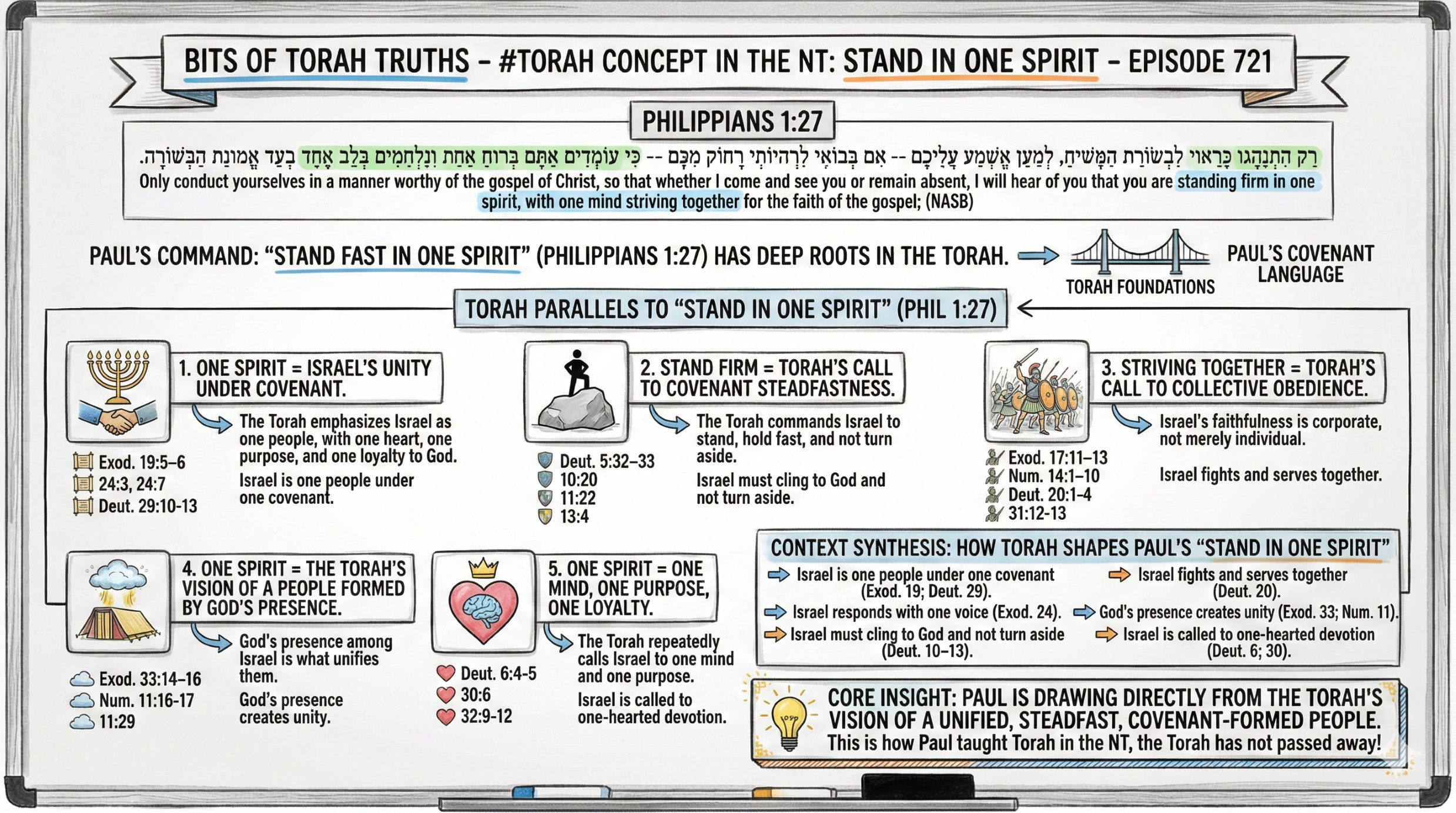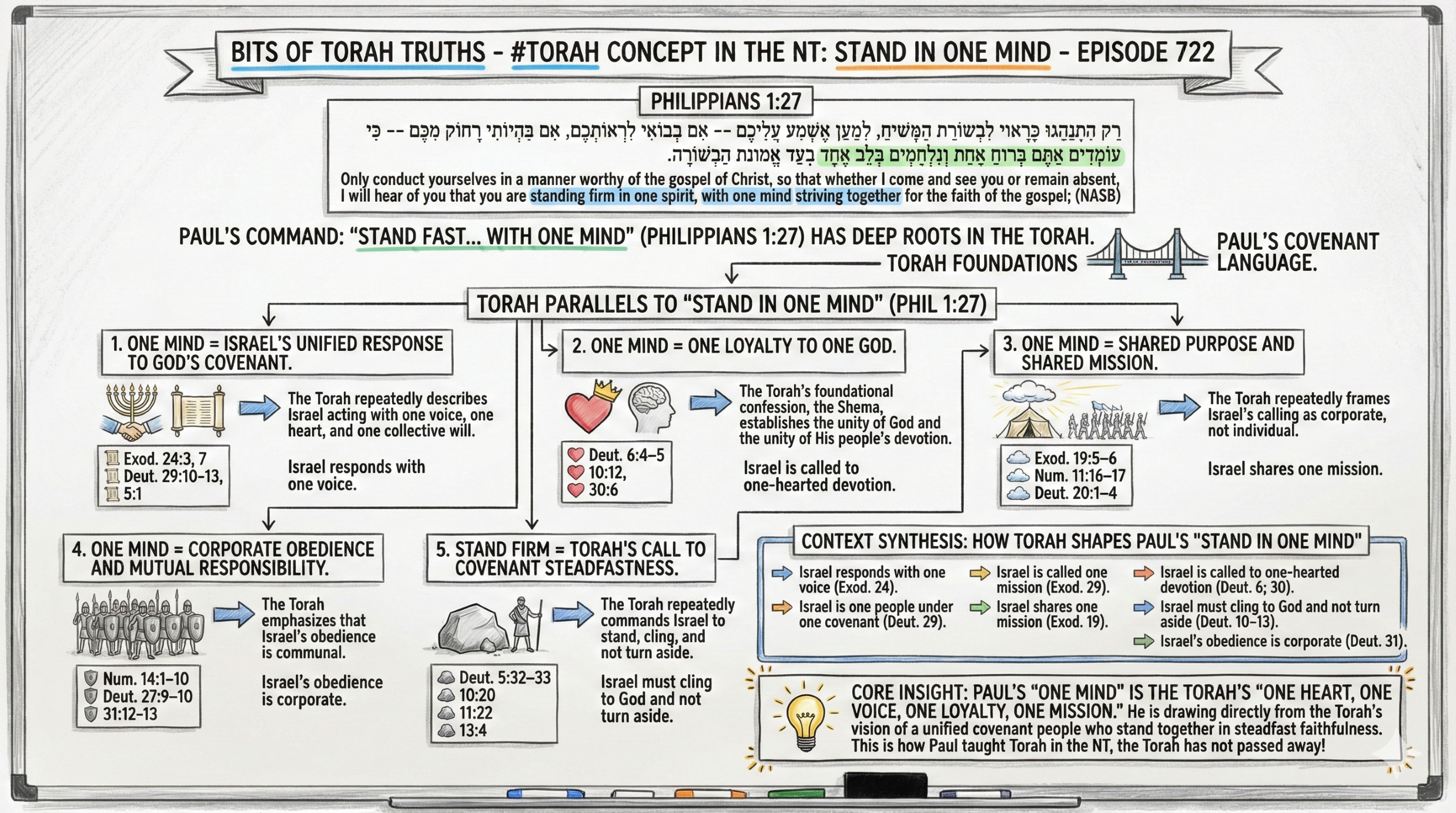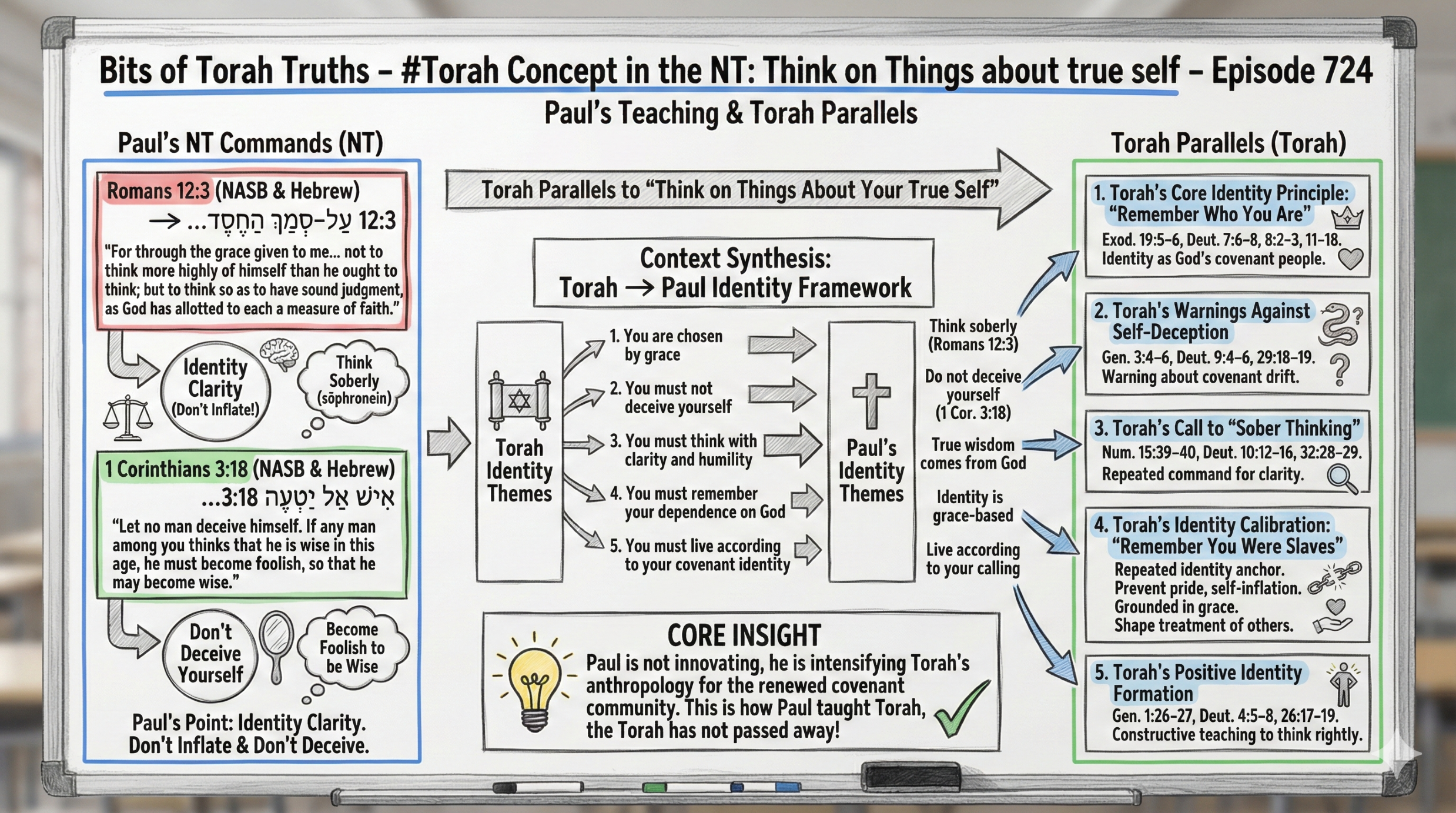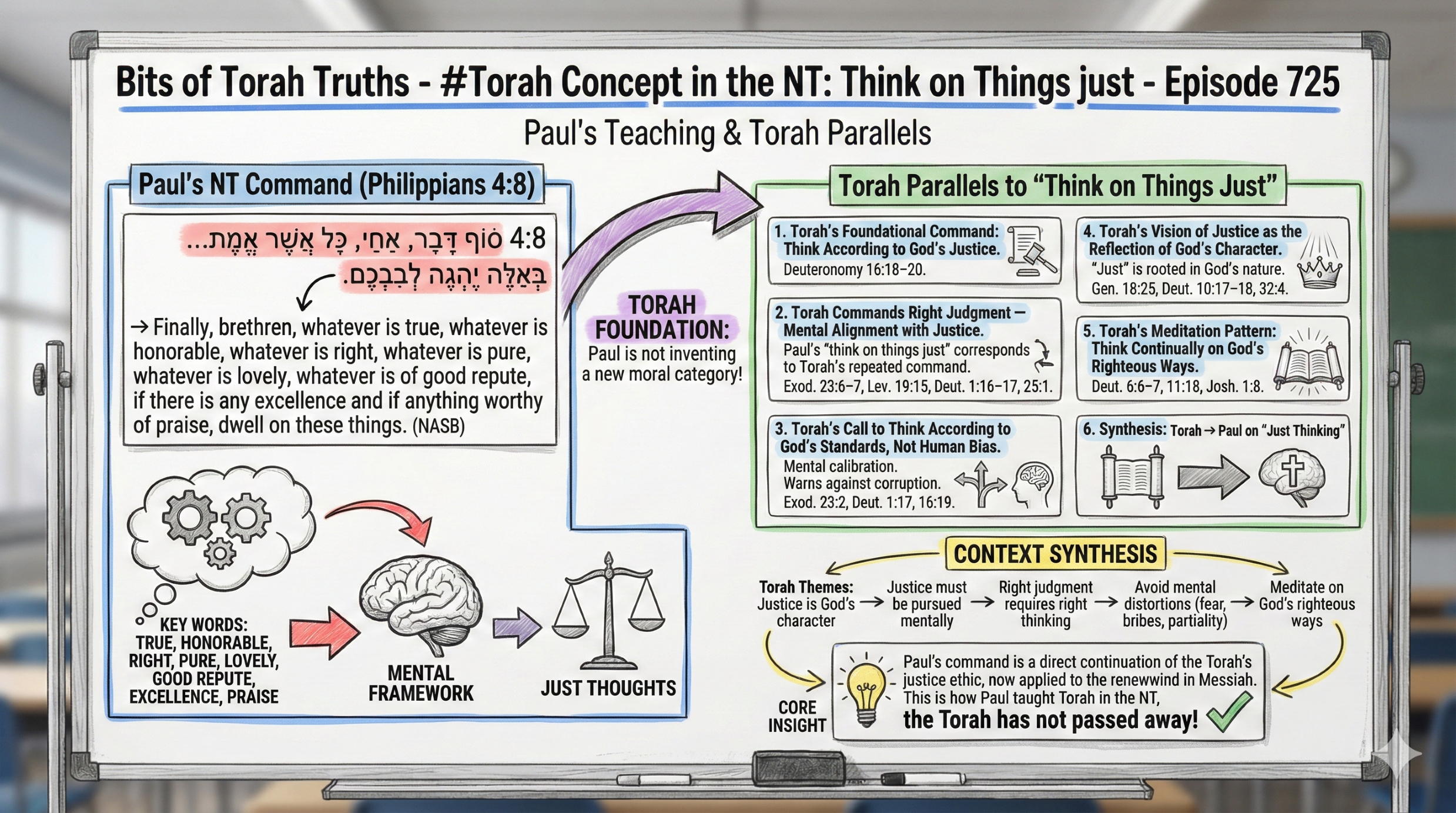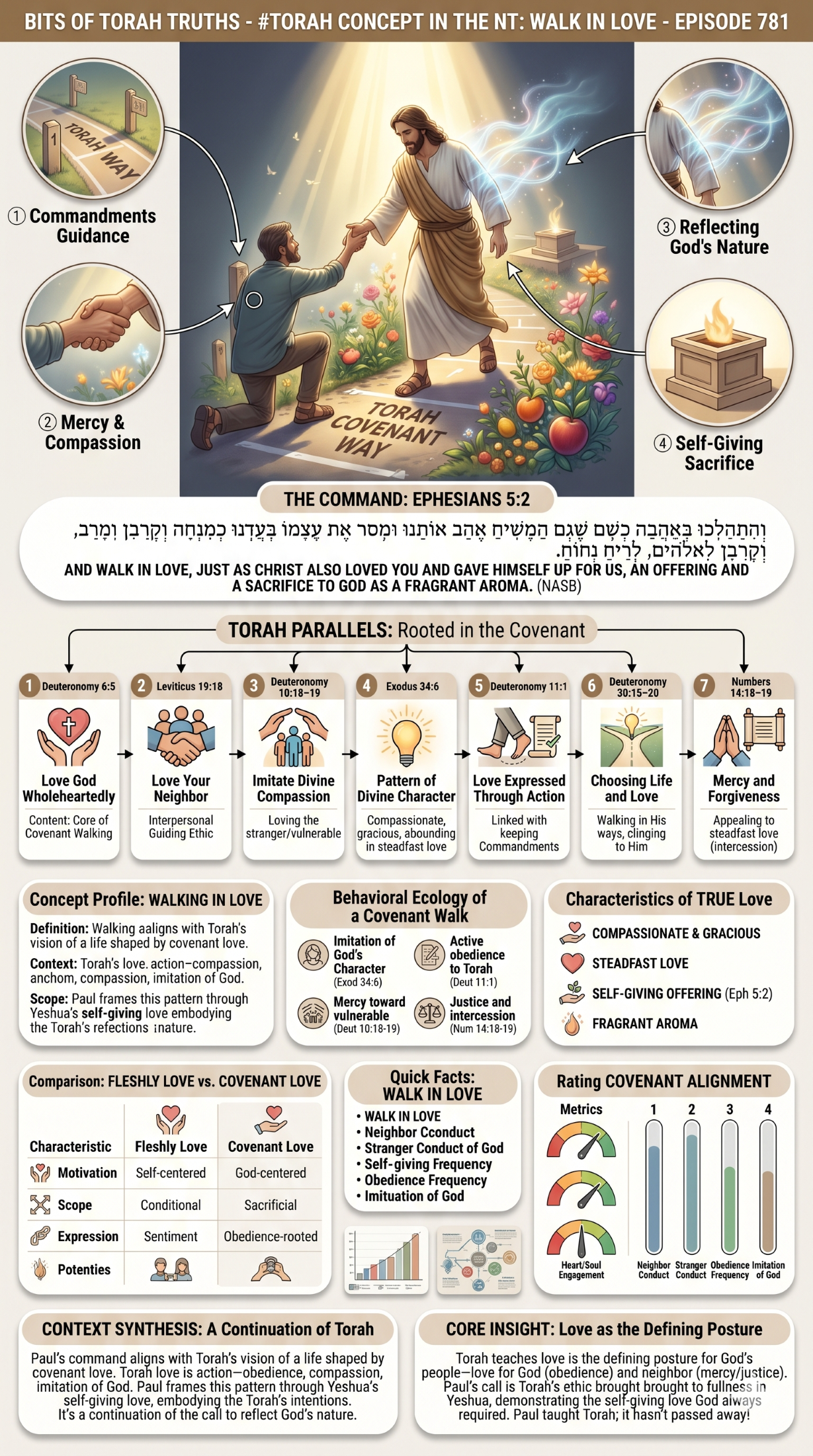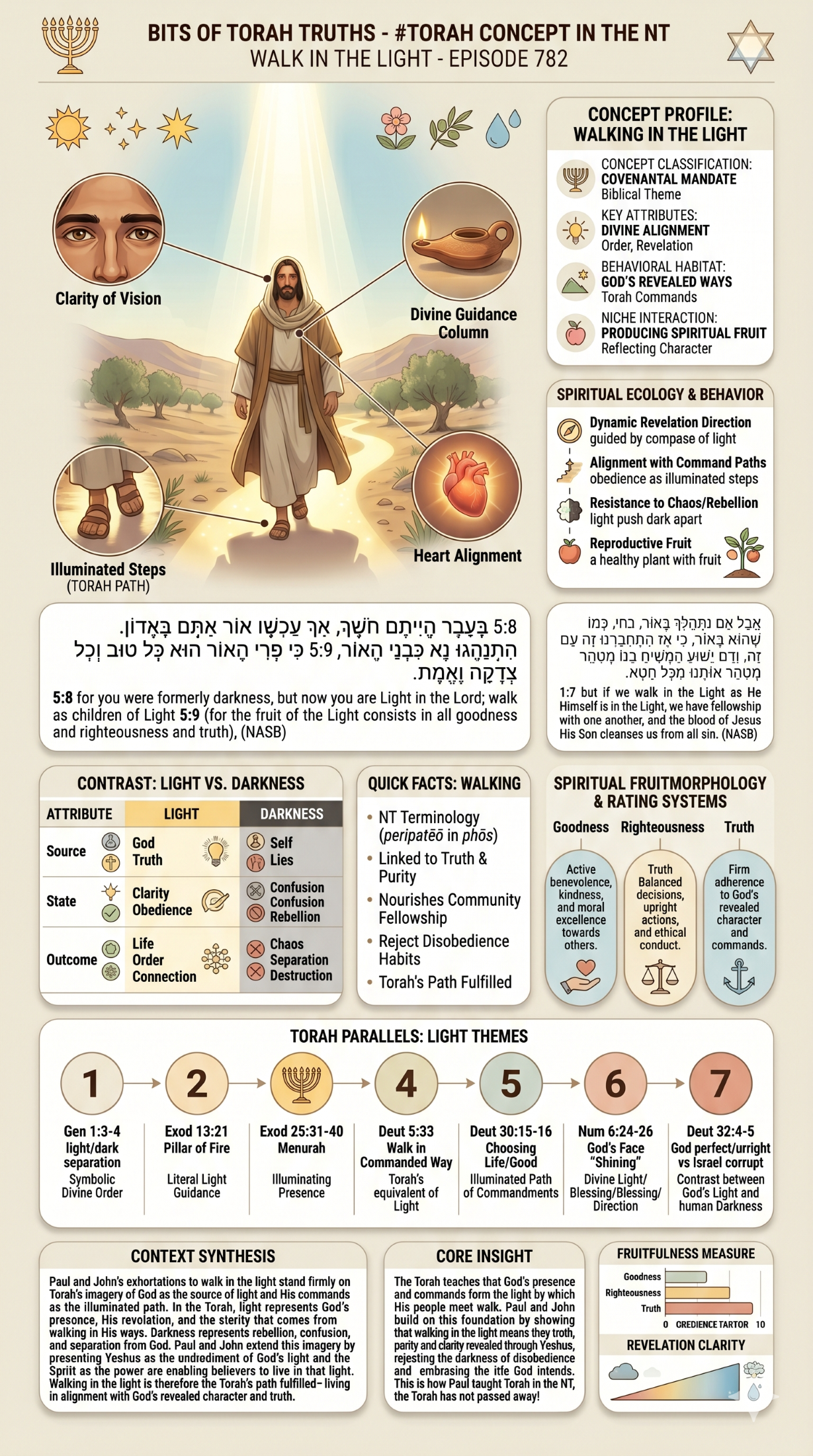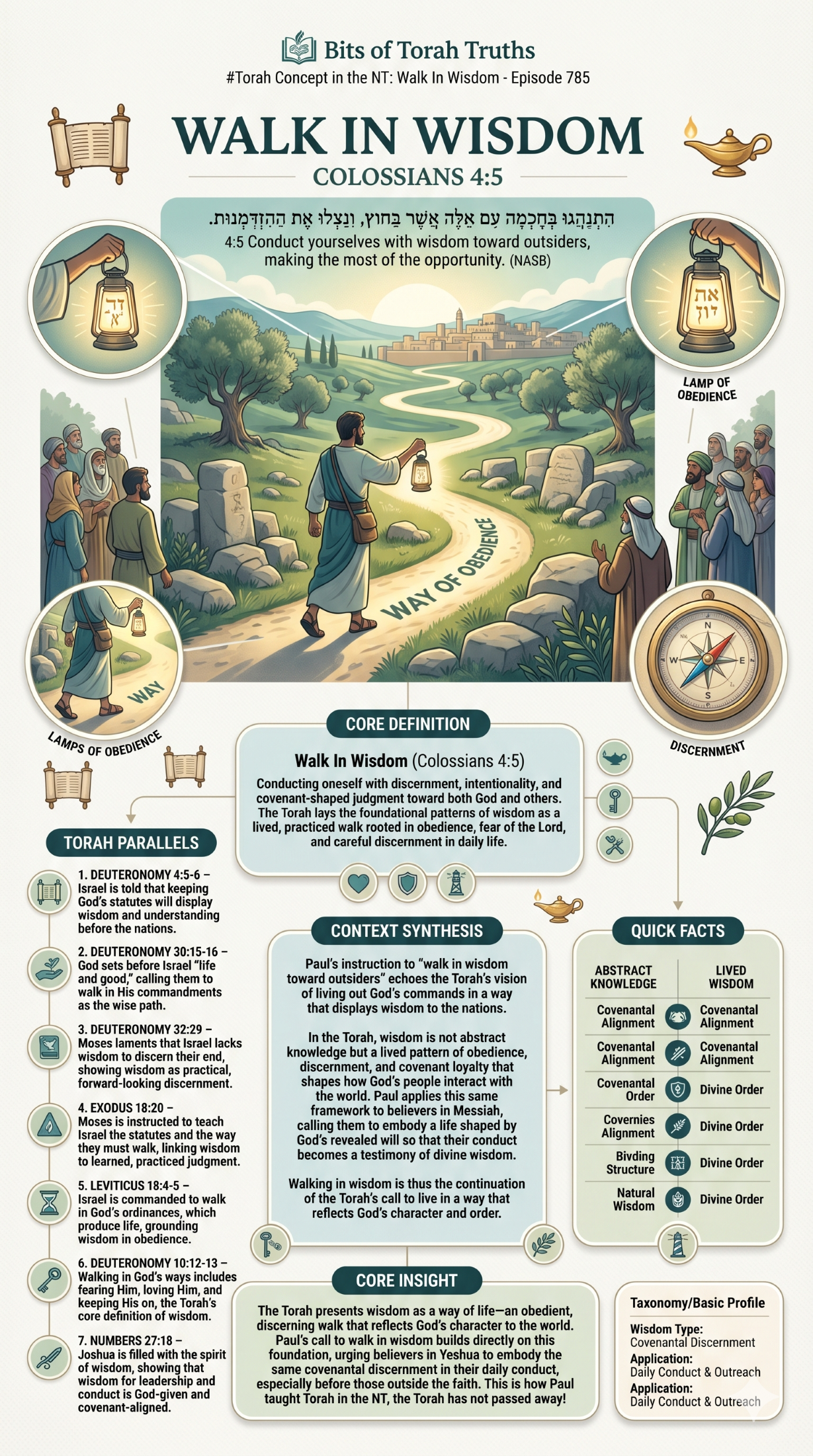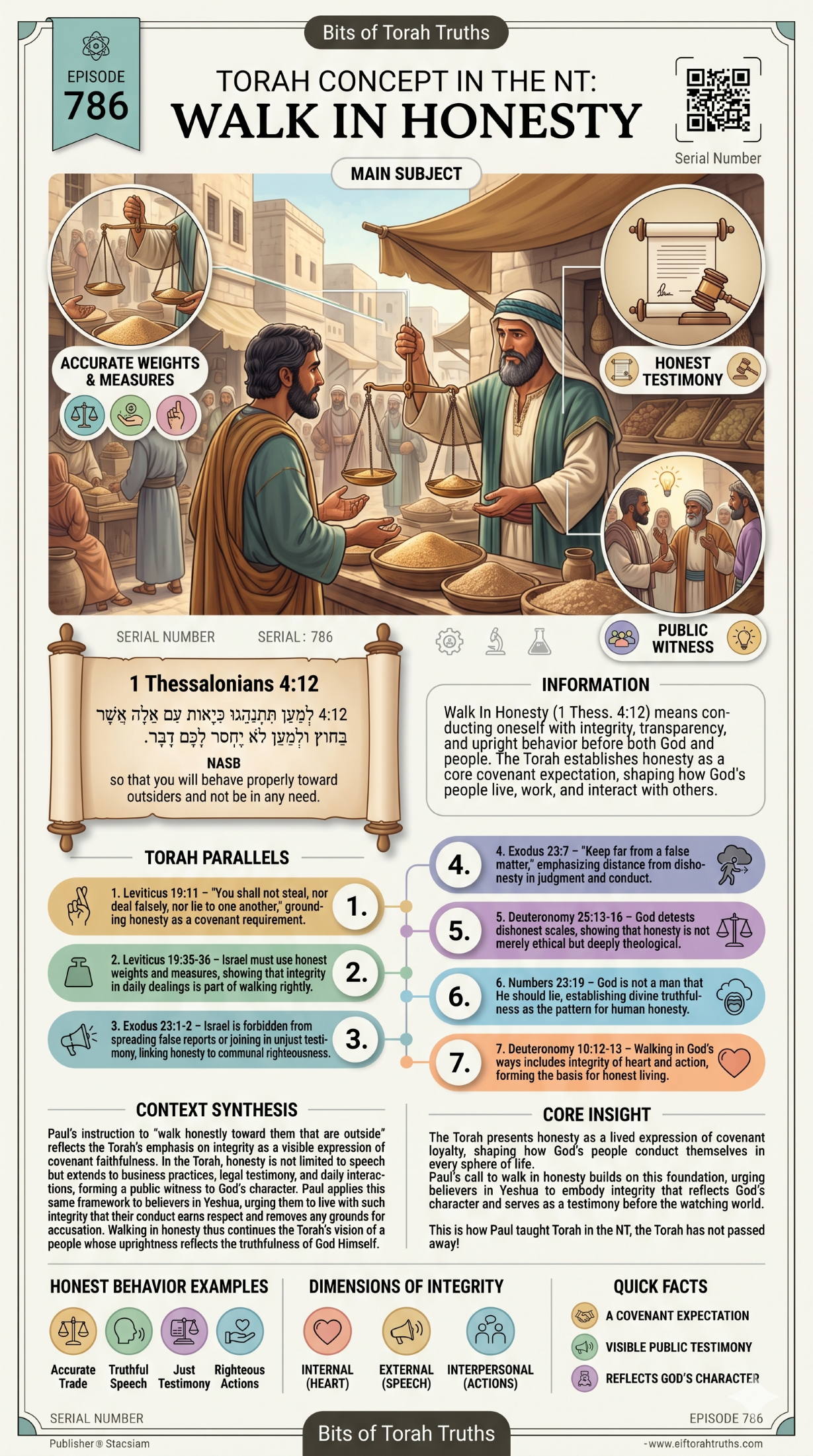
Bits of Torah Truths – #Torah Concept in the NT: Bear one another’s burdens – Episode 804
Galatians 6:2
שְׂאוּ אִישׁ אֶת מַעֲמֶסֶת רֵעֵהוּ וְכָךְ תְּקַיְּמוּ אֶת תּוֹרַת הַמָּשִׁיחַ.
#torah #torahwisdom #torahtruth #torahforlife #torah4you #torahtruth
Galatians 6:2
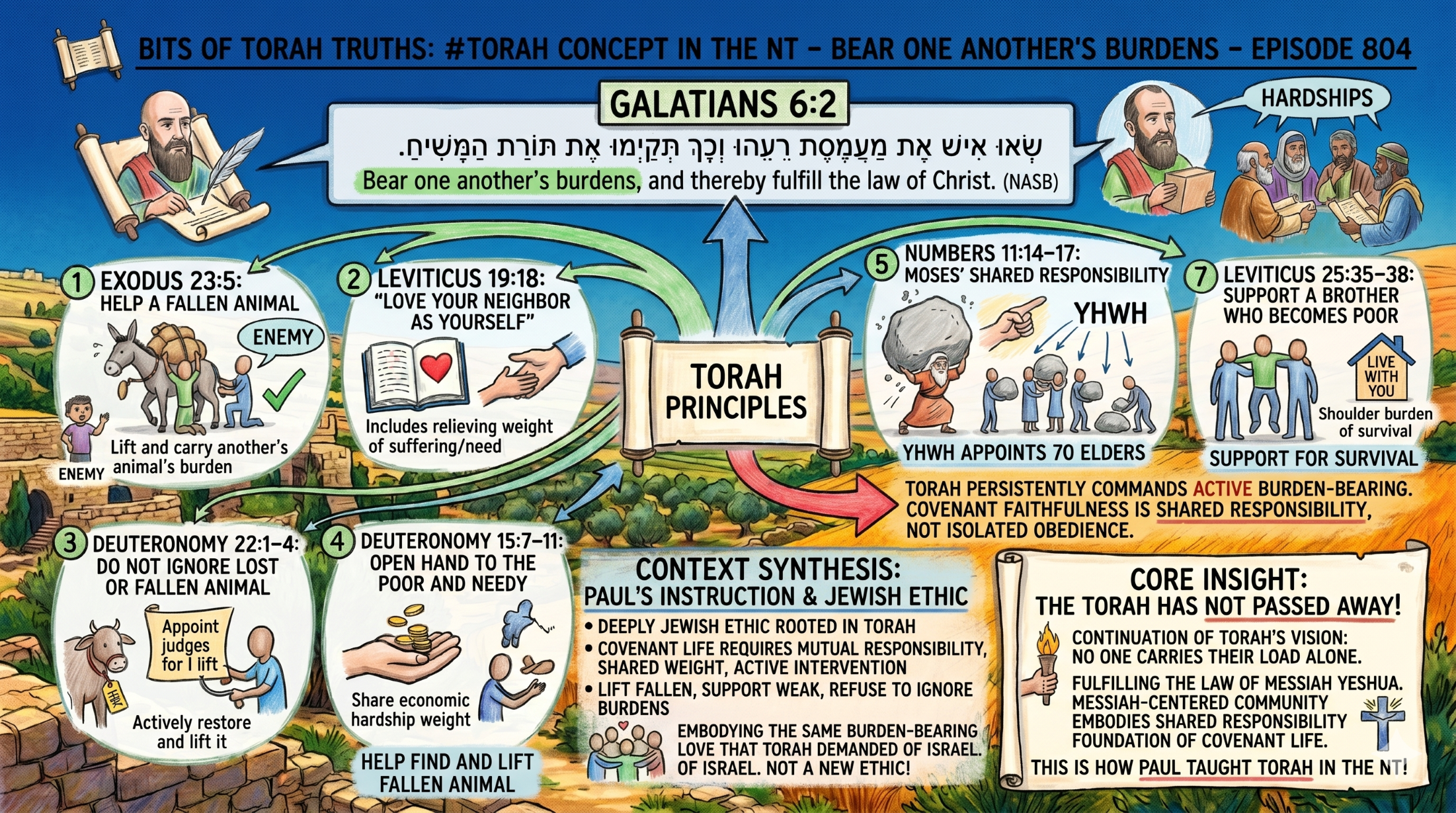
6:2 Bear one another’s burdens, and thereby fulfill the law of Christ. (NASB)
https://www.matsati.com/index.php/category/bits-of-torah-truths/
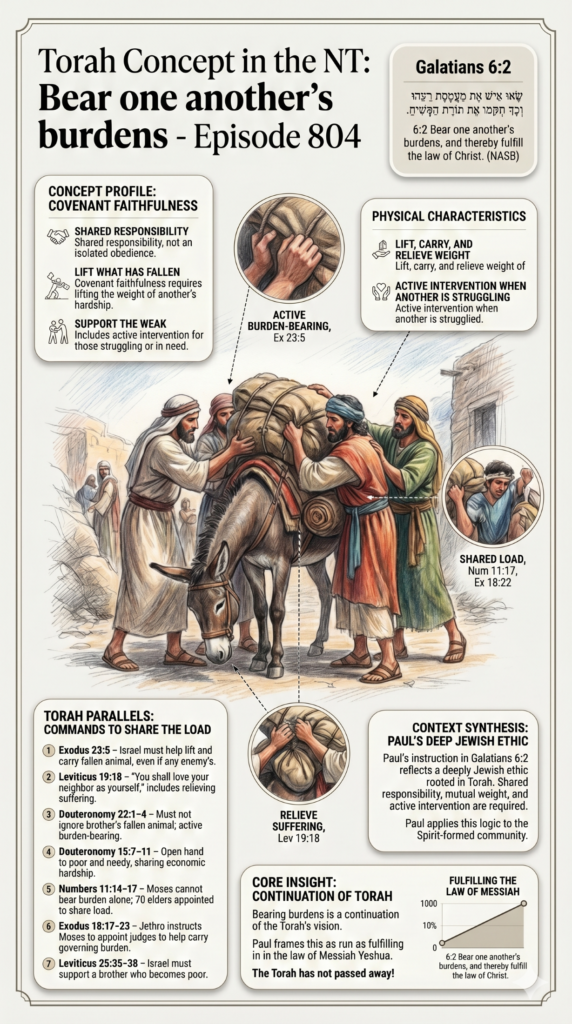
Paul’s command to “bear one another’s burdens” (Galatians 6:2) echoes long‑standing Torah principles that require Israel to lift, carry, and relieve the weight of another’s hardship. The Torah consistently frames covenant faithfulness as shared responsibility, not isolated obedience.
– Torah parallels –
- Exodus 23:5 – Israel must help lift and carry the burden of another’s fallen animal, even if the owner is an enemy.
- Leviticus 19:18 – “You shall love your neighbor as yourself,” which includes relieving the weight of another’s suffering or need.
- Deuteronomy 22:1–4 – Israel must not ignore a brother’s lost or fallen animal but must help restore and lift it, explicitly commanding active burden‑bearing.
- Deuteronomy 15:7–11 – Israel must open their hand to the poor and needy, sharing the weight of economic hardship.
- Numbers 11:14–17 – Moses confesses he cannot bear the burden of the people alone, and YHWH appoints seventy elders to share the load, establishing shared responsibility as a covenant pattern.
- Exodus 18:17–23 – Jethro instructs Moses to appoint judges to help carry the burden of governing the people, reinforcing distributed load‑bearing.
- Leviticus 25:35–38 – Israel must support a brother who becomes poor so he may “live with you,” a direct command to shoulder another’s burden of survival.
– Context Synthesis –
Paul’s instruction in Galatians 6:2 reflects a deeply Jewish ethic rooted in the Torah: covenant life requires mutual responsibility, shared weight, and active intervention when another is struggling. The Torah repeatedly commands Israel to lift what has fallen, support the weak, and refuse to ignore the burdens of others, whether physical, economic, or communal. Paul applies this same covenant logic to the Spirit‑formed community, where fulfilling the law of Messiah means embodying the same burden‑bearing love that the Torah demanded of Israel. The ethic is not new; Paul is calling the community to live out the ancient pattern revealed from Moses onward.
– Core Insight –
Bearing one another’s burdens is a continuation of the Torah’s vision of a community where no one carries their load alone. Paul frames this as fulfilling the law of Messiah Yeshua because the Messiah-centered community embodies the same shared responsibility that the Torah established as the foundation of covenant life. This is how Paul taught Torah in the NT; the Torah has not passed away!
Visual Summary of Concepts the Torah in the NT