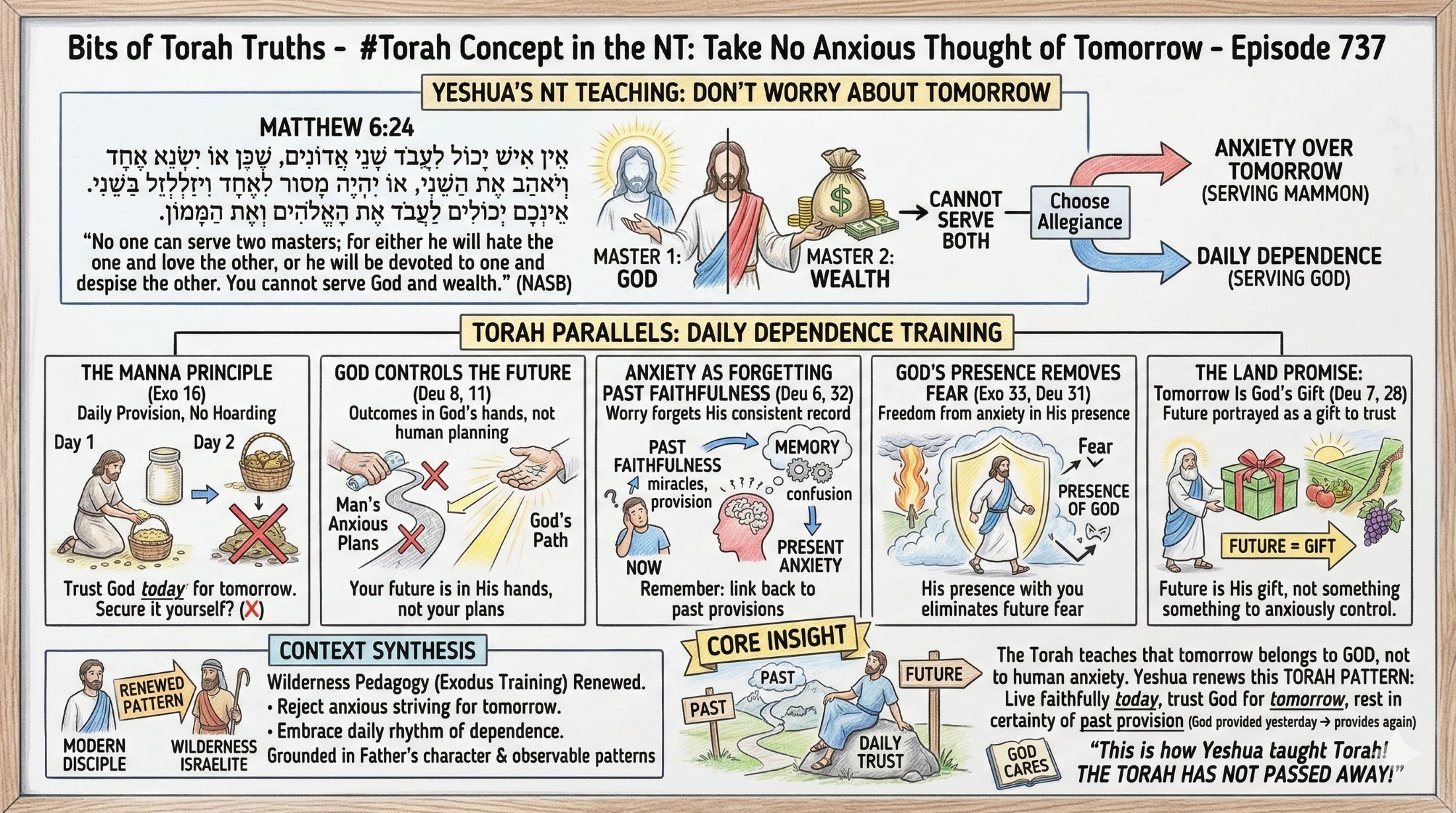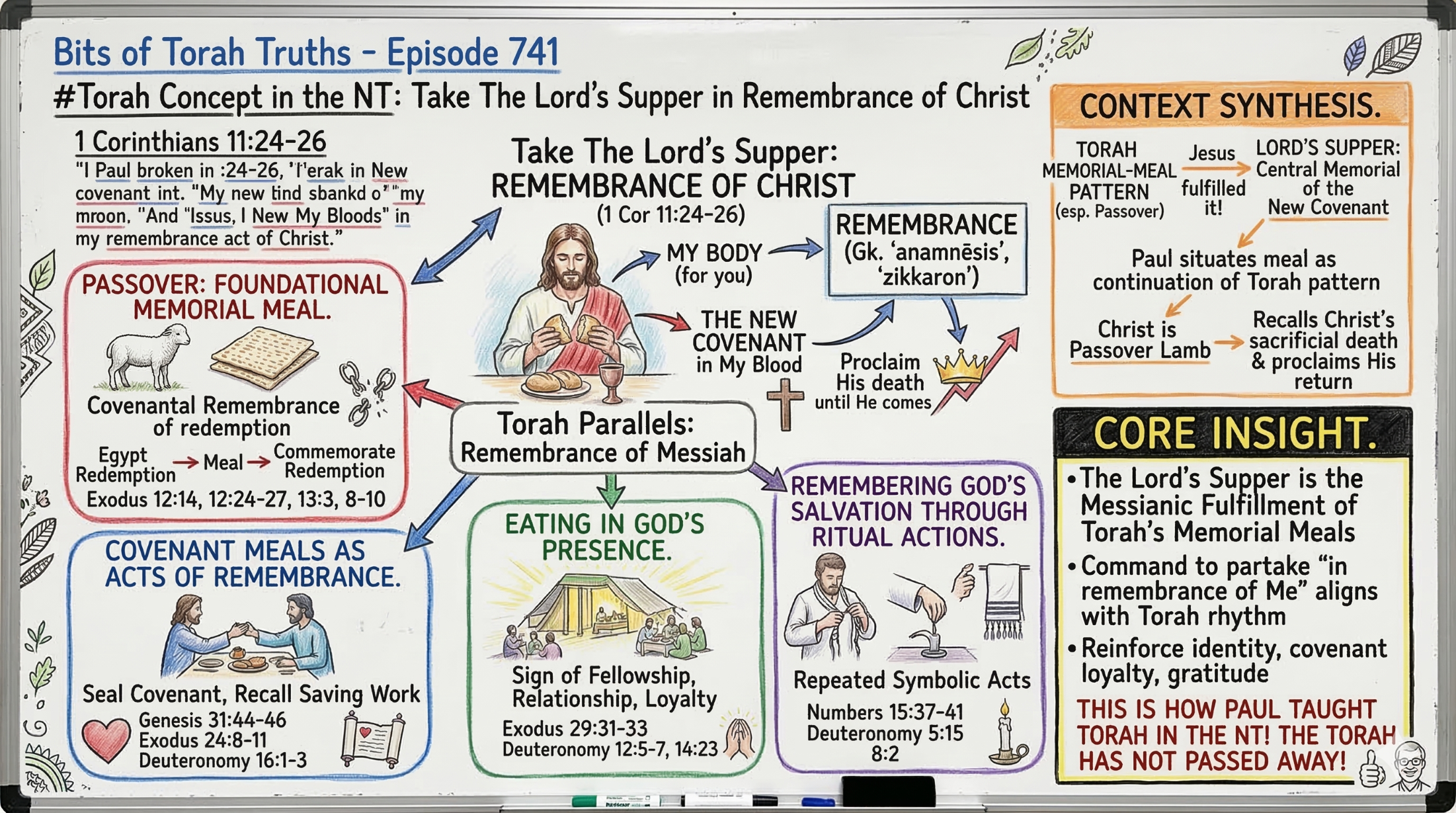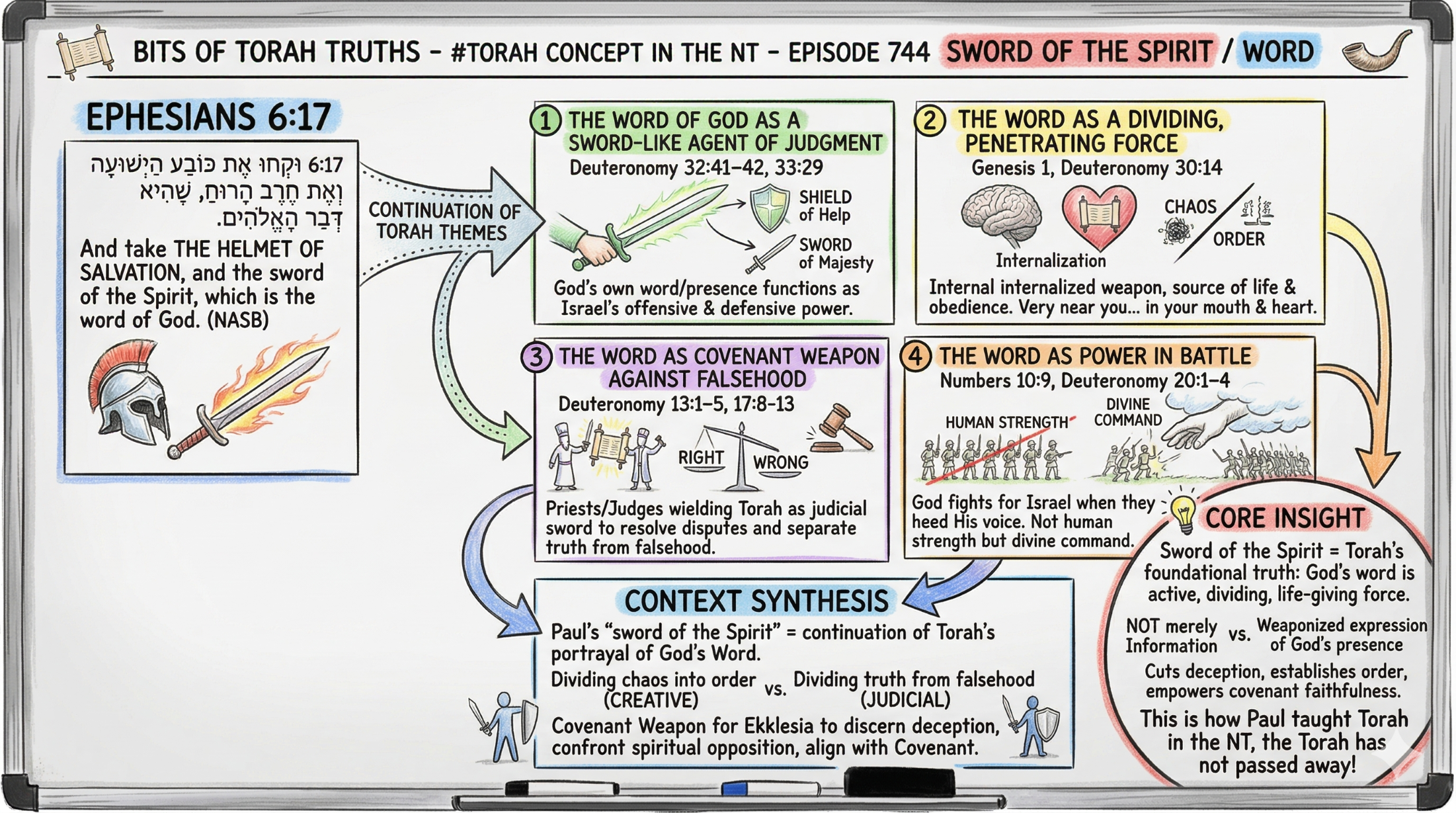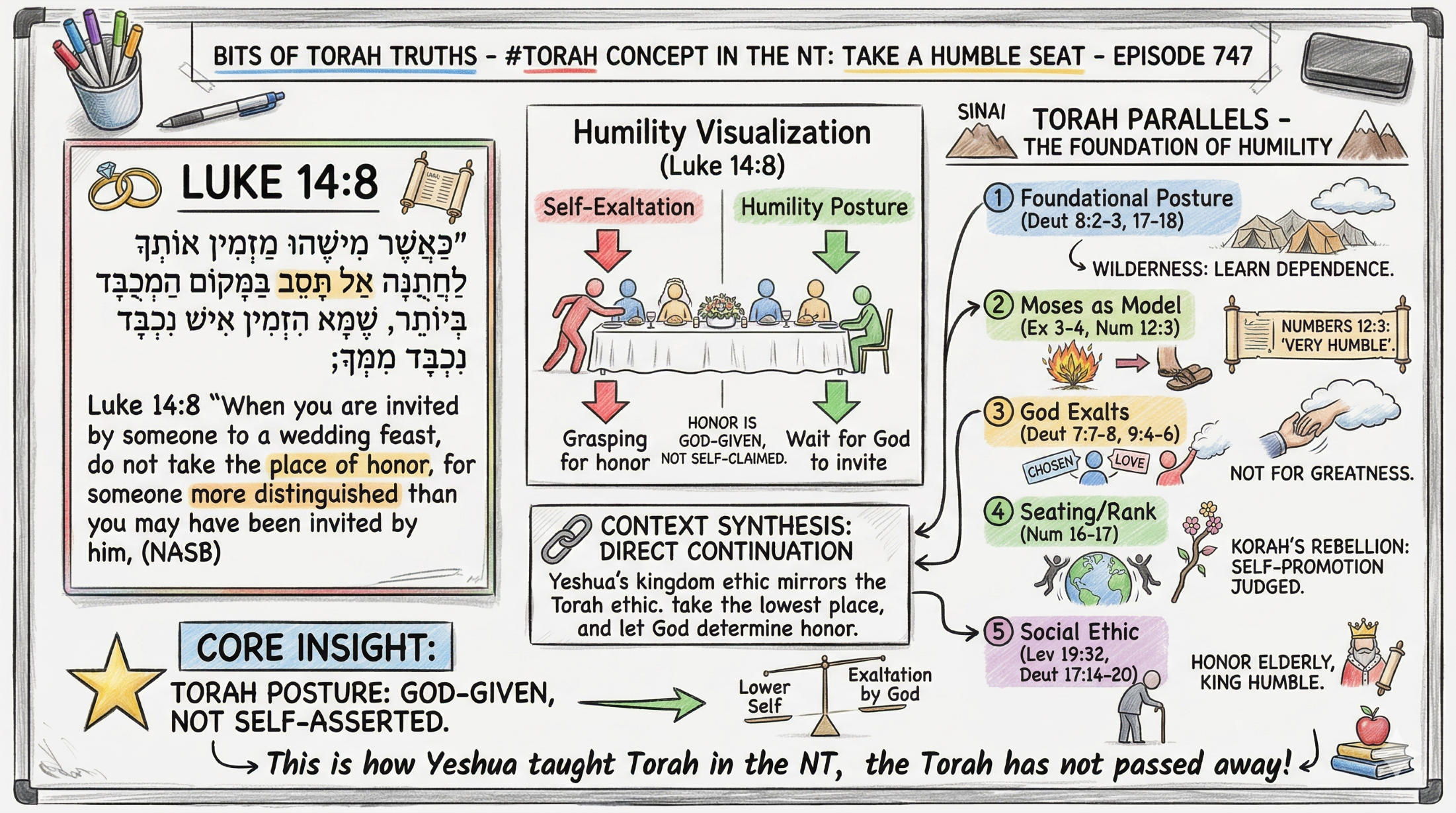
Bits of Torah Truths – #Torah Concept in the NT: You shall not Kill (murder) – Episode 771
Matthew 5:21
״שְׁמַעְתֶּם כִּי נֶאֱמַר לָרִאשׁוֹנִים ׳לֹא תִּרְצַח׳, וְ׳כָל רוֹצֵחַ חַיָּב לַעֲמֹד לְדִין׳.
Matthew 19:18
19:18 שָׁאַל הָאִישׁ׃ ״אֵיזֶה?״ הֵשִׁיב יֵשׁוּעַ׃ ״לֹא תִּרְצַח, לֹא תִּנְאַף, לֹא תִּגְנֹב, לֹא–תַעֲנֶה בְּרֵעֲךָ עֵד שָׁקֶר,
Mark 10:19
10:19 אֶת הַמִּצְווֹת אַתָּה יוֹדֵעַ׃ ׳לֹא תִרְצַח, לֹא תִנְאַף, לֹא תִגְנֹב, לֹא תַעֲנֶה בְרֵעֲךָ עֵד שָׁקֶר, לֹא תַּעֲשֹׁק, כַּבֵּד אֶת–אָבִיךָ וְאֶת–אִמֶּךָ.׳״ Luke 18:20 18:20 אֶת הַמִּצְווֹת אַתָּה יוֹדֵעַ׃ ׳לֹא תִנְאַף, לֹא תִרְצַח, לֹא תִגְנֹב, לֹא תַעֲנֶה בְרֵעֲךָ עֵד שָׁקֶר, כַּבֵּד אֶת אָבִיךָ וְאֶת אִמֶּךָ׳.״
Romans 13:9
13:9 הֵן הַמִּצְווֹת ״לֹא תִנְאַף״, ״לֹא תִרְצַח״, ״לֹא תִגְנֹב״, ״לֹא תַחְמֹד״, וְכָל מִצְוָה אַחֶרֶת, כְּלוּלוֹת בַּמַּאֲמָר ״וְאָהַבְתָּ לְרֵעֲךָ כָּמוֹךָ.״
#torah#torahwisdom#torahtruth#torahforlife#torah4you#torahtruth
Matthew 5:21
5:21 “You have heard that the ancients were told, ‘YOU SHALL NOT COMMIT MURDER’ and ‘Whoever commits murder shall be liable to the court.’ (NASB)
Matthew 19:18
19:18 Then he said to Him, “Which ones?” And Jesus said, “YOU SHALL NOT COMMIT MURDER; YOU SHALL NOT COMMIT ADULTERY; YOU SHALL NOT STEAL; YOU SHALL NOT BEAR FALSE WITNESS; (NASB)
Mark 10:19
10:19 “You know the commandments, ‘DO NOT MURDER, DO NOT COMMIT ADULTERY, DO NOT STEAL, DO NOT BEAR FALSE WITNESS, Do not defraud, HONOR YOUR FATHER AND MOTHER.’ ” (NASB)
Luke 18:20
18:20 “You know the commandments, ‘DO NOT COMMIT ADULTERY, DO NOT MURDER, DO NOT STEAL, DO NOT BEAR FALSE WITNESS, HONOR YOUR FATHER AND MOTHER.’ ” (NASB)
Romans 13:9
13:9 For this, “YOU SHALL NOT COMMIT ADULTERY, YOU SHALL NOT MURDER, YOU SHALL NOT STEAL, YOU SHALL NOT COVET,” and if there is any other commandment, it is summed up in this saying, “YOU SHALL LOVE YOUR NEIGHBOR AS YOURSELF.” (NASB)
https://www.matsati.com/index.php/category/bits-of-torah-truths/
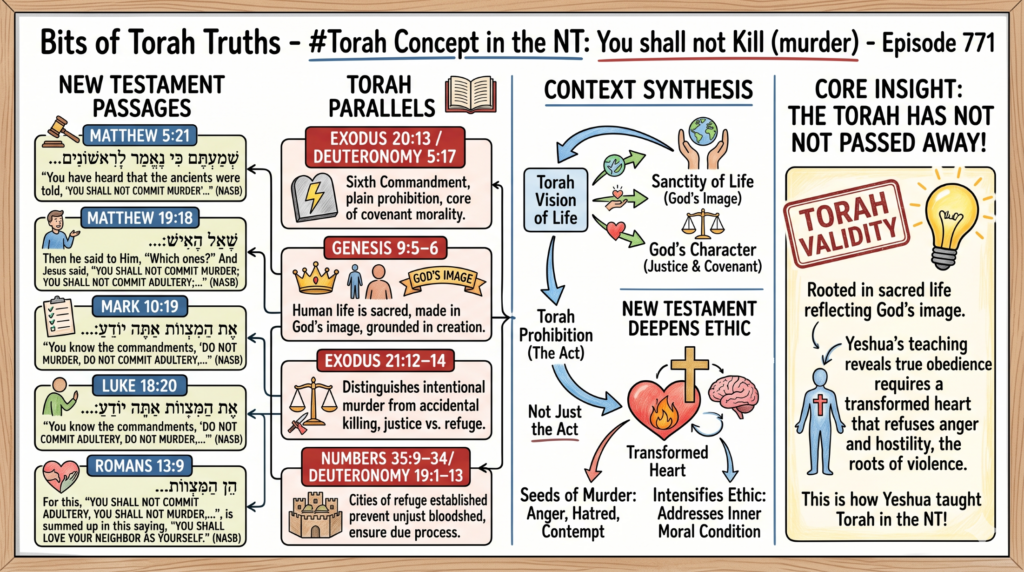
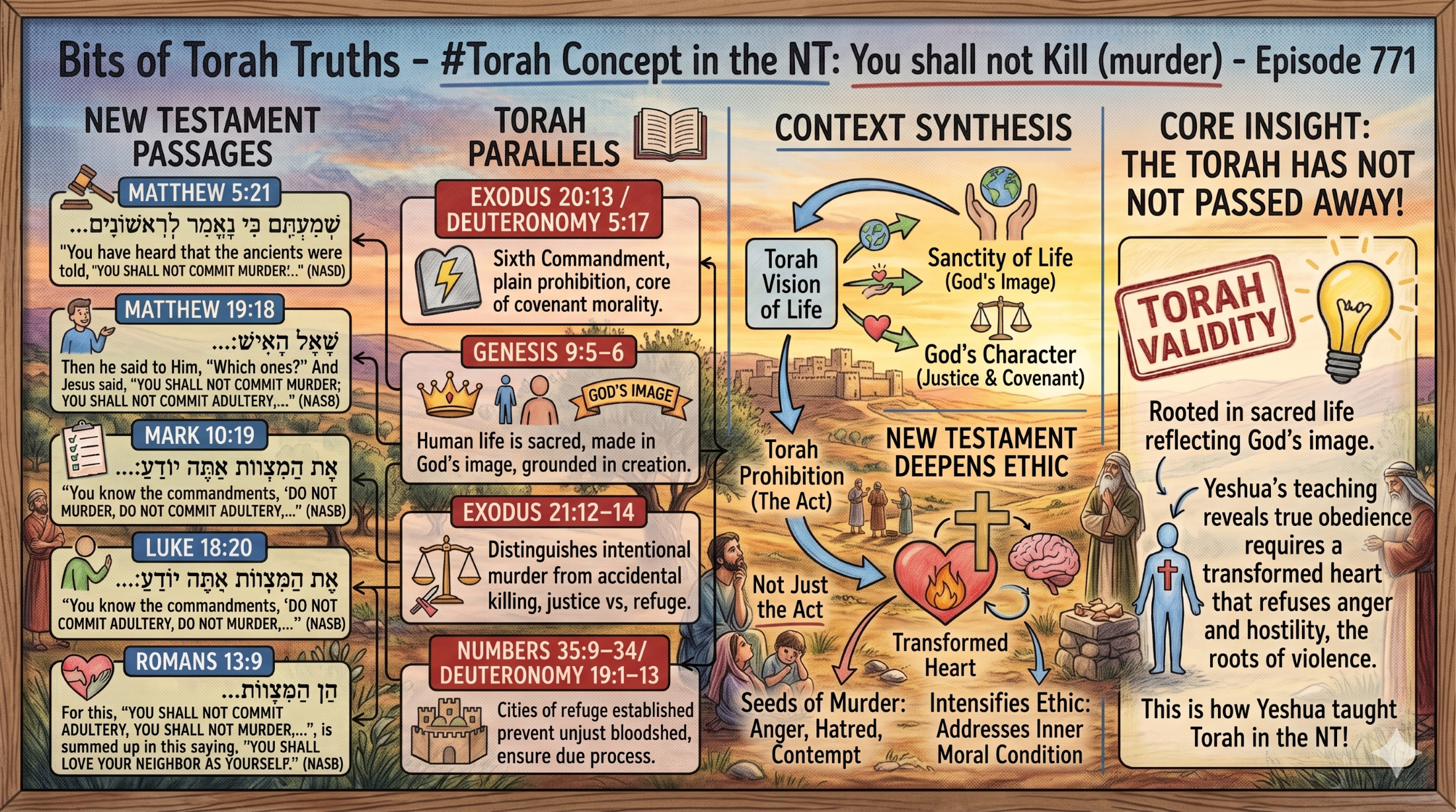
Yeshua’s reaffirmation of the command “You shall not kill (murder)” (Matt. 5:21; 19:18; Mark 10:19; Luke 18:20; Romans 13:9) directly reflects the Torah’s foundational prohibition against murder. The New Testament upholds and deepens the Torah’s ethic by addressing not only the act of murder but the inner attitudes that lead to it.
– Torah parallels –
- Exodus 20:13: The sixth commandment plainly prohibits murder, forming a core element of covenant morality.
- Deuteronomy 5:17: Moses restates the prohibition against murder as part of Israel’s renewed covenant obligations.
- Genesis 9:5–6: Human life is declared sacred because it is made in God’s image, grounding the prohibition of murder in creation itself.
- Exodus 21:12–14: The Torah distinguishes intentional murder from accidental killing, prescribing justice for the murderer and refuge for the manslayer.
- Numbers 35:9–34: Cities of refuge are established to prevent unjust bloodshed and ensure due process, reinforcing the seriousness of taking life. 6. Deuteronomy 19:1–13: Further instructions on cities of refuge emphasize God’s concern for justice, intent, and the protection of innocent life.
– Context Synthesis –
The Torah presents the prohibition of murder as a central expression of God’s character and the sanctity of human life. It not only forbids the act but establishes structures to ensure justice, prevent vengeance, and protect the innocent. Yeshua and the New Testament writers uphold this command while expanding its scope to include the heart’s disposition, showing that anger, hatred, and contempt are the seeds of murder. Thus, the New Testament does not replace the Torah’s ethic but intensifies it by addressing the internal moral condition that precedes outward violence.
– Core Insight –
The command not to kill is rooted in the Torah’s vision of life as sacred because it reflects God’s image. Yeshua’s teaching reveals that true obedience requires more than avoiding the act of murder; it demands a transformed heart that refuses the anger and hostility that give rise to violence. This is how Yeshua taught Torah in the NT; the Torah has not passed away!
Visual Summary of Concepts the Torah in the NT