Bits of Torah Truths – #Torah Concept in the NT: Think on Things pure – Episode 726
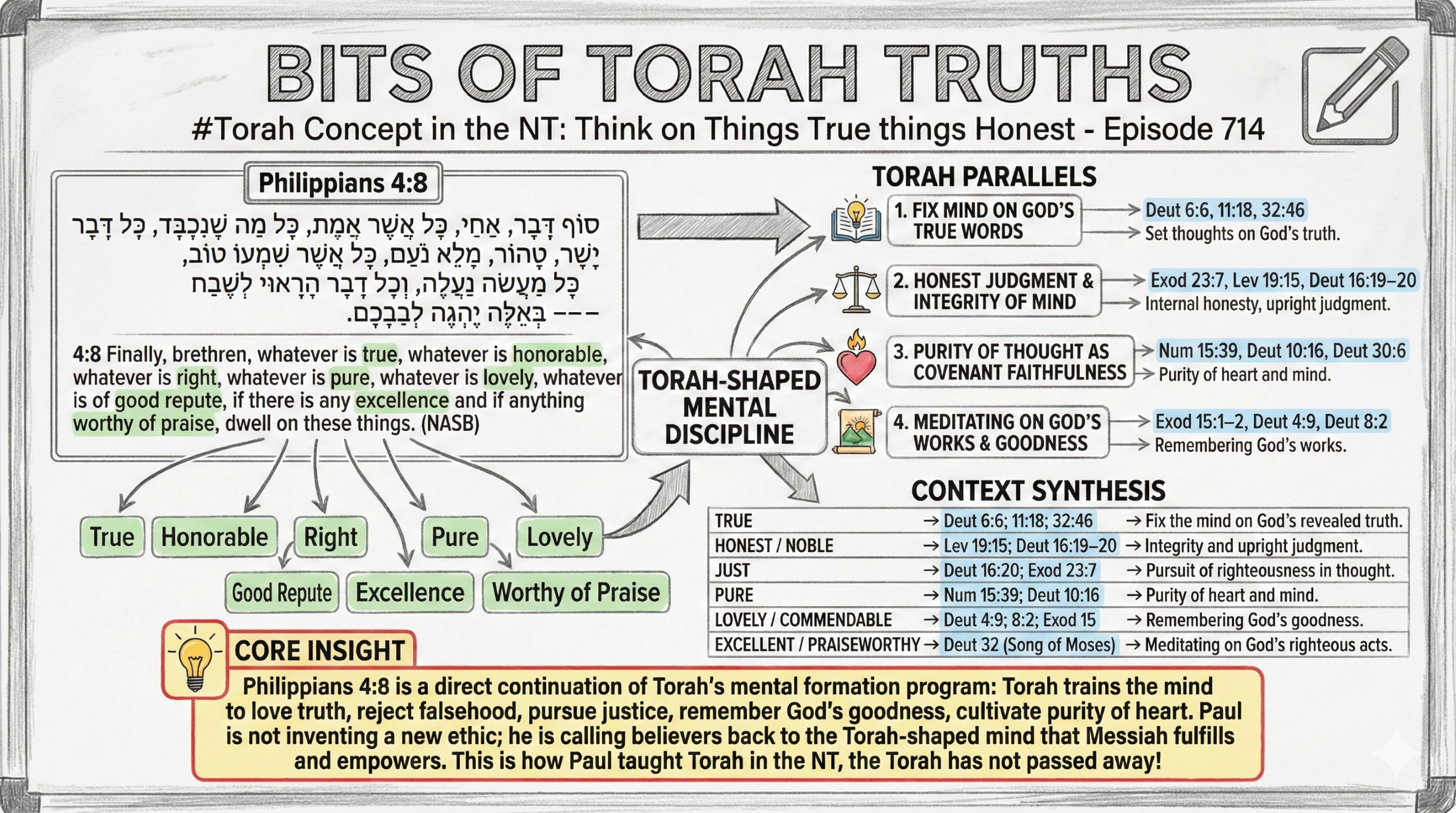
Philippians 4:8
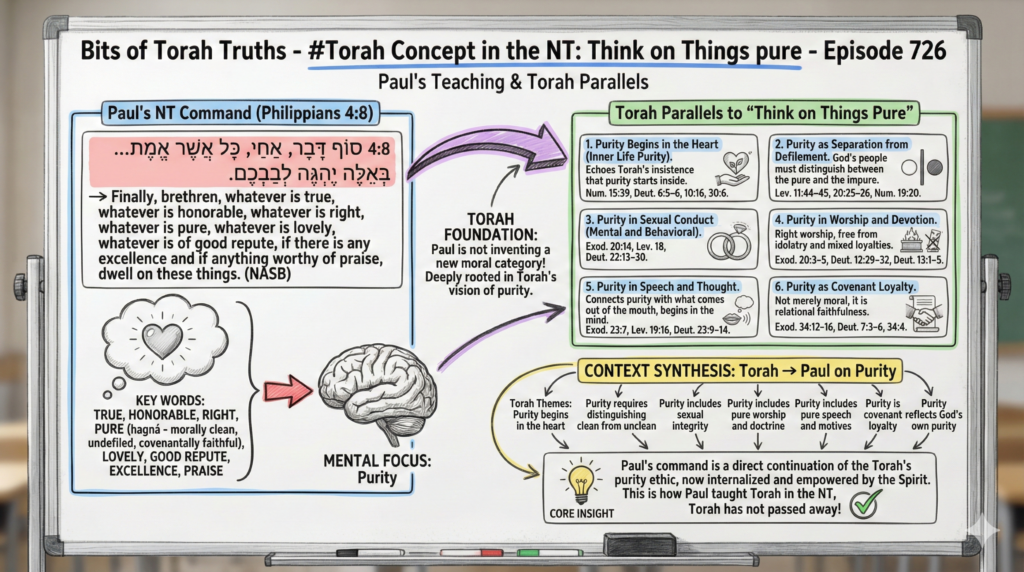
סוֹף דָּבָר, אַחַי, כָּל אֲשֶׁר אֱמֶת, כָּל מַה שֶׁנִּכְבָּד, כָּל דָּבָר יָשָׁר, טָהוֹר, מָלֵא נֹעַם, כָּל אֲשֶׁר שִׁמְעוֹ טוֹב, כָּל מַעֲשֶׂה נַעֲלֶה, וְכָל דָּבָר הָרָאוּי לְשֶׁבַח –– בְּאֵלֶּה יֶהְגֶּה לְבַבְכֶם.
#torah #torahwisdom #torahtruth #torahforlife #torah4you #torahtruth
Philippians 4:8
4:8 Finally, brethren, whatever is true, whatever is honorable, whatever is right, whatever is pure, whatever is lovely, whatever is of good repute, if there is any excellence and if anything worthy of praise, dwell on these things. (NASB)
https://www.matsati.com/index.php/category/bits-of-torah-truths/
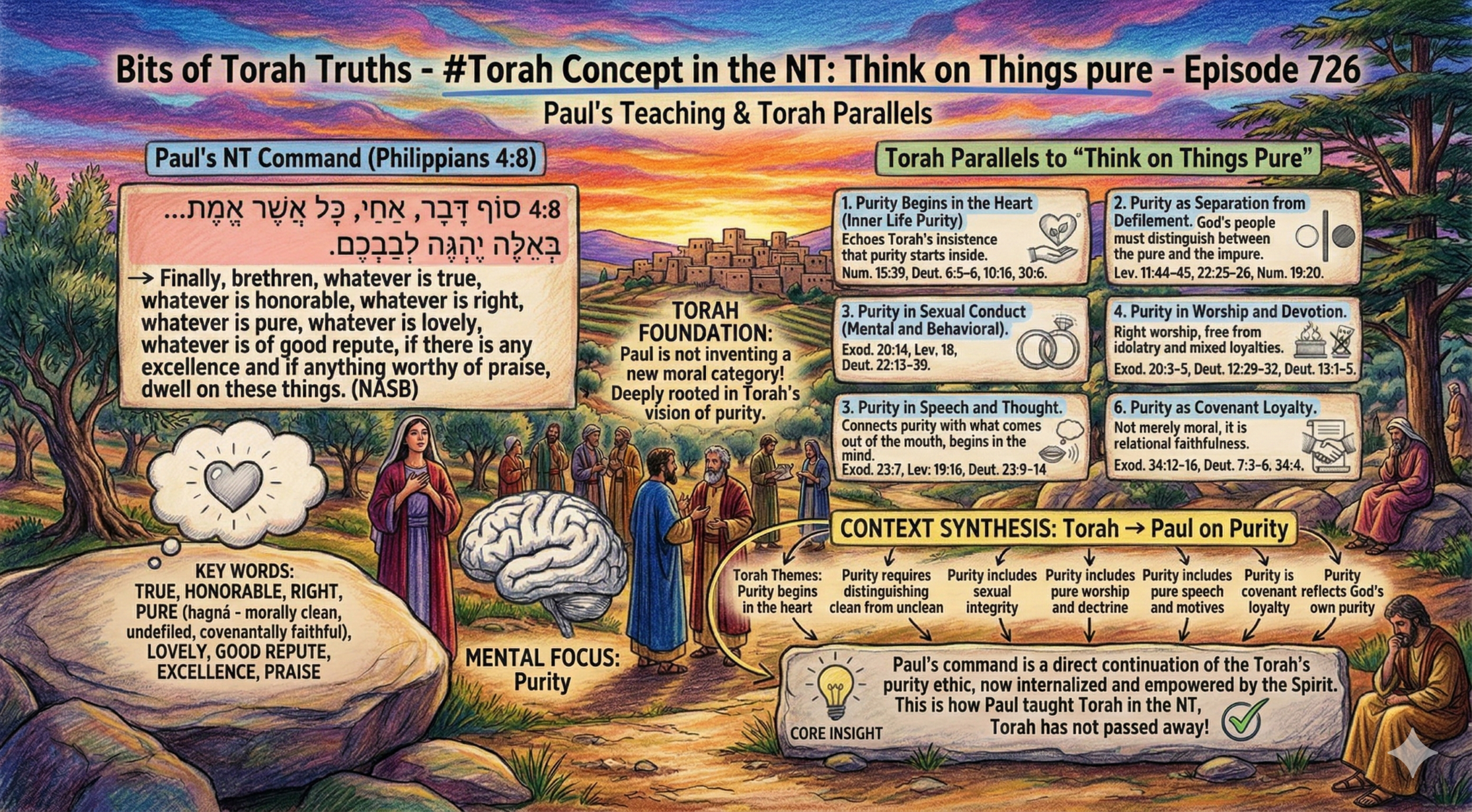
This is one of the richest Torah contexts where Paul connects the Torah to Philippians 4:8. When Paul says: “Think on things pure” (Philippians 4:8) he uses the Greek word hagná meaning morally clean, undefiled, ritually pure, covenantal faithfulness. This concept is deeply rooted in the Torah’s vision of purity of heart, purity of worship, and purity of conduct.
– Torah Parallels to “Think on Things Pure” (Philippians 4:8) –
- Purity Begins in the Heart (Inner Life Purity). Paul’s emphasis on mental purity echoes the Torah’s insistence that purity starts inside, not merely in ritual actions. Num. 15:39, Deut. 6:5–6, 10:16, 30:6.
- Purity as Separation from Defilement. The Torah repeatedly teaches that God’s people must distinguish between the pure and the impure. Lev. 11:44–45, 20:25–26, Num. 19:20.
- Purity in Sexual Conduct (Mental and Behavioral). Exod. 20:14, Lev. 18, Deut. 22:13–30.
- Purity in Worship and Devotion. Purity in Torah is also about right worship, free from idolatry and mixed loyalties. Exod. 20:3–5, Deut. 12:29–32, Deut. 13:1–5.
- Purity in Speech and Thought. Torah repeatedly connects purity with what comes out of the mouth, which begins in the mind. Exod. 23:7, Lev. 19:16, Deut. 23:9–14.
- Purity as Covenant Loyalty. Purity in Torah is not merely moral; it is relational faithfulness. Exod. 34:12–16, Deut. 7:3–6, 34:4.
– Context synthesis –
Torah → Paul on Purity: Torah Themes:
- Purity begins in the heart: Deuteronomy 10:16, Deuteronomy 30:6, Deuteronomy 6:5–6, Numbers 15:39
- Purity requires distinguishing clean from unclean: Leviticus 10:10, Leviticus 11, Leviticus 12–15, Deuteronomy 14:3–21
- Purity includes sexual integrity: Leviticus 18, Leviticus 20:10–21, Deuteronomy 22:13–30, Genesis 39:7–12
- Purity includes pure worship and doctrine: Deuteronomy 12:1–4, Deuteronomy 12:29–32, Exodus 20:3–5, Deuteronomy 13:1–5, Deuteronomy 6:4–5
- Purity includes pure speech and motives: Exodus 20:16, Leviticus 19:11–12, Deuteronomy 23:21–23, Deuteronomy 15:9, Deuteronomy 32:4
- Purity is covenant loyalty: Exodus 19:5–6, Deuteronomy 7:9–11, Deuteronomy 10:12–13, Deuteronomy 29:18, Numbers 25:1–13
- Purity reflects God’s own purity: Leviticus 11:44–45, Leviticus 19:2, Deuteronomy 32:4, Exodus 34:6–7, Deuteronomy 32:46–47
– Core Insight –
Paul’s command is a direct continuation of the Torah’s purity ethic, now internalized and empowered by the Spirit. This is how Paul taught Torah in the NT, the Torah has not passed away!
Visual Summary of Concepts the Torah in the NT