Bits of Torah Truths – #Torah Concept in the NT: Think on Things of Virtue – Episode 729
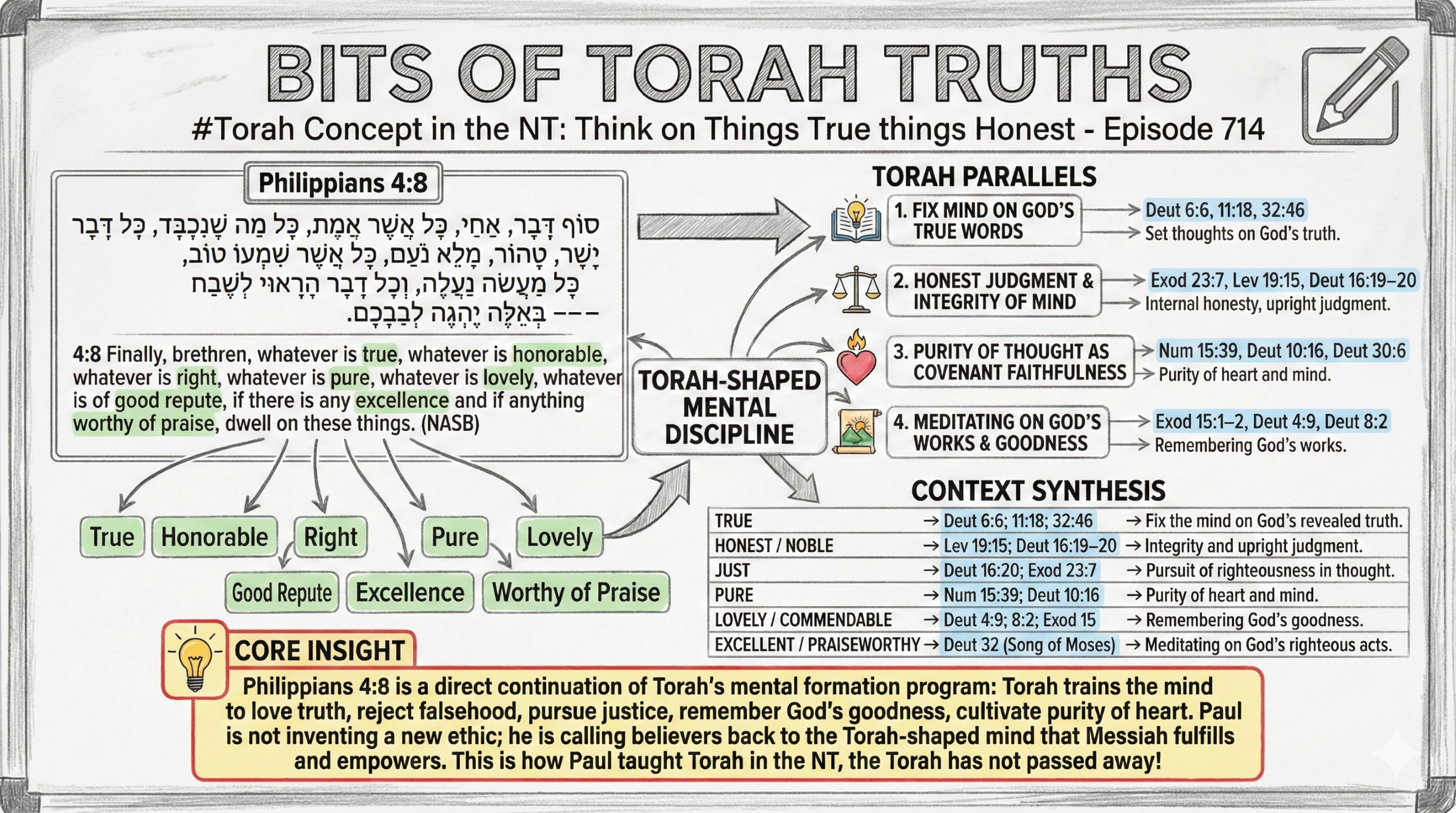
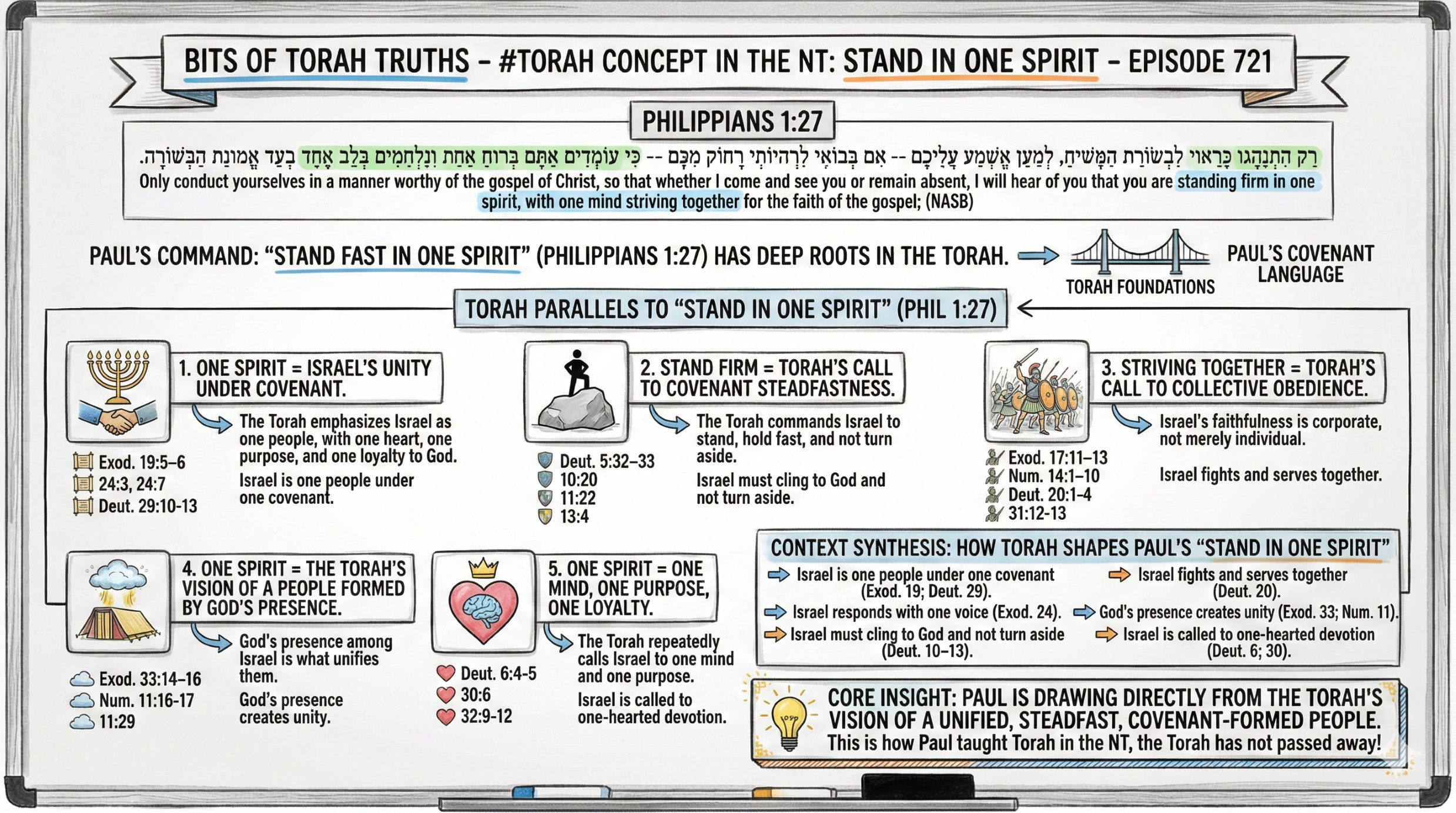
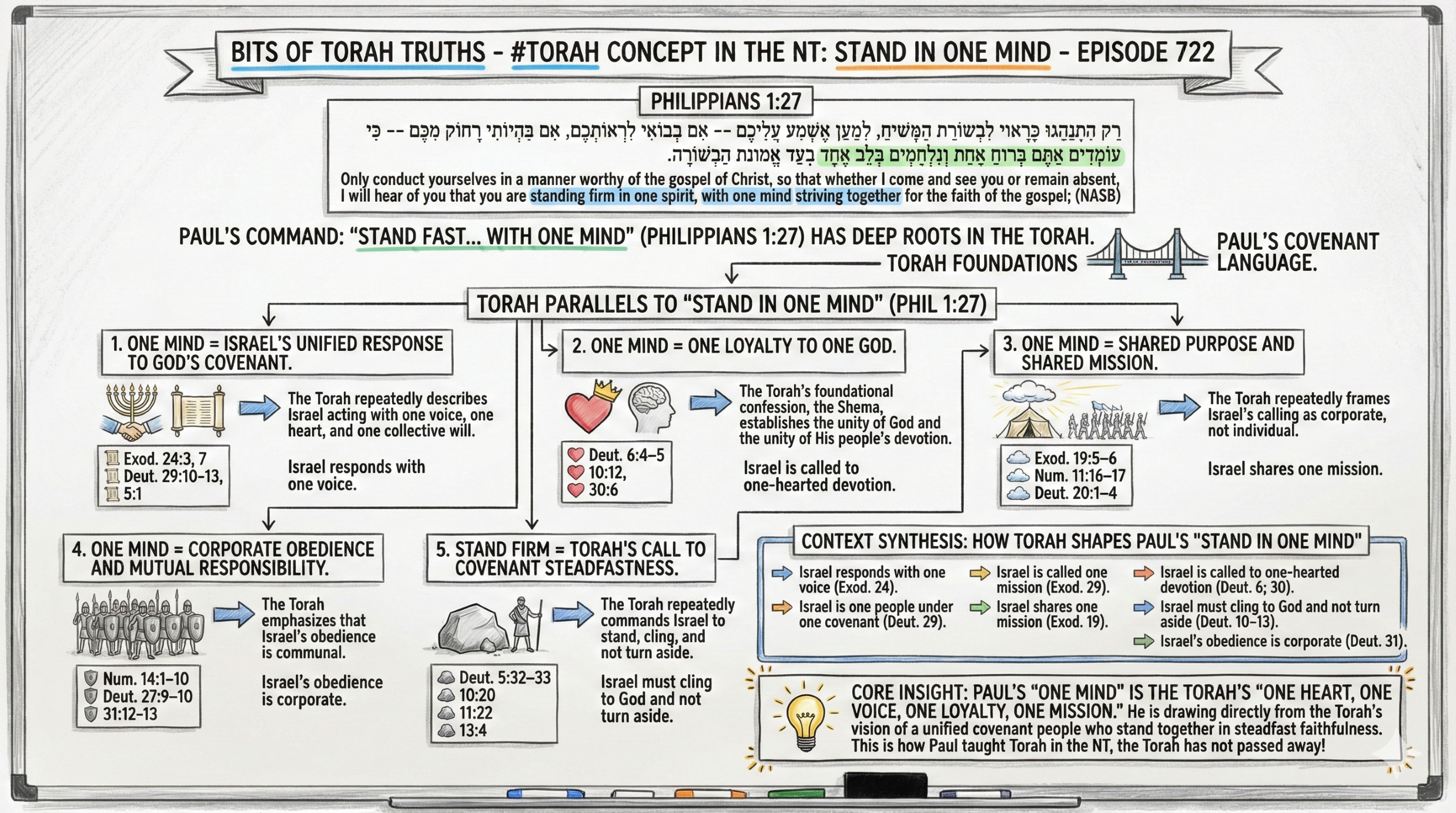
Philippians 4:8
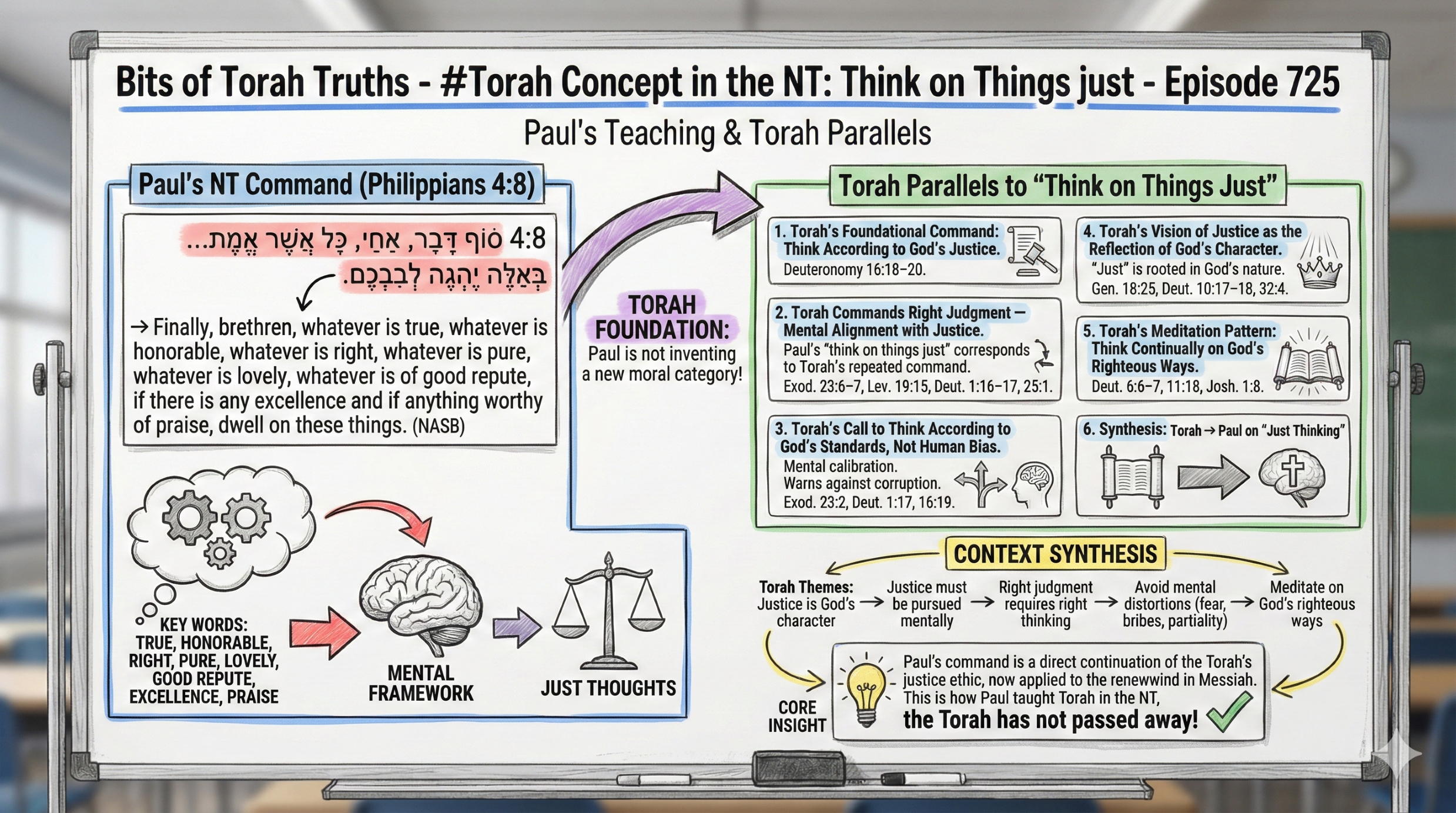
סוֹף דָּבָר, אַחַי, כָּל אֲשֶׁר אֱמֶת, כָּל מַה שֶׁנִּכְבָּד, כָּל דָּבָר יָשָׁר, טָהוֹר, מָלֵא נֹעַם, כָּל אֲשֶׁר שִׁמְעוֹ טוֹב, כָּל מַעֲשֶׂה נַעֲלֶה, וְכָל דָּבָר הָרָאוּי לְשֶׁבַח –– בְּאֵלֶּה יֶהְגֶּה לְבַבְכֶם.
#torah#torahwisdom#torahtruth#torahforlife#torah4you#torahtruth
Philippians 4:8
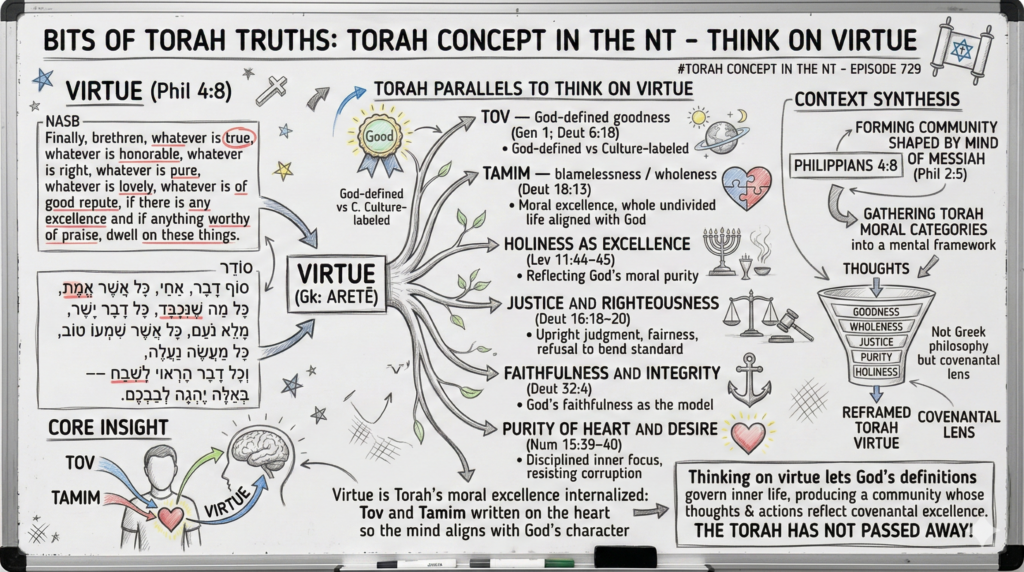
4:8 Finally, brethren, whatever is true, whatever is honorable, whatever is right, whatever is pure, whatever is lovely, whatever is of good repute, if there is any excellence and if anything worthy of praise, dwell on these things. (NASB)
https://www.matsati.com/index.php/category/bits-of-torah-truths/
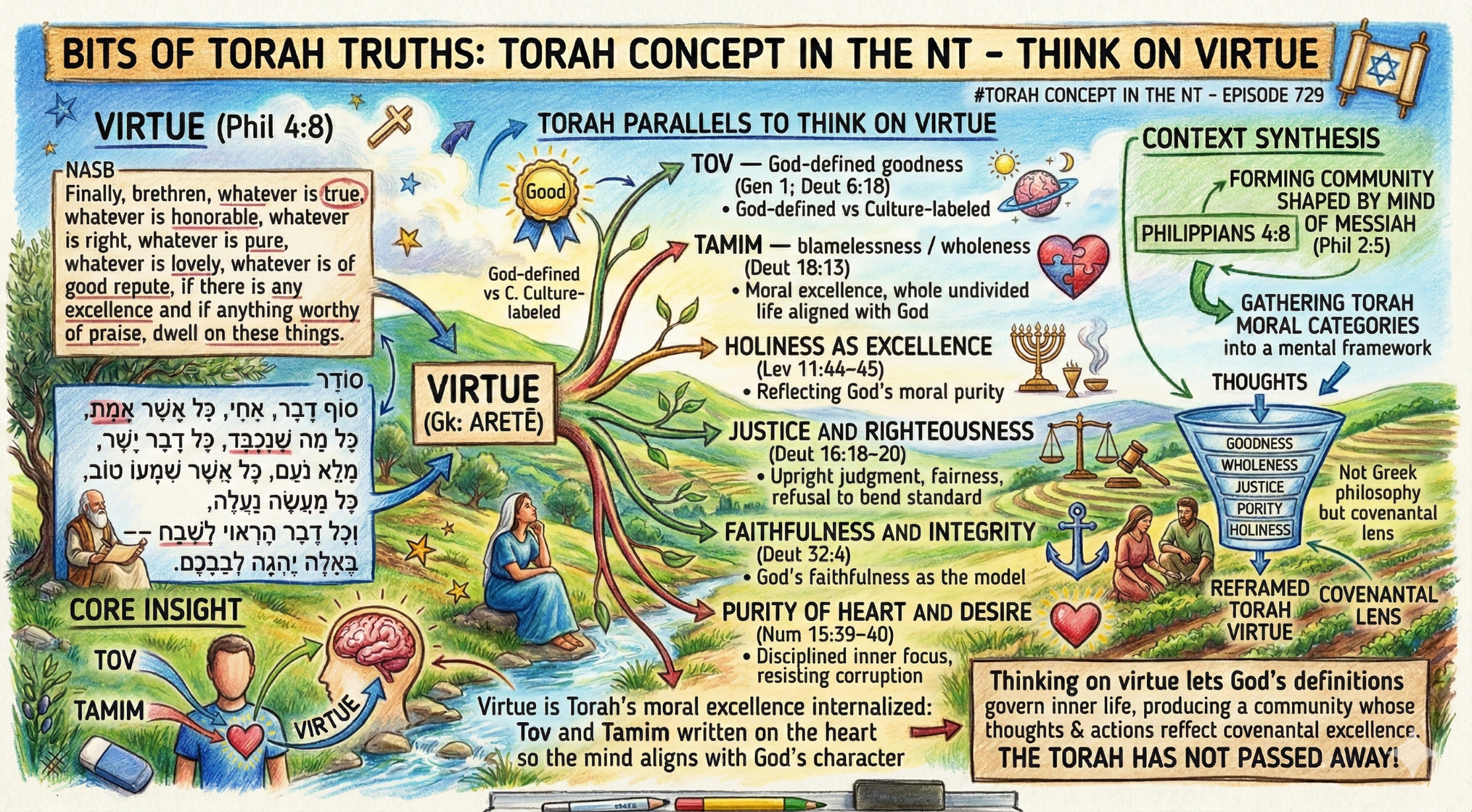
Paul’s call to think on “virtue” (Phil. 4:8, Greek aretē) draws directly from the Torah’s categories of tov (goodness), tamim (blamelessness), justice, purity, and covenantal holiness. In Paul’s mind, virtue is not abstract morality but the inner excellence defined by God’s own character and revealed through the Torah.
– Torah Parallels to Think on Virtue –
- Tov — God‑defined goodness (Gen 1; Deut 6:18): Virtue begins with what God Himself calls good, not what culture labels as good.
- Tamim — blamelessness / wholeness (Deut 18:13): The Torah’s central word for moral excellence; a life whole, undivided, and aligned with God.
- Holiness as excellence (Lev 11:44–45): Virtue is rooted in God’s holiness—Israel is called to reflect His moral purity.
- Justice and righteousness (Deut 16:18–20): Virtue includes upright judgment, fairness, and the refusal to bend the standard.
- Faithfulness and integrity (Deut 32:4): God’s own faithfulness becomes the model for Israel’s moral excellence.
- Purity of heart and desire (Num 15:39–40): Virtue requires disciplined inner focus, resisting the pull of the heart and eyes toward corruption.
– Context Synthesis –
Philippians 4:8 sits within Paul’s larger project of forming a community shaped by the mind of Messiah (Phil 2:5). When Paul uses the word aretē, he is not importing Greek philosophy but gathering the Torah’s moral categories [goodness, wholeness, justice, purity, and holiness] into a single mental framework. The Philippians are to filter their thoughts through the same covenantal lens Israel was given: think on what God calls excellent, not what the surrounding culture celebrates. Virtue, then, is the Torah’s moral excellence reframed for a Messianic community living among the nations.
– Core Insight –
Virtue in Paul is the Torah’s moral excellence internalized: tov and tamim written on the heart so that the mind becomes aligned with God’s character. Thinking on virtue means letting God’s definitions of goodness, purity, justice, and wholeness govern the inner life, producing a community whose thoughts and actions reflect the covenantal excellence of the God they serve. This is how Paul taught Torah in the NT, the Torah has not passed away!
Visual Summary of Concepts the Torah in the NT