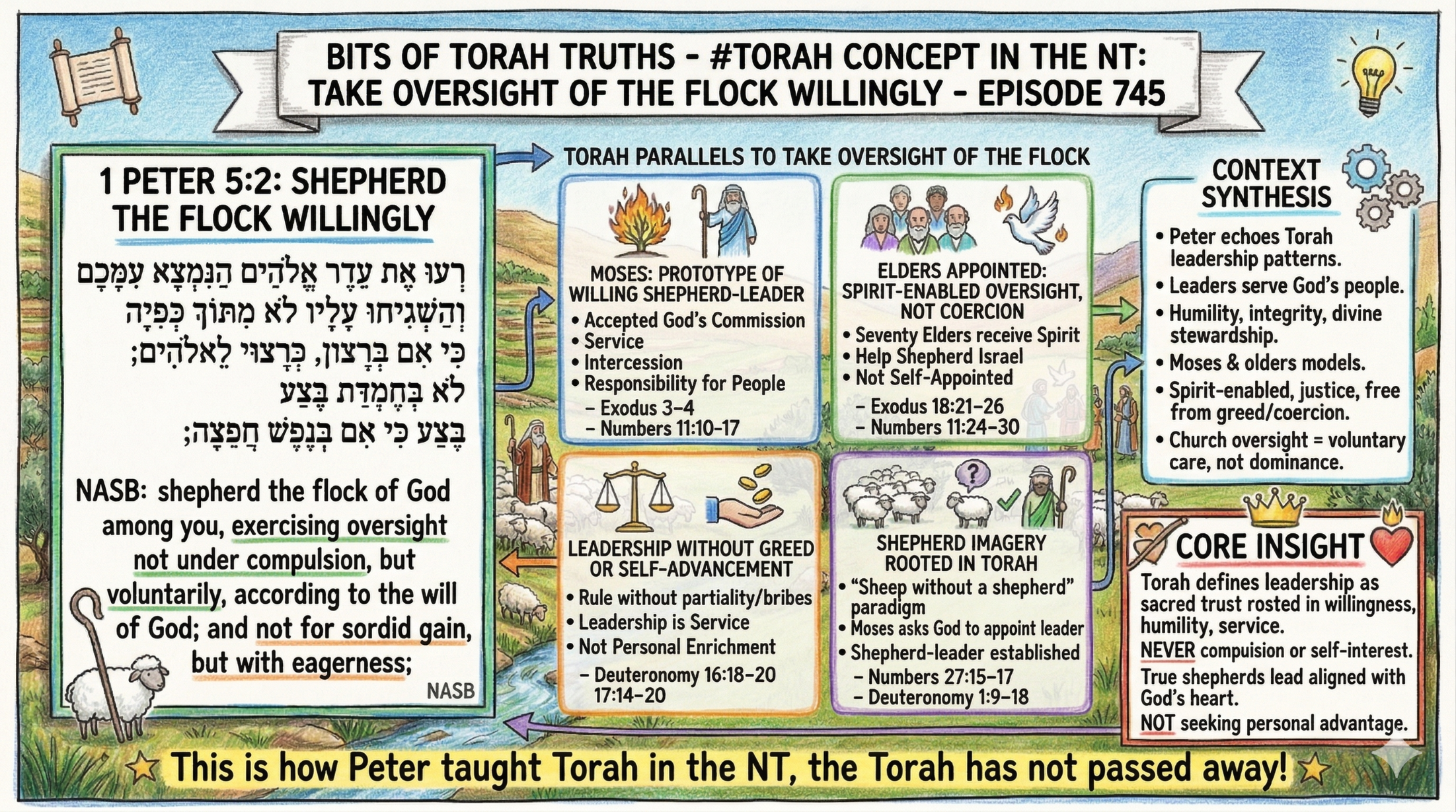
Bits of Torah Truths – #Torah Concept in the NT: Take Oversight of the flock willingly – Episode 745
1 Peter 5:2
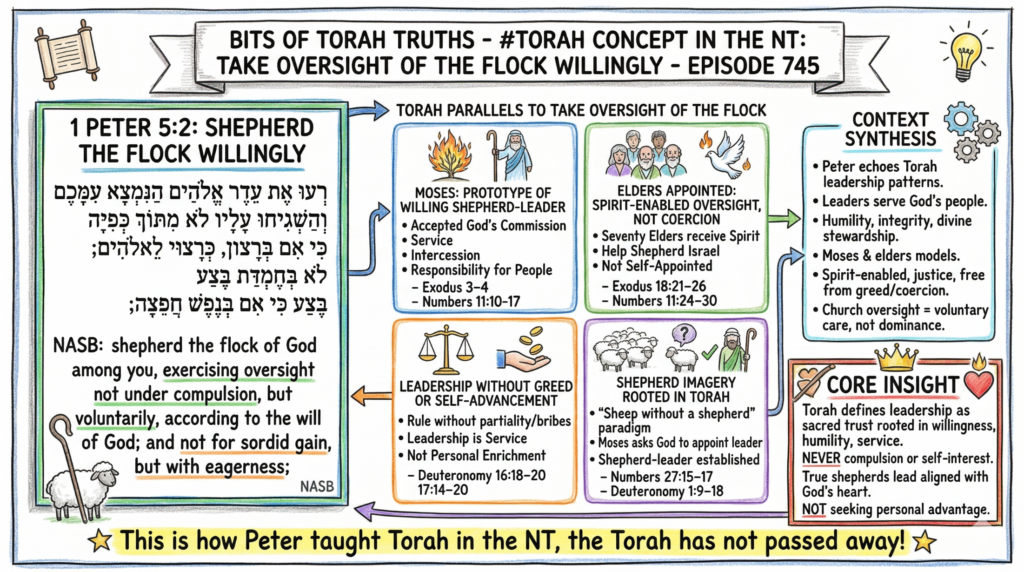
רְעוּ אֶת עֵדֶר אֱלֹהִים הַנִּמְצָא עִמָּכֶם וְהַשְׁגִיחוּ עָלָיו לֹא מִתּוֹךְ כְּפִיָּה כִּי אִם בְּרָצוֹן, כְּרָצוּי לֵאלֹהִים; לֹא בְּחֶמְדַּת בֶּצַע כִּי אִם בְּנֶפֶשׁ חֲפֵצָה;
#torah #torahwisdom #torahtruth #torahforlife #torah4you #torahtruth
1 Peter 5:2
5:2 shepherd the flock of God among you, exercising oversight not under compulsion, but voluntarily, according to the will of God; and not for sordid gain, but with eagerness; (NASB)
https://www.matsati.com/index.php/category/bits-of-torah-truths/
Peter’s call for elders to shepherd God’s flock willingly (1 Peter 5:2) reflects the Torah’s model of leadership rooted in voluntary service, humility, and responsibility before God. The Torah consistently frames true leadership as a stewardship of God’s people, not a pursuit of personal gain or power.
– Torah Parallels to Take Oversight of the Flock –
- Moses as the Prototype of Willing Shepherd‑Leadership Exodus 3–4, Numbers 11:10-17 Moses is called to shepherd Israel, not by compulsion but by accepting God’s commission; his leadership is defined by service, intercession, and responsibility for the people.
- Elders Appointed to Shepherd the People Exodus 18:21–26, Numbers 11:24–30 The seventy elders receive the Spirit to help shepherd Israel, showing that oversight is Spirit‑enabled, not self‑appointed or coerced.
- Leadership Without Greed or Self‑Advancement Deuteronomy 16:18–20, 17:14–20 Judges and officers must rule without partiality or bribes; leadership is service, not personal enrichment.
- Shepherd Imagery Rooted in Torah Numbers 27:15–17, Deuteronomy 1:9–18 Moses asks God to appoint a leader so Israel will not be “as sheep without a shepherd,” establishing the shepherd‑leader paradigm Peter draws upon.
– Context Synthesis –
Peter’s instruction that elders shepherd the flock “not by compulsion, but willingly” echoes the Torah’s foundational leadership patterns. In the Torah, leaders are chosen to serve God’s people with humility, integrity, and a sense of divine stewardship. Moses and the elders exemplify leadership that is Spirit‑enabled, justice‑oriented, and free from greed or coercion. Peter reframes this same covenantal leadership model for the early church: oversight is not a position of dominance but a voluntary, God‑centered act of care for the community.
– Core Insight –
The Torah establishes leadership as a sacred trust rooted in willingness, humility, and service, never compulsion or self‑interest. Peter’s exhortation simply reaffirms this ancient pattern: true shepherds lead because they are aligned with God’s heart for His people, not because they seek personal advantage. This is how Peter taught Torah in the NT, the Torah has not passed away!
Visual Summary of Concepts the Torah in the NT