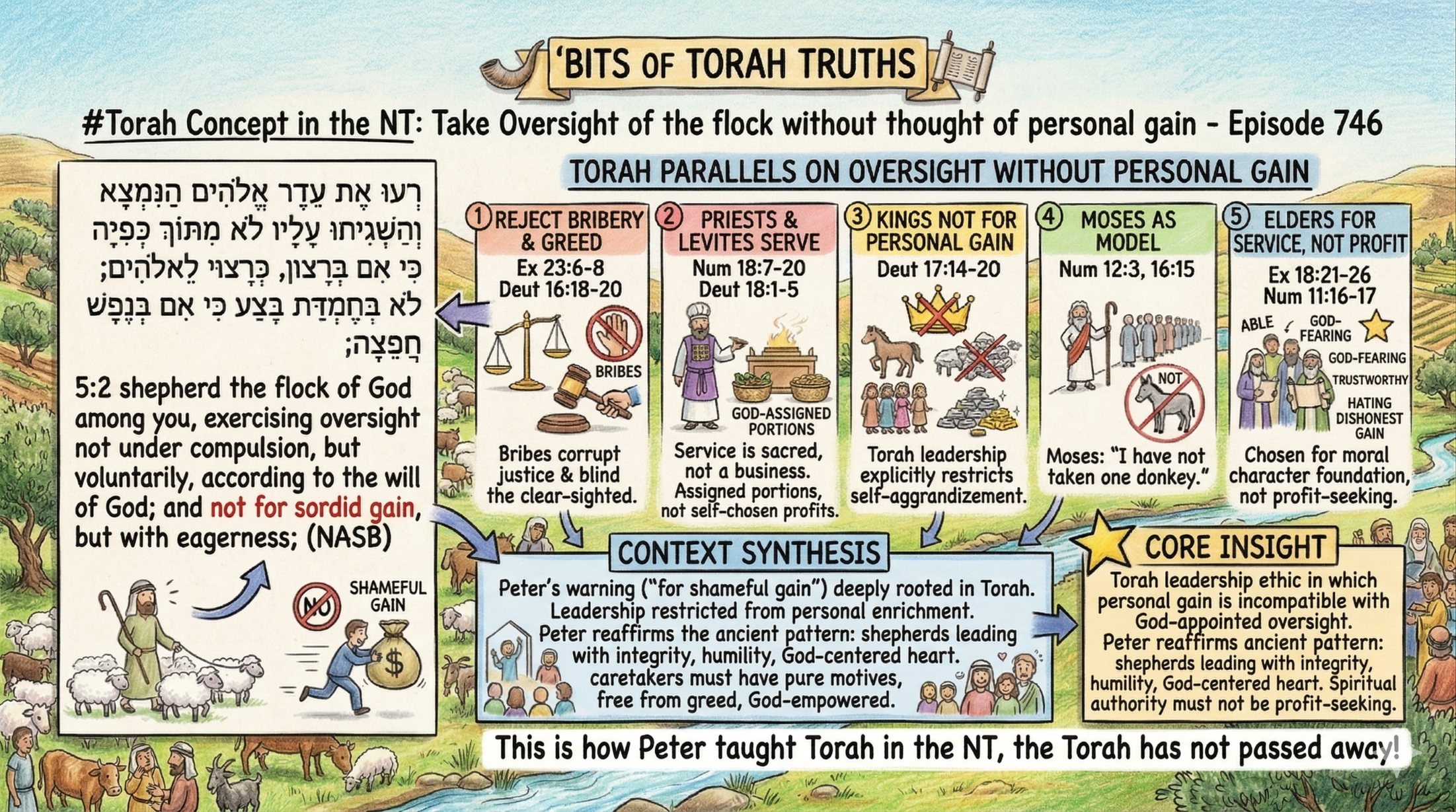
Bits of Torah Truths – #Torah Concept in the NT: Take Oversight of the flock w/o thought of personal gain – Episode 746
1 Peter 5:2
רְעוּ אֶת עֵדֶר אֱלֹהִים הַנִּמְצָא עִמָּכֶם וְהַשְׁגִיחוּ עָלָיו לֹא מִתּוֹךְ כְּפִיָּה כִּי אִם בְּרָצוֹן, כְּרָצוּי לֵאלֹהִים; לֹא בְּחֶמְדַּת בֶּצַע כִּי אִם בְּנֶפֶשׁ חֲפֵצָה;
#torah #torahwisdom #torahtruth #torahforlife #torah4you #torahtruth
1 Peter 5:2
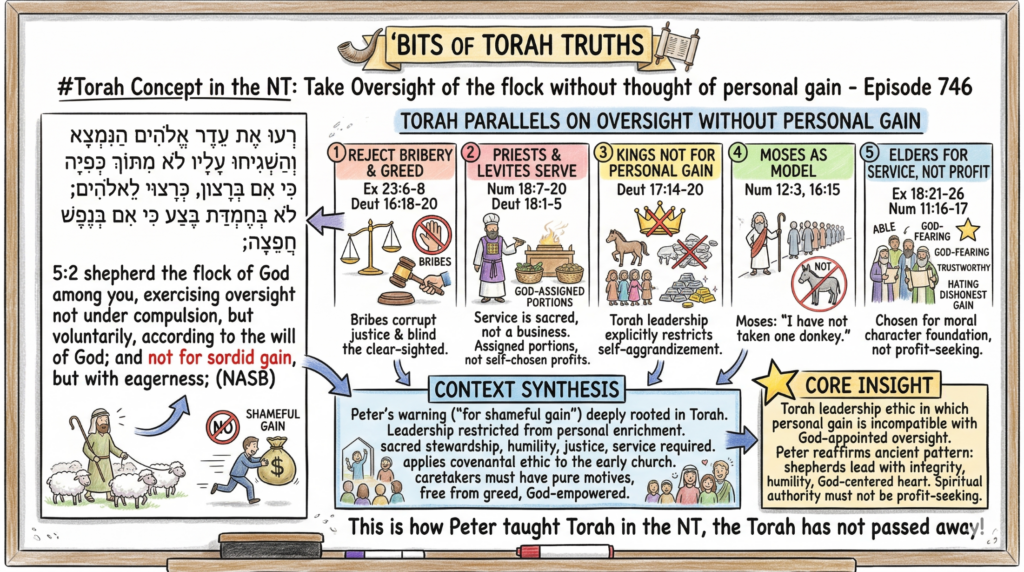
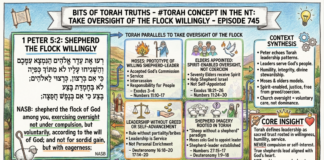
5:2 shepherd the flock of God among you, exercising oversight not under compulsion, but voluntarily, according to the will of God; and not for sordid gain, but with eagerness; (NASB)
https://www.matsati.com/index.php/category/bits-of-torah-truths/
Peter’s instruction that leaders shepherd God’s flock “not for dishonest gain” (1 Peter 5:2) echoes the Torah’s insistence that leadership must be free from greed, bribery, and self‑advancement. The Torah consistently frames leadership as a sacred trust in which personal profit is forbidden and justice, humility, and service are required.
– Torah Parallels on Oversight without Personal Gain –
- Leadership Must Reject Bribery and Greed Exodus 23:6–8, Deuteronomy 16:18–20 Leaders must not take bribes, because bribes “blind the clear‑sighted” and corrupt justice. Oversight is incompatible with personal gain.
- Priests and Levites Serve Without Exploiting the People Numbers 18:7–20, Deuteronomy 18:1–5 Priests and Levites receive God‑assigned portions, not self‑chosen profits; their service is sacred, not a business.
- Kings Must Not Use Their Position for Personal Gain Deuteronomy 17:14–20 The king must not multiply horses, wives, or silver and gold for himself. Torah leadership is explicitly restricted from self‑aggrandizement.
- Moses as the Model of Non‑Exploitative Leadership Numbers 12:3, 16:15 Moses declares, “I have not taken one donkey from them,” emphasizing that true leadership refuses personal gain.
- Elders Appointed for Service, Not Profit Exodus 18:21–26, Numbers 11:16–17 Leaders are chosen for character: able, God‑fearing, trustworthy, and hating dishonest gain. This is the exact moral foundation Peter draws upon.
– Context Synthesis –
Peter’s warning against shepherding “for shameful gain” is deeply rooted in the Torah’s vision of leadership. The Torah repeatedly restricts leaders, judges, priests, kings, and elders from using their position for personal enrichment. Instead, leadership is framed as a sacred stewardship under God’s authority, marked by humility, justice, and service. Peter applies this same covenantal ethic to the early church: leaders must care for God’s people with pure motives, free from greed, and empowered by God rather than driven by self‑interest.
– Core Insight –
The Torah establishes a leadership ethic in which personal gain is incompatible with God‑appointed oversight. Peter’s instruction simply reaffirms this ancient pattern: shepherds must lead with integrity, humility, and a God‑centered heart, refusing to turn spiritual authority into a means of profit. This is how Peter taught Torah in the NT, the Torah has not passed away!
Visual Summary of Concepts the Torah in the NT