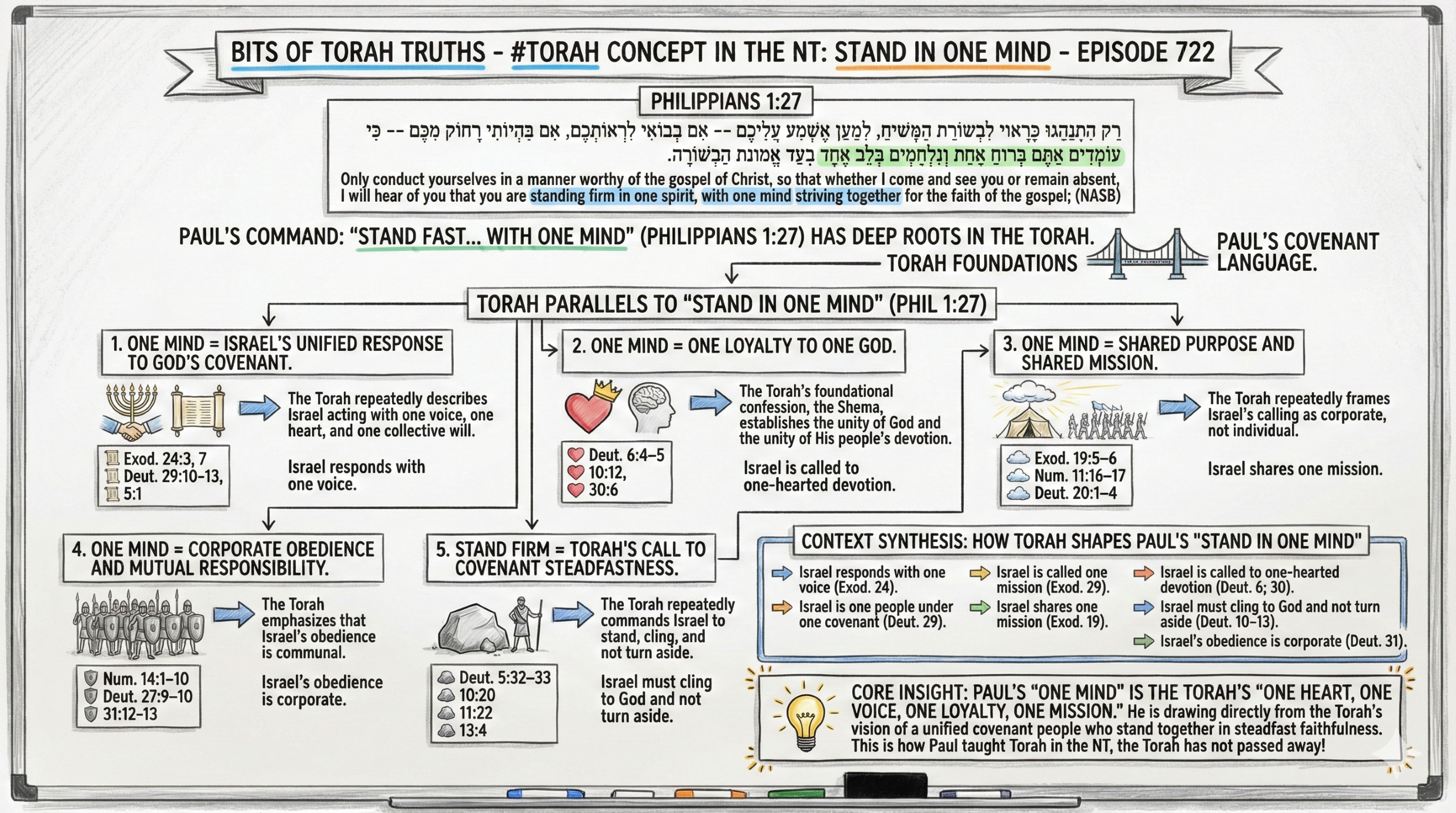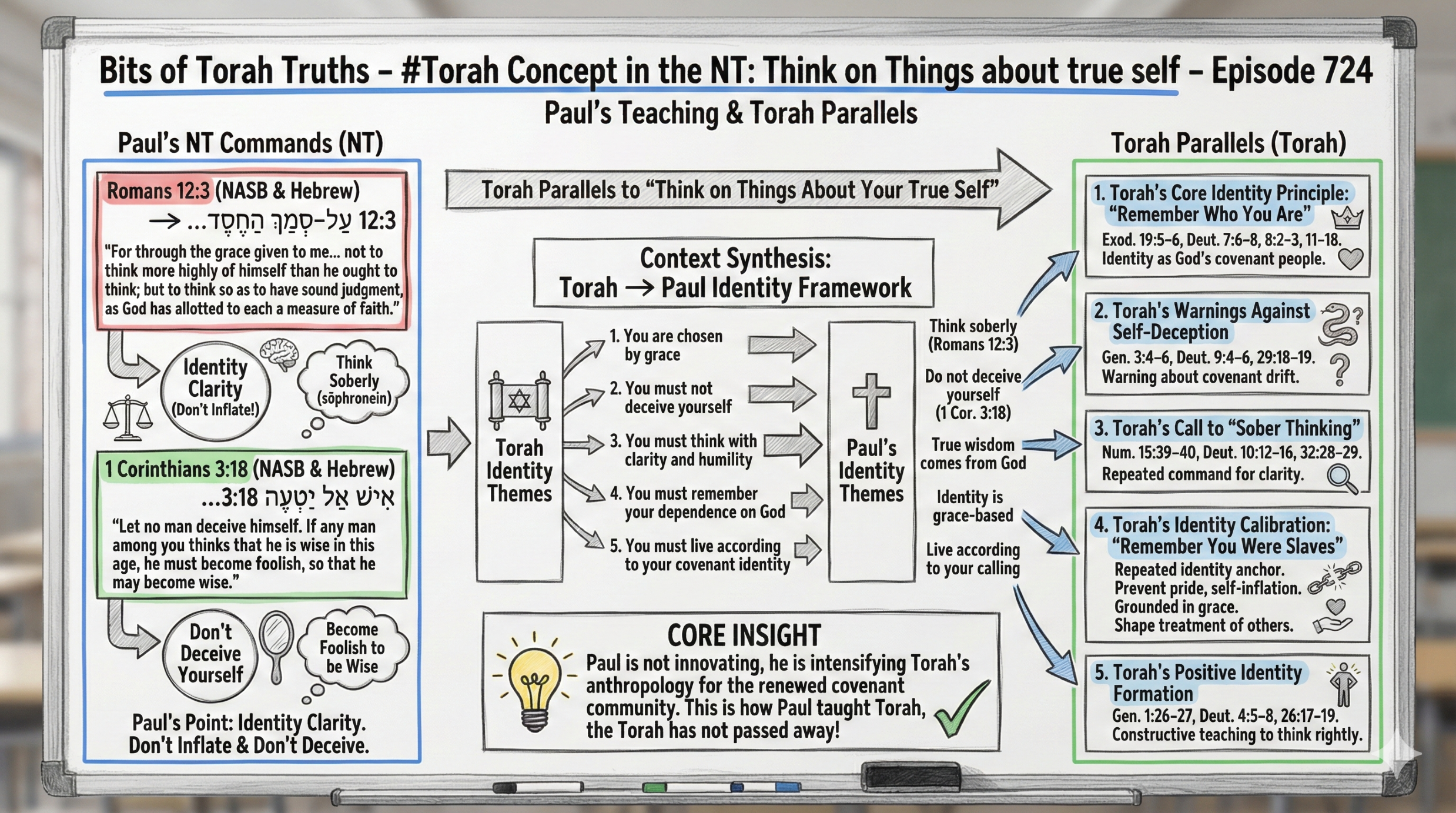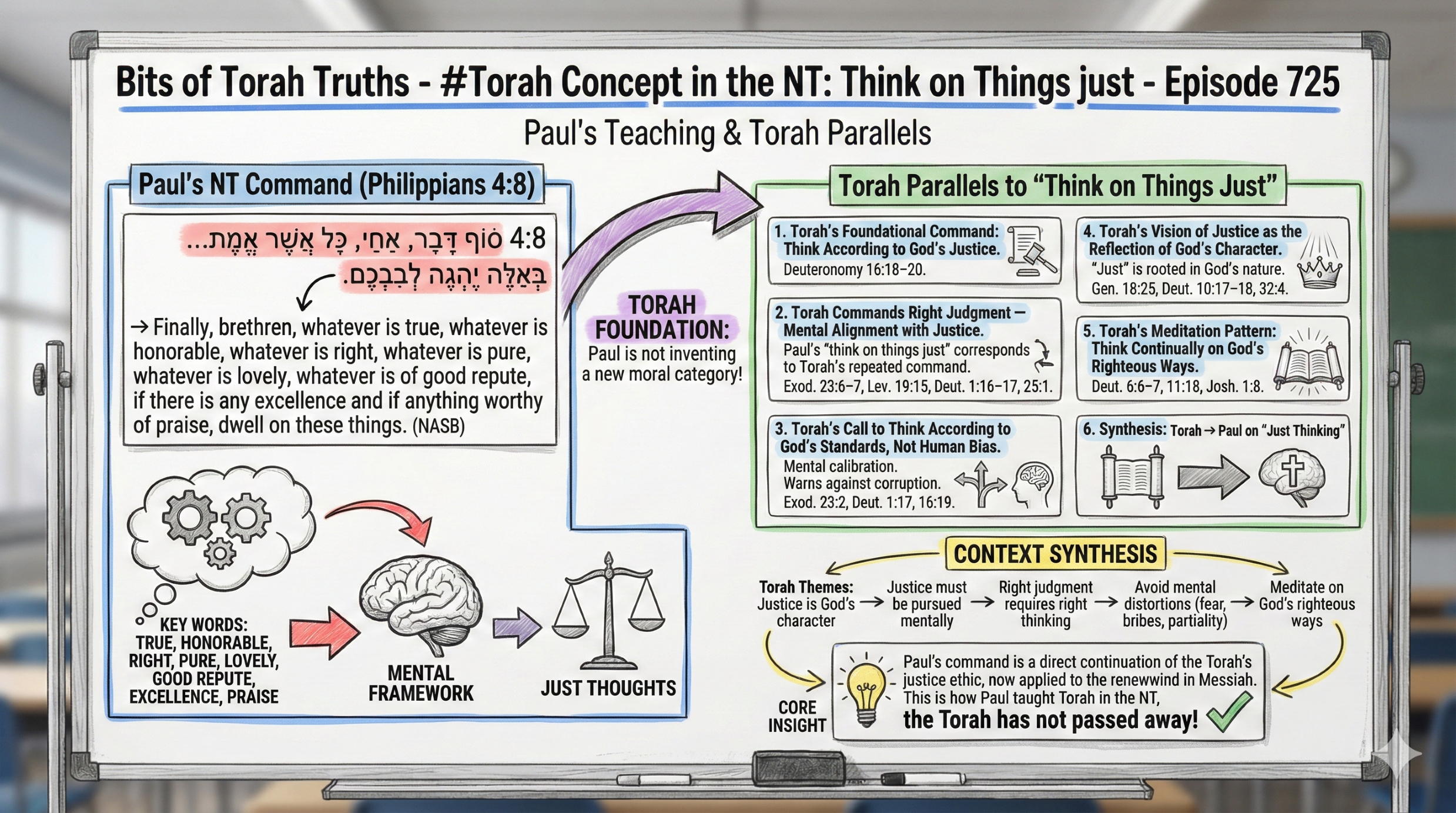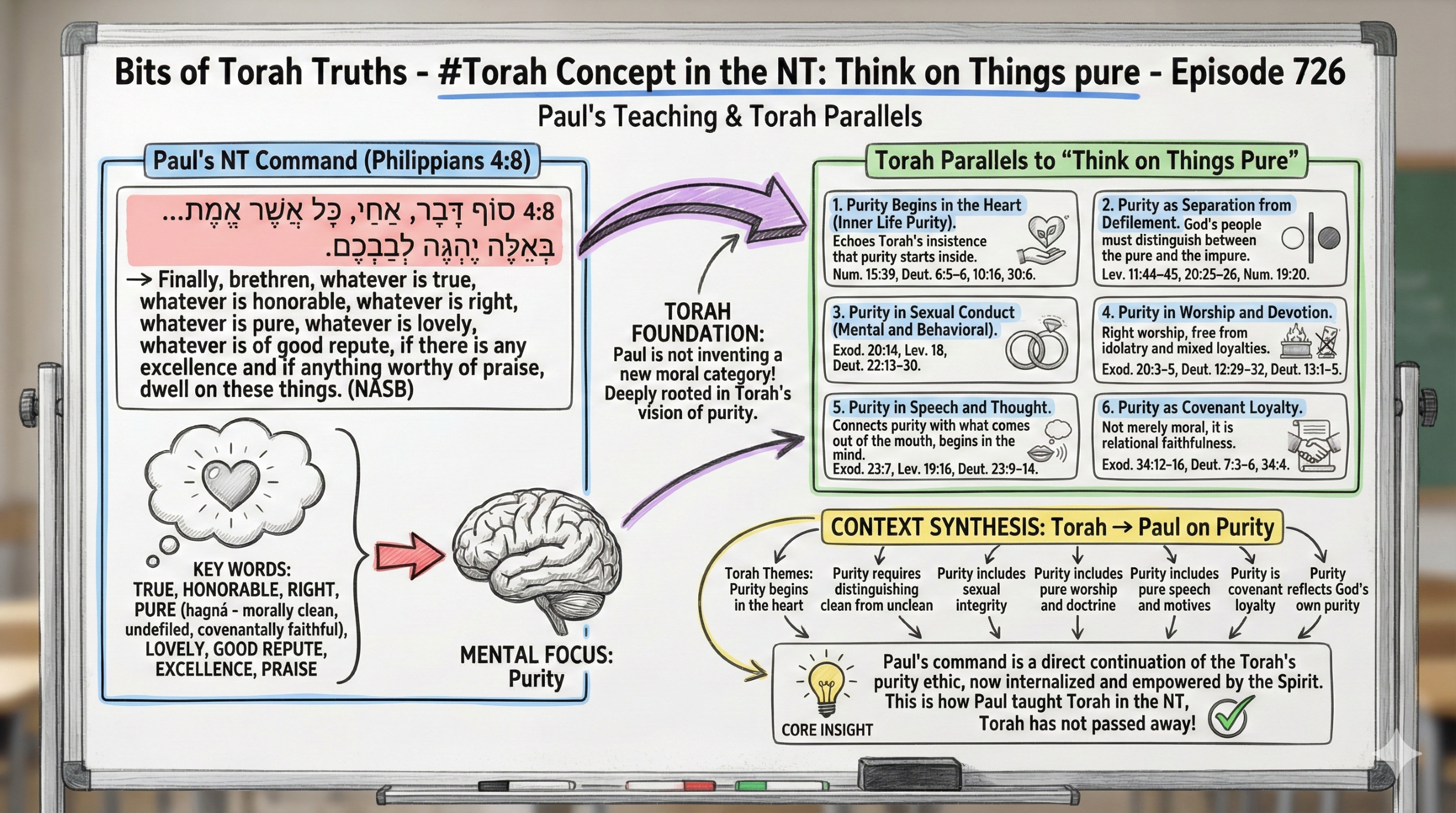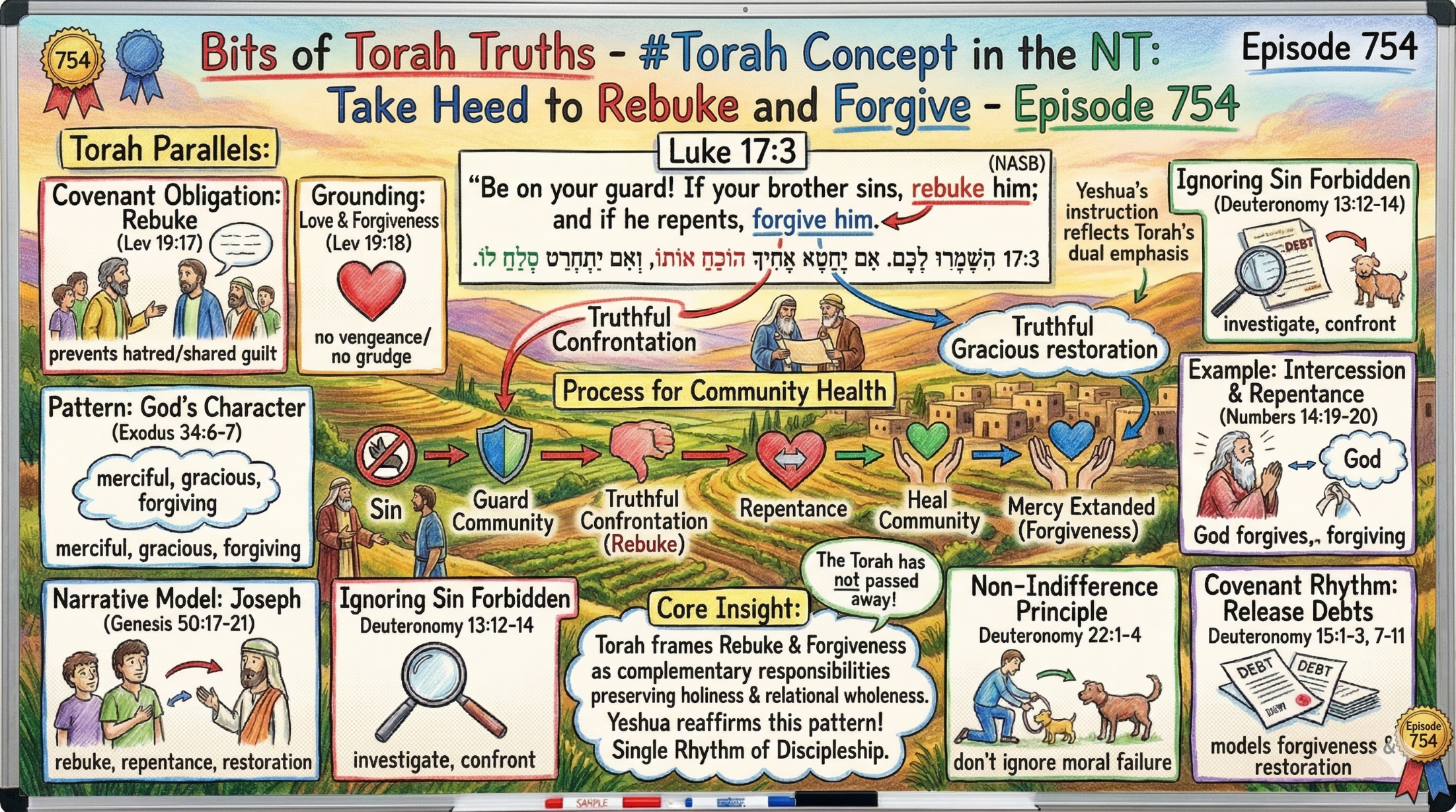
Bits of Torah Truths – #Torah Concept in the NT: Take Heed to Rebuke and Forgive – Episode 754
Luke 17:3
הִשָּׁמְרוּ לָכֶם. אִם יֶחֱטָא אָחִיךָ הוֹכֵחַ אוֹתוֹ, וְאִם יִתְחָרֵט סְלַח לוֹ.
#torah #torahwisdom #torahtruth #torahforlife #torah4you #torahtruth
Luke 17:3
17:3 “Be on your guard! If your brother sins, rebuke him; and if he repents, forgive him. (NASB)
https://www.matsati.com/index.php/category/bits-of-torah-truths/
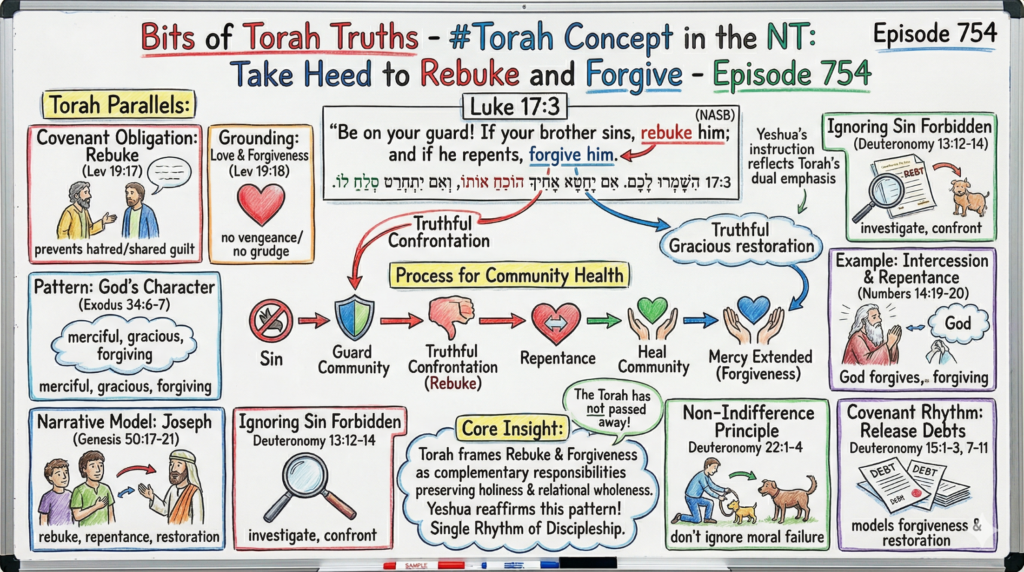
Yeshua commands His disciples “Take Heed to Rebuke and Forgive” (Luke 17:3) to confront wrongdoing and to extend forgiveness when repentance is present. The Torah establishes both duties as essential components of covenant faithfulness, communal integrity, and love.
– Torah parallels –
- Leviticus 19:17 – “You shall surely rebuke your neighbor” establishes rebuke as a covenant obligation that prevents hatred and shared guilt.
- Leviticus 19:18 – Israel must not take vengeance or bear a grudge, grounding forgiveness in the command to love one’s neighbor.
- Exodus 34:6–7 – God’s own character is merciful, gracious, and forgiving, forming the pattern Israel is to imitate.
- Numbers 14:19–20 – Moses intercedes and God forgives Israel, showing forgiveness as a covenantal act tied to repentance.
- Genesis 50:17–21 – Joseph forgives his brothers when they repent, providing a narrative model of rebuke, repentance, and restoration.
- Deuteronomy 13:12–14 – Wrongdoing must be investigated and confronted, showing that ignoring sin is not permitted.
- Deuteronomy 22:1–4 – The principle of not ignoring a brother’s loss or danger parallels the duty not to ignore moral failure.
- Deuteronomy 15:1–3, 7–11 – The release of debts models the covenant rhythm of forgiveness and restoration.
– Context Synthesis –
Yeshua’s instruction in Luke 17:3 reflects the Torah’s dual emphasis on confronting sin and restoring the repentant. The Torah consistently teaches that rebuke is an act of love that protects the community from corruption, while forgiveness prevents bitterness and imitates God’s own mercy. Yeshua compresses these two covenant duties into a single rhythm of discipleship: truthful confrontation followed by gracious restoration. In both Torah and Gospel, covenant relationships are maintained through honest correction and generous forgiveness.
– Core Insight –
The Torah frames rebuke and forgiveness as complementary responsibilities that preserve holiness and relational wholeness. Yeshua reaffirms this pattern, calling His followers to guard the community through courageous truth-telling and to heal it through mercy extended to the repentant. This is how Yeshua taught Torah, the Torah has not passed away!
Visual Summary of Concepts the Torah in the NT