Bits of Torah Truths – #Torah Concept in the NT: Take Heed that you do not alms be seen of men – Episode 748
Matthew 6:1
״הִשָּׁמְרוּ מִלַּעֲשׂוֹת אֶת צִדְקַתְכֶם לִפְנֵי בְּנֵי אָדָם מִתּוֹךְ כַּוָּנָה שֶׁיִּרְאוּ אֶתְכֶם; אִם תַּעֲשׂוּ כֵן, אֵין לָכֶם שָׂכָר אֵצֶל אֲבִיכֶם שֶׁבַּשָּׁמַיִם.
#torah#torahwisdom#torahtruth#torahforlife#torah4you#torahtruth
Matthew 6:1
6:1 “Beware of practicing your righteousness before men to be noticed by them; otherwise you have no reward with your Father who is in heaven. (NASB)
https://www.matsati.com/index.php/category/bits-of-torah-truths/
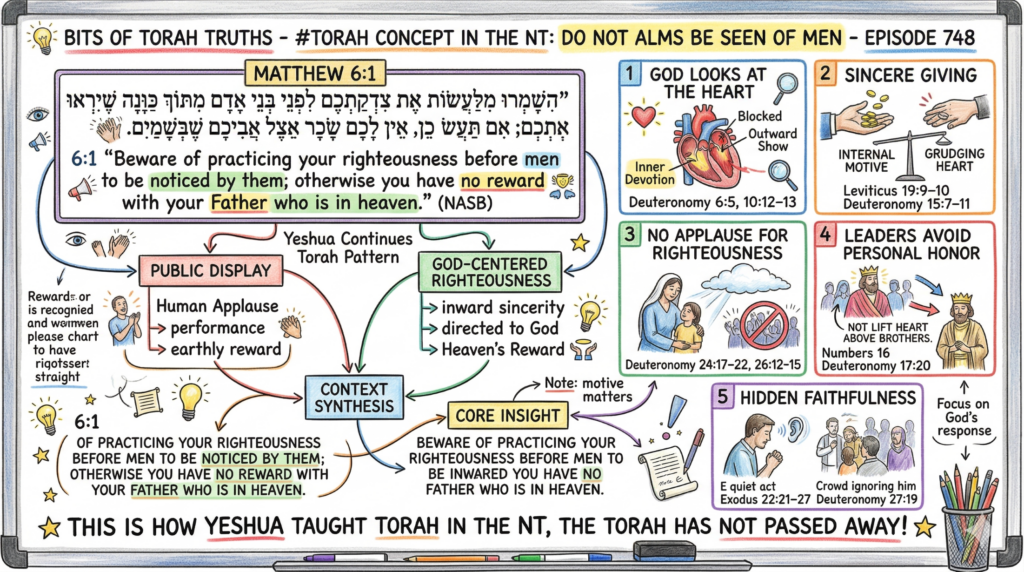
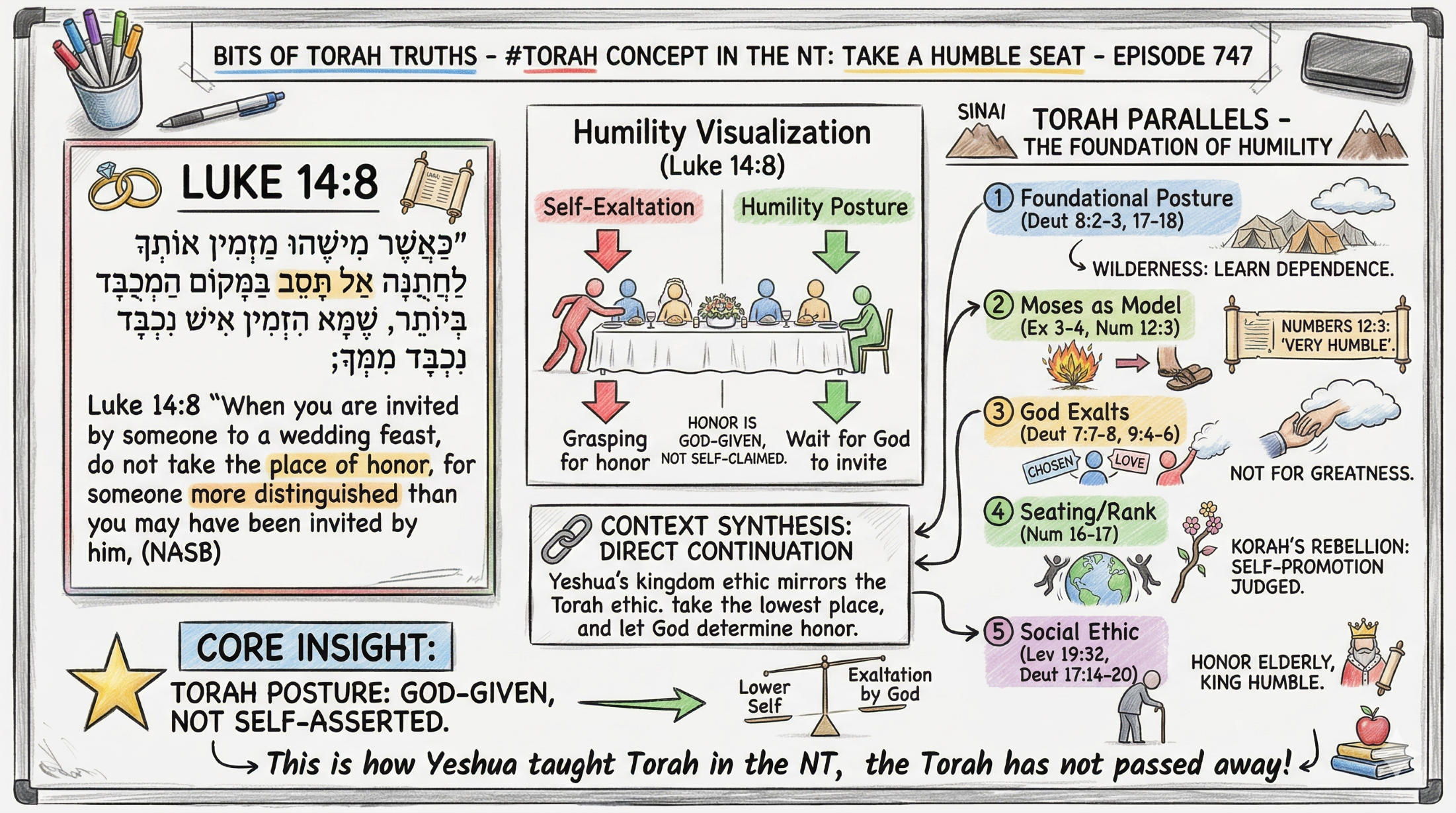
Yeshua’s warning against performing righteous acts for public display (Matthew 6:1) echoes the Torah’s insistence that obedience, generosity, and covenant faithfulness must flow from sincerity of heart rather than a desire for human praise. The Torah repeatedly emphasizes that God evaluates the inner motive behind giving, justice, and compassion.
– Torah Parallels Do not Alms before Men –
- God Looks at the Heart, Not the Display Deuteronomy 6:5, 10:12–13 Israel is called to fear, love, and serve God with all the heart, grounding righteousness in inward devotion rather than outward show.
- Giving to the Poor Must Be Sincere, Not Self‑Serving Leviticus 19:9–10, Deuteronomy 15:7–11 We must open our hand generously to the poor without a grudging heart; the Torah explicitly ties the value of giving to the internal motive.
- Righteousness Must Not Be Performed for Applause Deuteronomy 24:17–22, 26:12-15 Justice for the vulnerable (widow, orphan, stranger) is commanded without any suggestion of public reward; the ethic is service, not self‑promotion.
- Leaders Must Avoid Using Good Works for Personal Honor Numbers 16, Deuteronomy 17:20 The king must not “lift his heart above his brothers,” reinforcing that even public figures must avoid self‑glorifying righteousness.
- The Torah’s Pattern of Hidden Faithfulness Exodus 22:21–27, Deuteronomy 27:19 God hears the cry of the oppressed and judges those who mistreat them; the focus is on God’s response, not human recognition.
– Context Synthesis –
Yeshua’s teaching in Matthew 6:1 aligns seamlessly with the Torah’s emphasis on inward sincerity and God‑centered righteousness. The Torah repeatedly warns against pride, self‑exaltation, and using acts of justice or generosity as a means of gaining honor. Instead, it frames giving, compassion, and obedience as acts performed before God, who sees the heart and rewards accordingly. Yeshua simply reasserts this covenantal principle: righteousness loses its meaning when it becomes a performance for human applause.
– Core Insight –
The Torah establishes that true righteousness flows from a sincere heart oriented toward God, not from a desire for public recognition. Yeshua’s instruction continues this pattern, acts of generosity and obedience are meaningful only when they are directed toward God, who alone evaluates motives and grants reward. This is how Yeshua taught Torah in the NT, the Torah has not passed away!
Visual Summary of Concepts the Torah in the NT