Bits of Torah Truths – #Torah Concept in the NT: Take Heed Not to surfeit – Episode 756
Luke 21:34
הִשָּׁמְרוּ לָכֶם שֶׁלֹּא יִכְבַּד לְבַבְכֶם בִּשְׁתִיָּה וּבְשִׁכָּרוֹן וּבְדַאֲגוֹת הַחַיִּים וְהַיּוֹם הַהוּא יָבוֹא עֲלֵיכֶם פִּתְאוֹם;
#torah #torahwisdom #torahtruth #torahforlife #torah4you #torahtruth
Luke 21:34
21:34 “Be on guard, so that your hearts will not be weighted down with dissipation and drunkenness and the worries of life, and that day will not come on you suddenly like a trap; (NASB)
https://www.matsati.com/index.php/category/bits-of-torah-truths/
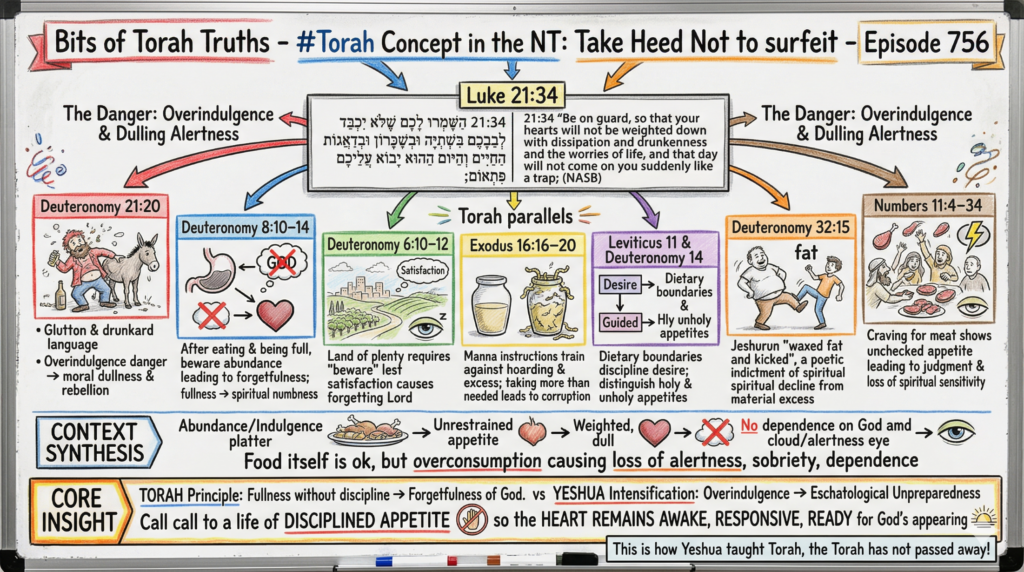
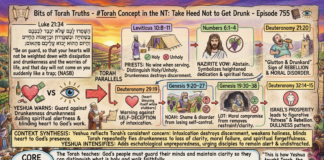
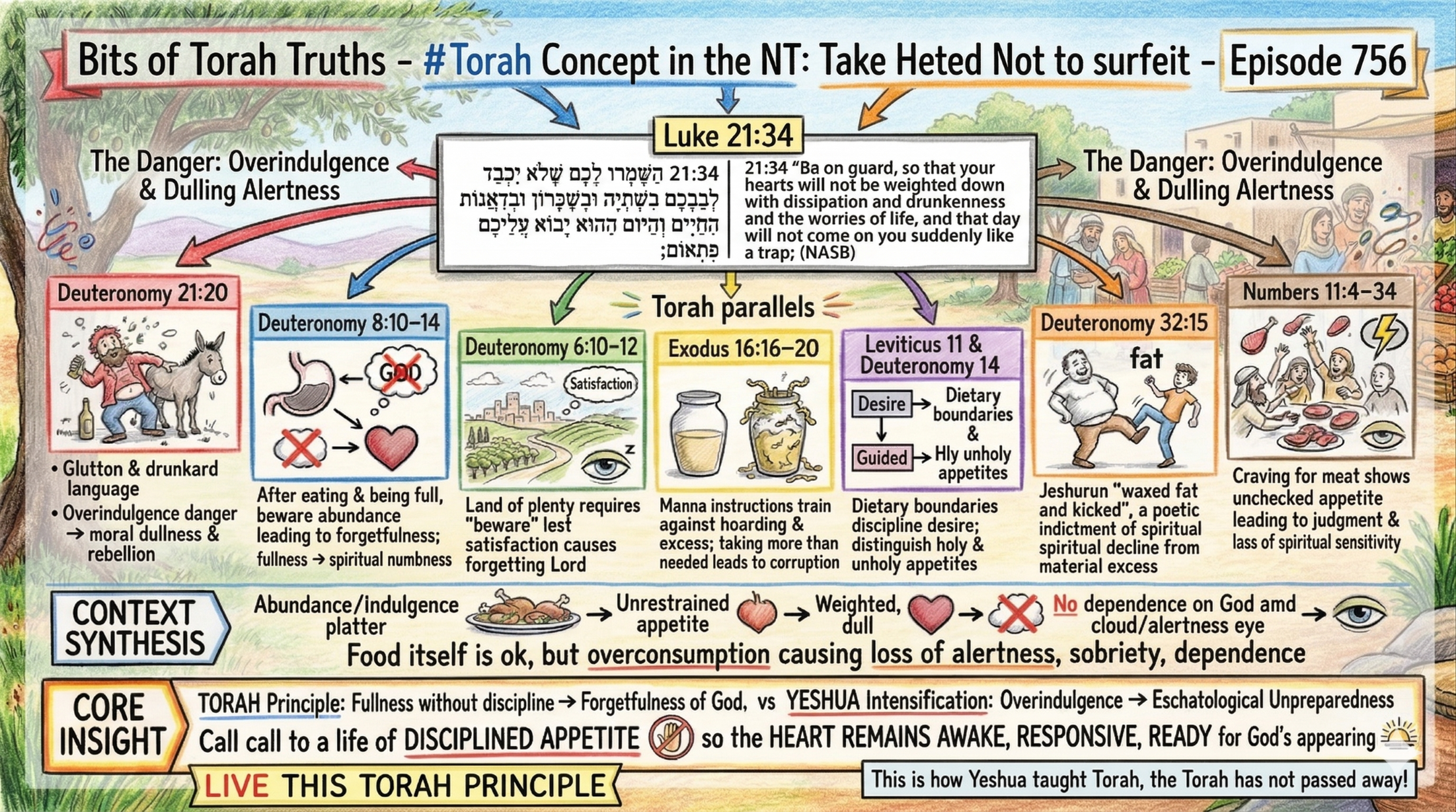
Yeshua warns His disciples “Take Heed Not to Surfeit” (Luke 21:34) to guard themselves against overindulgence, excess, and the dulling of spiritual alertness. The Torah contains multiple commands that restrain appetite, regulate consumption, and cultivate disciplined awareness before God.
– Torah parallels –
- Deuteronomy 21:20 – The “glutton and drunkard” language shows that overindulgence is a recognized covenant danger that leads to moral dullness and rebellion.
- Deuteronomy 8:10–14 – After eating and being full, Israel is warned not to let abundance lead to forgetfulness of God; fullness can produce spiritual numbness.
- Deuteronomy 6:10–12 – When Israel enters a land of plenty, they must “beware” lest satisfaction causes them to forget the Lord.
- Exodus 16:16–20 – The manna instructions train Israel against hoarding and excess; taking more than needed leads to corruption.
- Leviticus 11 and Deuteronomy 14 – Dietary boundaries discipline desire and teach Israel to distinguish between holy and unholy appetites.
- Deuteronomy 32:15 – Jeshurun “waxed fat and kicked,” a poetic indictment of spiritual decline caused by material excess.
- Numbers 11:4–34 – The craving for meat shows how unchecked appetite leads to judgment and loss of spiritual sensitivity.
– Context Synthesis –
Yeshua’s warning in Luke 21:34 echoes the Torah’s repeated concern that abundance, indulgence, and unrestrained appetite dull the heart and lead to forgetfulness of God. The Torah consistently frames excess as a spiritual hazard that blinds a person to divine instruction and weakens covenant vigilance. In both Torah and Gospel, the danger is not food itself but the loss of alertness, sobriety, and dependence on God that comes from overconsumption.
– Core Insight –
The Torah teaches that fullness without discipline leads to forgetfulness, and Yeshua intensifies this by linking overindulgence to eschatological unpreparedness. Both call the covenant people to a life of disciplined appetite so the heart remains awake, responsive, and ready for God’s appearing. This is how Yeshua taught Torah, the Torah has not passed away!
Visual Summary of Concepts the Torah in the NT