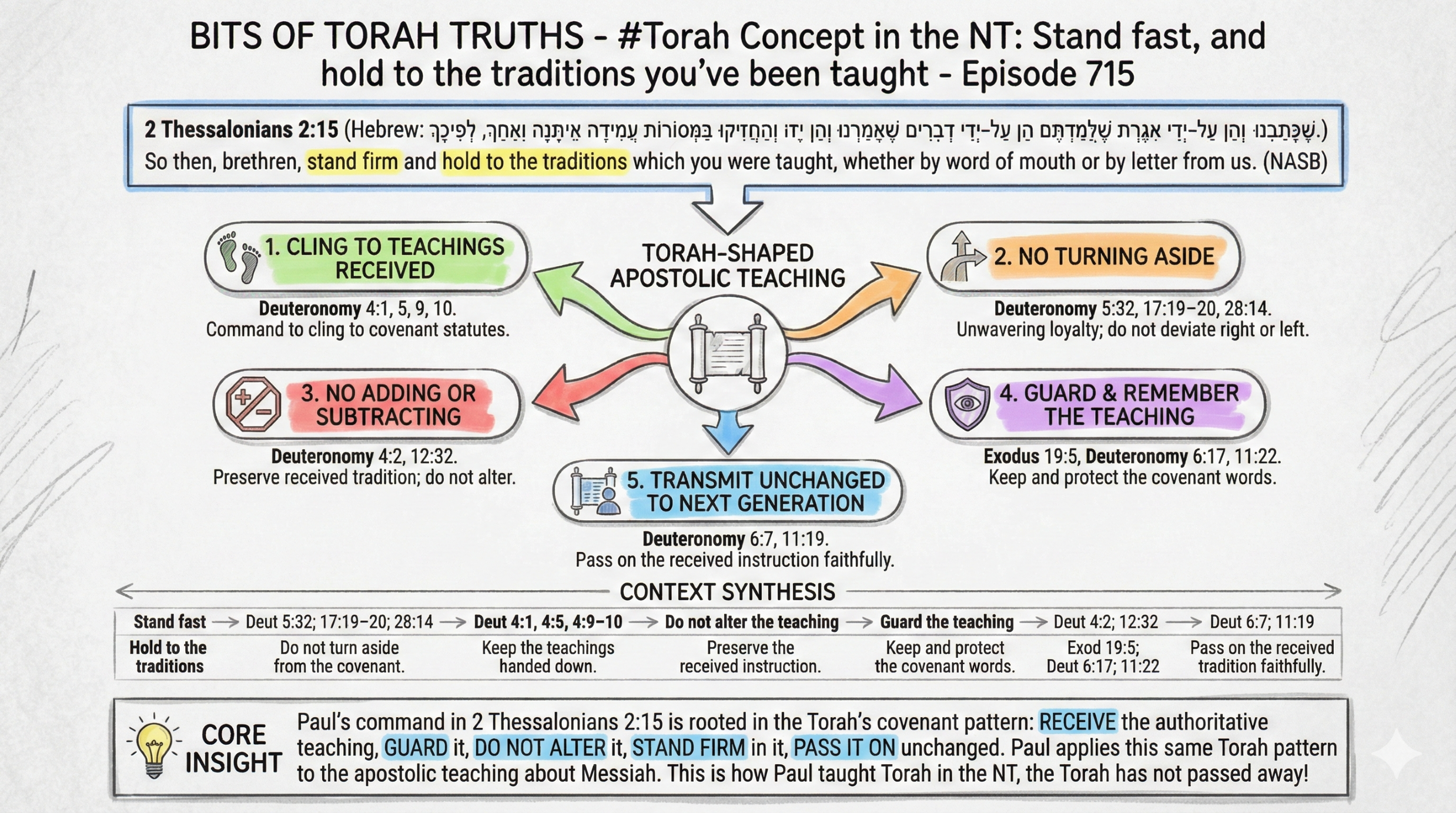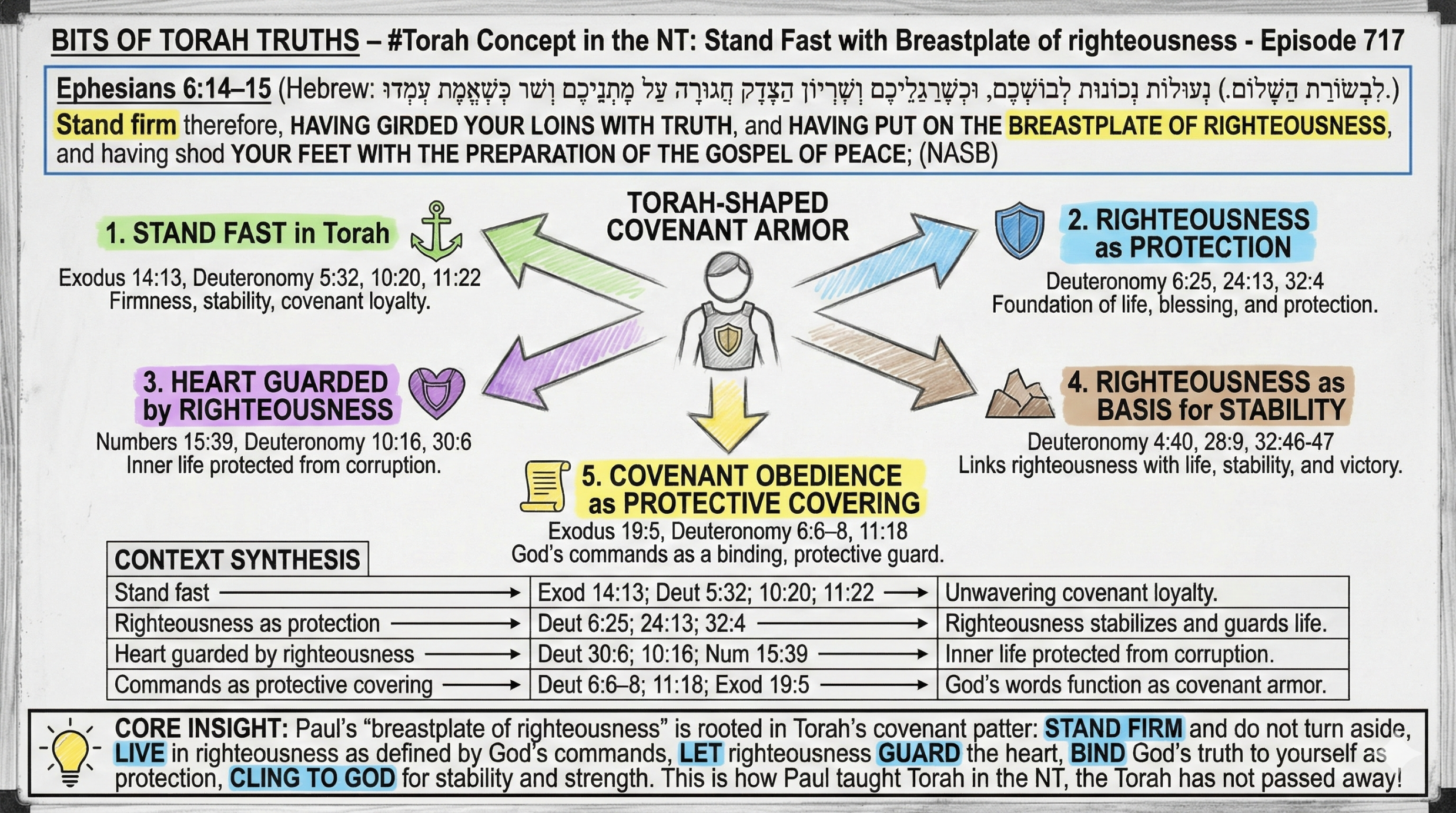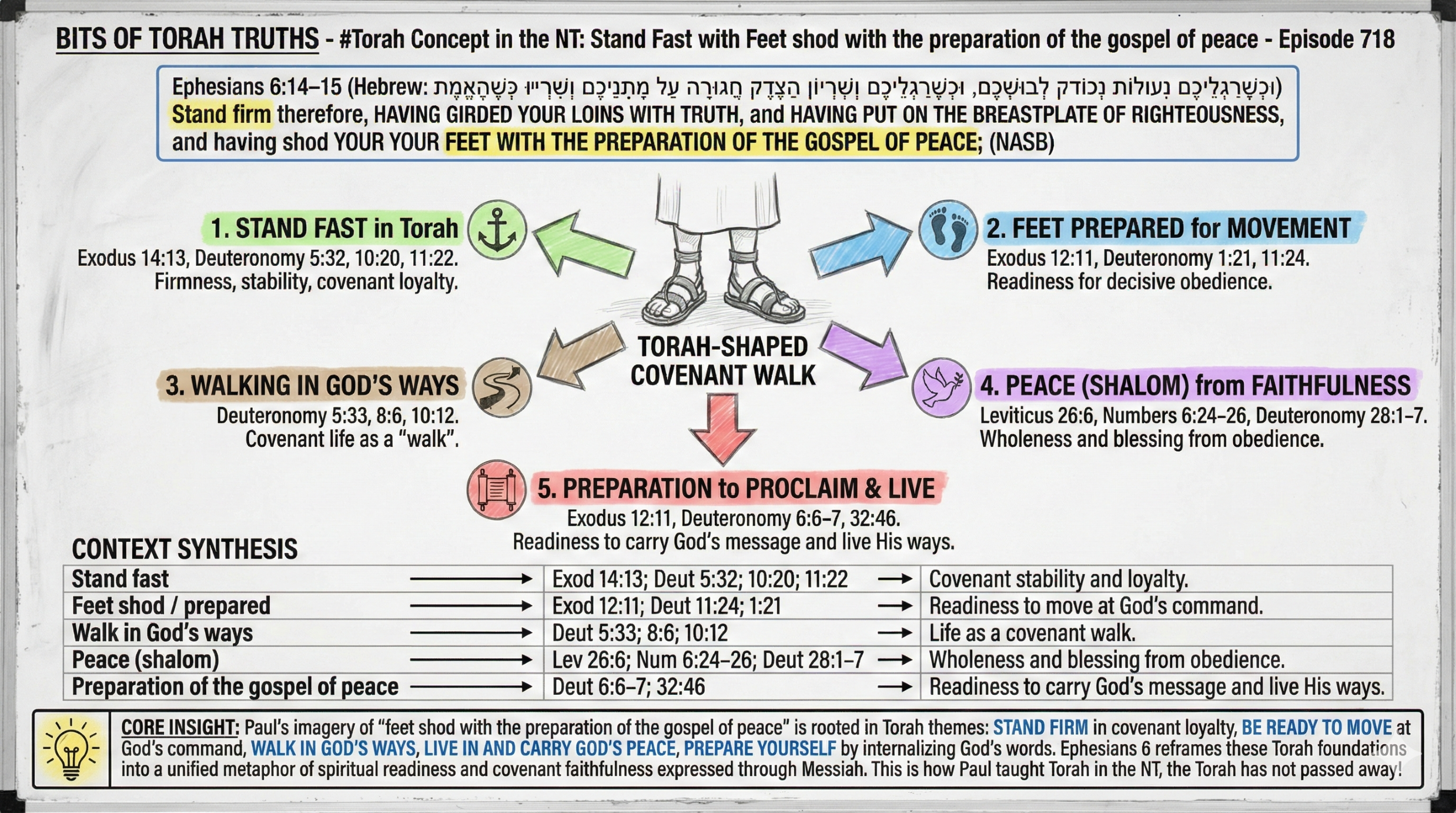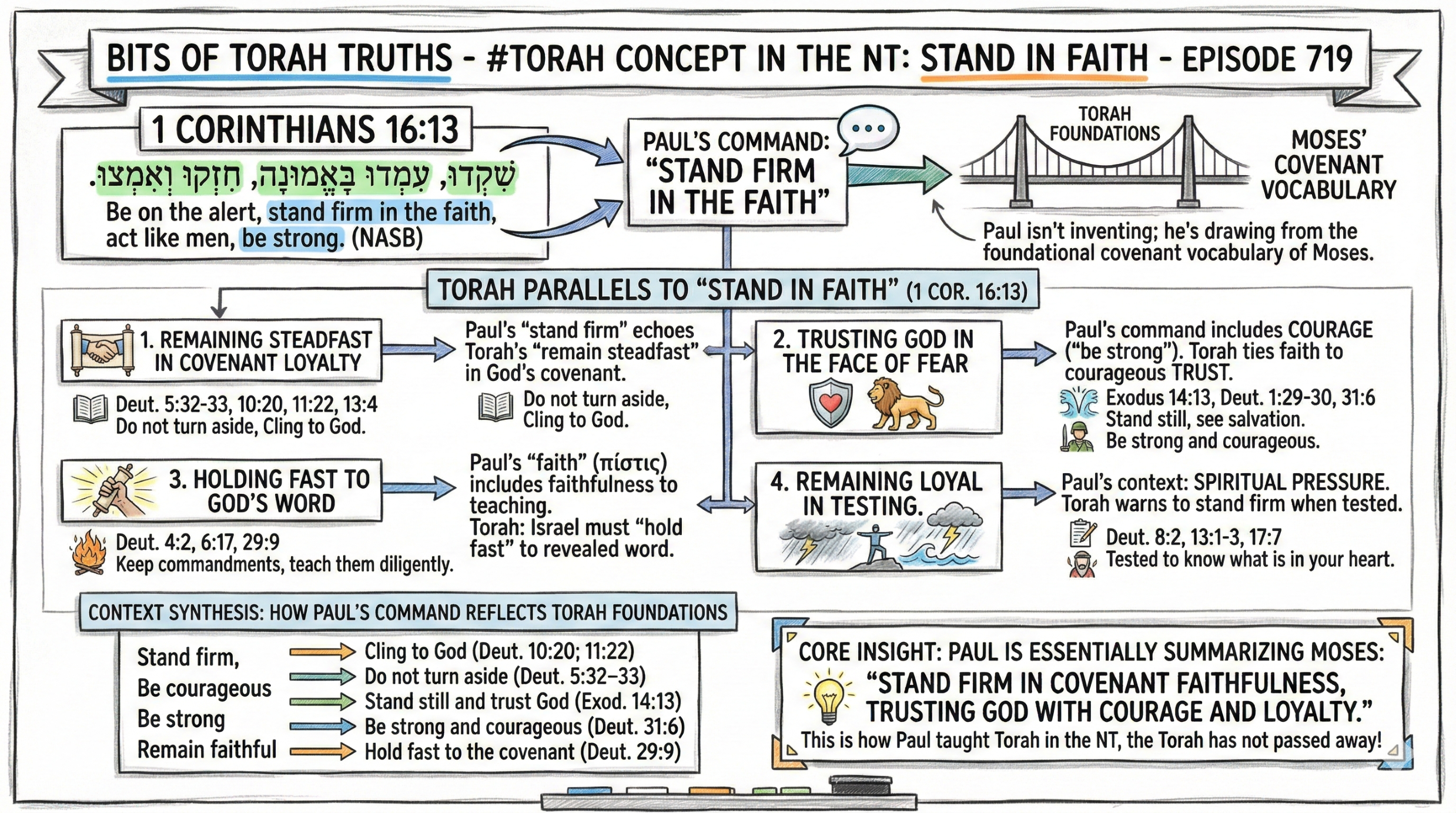
Bits of Torah Truths – #Torah Concept in the NT: Submit to Every Ordinance of Man – Episode 733
1 Peter 2:13–14
הִכָּנְעוּ לְכָל מוֹסָד אֱנוֹשִׁי לְמַעַן הָאָדוֹן׃ אִם לַמֶּלֶךְ, בִּהְיוֹתוֹ הָרֹאשׁ; אִם לַמּוֹשְׁלִים, בִּהְיוֹתָם שְׁלוּחִים מִטַּעְמוֹ לִנְקָמָה בְּעוֹשֵׂי הָרַע, אַךְ לְמַתַּן שֶׁבַח לְעוֹשֵׂי הַטּוֹב.
Romans 13:1–8
13:1 כָּל אָדָם יִכָּנַע לְרָשֻׁיּוֹת הַשִּׁלְטוֹן, שֶׁהֲרֵי אֵין שִׁלְטוֹן אֶלָּא מִטַּעַם אֱלֹהִים, וְהַשִּׁלְטוֹנוֹת הַנּוֹכְחִיִּים נִקְבְּעוּ מִטַּעַם אֱלֹהִים.13:2 לְפִיכָךְ כָּל הַמִּתְקוֹמֵם נֶגֶד הַשִּׁלְטוֹן מִתְנַגֵּד לְצַו אֱלֹהִים, וְהַמִּתְנַגְּדִים יָבִיאוּ עַל עַצְמָם מִשְׁפָּט.13:3 הֲרֵי אֵין פַּחַד הַשַּׁלִּיטִים עַל עוֹשֵׂה הַטּוֹב, אֶלָּא עַל עוֹשֵׂה הָרַע. הַאִם אַתָּה רוֹצֶה שֶׁלֹּא לִפְחֹד מִן הַשִּׁלְטוֹנוֹת? עֲשֵׂה אֶת הַטּוֹב וְתִזְכֶּה לְשֶׁבַח מֵהֶם.13:4 הַשִּׁלְטוֹנוֹת הֵם מְשָׁרְתֵי אֱלֹהִים לְטוֹבָתְךָ. אַךְ אִם תַּעֲשֶׂה אֶת הָרַע, עָלֶיךָ לִפְחֹד; שֶׁהֲרֵי לֹא לְחִנָּם הֵם מַחֲזִיקִים בַּחֶרֶב, כִּי מְשָׁרְתֵי אֱלֹהִים הֵם לִנְקֹם וְלִשְׁפֹּךְ זַעַם עַל עוֹשֵׂי הָרַע.13:5 לָכֵן עָלֶיךָ לְהִכָּנַע לֹא רַק בִּגְלַל הַזַּעַם, אֶלָּא גַּם בִּגְלַל הַמַּצְפּוּן.13:6 וְלָכֵן אַתֶּם גַּם מְשַׁלְּמִים מִסִּים, כִּי מְשָׁרְתֵי אֱלֹהִים הֵם הַשּׁוֹקְדִים עַל מִלּוּי תַּפְקִידָם זֶה.13:7 תְּנוּ לְכָל אָדָם מַה שֶּׁמַּגִּיעַ לוֹ׃ מַס לְמִי שֶׁעַל הַמַּס; מֶכֶס לְמִי שֶׁעַל הַמֶּכֶס; יִרְאָה לְמִי שֶׁרָאוּי לִירֹא מִמֶּנּוּ; כָּבוֹד לְמִי שֶׁמַּגִּיעַ לוֹ כָּבוֹד.13:8 אַל תִּהְיוּ חַיָּבִים דָּבָר לְאִישׁ מִלְּבַד אַהֲבַת הַזּוּלַת, כִּי הָאוֹהֵב אֶת הַזּוּלַת קִיֵּם אֶת הַתּוֹרָה.
#torah #torahwisdom #torahtruth #torahforlife #torah4you #torahtruth
1 Peter 2:13–14
2:13 Submit yourselves for the Lord’s sake to every human institution, whether to a king as the one in authority, 2:14 or to governors as sent by him for the punishment of evildoers and the praise of those who do right. (NASB)
Romans 13:1–8
13:1 Every person is to be in subjection to the governing authorities. For there is no authority except from God, and those which exist are established by God. 13:2 Therefore whoever resists authority has opposed the ordinance of God; and they who have opposed will receive condemnation upon themselves. 13:3 For rulers are not a cause of fear for good behavior, but for evil. Do you want to have no fear of authority? Do what is good and you will have praise from the same; 13:4 for it is a minister of God to you for good. But if you do what is evil, be afraid; for it does not bear the sword for nothing; for it is a minister of God, an avenger who brings wrath on the one who practices evil. 13:5 Therefore it is necessary to be in subjection, not only because of wrath, but also for conscience’ sake. 13:6 For because of this you also pay taxes, for rulers are servants of God, devoting themselves to this very thing. 13:7 Render to all what is due them: tax to whom tax is due; custom to whom custom; fear to whom fear; honor to whom honor. 13:8 Owe nothing to anyone except to love one another; for he who loves his neighbor has fulfilled the law. (NASB)
https://www.matsati.com/index.php/category/bits-of-torah-truths/
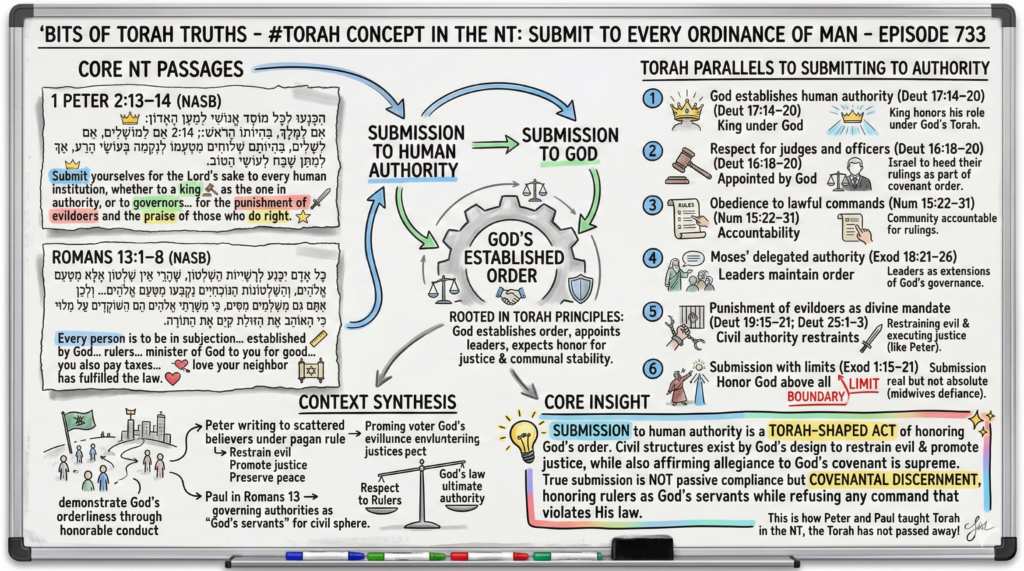
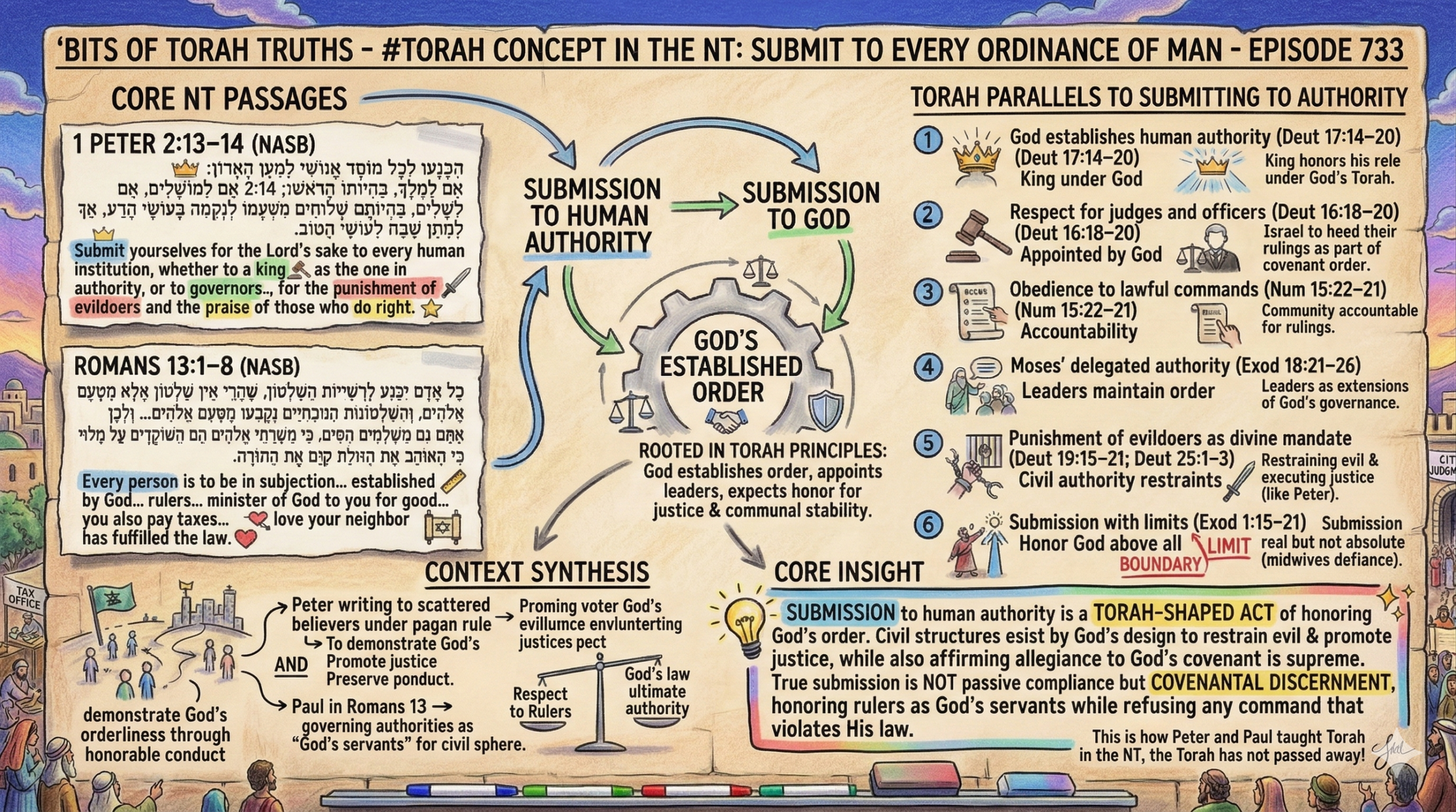
Peter and Paul’s command to submit to governing authorities (1 Peter 2:13-14; Romans 13:1-8) is rooted in the Torah’s principle that God establishes order, appoints leaders, and expects His people to honor those structures for the sake of justice and communal stability. Submission to human authority is ultimately an expression of submission to God, so long as it does not require disobedience to His covenant.
– Torah Parallels to Submitting to Authority –
- God establishes human authority — Deut 17:14–20: the king is appointed under God’s authority, and Israel must honor his role while the king himself submits to Torah.
- Respect for judges and officers — Deut 16:18–20: God commands the appointment of judges and officials, and Israel is expected to heed their rulings as part of covenant order.
- Obedience to lawful commands — Num 15:22–31: the community is accountable for following the rulings and instructions given through appointed leaders.
- Moses’ delegated authority — Exod 18:21–26: leaders are appointed to maintain order, and the people submit to their judgments as extensions of God’s governance.
- Punishment of evildoers as divine mandate — Deut 19:15–21; Deut 25:1–3: civil authority is tasked with restraining evil and executing justice, paralleling Peter’s “punish evildoers and praise those who do good.”
- Submission with limits — Exod 1:15–21: the midwives honor God above Pharaoh when human authority commands sin, showing that submission is real but not absolute.
– Context Synthesis –
Peter writes to scattered believers living under pagan governments, urging them to demonstrate God’s orderliness through honorable conduct. His instruction mirrors the Torah’s covenantal logic: God establishes structures of authority to restrain evil, promote justice, and preserve societal peace. Paul in Romans 13 echoes the same pattern, governing authorities are “God’s servants” in the civil sphere, just as judges and kings were in Israel’s Torah framework. Both apostles assume the Torah’s balance: respect and obedience to rulers as part of honoring God, yet with the clear boundary that God’s law remains the ultimate authority when human commands contradict His will.
– Core Insight –
Submission to human authority is a Torah-shaped act of honoring God’s order in the world. It recognizes that civil structures exist by God’s design to restrain evil and promote justice, while also affirming that allegiance to God’s covenant remains supreme. True submission is not passive compliance but covenantal discernment, honoring rulers as God’s servants while refusing any command that violates His law. This is how Peter and Paul taught Torah in the NT, the Torah has not passed away!
Visual Summary of Concepts the Torah in the NT