Bits of Torah Truths – #Torah Concept in the NT: Rebuke Unrepentant Sinning – Episode 694
1 Timothy 5:20
5:20 אֶת הַחוֹטְאִים תּוֹכִיחַ לְעֵינֵי כֹּל, לְמַעַן תִּהְיֶה יִרְאָה גַּם בְּלֵב הָאֲחֵרִים.
#torah#torahwisdom#torahtruth#torahforlife#torah4you#torahtruth
1 Timothy 5:20
5:20 Those who continue in sin, rebuke in the presence of all, so that the rest also will be fearful of sinning. (NASB)
https://www.matsati.com/index.php/category/bits-of-torah-truths/
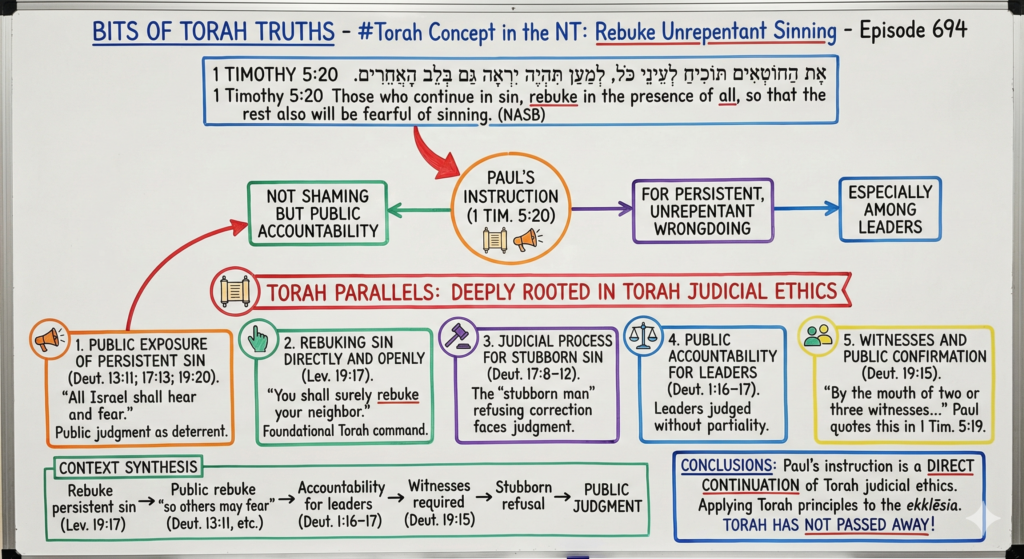
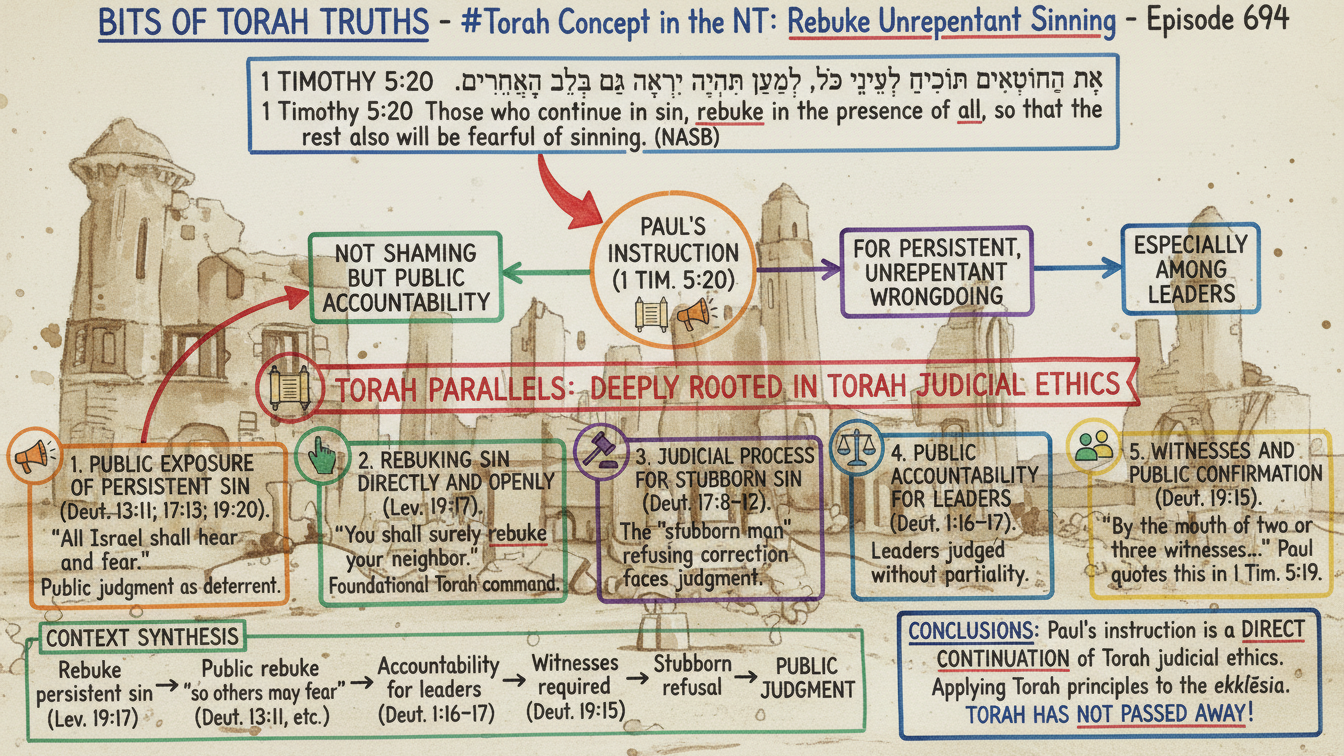
This one is actually one of the clearest cases where Paul is directly echoing Torah judicial ethics when he says to rebuke unrepentant sinning (1 Tim. 5:20). Paul’s instruction is not about shaming but about public accountability for persistent, unrepentant wrongdoing, especially among leaders. This concept is deeply rooted in the Torah.
– Torah Parallels to “Rebuke Unrepentant Sinning” (1 Tim. 5:20) –
- Public Exposure of Persistent Sin, Deuteronomy 13:11; 17:13; 19:20 “All Israel shall hear and fear.” These passages describe what happens when a person persists in sin despite warnings, the matter becomes public, and the community witnesses the judgment so that “others may fear.”
- Rebuking Sin Directly and Openly, Leviticus 19:17 “You shall surely rebuke your neighbor.” This is the foundational Torah command for rebuke.
- Judicial Process for Stubborn, Unrepentant Sin, Deuteronomy 17:8–12 The “stubborn man” who refuses correction.
- Public Accountability for Leaders, Deuteronomy 1:16–17 Leaders judged without partiality.
- Witnesses and Public Confirmation, Deuteronomy 19:15 “By the mouth of two or three witnesses…” Paul quotes this exact verse in the same chapter (1 Tim. 5:19).
– Context Synthesis –
- Rebuke persistent sin, Lev. 19:17 Rebuke is commanded to stop sin.
- Public rebuke “so others may fear” Deut. 13:11; 17:13; 19:20 Public accountability deters sin.
- Accountability for leaders Deut. 1:16–17 No partiality in judgment.
- Witnesses required Deut. 19:15 Judicial integrity.
- Stubborn refusal to repent Deut. 17:12 Willful disobedience → public judgment.
– Conclusions –
Paul’s instruction in 1 Timothy 5:20 is not a new Christian idea. It is a direct continuation of Torah judicial ethics: Private rebuke first (Lev. 19:17), If unrepentant, public accountability (Deut. 13:11; 17:13; 19:20), Especially for leaders (Deut. 1:16–17), With witnesses (Deut. 19:15). Paul is simply applying the Torah’s community‑protection principles to the ekklēsia. This is how Paul taught Torah in the NT, the Torah has not passed away!
Visual Summary of Concepts the Torah in the NT