Bits of Torah Truths – #Torah Concept in the NT: Put Off Wrath – Episode 677
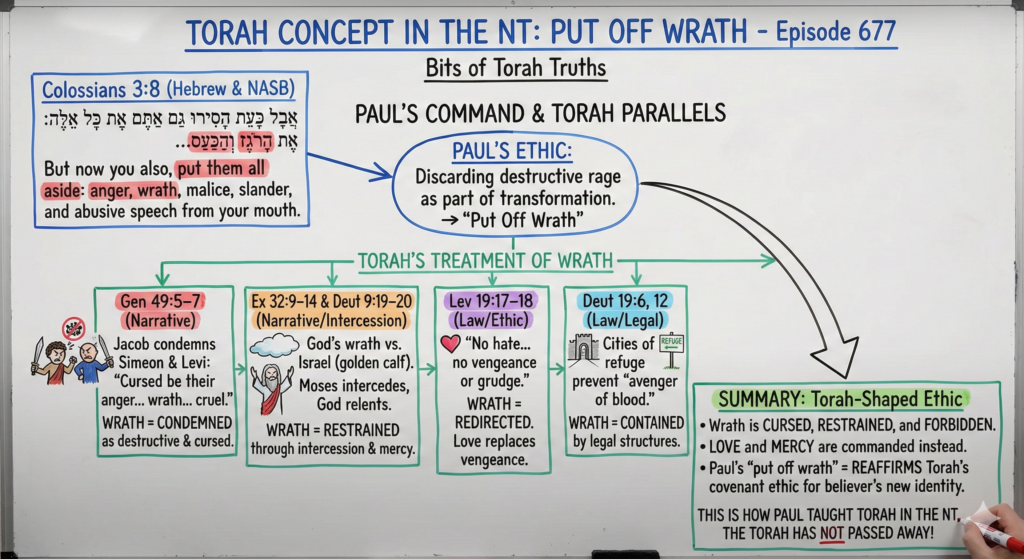
Colossians 3:8
אֲבָל כָּעֵת הָסִירוּ גַּם אַתֶּם אֶת כָּל אֵלֶּה׃ אֶת הָרֹגֶז וְהַכַּעַס וְאֶת הָרֶשַׁע וְהַגִּדּוּף וְאֶת נִבּוּל הַפֶּה.
#torah #torahwisdom #torahtruth #torahforlife #torah4you #torahtruth
Colossians 3:8
3:8 But now you also, put them all aside: anger, wrath, malice, slander, and abusive speech from your mouth. (NASB)
https://www.matsati.com/index.php/category/bits-of-torah-truths/
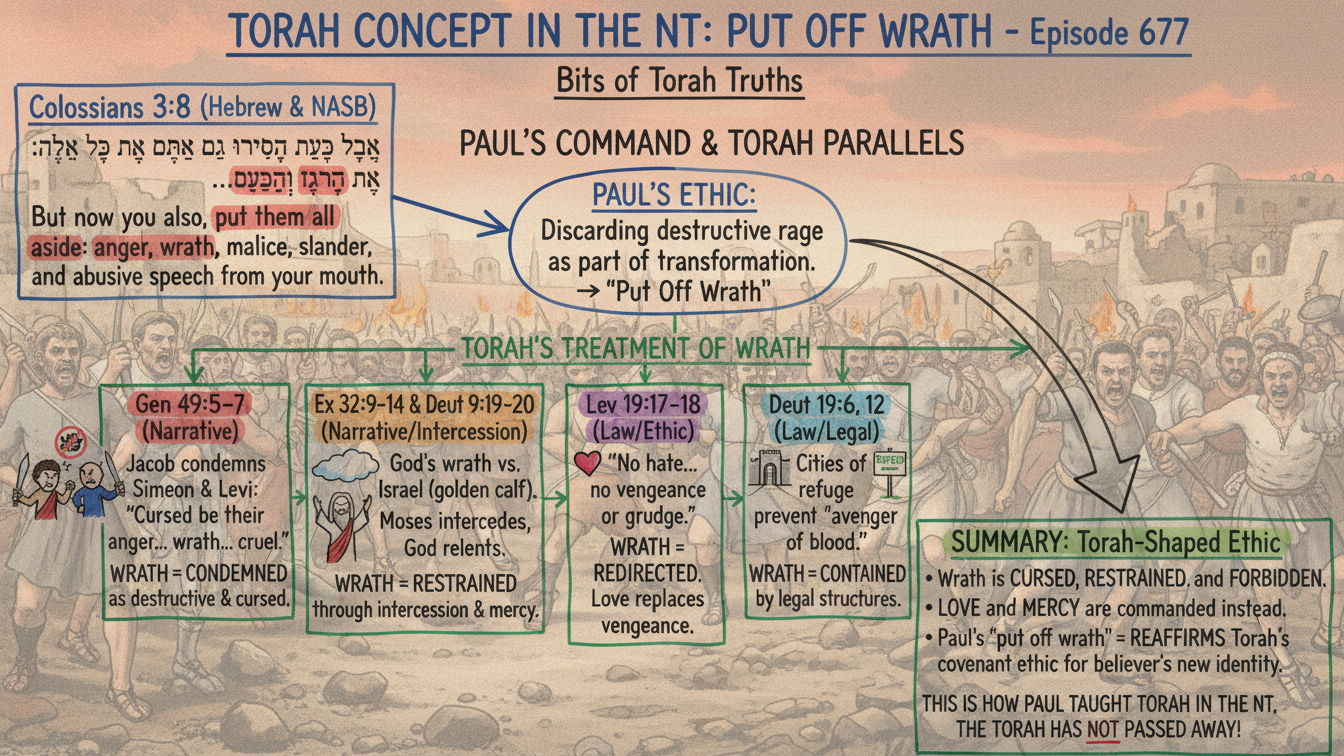
Paul’s command in Colossians 3:8 “put off… wrath” is about discarding destructive rage as part of the believer’s transformation. The Torah doesn’t use the exact phrase “put off wrath,” but it does contain legal, narrative, and covenantal parallels that restrain, redirect, or forbid wrath.
– Torah Parallels to “Put Off Wrath” –
- Genesis 49:5–7 Jacob condemns Simeon and Levi: “Cursed be their anger, for it is fierce; and their wrath, for it is cruel.” Wrath is explicitly denounced as destructive and cursed.
- Exodus 32:9–14 God’s wrath against Israel after the golden calf; Moses intercedes and God relents. This Models restraint of wrath through intercession and mercy.
- Leviticus 19:17–18 “You shall not hate your brother… You shall not take vengeance or bear a grudge.” Wrath expressed as vengeance is forbidden; love replaces wrath.
- Deuteronomy 9:19–20 Moses fears God’s wrath against Israel but intercedes again. Divine wrath is real but tempered; human response is prayer, not retaliation.
- Deuteronomy 19:6, 12 Cities of refuge prevent the “avenger of blood” from acting in wrath. Legal structures restrain wrath-driven vengeance.
– Key Observations –
- Wrath condemned: Jacob’s words in Genesis 49 are the clearest Torah parallel, wrath is not just dangerous, it is cursed.
- Wrath restrained: Exodus and Deuteronomy show God’s wrath, but also His willingness to relent. This models that wrath should not be indulged but tempered.
- Wrath redirected: Leviticus forbids vengeance and grudges, replacing wrath with love. Wrath contained: Cities of refuge institutionalize restraint, preventing wrath from escalating into bloodshed.
The Torah’s treatment of wrath is multi-layered:
- Narrative: Wrath is condemned (Genesis 49) and shown as dangerous (Exodus 32).
- Law: Wrath-driven vengeance is forbidden (Leviticus 19) and restrained by legal structures (Deuteronomy 19).
- Covenant ethic: Wrath is replaced by love, mercy, and justice, the same ethic Paul reaffirms in Colossians.
So, Paul’s “put off wrath” is essentially a Torah-shaped ethic: wrath is cursed, restrained, and forbidden, while love and mercy are commanded instead. Note, the Torah distinguishes between the two impulses (anger as inner emotion, wrath as outward destructive force) and Paul collapses both into behaviors to be discarded? This is how Paul taught Torah in the NT, the Torah has not passed away!
Visual Summary of Concepts the Torah in the NT