Bits of Torah Truths – #Torah Concept in the NT: Put Off the Old Man – Episode 675
Ephesians 4:22
4:22 שֶׁעֲלֵיכֶם לִפְשֹׁט אֶת הָאָדָם הַיָּשָׁן אֲשֶׁר הִתְנַהֲגוּתְכֶם הָרִאשׁוֹנָה כְּרוּכָה עִמּוֹ וְהוּא נִשְׁחָת בְּתַאֲווֹת מַתְעוֹת, Colossians 3:9 3:9 אַל תְּשַׁקְּרוּ אִישׁ לְרֵעֵהוּ, שֶׁכֵּן פְּשַׁטְתֶּם אֶת הָאָדָם הַיָּשָׁן עִם מַעֲשָׂיו
Colossians 3:9
3:9 אַל תְּשַׁקְּרוּ אִישׁ לְרֵעֵהוּ, שֶׁכֵּן פְּשַׁטְתֶּם אֶת הָאָדָם הַיָּשָׁן עִם מַעֲשָׂיו
#torah #torahwisdom #torahtruth #torahforlife #torah4you #torahtruth
Ephesians 4:22
4:22 that, in reference to your former manner of life, you lay aside the old self, which is being corrupted in accordance with the lusts of deceit, (NASB)
Colossians 3:9
3:9 Do not lie to one another, since you laid aside the old self with its evil practices, (NASB)
https://www.matsati.com/index.php/category/bits-of-torah-truths/
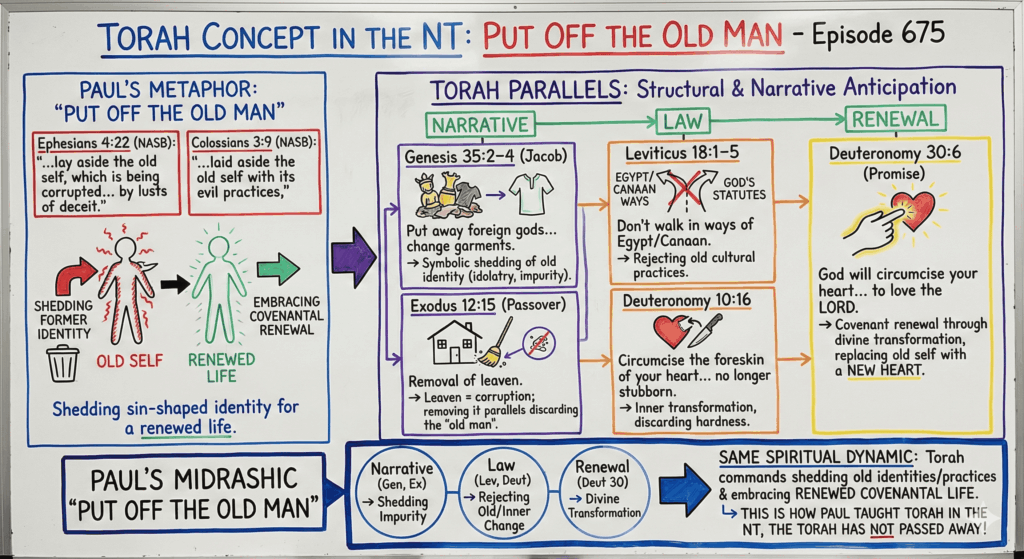
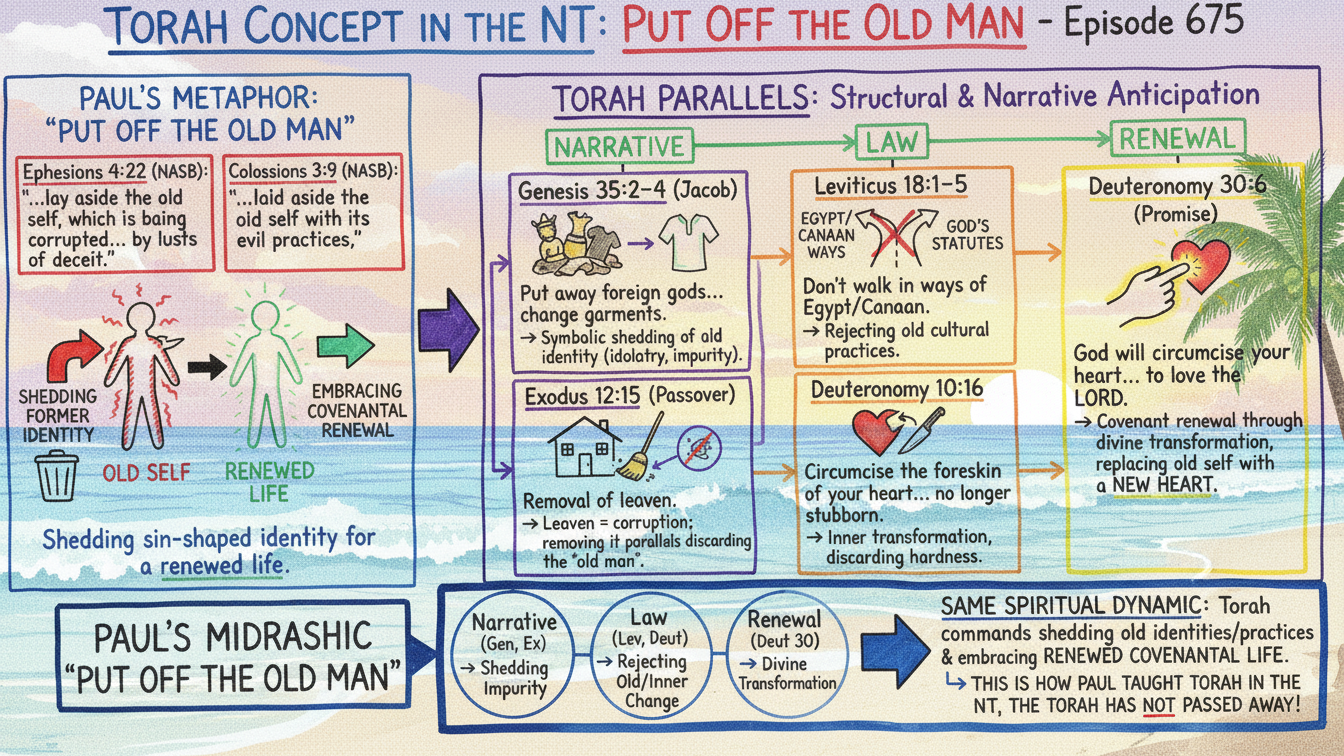
Paul’s phrase “put off the old man” (Eph. 4:22; Col. 3:9) is about shedding a former identity shaped by sin and embracing a renewed life. While the Torah doesn’t use that exact metaphor, it does contain structural and narrative parallels that anticipate the idea of leaving behind an old self and embracing covenantal renewal.
– Torah Parallels to “Put Off the Old Man” –
- Genesis 35:2–4 Jacob commands his household to “put away foreign gods, purify yourselves, and change your garments.” Symbolic shedding of old identity (idolatry, impurity) and clothing oneself anew, very close to Paul’s metaphor.
- Exodus 12:15 Removal of leaven during Passover: Leaven represents corruption; removing it parallels discarding the “old man” of sin. Leviticus 18:1–5 Israel is told not to walk in the ways of Egypt or Canaan. Rejecting old cultural practices and living by God’s statutes mirrors putting off the old life.
- Deuteronomy 10:16 “Circumcise the foreskin of your heart and be no longer stubborn.” Inner transformation means discarding hardness of heart and anticipates Paul’s language of renewal.
- Deuteronomy 30:6 Promise that God will “circumcise your heart… so that you will love the LORD.” Covenant renewal through divine transformation, is replacing the old self with a new heart.
– Key Observations –
- Garment Imagery: Genesis 35:2–4 is striking because Paul also uses clothing language (“put off” / “put on”). Torah already connects changing garments with purification and covenant renewal.
- Purging Corruption: The removal of leaven in Exodus 12 is a ritualized “putting off” of corruption, symbolizing a new identity as God’s redeemed people.
- Cultural Break: Leviticus 18 and Deuteronomy 10 emphasize leaving behind the old ways of Egypt/Canaan, a collective “old man” identity.
- Heart Transformation: Deuteronomy’s call for circumcision of the heart is the clearest inner parallel: discarding stubbornness and embracing covenantal love.
Paul’s “old man” language is essentially a midrashic extension of Torah themes:
- Narrative (Genesis, Exodus): Put away idols, leaven, garments of impurity. Law (Leviticus, Deuteronomy): Reject old cultural practices, circumcise the heart.
- Renewal (Deuteronomy 30): God Himself enables transformation, replacing the old with the new.
So, while the Torah doesn’t use the phrase “old man,” it repeatedly commands Israel to shed old identities and practices and embrace a renewed covenantal life, the same spiritual dynamic Paul applies to the believer’s transformation in Christ. This is how Paul taught Torah in the NT, the Torah has not passed away!
Visual Summary of Concepts the Torah in the NT