Bits of Torah Truths – #Torah Concept in the NT: Put Off Malice – Episode 678
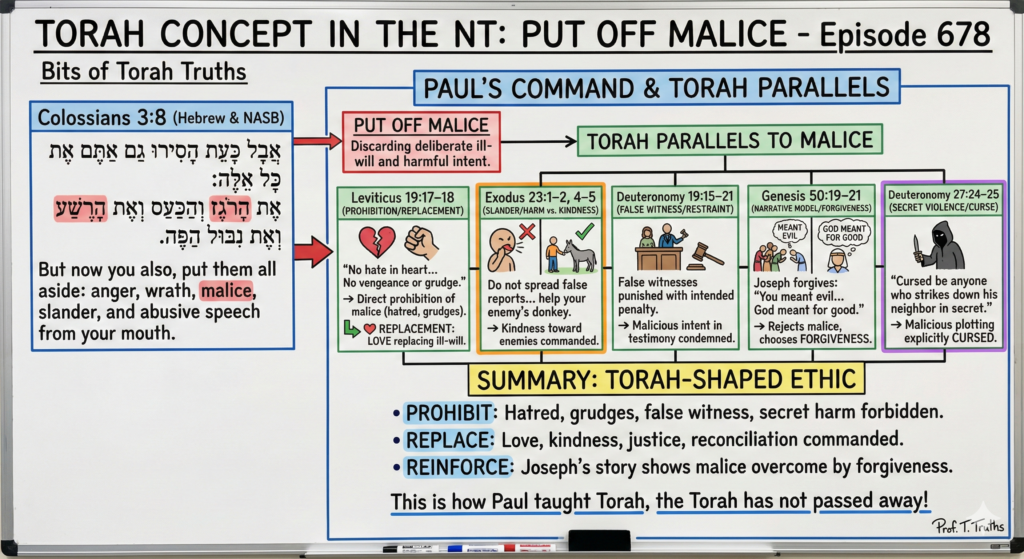
Colossians 3:8
אֲבָל כָּעֵת הָסִירוּ גַּם אַתֶּם אֶת כָּל אֵלֶּה׃ אֶת הָרֹגֶז וְהַכַּעַס וְאֶת הָרֶשַׁע וְהַגִּדּוּף וְאֶת נִבּוּל הַפֶּה.
#torah#torahwisdom#torahtruth#torahforlife#torah4you#torahtruth
Colossians 3:8
3:8 But now you also, put them all aside: anger, wrath, malice, slander, and abusive speech from your mouth. (NASB)
https://www.matsati.com/index.php/category/bits-of-torah-truths/
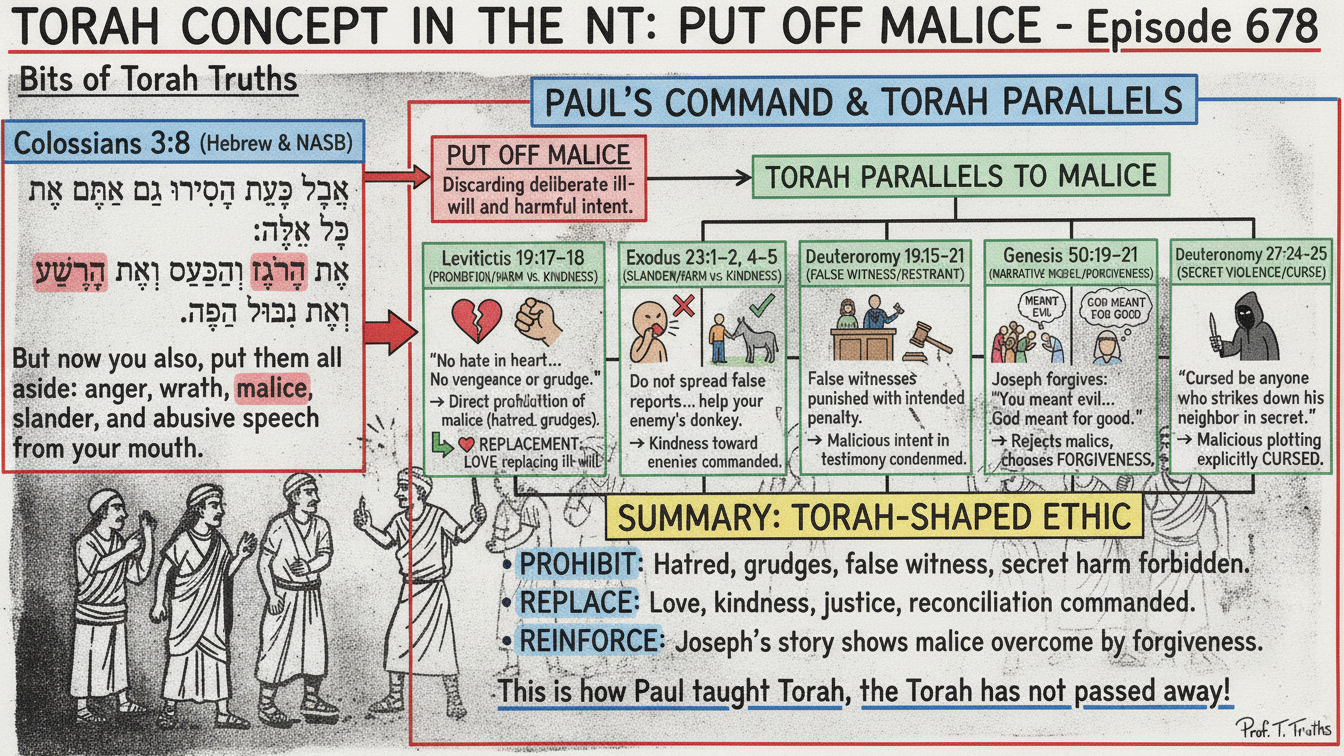
Paul’s command in Colossians 3:8 “put off… malice” is about discarding deliberate ill‑will and harmful intent. The Torah doesn’t use the exact word “malice,” but it repeatedly forbids harboring hatred, grudges, or plotting harm, and instead commands love, fairness, and reconciliation.
– Torah Parallels to “Put Off Malice” –
- Leviticus 19:17–18 “You shall not hate your brother in your heart… You shall not take vengeance or bear a grudge… but you shall love your neighbor as yourself.” Direct prohibition of malice (hatred, grudges, vengeance). Love replaces ill‑will.
- Exodus 23:1–2, 4–5 Do not spread false reports or join hands to do evil; help your enemy’s donkey if it is struggling. Malice expressed in slander or harm is forbidden; kindness toward enemies is commanded.
- Deuteronomy 19:15–21 False witnesses are punished with the penalty they intended for another. Malicious intent in testimony is condemned and restrained.
- Genesis 50:19–21 Joseph forgives his brothers: “You meant evil against me, but God meant it for good.” Narrative model of rejecting malice and choosing forgiveness.
- Deuteronomy 27:24–25 “Cursed be anyone who strikes down his neighbor in secret… or takes a bribe to shed innocent blood.” Malicious plotting against others is explicitly cursed.
– Key Observations –
- Malice as Hatred/Grudge: Leviticus 19:18 is the clearest Torah parallel, forbidding hatred and grudges, commanding love instead.
- Malice as False Witness: Deuteronomy 19 shows that malicious intent in testimony is punished, preventing harm through deceit.
- Malice as Secret Violence: Deuteronomy 27 curses hidden, malicious acts against neighbors.
- Narrative Example: Joseph’s forgiveness illustrates the opposite of malice, transforming intended harm into reconciliation.
- Ethical Antidote: Torah consistently replaces malice with love, justice, and kindness, the same ethic Paul reaffirms.
The Torah’s approach to malice is covenantal and communal:
- Prohibition: Hatred, grudges, false witness, and secret harm are forbidden.
- Replacement: Love, kindness, and justice are commanded instead.
- Narrative reinforcement: Joseph’s story shows malice overcome by forgiveness.
Paul’s “put off malice” is essentially a Torah-shaped ethic: the covenant community must reject ill‑will and embrace love and reconciliation, just as Israel was commanded in the Torah. This is how Paul taught Torah, the Torah has not passed away!
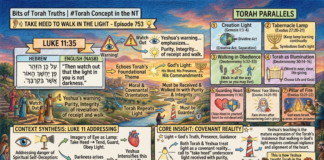
Visual Summary of Concepts the Torah in the NT