Bits of Torah Truths – #Torah Concept in the NT: Put Off Filthy Conversations – Episode 680
Colossians 3:8
3:8 אֲבָל כָּעֵת הָסִירוּ גַּם אַתֶּם אֶת כָּל אֵלֶּה׃ אֶת הָרֹגֶז וְהַכַּעַס וְאֶת הָרֶשַׁע וְהַגִּדּוּף וְאֶת נִבּוּל הַפֶּה.
Colossians 3:8
3:8 But now you also, put them all aside: anger, wrath, malice, slander, and abusive speech from your mouth. (NASB)
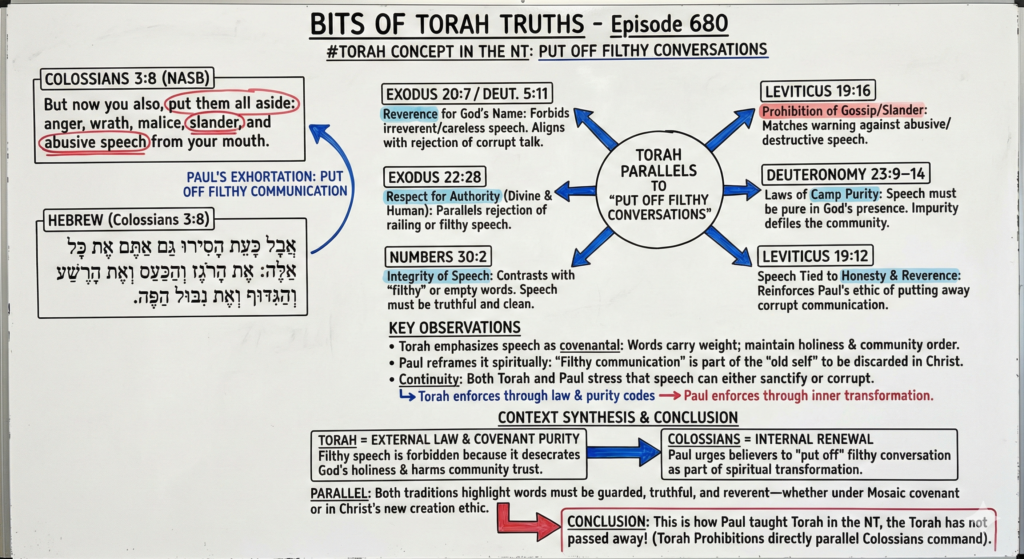
Paul exhorts believers in Colossians 3:8 to “put off… filthy communication out of your mouth.” If we look to the Torah, we can find several parallels where the sanctity of speech is emphasized, and corrupt or degrading language is forbidden.
– Torah Parallels to “Put Off Filthy Conversations” –
- Exodus 20:7 / Deut. 5:11 Reverence for God’s name forbids irreverent or careless speech, aligning with Paul’s rejection of corrupt talk.
- Leviticus 19:16 The Prohibition of gossip/slander matches Paul’s warning against abusive or destructive speech.
- Exodus 22:28 Respect for divine and human authority parallels Paul’s rejection of railing or filthy speech against others.
- Deuteronomy 23:9–14 The Laws of camp purity illustrate how even bodily functions and speech must be kept pure in God’s presence. This extends the idea that impurity (including speech) defiles the community.
- Numbers 30:2 Here Integrity of speech contrasts with “filthy” or empty words; speech must be truthful and clean.
- Leviticus 19:12 Speech is tied to honesty and reverence which reinforces Paul’s ethic of putting away corrupt communication.
– Key Observations –
- Torah emphasizes speech as covenantal: Words are not neutral; they carry weight in maintaining holiness and community order.
- Paul reframes it spiritually: In Colossians, “filthy communication” is part of the “old self” to be discarded in Christ.
- Continuity: Both Torah and Paul stress that speech can either sanctify or corrupt. Torah enforces this through law and purity codes; Paul through inner transformation.
– Context Synthesis –
- Torah = external law and covenant purity: Filthy or corrupt speech is forbidden because it desecrates God’s holiness and harms community trust.
- Colossians = internal renewal: Paul urges believers to “put off” filthy conversation as part of spiritual transformation.
- Parallels: Both traditions highlight that words must be guarded, truthful, and reverent—whether under Mosaic covenant or in Christ’s new creation ethic.
The Torah’s prohibitions against gossip, false oaths, cursing, and irreverent use of God’s name (Exodus 20:7; Leviticus 19:16; Exodus 22:28) are direct parallels to Colossians 3:8’s command to “put off filthy communication.” This is how Paul taught Torah in the NT, the Torah has not passed away!
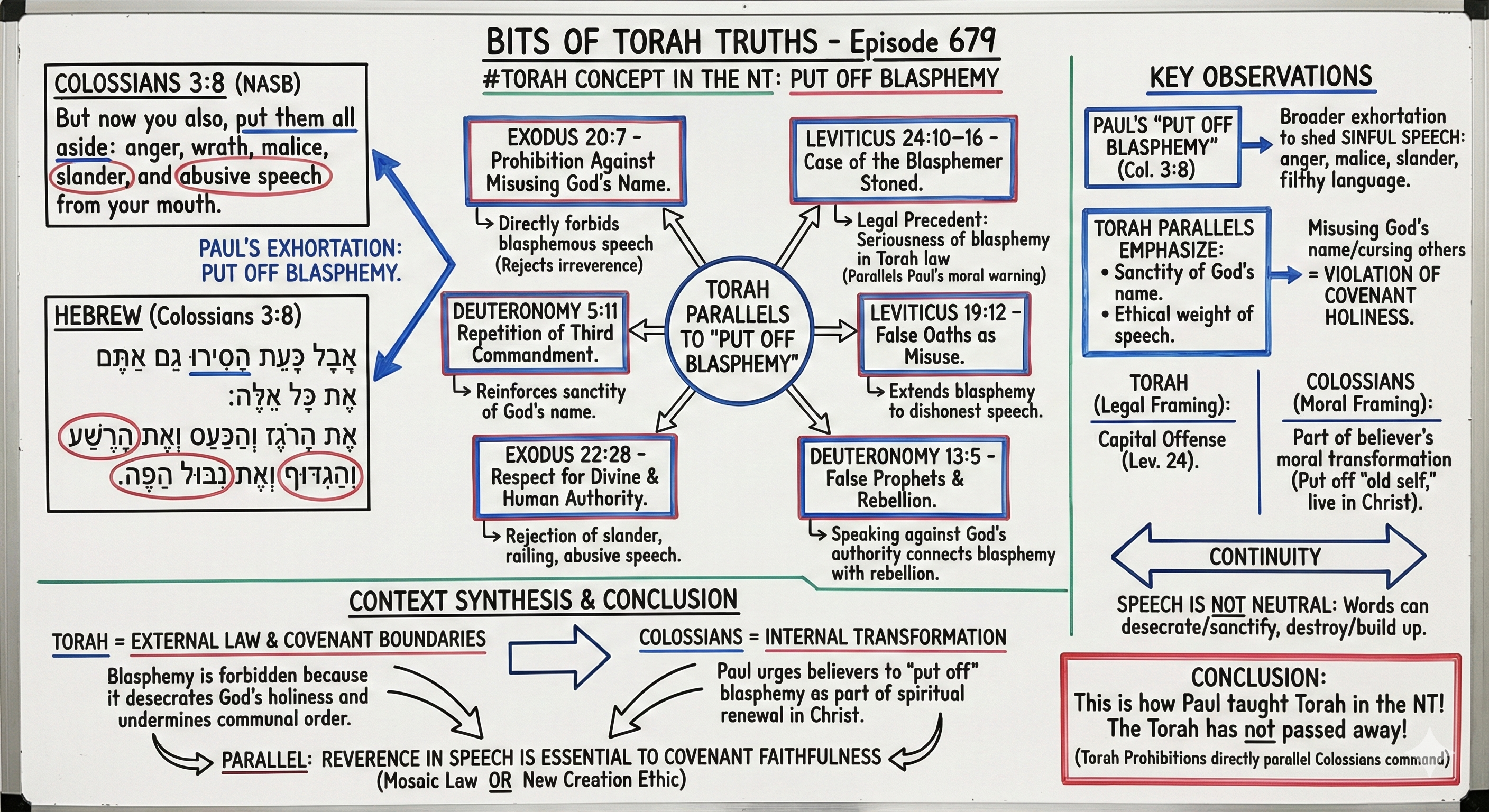
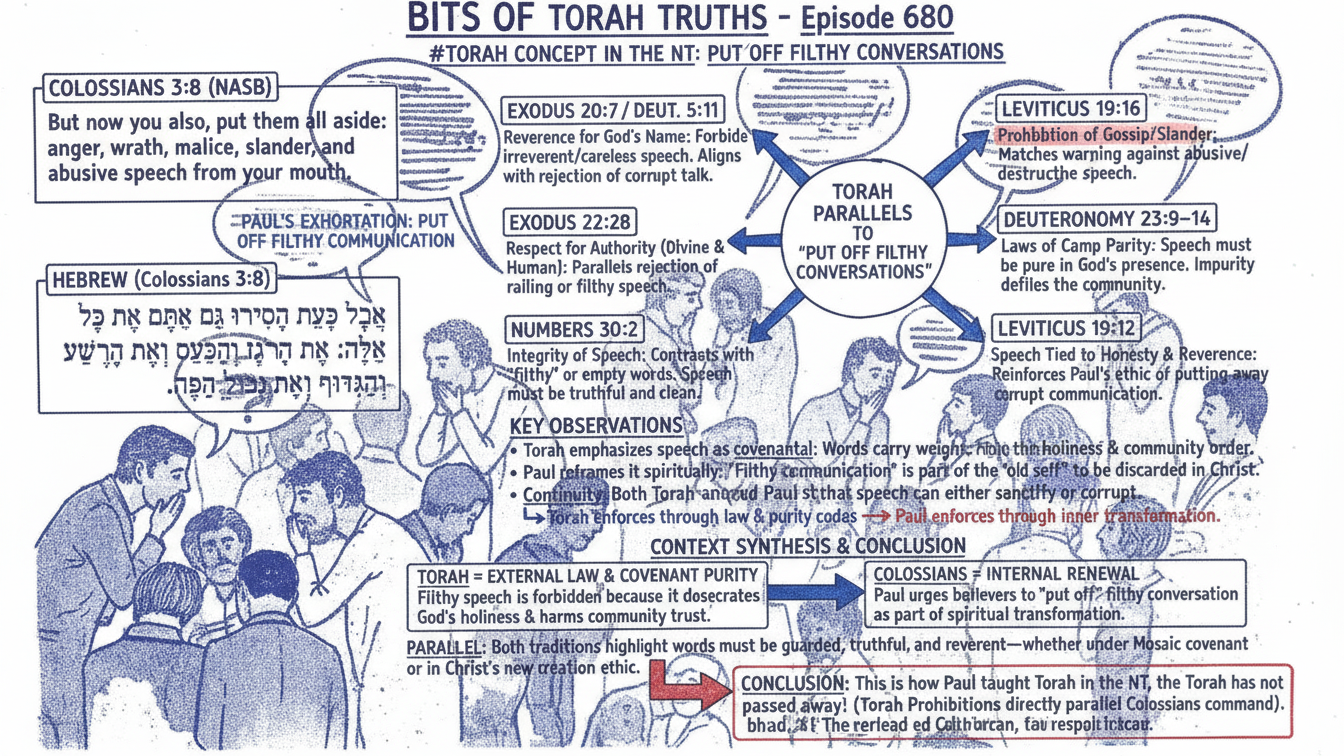
Visual Summary of Concepts the Torah in the NT