Bits of Torah Truths – #Torah Concept in the NT: Put Off Blasphemy – Episode 679
Colossians 3:8
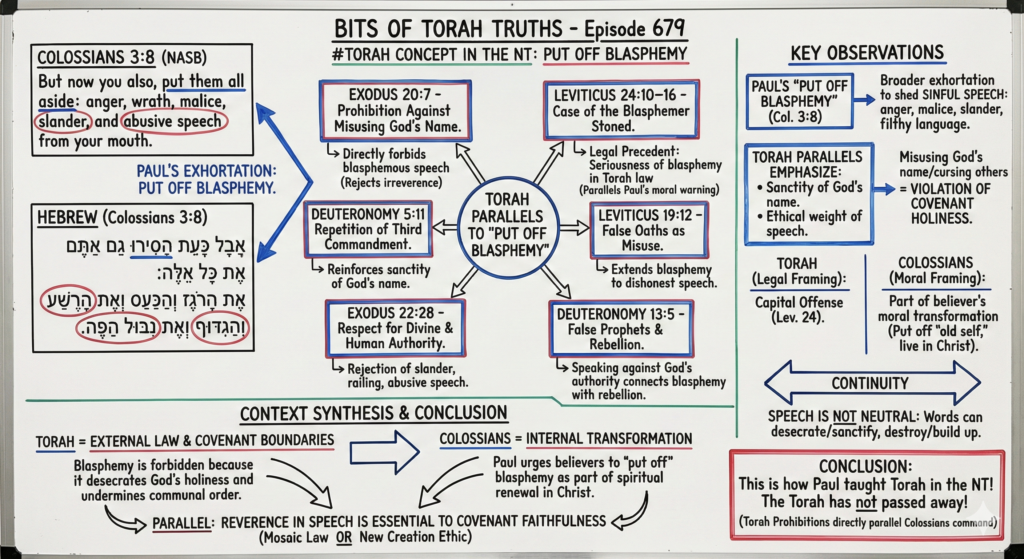
אֲבָל כָּעֵת הָסִירוּ גַּם אַתֶּם אֶת כָּל אֵלֶּה׃ אֶת הָרֹגֶז וְהַכַּעַס וְאֶת הָרֶשַׁע וְהַגִּדּוּף וְאֶת נִבּוּל הַפֶּה.
#torah #torahwisdom #torahtruth #torahforlife #torah4you #torahtruth
Colossians 3:8
3:8 But now you also, put them all aside: anger, wrath, malice, slander, and abusive speech from your mouth. (NASB)
https://www.matsati.com/index.php/category/bits-of-torah-truths/
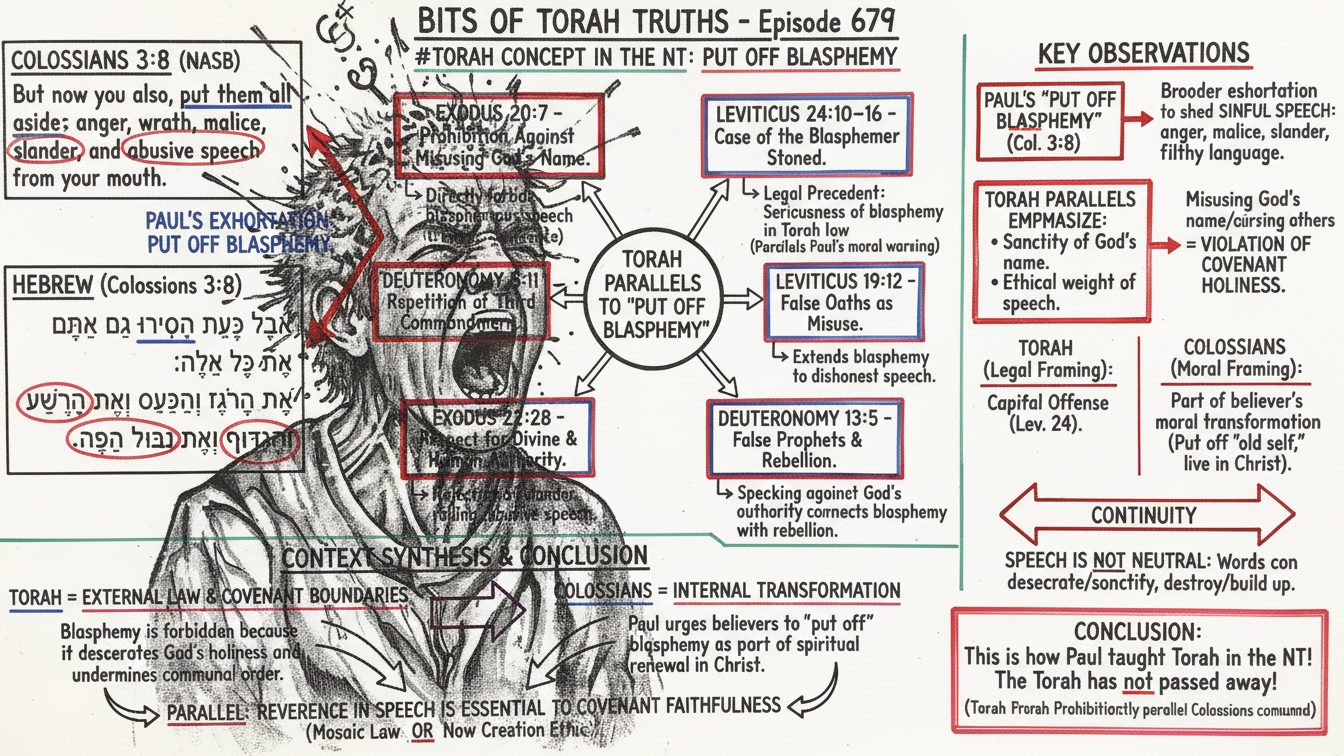
The Torah contains several passages that parallel Paul’s exhortation in Colossians 3:8 to “put off blasphemy.” These parallels emphasize prohibitions against misusing God’s name, speaking irreverently, or cursing others, concepts that align with rejecting blasphemy and corrupt speech.
– Torah Parallels to “Put Off Blasphemy” –
- Exodus 20:7 is the Prohibition against misusing God’s name. The Torah directly forbids blasphemous speech, echoing Paul’s call to reject irreverence.
- Leviticus 24:10–16 Case of the blasphemer stoned. There is legal precedent for punishing blasphemy; these verses show the seriousness of blasphemy in Torah law, paralleling Paul’s moral warning.
- Deuteronomy 5:11 Repetition of the Third Commandment, reinforces the sanctity of God’s name.
- Leviticus 19:12 Here are False oaths as misuse of God’s name extends blasphemy to dishonest speech.
- Exodus 22:28 Respect for divine and human authority parallels Paul’s rejection of slander, railing, and abusive speech.
- Deuteronomy 13:5 false prophets leading to rebellion or Speaking against God’s authority connects blasphemy with rebellion and corrupt teaching.
– Key Observations –
- Paul’s “put off blasphemy” (Col. 3:8): is part of a broader exhortation to shed sinful speech: anger, malice, slander, filthy language.
- Torah parallels: emphasize the sanctity of God’s name and the ethical weight of speech. Misusing God’s name or cursing others is treated as a violation of covenant holiness.
- Legal vs. moral framing: In Torah, blasphemy is a capital offense (Leviticus 24). In Colossians, Paul reframes it as part of the believer’s moral transformation, putting off the “old self” and living in Christ.
- Continuity: Both traditions highlight that speech is not neutral; words can desecrate or sanctify, destroy or build up.
– Context Synthesis –
- Torah = external law and covenant boundaries: Blasphemy is forbidden because it desecrates God’s holiness and undermines communal order.
- Colossians = internal transformation: Paul urges believers to “put off” blasphemy as part of spiritual renewal in Christ.
- Parallels: Both stress that reverence in speech is essential to covenant faithfulness, whether under Mosaic law or in the new creation ethic of the Gospel.
The Torah’s prohibitions against misusing God’s name (Exodus 20:7, Leviticus 24:16, Deuteronomy 5:11) are direct parallels to Colossians 3:8’s command to “put off blasphemy.” This is how Paul taught Torah in the NT; the Torah has not passed away!
Visual Summary of Concepts the Torah in the NT