Bits of Torah Truths – #Torah Concept in the NT: Put Off Anger – Episode 676
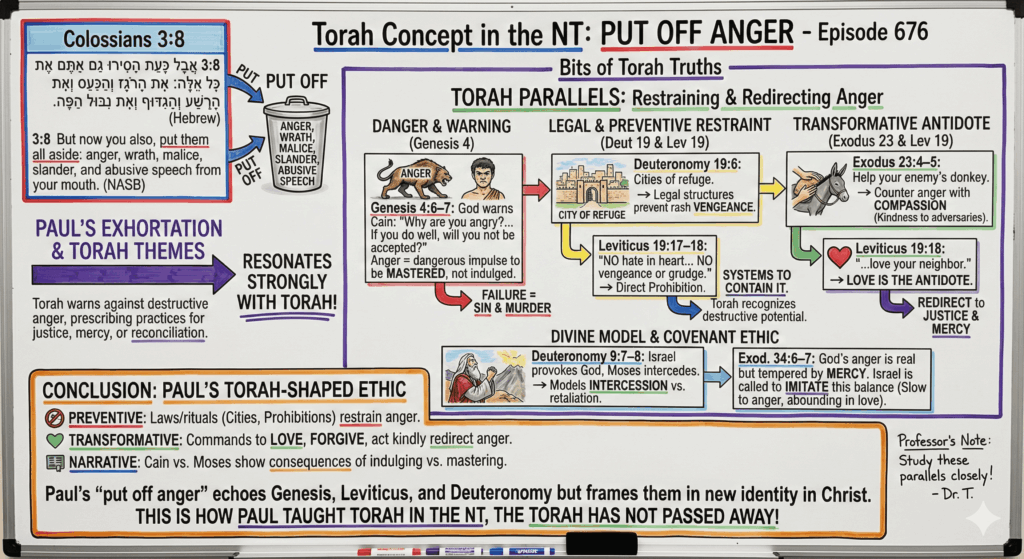
Colossians 3:8
אֲבָל כָּעֵת הָסִירוּ גַּם אַתֶּם אֶת כָּל אֵלֶּה׃ אֶת הָרֹגֶז וְהַכַּעַס וְאֶת הָרֶשַׁע וְהַגִּדּוּף וְאֶת נִבּוּל הַפֶּה.
#torah #torahwisdom #torahtruth #torahforlife #torah4you #torahtruth
Colossians 3:8
3:8 But now you also, put them all aside: anger, wrath, malice, slander, and abusive speech from your mouth. (NASB)
https://www.matsati.com/index.php/category/bits-of-torah-truths/
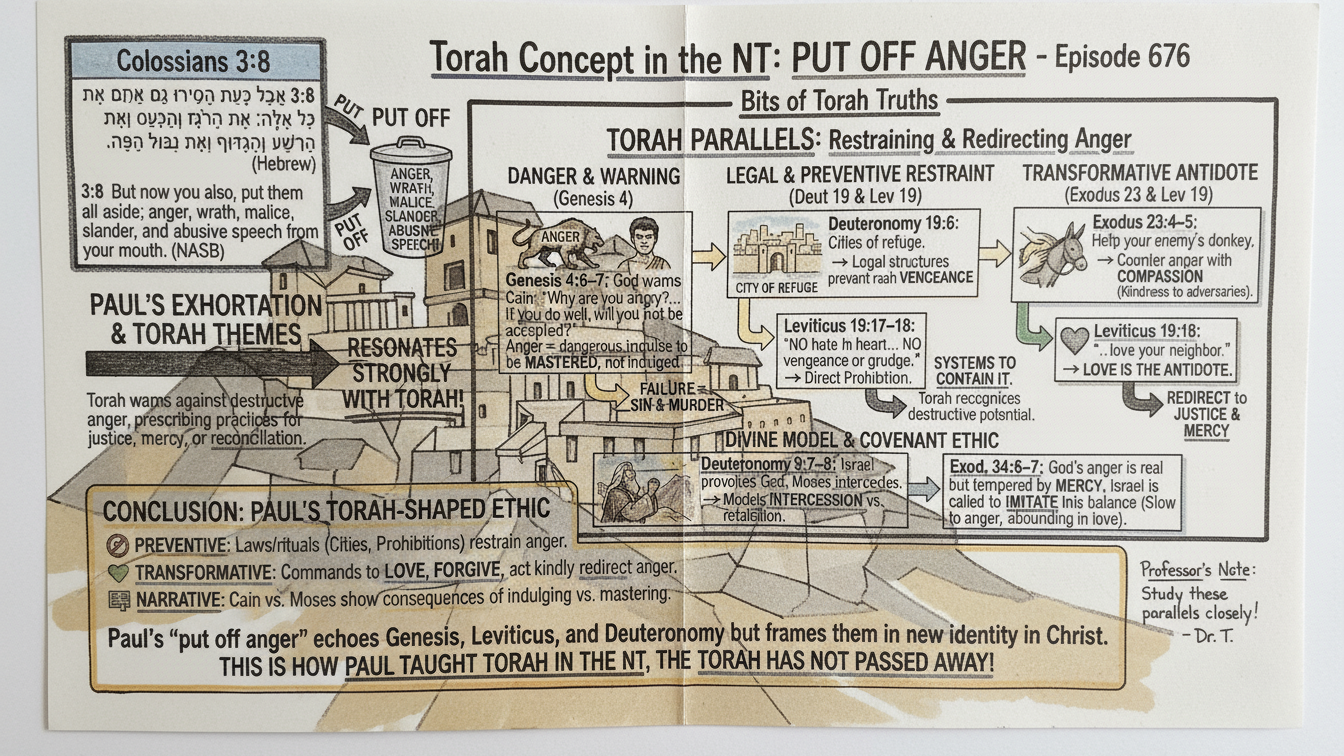
Paul’s exhortation in Colossians 3:8 resonates strongly with Torah themes. While the Torah doesn’t use the exact phrase “put off anger,” it repeatedly warns against destructive anger and prescribes practices that redirect it toward justice, mercy, or reconciliation.
– Torah Parallels to “Put Off Anger” –
- Genesis 4:6–7 God warns Cain: “Why are you angry? … If you do well, will you not be accepted?” Anger is portrayed as a dangerous impulse that must be mastered, not indulged.
- Leviticus 19:17–18 “You shall not hate your brother in your heart… You shall not take vengeance or bear a grudge.” Direct prohibition of harboring anger and resentment; instead, love your neighbor.
- Deuteronomy 9:7–8 Israel provokes God’s anger at Horeb, but Moses intercedes. Shows divine anger as just but also restrained, models intercession instead of retaliation.
- Deuteronomy 19:6 Cities of refuge are Legal structures are designed to restrain human anger and prevent rash vengeance.
- Exodus 23:4–5 Help your enemy’s donkey if it is struggling. Commands kindness toward adversaries, countering anger with compassion.
– Key Observations –
- Anger as a primal danger: Genesis 4 frames anger as a gateway to sin, Cain’s failure to master it leads to murder. This is the Torah’s earliest warning about unchecked wrath.
- Legal restraint of vengeance: Cities of refuge (Deut. 19) are institutional safeguards against anger-driven retaliation. Torah recognizes anger’s destructive potential and builds systems to contain it.
- Love as antidote: Leviticus 19:18 is the clearest parallel, forbidding grudges and vengeance, commanding love instead. Paul’s “put off anger” is essentially a restatement of this covenant ethic.
- Divine model: God’s anger is real but tempered by mercy (Exod. 34:6–7). Israel is called to imitate this balance, slow to anger, abounding in steadfast love.
The Torah’s approach to anger is preventive and transformative:
- Preventive: Laws and rituals (cities of refuge, prohibitions on grudges) restrain anger before it erupts. Transformative: Commands to love, forgive, and act kindly toward enemies redirect anger into covenantal compassion.
- Narrative: Cain’s story and Moses’ intercession show the consequences of indulging anger versus mastering it.
Paul’s “put off anger” is a Torah-shaped ethic: it echoes Genesis’ warning, Leviticus’ prohibition, and Deuteronomy’s safeguards, but frames them in the believer’s new identity in Christ. This is how Paul taught Torah in the NT, the Torah has not passed away!
Visual Summary of Concepts the Torah in the NT