Bits of Torah Truths – #Torah Concept in the NT: Put Away Wrath – Episode 670
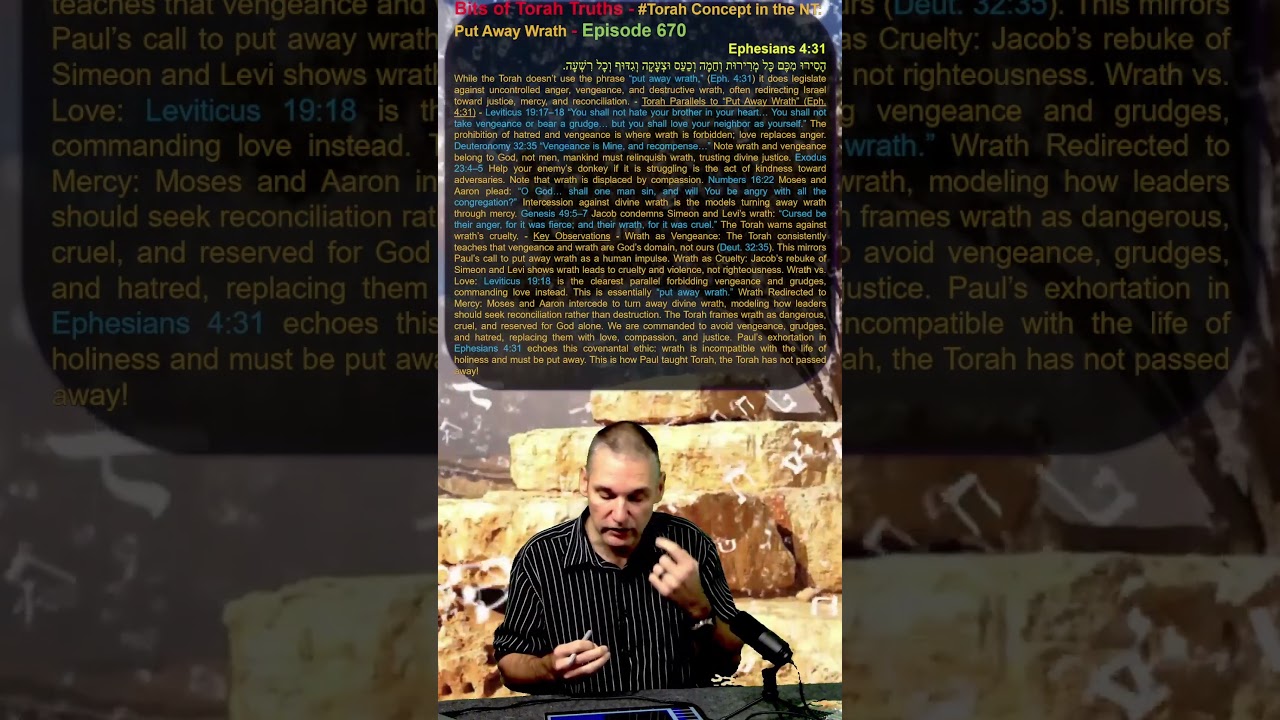
Ephesians 4:31
הָסִירוּ מִכֶּם כָּל מְרִירוּת וְחֵמָה וְכַעַס וּצְעָקָה וְגִדּוּף וְכָל רִשְׁעָה.
#torah #torahwisdom #torahtruth #torahforlife #torah4you #torahtruth
Ephesians 4:31
4:31 Let all bitterness and wrath and anger and clamor and slander be put away from you, along with all malice. (NASB)
https://www.matsati.com/index.php/category/bits-of-torah-truths/
While the Torah doesn’t use the phrase “put away wrath,” (Eph. 4:31) it does legislate against uncontrolled anger, vengeance, and destructive wrath, often redirecting Israel toward justice, mercy, and reconciliation.
– Torah Parallels to “Put Away Wrath” (Eph. 4:31) –
- Leviticus 19:17–18 “You shall not hate your brother in your heart… You shall not take vengeance or bear a grudge… but you shall love your neighbor as yourself.” The prohibition of hatred and vengeance is where wrath is forbidden; love replaces anger.
- Deuteronomy 32:35 “Vengeance is Mine, and recompense…” Note wrath and vengeance belong to God, not men, mankind must relinquish wrath, trusting divine justice.
- Exodus 23:4–5 Help your enemy’s donkey if it is struggling is the act of kindness toward adversaries. Note that wrath is displaced by compassion.
- Numbers 16:22 Moses and Aaron plead: “O God… shall one man sin, and will You be angry with all the congregation?” Intercession against divine wrath is the models turning away wrath through mercy.
- Genesis 49:5–7 Jacob condemns Simeon and Levi’s wrath: “Cursed be their anger, for it was fierce; and their wrath, for it was cruel.” The Torah warns against wrath’s cruelty.
– Key Observations –
- Wrath as Vengeance: The Torah consistently teaches that vengeance and wrath are God’s domain, not ours (Deut. 32:35). This mirrors Paul’s call to put away wrath as a human impulse.
- Wrath as Cruelty: Jacob’s rebuke of Simeon and Levi shows wrath leads to cruelty and violence, not righteousness.
- Wrath vs. Love: Leviticus 19:18 is the clearest parallel forbidding vengeance and grudges, commanding love instead. This is essentially “put away wrath.”
- Wrath Redirected to Mercy: Moses and Aaron intercede to turn away divine wrath, modeling how leaders should seek reconciliation rather than destruction.
The Torah frames wrath as dangerous, cruel, and reserved for God alone. We are commanded to avoid vengeance, grudges, and hatred, replacing them with love, compassion, and justice. Paul’s exhortation in Ephesians 4:31 echoes this covenantal ethic: wrath is incompatible with the life of holiness and must be put away. This is how Paul taught Torah, the Torah has not passed away!