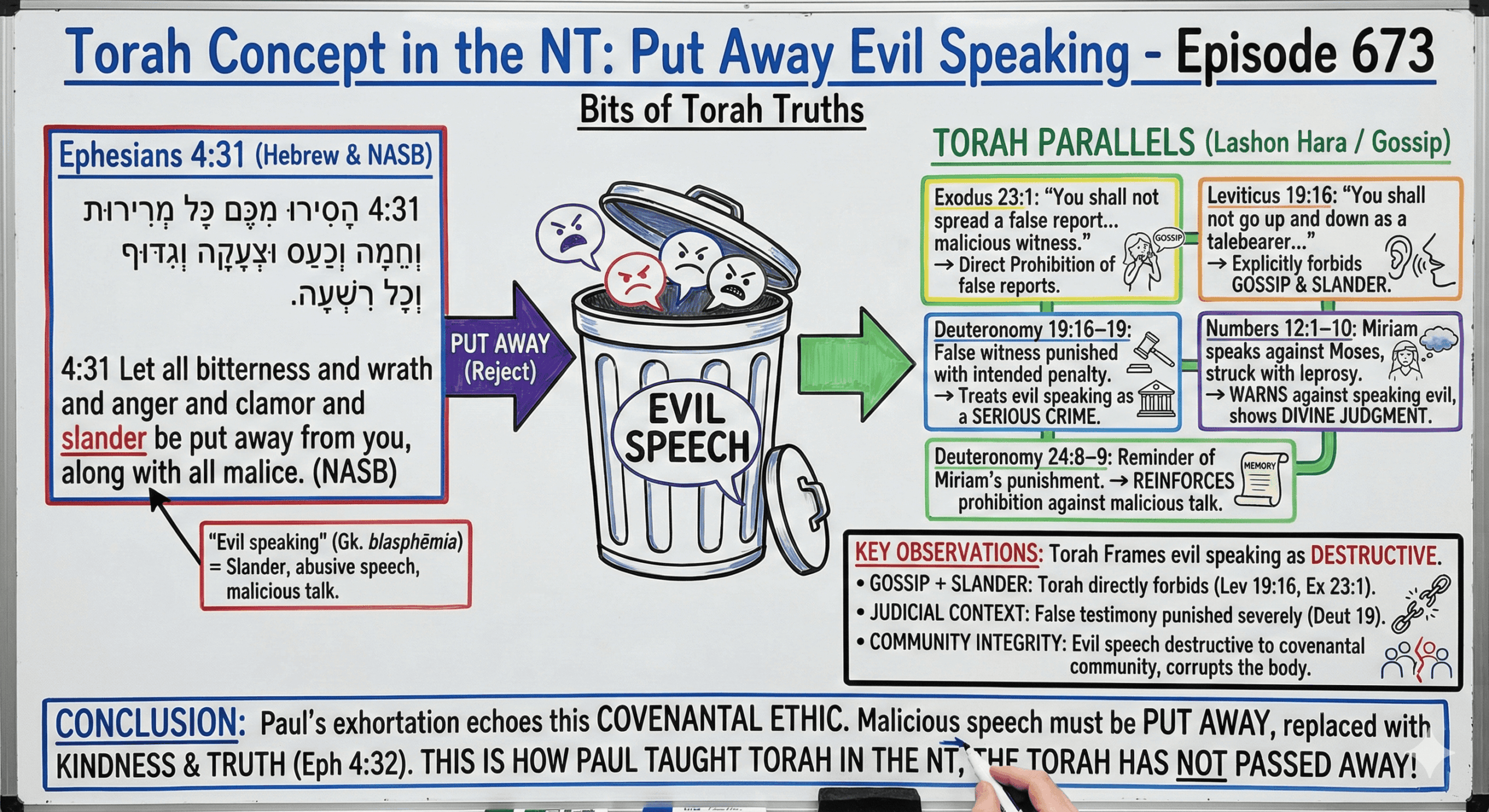
Bits of Torah Truths – #Torah Concept in the NT: Put Away Evil Speaking – Episode 673
Ephesians 4:31
הָסִירוּ מִכֶּם כָּל מְרִירוּת וְחֵמָה וְכַעַס וּצְעָקָה וְגִדּוּף וְכָל רִשְׁעָה.
#torah #torahwisdom #torahtruth #torahforlife #torah4you #torahtruth
Ephesians 4:31
4:31 Let all bitterness and wrath and anger and clamor and slander be put away from you, along with all malice. (NASB)
https://www.matsati.com/index.php/category/bits-of-torah-truths/
In Ephesians 4:31, “evil speaking” (Greek blasphēmia) refers to slander, abusive speech, or malicious talk. The Torah doesn’t use that exact phrase, but it repeatedly prohibits lashon hara (evil speech), slander, false witness, and destructive words.
– Torah Parallels to “Put Away Evil Speaking” –
- Exodus 23:1 “You shall not spread a false report. Do not join hands with a wicked man to be a malicious witness.” The Prohibition of false reports and malicious testimony is a Direct parallel to forbidding evil speaking.
- Leviticus 19:16 “You shall not go up and down as a talebearer among your people.” The Torah explicitly forbids evil speech (gossip and slander).
- Deuteronomy 19:16–19 False witness is punished with the penalty intended for the accused. The Torah treats evil speaking as a serious crime.
- Numbers 12:1–10 Miriam and Aaron speak against Moses; Miriam is struck with leprosy. The narrative warns against speaking evil of others and shows divine judgment against slander.
- Deuteronomy 24:8–9 Reminder of Miriam’s punishment for slander, this reinforces prohibition against malicious talk.
– Key Observations –
- Evil Speaking = Gossip + Slander: Torah directly forbids talebearing (Lev. 19:16) and false reports (Ex. 23:1). These are the clearest parallels to Paul’s “put away evil speaking.”
- Judicial Context: The Torah treats slander as a crime, especially in court (Deut. 19). False testimony is punished severely. Narrative Example: Miriam’s punishment in Numbers 12 is the most vivid Torah story showing the danger of evil speaking.
- Community Integrity: Evil speech is seen as destructive to covenantal community, just as Paul warns it corrupts the body of Christ.
The Torah frames evil speaking as gossip, slander, and false witness which are destructive acts that undermine justice and community trust. Paul’s exhortation in Ephesians 4:31 echoes this covenantal ethic: malicious speech must be put away, replaced with kindness and truth (Eph. 4:32). This is how Paul taught Torah in the NT, the Torah has not passed away!