Bits of Torah Truths – #Torah Concept in the NT: Put Away All Malice – Episode 674
Ephesians 4:31
הָסִירוּ מִכֶּם כָּל מְרִירוּת וְחֵמָה וְכַעַס וּצְעָקָה וְגִדּוּף וְכָל רִשְׁעָה.
#torah #torahwisdom #torahtruth #torahforlife #torah4you #torahtruth
Ephesians 4:31
4:31 Let all bitterness and wrath and anger and clamor and slander be put away from you, along with all malice. (NASB)
https://www.matsati.com/index.php/category/bits-of-torah-truths/
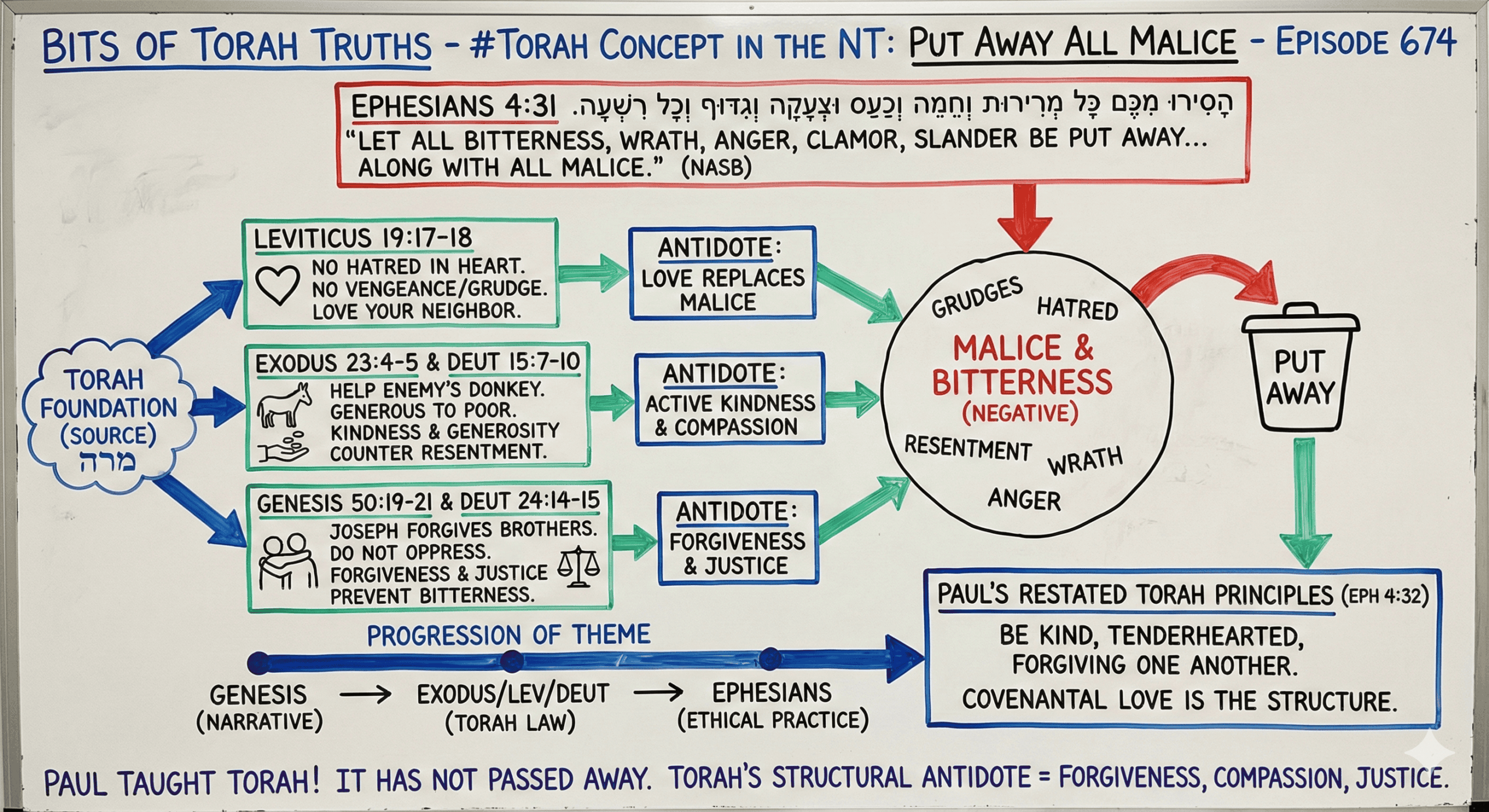
The Torah contains several direct parallels to Paul’s exhortation in Ephesians 4:31 “Put away all bitterness, wrath, anger, clamor, slander, and all malice.” The Torah repeatedly emphasize rejecting hatred, grudges, and malice, and instead commands forgiveness, compassion, and justice.
– Key Torah Parallels to “Put Away All Malice” –
- Leviticus 19:17–18 “You shall not hate your brother in your heart… You shall not take vengeance or bear a grudge… but you shall love your neighbor as yourself.” This is an explicit prohibition of hatred and grudges; love replaces malice.
- Exodus 23:4–5 Help your enemy’s donkey if it is struggling. Acts of kindness toward adversaries reject malice and promote reconciliation.
- Deuteronomy 15:7–10 Open your hand generously to the poor, “and your heart shall not be grieved when you give.” Generosity without resentment counters bitterness and cultivates compassion.
- Genesis 50:19–21 Joseph forgives his brothers: “You meant evil against me, but God meant it for good.” Forgiveness instead of revenge models release of bitterness and malice.
- Deuteronomy 24:14–15 Do not oppress the poor or withhold wages. Justice and empathy prevent resentment and exploitation.
– Key Observations –
- Bitterness as Grudge-Holding: The clearest Torah parallel is Leviticus 19:18, which forbids bearing grudges. This directly aligns with Paul’s command to put away bitterness and malice.
- Forgiveness as Covenant Value: Stories like Joseph forgiving his brothers show that bitterness is overcome by trust in God’s providence and choosing reconciliation over revenge.
- Generosity and Justice: Torah laws stress fairness and compassion, preventing resentment from taking root.
- Love as the Antidote: Both Torah and Ephesians frame love as the opposite of malice.
Torah says, “love your neighbor as yourself,” while Paul says, “be kind, tenderhearted, forgiving one another” (Eph. 4:32). The Torah’s approach is structural and covenantal: it insists that hatred, grudges, and malice are incompatible with covenantal love. Instead, the Torah based antidote is forgiveness, compassion, and justice. Paul’s exhortation in Ephesians 4:31–32 is essentially a restatement of these Torah principles, applied to the life of the early church. Note that these themes develop across Genesis → Exodus → Leviticus → Deuteronomy, so it is possible to visually trace the progression from narrative (Joseph’s forgiveness) to Torah(Leviticus/Deuteronomy) to ethical practice (Ephesians)? This is how Paul taught Torah in the NT, the Torah has not passed away!