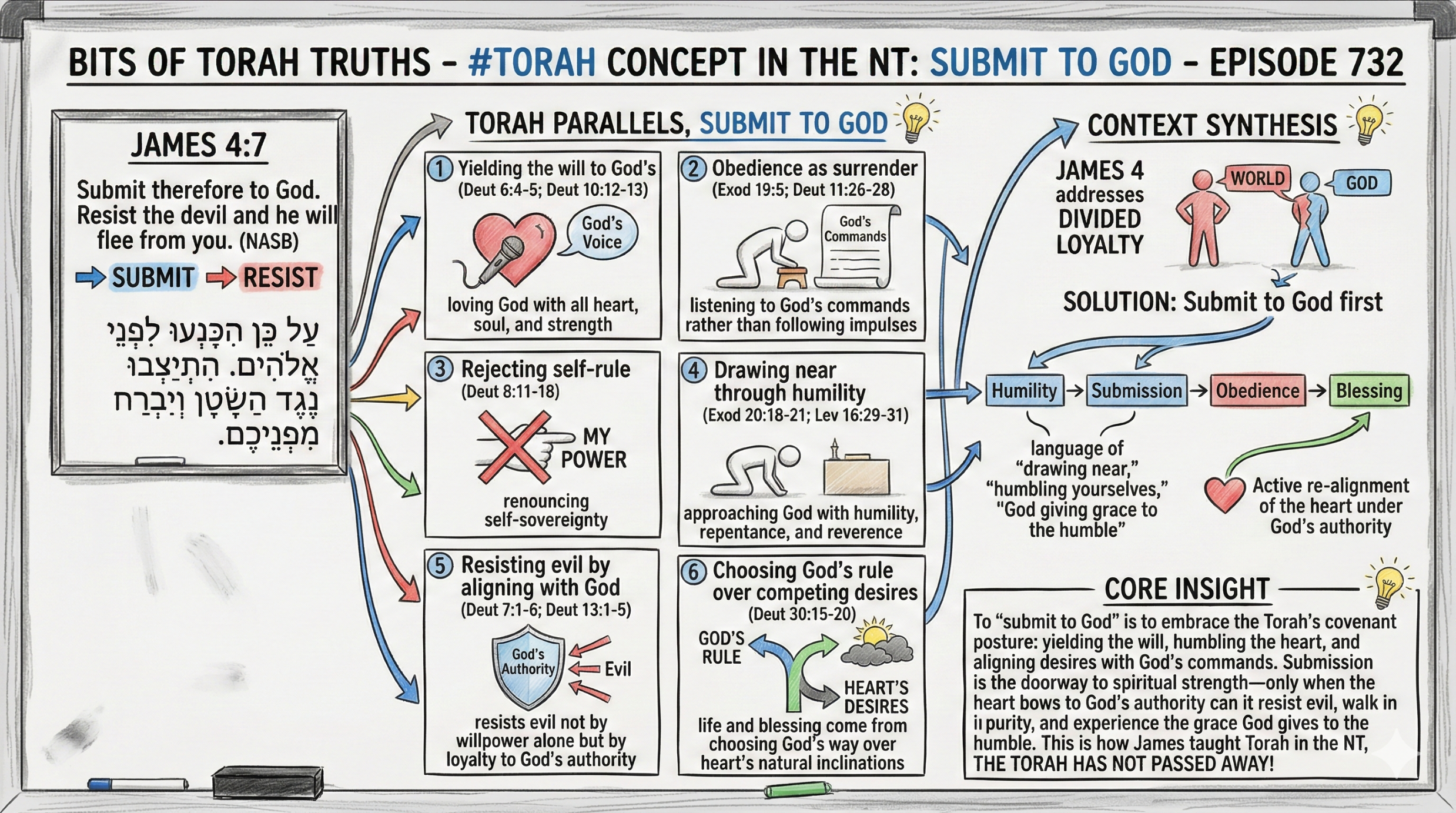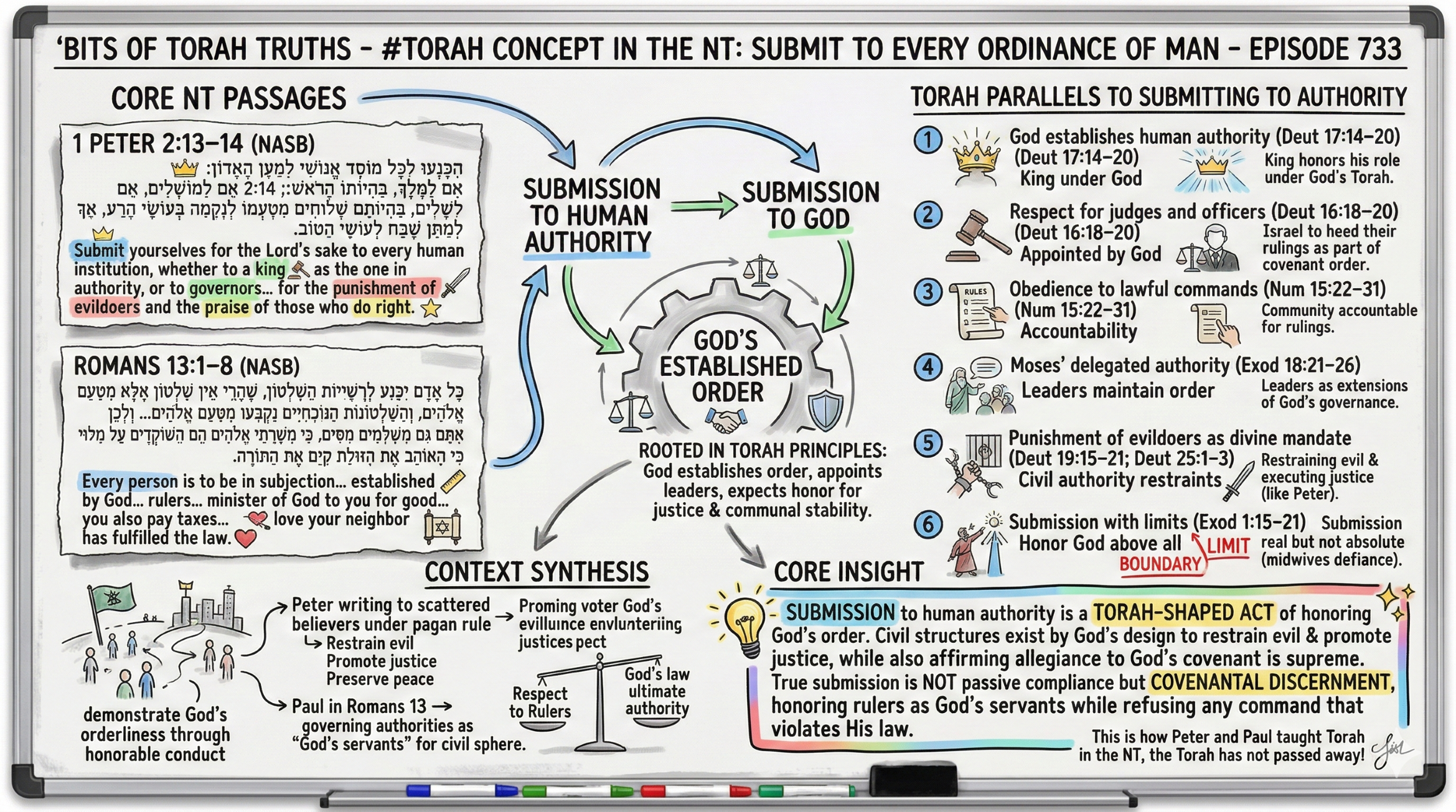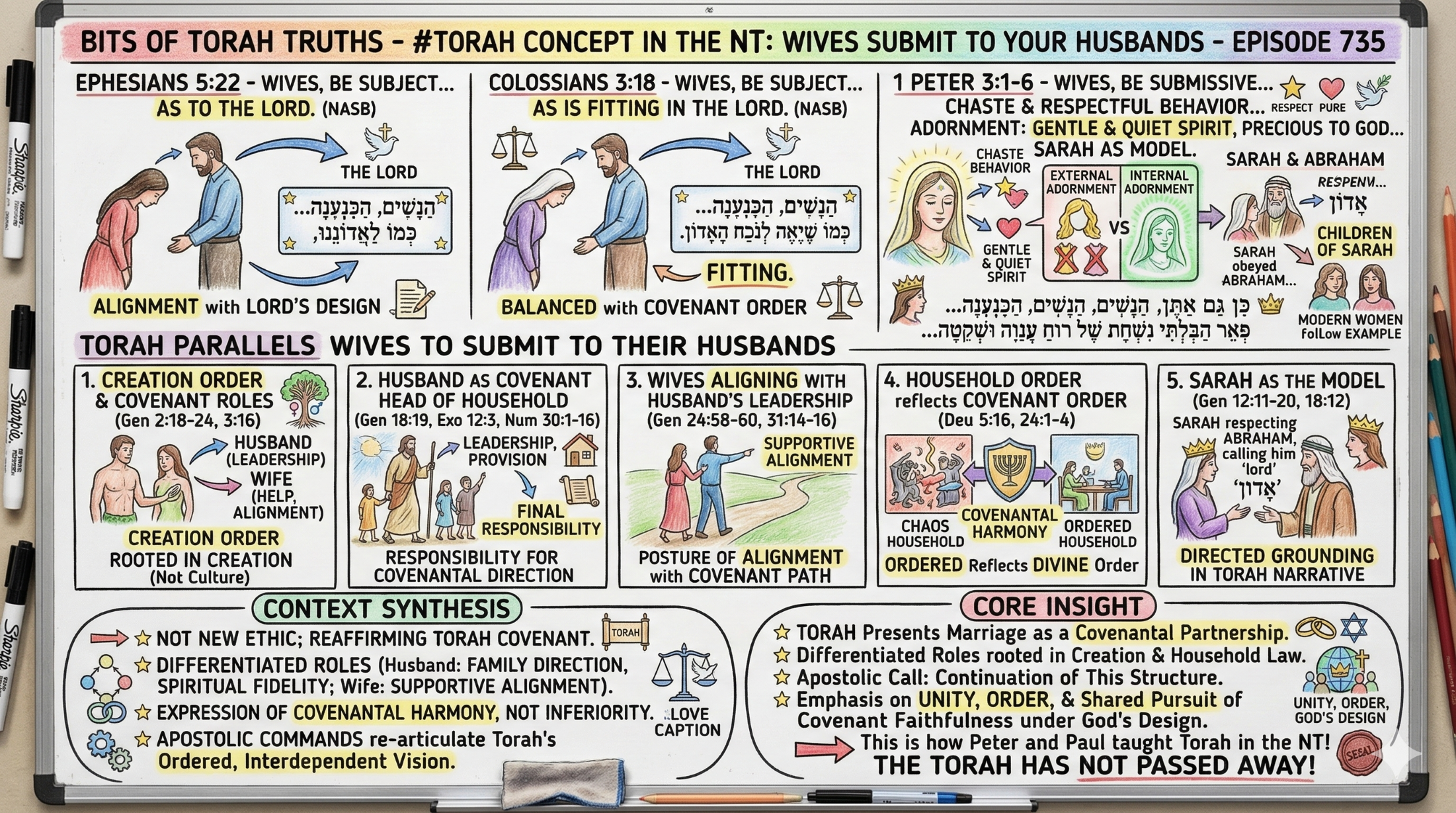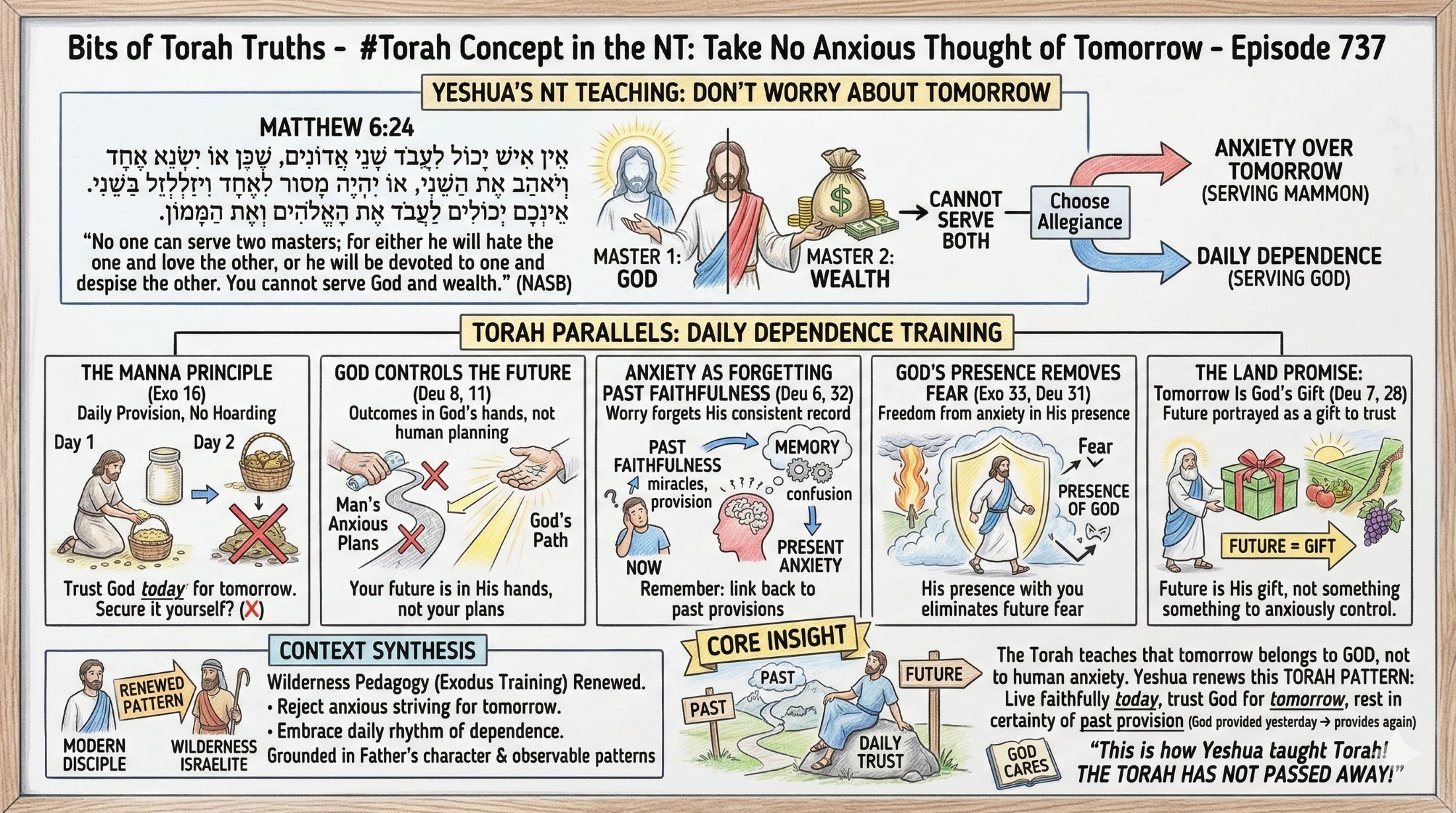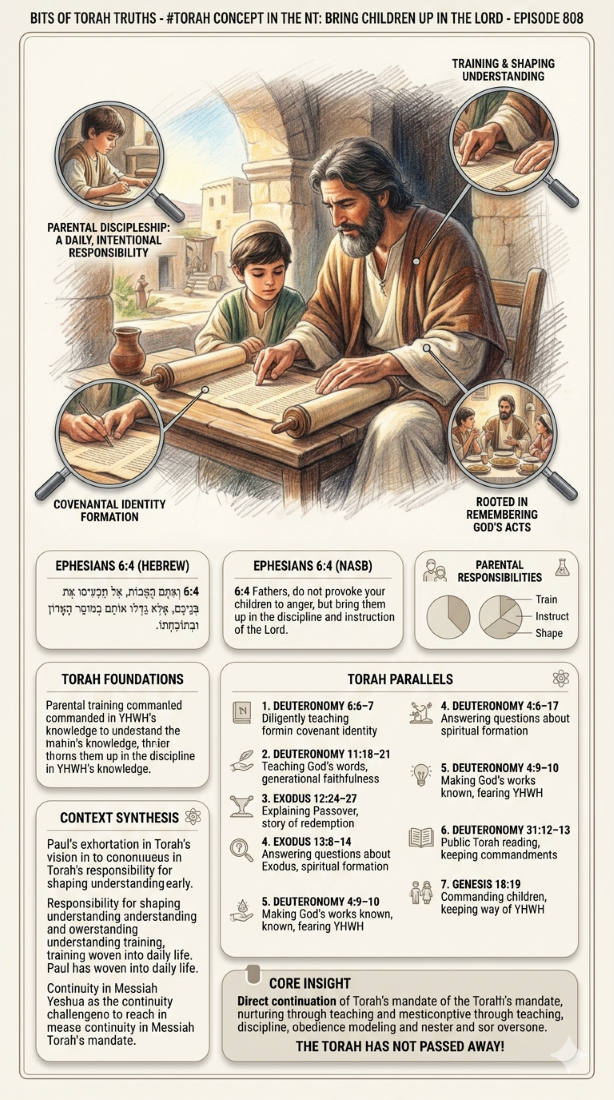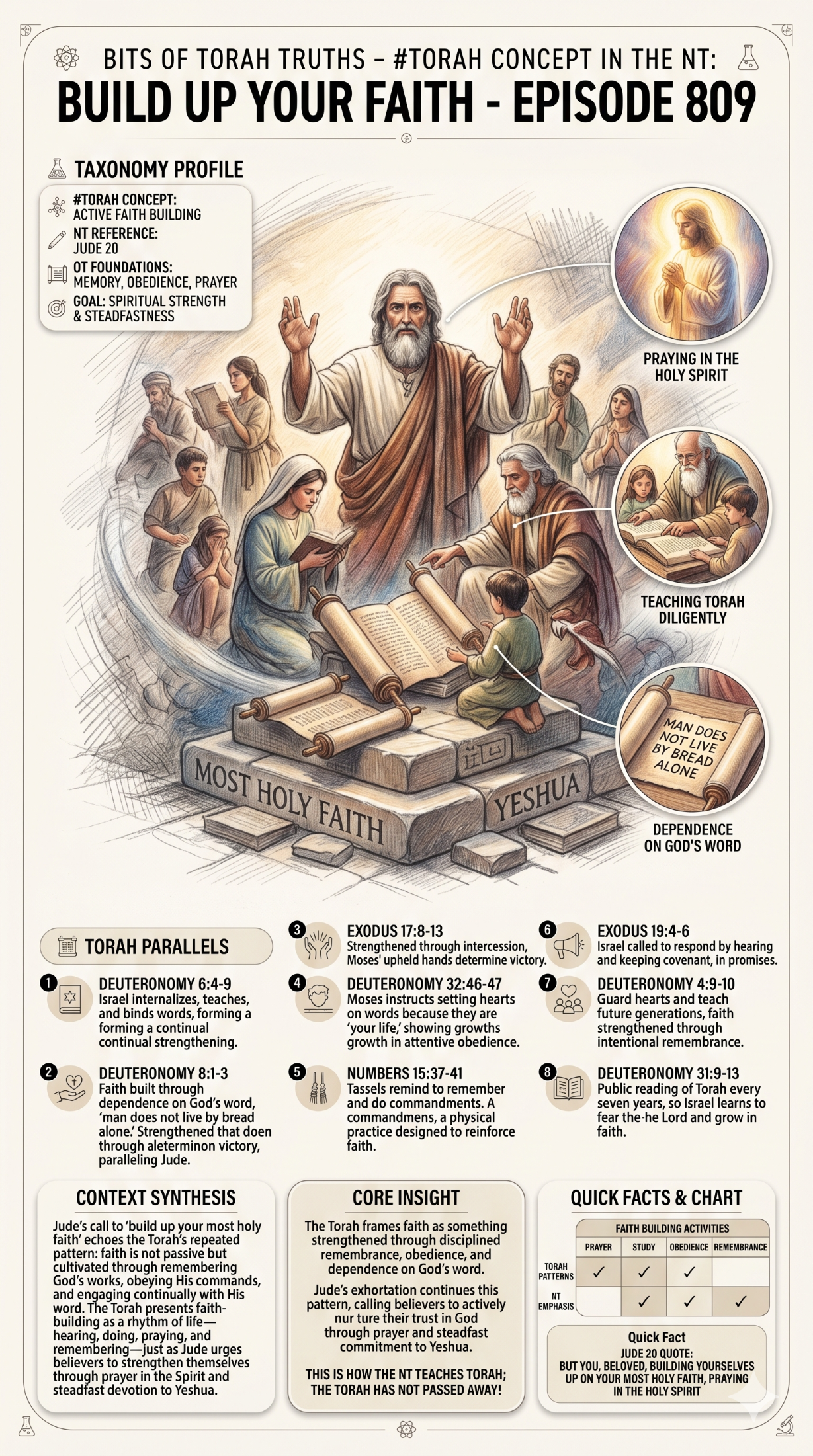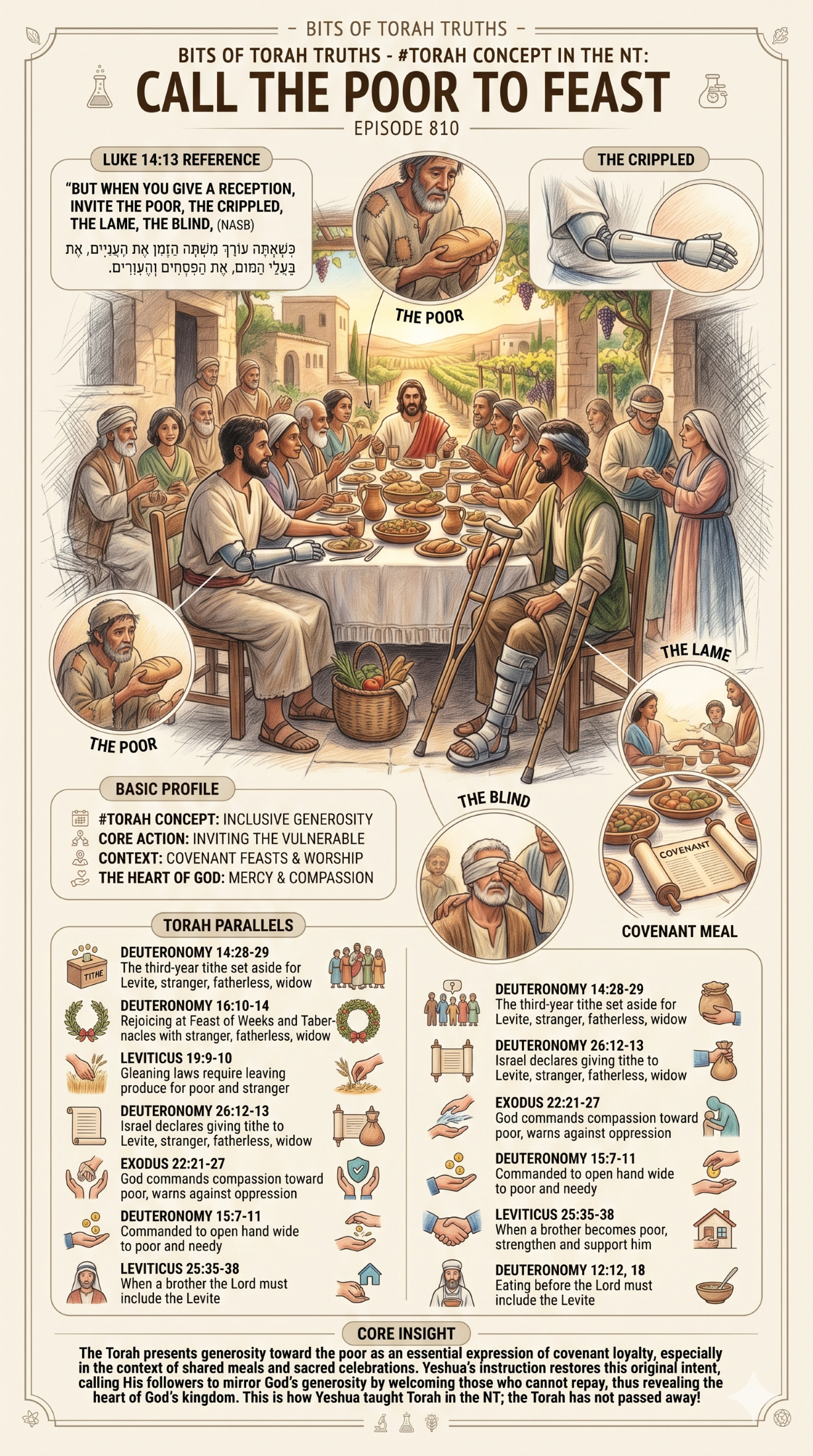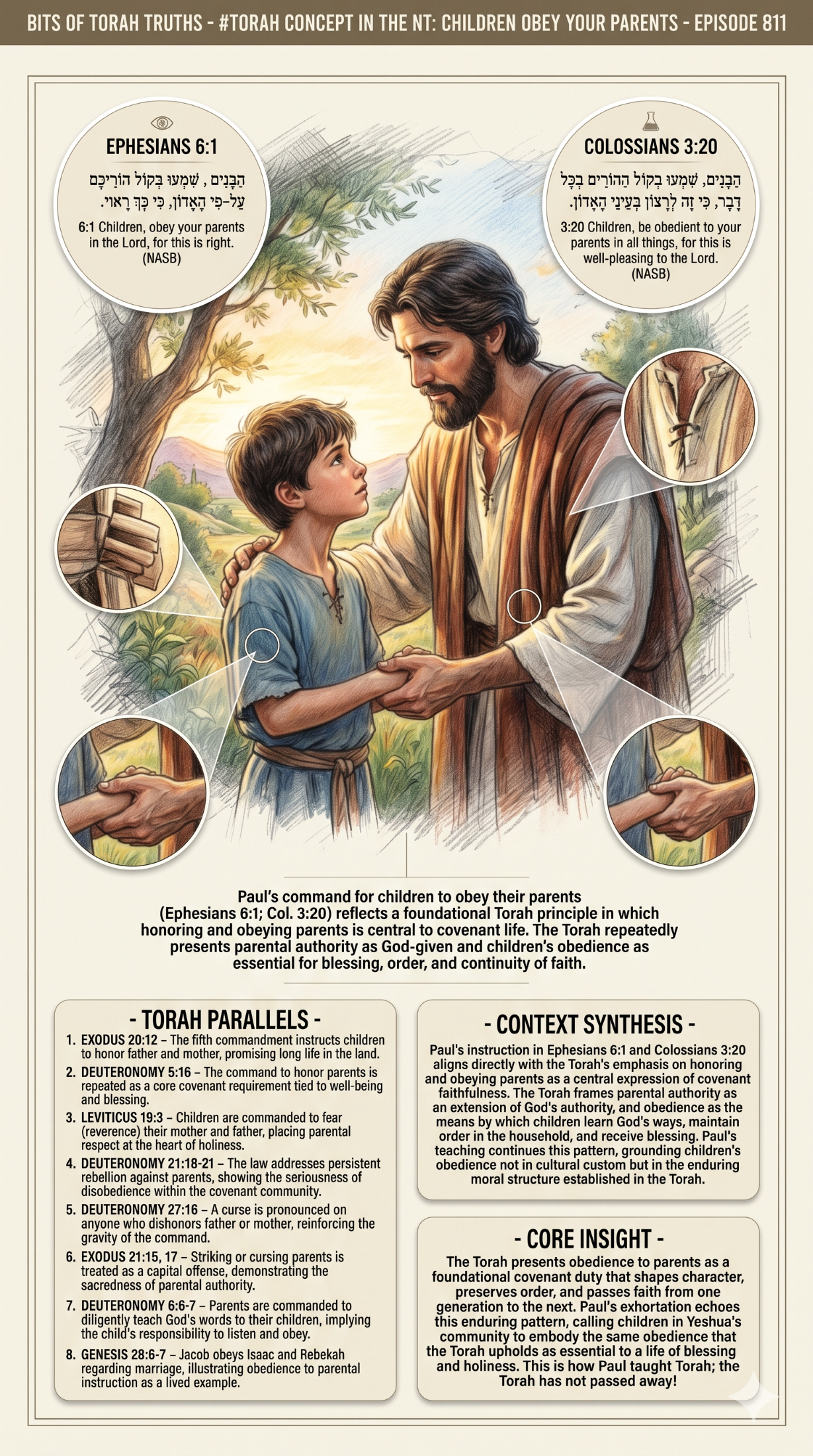
Bits of Torah Truths – #Torah Concept in the NT: Confess faults to one another – Episode 819
James 5:16
הִתְוַדּוּ עַל חֲטָאֵיכֶם אִישׁ לִפְנֵי רֵעֵהוּ וְהִתְפַּלְּלוּ אִישׁ בְּעַד רֵעֵהוּ, לְמַעַן תֵּרָפְאוּ. גָדוֹל כֹּחָהּ שֶׁל תְּפִלַּת צַדִּיק בִּפְעֻלָּתָהּ.
#torah#torahwisdom#torahtruth#torahforlife#torah4you#torahtruth
James 5:16
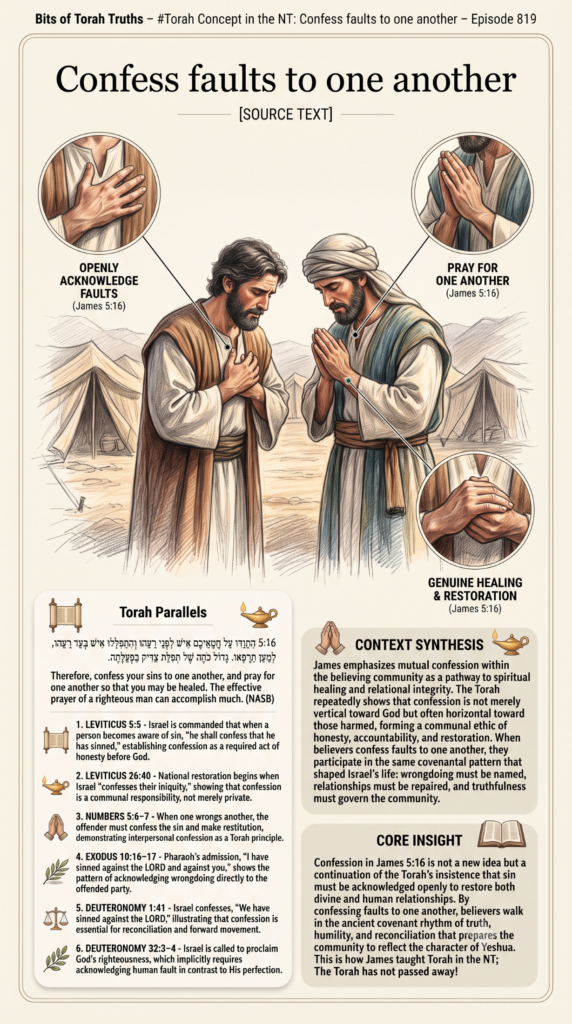
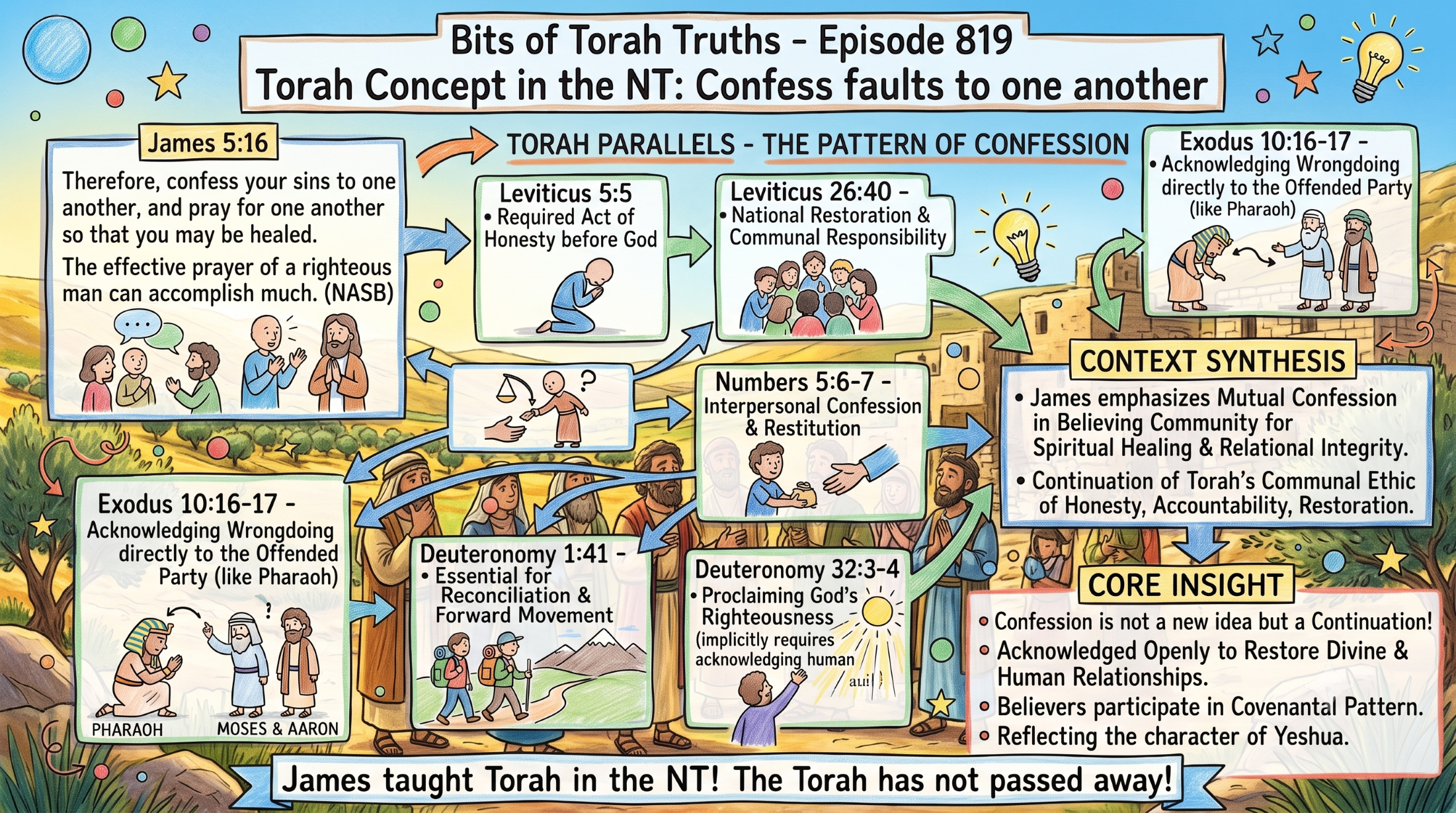
5:16 Therefore, confess your sins to one another, and pray for one another so that you may be healed. The effective prayer of a righteous man can accomplish much. (NASB)
https://www.matsati.com/index.php/category/bits-of-torah-truths/
James 5:16 urges believers to openly acknowledge their faults to one another so that genuine healing and restoration can occur. The Torah contains foundational patterns of confession, accountability, and communal responsibility that illuminate this New Testament instruction.
– Torah parallels –
- Leviticus 5:5 – Israel is commanded that when a person becomes aware of sin, “he shall confess that he has sinned,” establishing confession as a required act of honesty before God.
- Leviticus 26:40 – National restoration begins when Israel “confesses their iniquity,” showing that confession is a communal responsibility, not merely private.
- Numbers 5:6–7 – When one wrongs another, the offender must confess the sin and make restitution, demonstrating interpersonal confession as a Torah principle.
- Exodus 10:16–17 – Pharaoh’s admission, “I have sinned against the LORD and against you,” shows the pattern of acknowledging wrongdoing directly to the offended party.
- Deuteronomy 1:41 – Israel confesses, “We have sinned against the LORD,” illustrating that confession is essential for reconciliation and forward movement.
- Deuteronomy 32:3–4 – Israel is called to proclaim God’s righteousness, which implicitly requires acknowledging human fault in contrast to His perfection.
– Context Synthesis –
James emphasizes mutual confession within the believing community as a pathway to spiritual healing and relational integrity. The Torah repeatedly shows that confession is not merely vertical toward God but often horizontal toward those harmed, forming a communal ethic of honesty, accountability, and restoration. When believers confess faults to one another, they participate in the same covenantal pattern that shaped Israel’s life: wrongdoing must be named, relationships must be repaired, and truthfulness must govern the community.
– Core Insight –
Confession in James 5:16 is not a new idea but a continuation of the Torah’s insistence that sin must be acknowledged openly to restore both divine and human relationships. By confessing faults to one another, believers walk in the ancient covenant rhythm of truth, humility, and reconciliation that prepares the community to reflect the character of Yeshua. This is how James taught Torah in the NT; The Torah has not passed away!
Visual Summary of Concepts the Torah in the NT